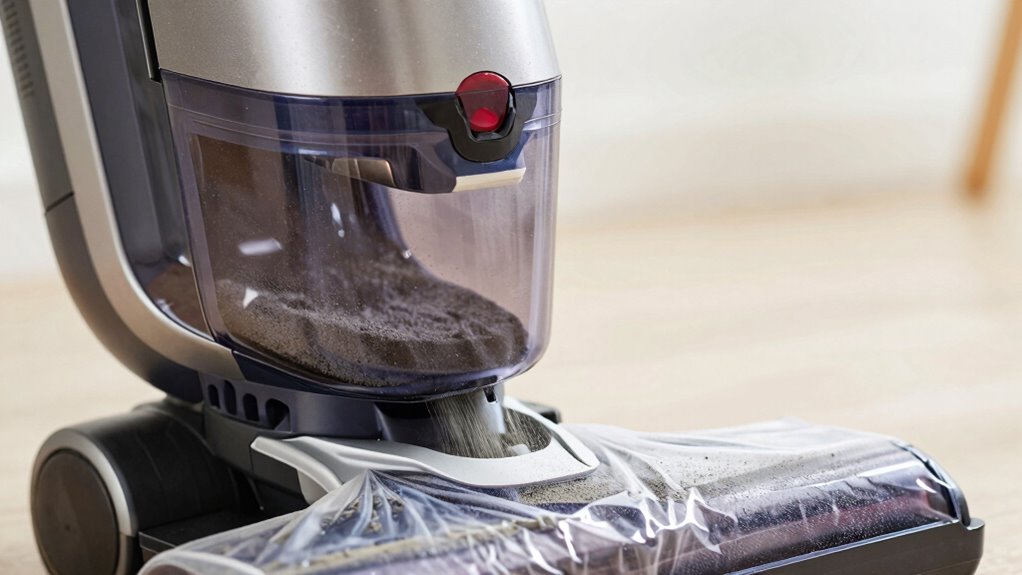

To prevent fine dust from escaping while emptying your vacuum, make certain you use a sealed, airtight container with secure lids or locking mechanisms. Handle the container slowly and carefully, keeping it close to the trash can to reduce dust release. Wear gloves and a dust mask for added protection, and double-check seals before disposing. Maintaining your vacuum and filters regularly also helps keep dust contained. For more tips, discover how combining these practices guarantees a cleaner, safer cleanup process.
Key Takeaways
- Use vacuums with sealed, airtight dust containers and secure lids before disposal.
- Engage locking mechanisms to prevent dust from escaping during emptying.
- Empty the vacuum slowly and close to a trash can to minimize dust release.
- Wear dust masks and gloves for added protection during disposal.
- Regularly inspect and maintain filters and seals for optimal containment.
When emptying your vacuum, fine dust can often escape into the air, making cleanup messy and potentially harmful. This is especially true if your vacuum lacks proper dust containment measures. To minimize this, focus on effective air filtration and secure dust containment practices. First, ensure that your vacuum is equipped with a high-quality HEPA filter, which captures tiny particles and prevents them from being released back into the room. When you open the vacuum to empty it, the air filtration system helps contain the dust inside, reducing airborne particles. Without such filters, dust can easily become airborne, settling on surfaces or being inhaled, which can aggravate allergies or respiratory issues.
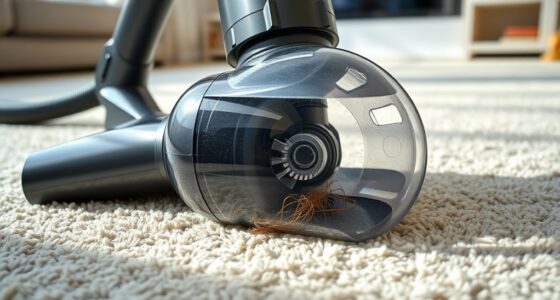
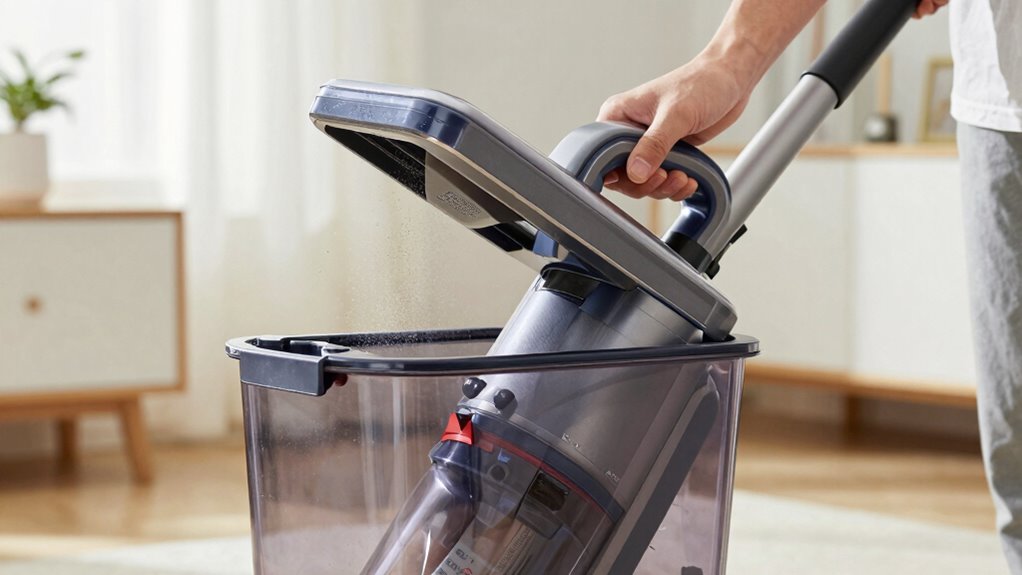
Next, pay attention to the design of your vacuum’s dust container. Use models with sealed or airtight containers that lock securely when you’re done. Before opening, try to minimize shaking or disturbing the dust bag or bin. Some vacuums have a “bagless” design, but these require extra care—make sure to wear a dust mask and gloves if possible. When it’s time to empty, do so slowly and close to a trash can to avoid splattering dust. If your vacuum has a locking mechanism or a cover, engage it before removing the container to keep dust sealed inside. Proper dust containment practices are essential for maintaining a healthy indoor environment. Ensuring that your vacuum has effective air filtration helps keep airborne dust to a minimum during this process. Additionally, choosing a vacuum with proper dust containment features can greatly reduce airborne dust during emptying.
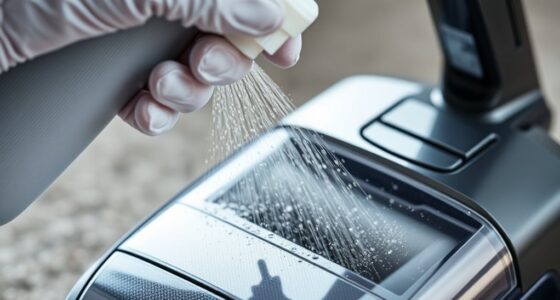
Dust containment is crucial because it keeps fine particles from escaping into your living space. When you’re done, double-check that all seals are tight and that the lid or cover is properly secured before moving the container away from the vacuum. This way, you’re less likely to accidentally release dust into the air during disposal. Also, consider using disposable gloves or a dust mask during the process to protect your skin and lungs from fine particles. Once you’ve emptied the vacuum, wipe down the exterior and the area around the container to catch any residual dust. Additionally, regular inspection and maintenance** of your vacuum’s dust containment features ensures ongoing effectiveness. Proper maintenance ensures your vacuum continues to trap dust effectively, reducing the chance of it escaping during future emptying. Incorporating routine filter replacements can further enhance the vacuum’s dust-trapping efficiency. By combining high-quality filters, airtight containers, careful handling, and regular upkeep**, you’ll significantly reduce the release of fine dust into your environment, making cleanup safer and more hygienic.

4 Pack HEPA Replacement Filters for AFNOP Acevac11 Cordless Vacuum Cleaner
- Includes 4 HEPA filters and sponge sets: Long-lasting, cost-effective cleaning supplies
- Compatible with AFNOP AceVac11: Fits AceVac 11 and Blue models perfectly
- High-efficiency HEPA filtration: Captures 99.97% of dust and particles
As an affiliate, we earn on qualifying purchases.
As an affiliate, we earn on qualifying purchases.
Frequently Asked Questions
Can Using a Bagless Vacuum Reduce Dust Escape?
Using a bagless vacuum can reduce dust escape if it features good air filtration and dust barriers. Many modern models have sealed systems that trap fine dust effectively, preventing it from escaping into the air during emptying. To further minimize dust escape, look for vacuums with HEPA filters and secure dust chambers. This way, you protect your indoor air quality while cleaning, making your vacuuming safer and more efficient.
What Are the Best Vacuum Models for Dust Containment?
Think of a vacuum with the fortress of a castle—these models excel at dust containment. Look for ones with advanced dust containment technology and easy-to-maintain vacuum filters. Models like the Dyson Ball Animal 2 or Miele Complete C3 offer premium filtration systems that seal in dust during disposal. Regular vacuum filter maintenance keeps these defenses strong, ensuring dust stays locked away and your air remains pure and fresh.
How Often Should I Clean My Vacuum’s Filters?
You should clean your vacuum’s filters every 1 to 3 months, depending on usage and dust accumulation. Regular maintenance guarantees ideal air filtration, preventing dust buildup that can reduce suction and worsen indoor air quality. Check your vacuum’s manual for specific instructions. If you notice a decrease in performance or odor, it’s a sign it’s time for a filter cleaning. Keeping filters clean helps keep dust contained and improves your vacuum’s efficiency.
Does Emptying Outside Prevent Dust From Escaping?
They say “a stitch in time saves nine,” and emptying your vacuum outside definitely helps prevent dust from escaping. It improves airflow optimization and minimizes indoor mess. To keep dust contained, use sealant solutions around the vacuum’s opening and handle, making sure the bag or container is securely sealed. Emptying outside reduces airborne particles, protecting your indoor air quality and keeping dust from sneaking back into your space.
Are There DIY Tips to Improve Dust Sealing?
Yes, you can improve dust sealing with DIY tips. Start by inspecting your vacuum’s seals and replacing worn or damaged gaskets. Use weather stripping or rubber seals around the lid or dustbin to create a tighter fit. Applying a thin layer of petroleum jelly on the seals can enhance their grip. These DIY improvements help prevent dust from escaping during emptying, keeping your space cleaner and reducing airborne particles.
Conclusion
So, next time you’re tempted to empty your vacuum without a fuss, remember: fine dust loves to escape just when you think the job’s done. Think of it as a tiny, rebellious cloud refusing to say goodbye. But with these tips, you can keep that sneaky dust contained—because who wants their living room to turn into a foggy mystery? Stay vigilant, and let the dust have its escape plan elsewhere, not in your clean space.