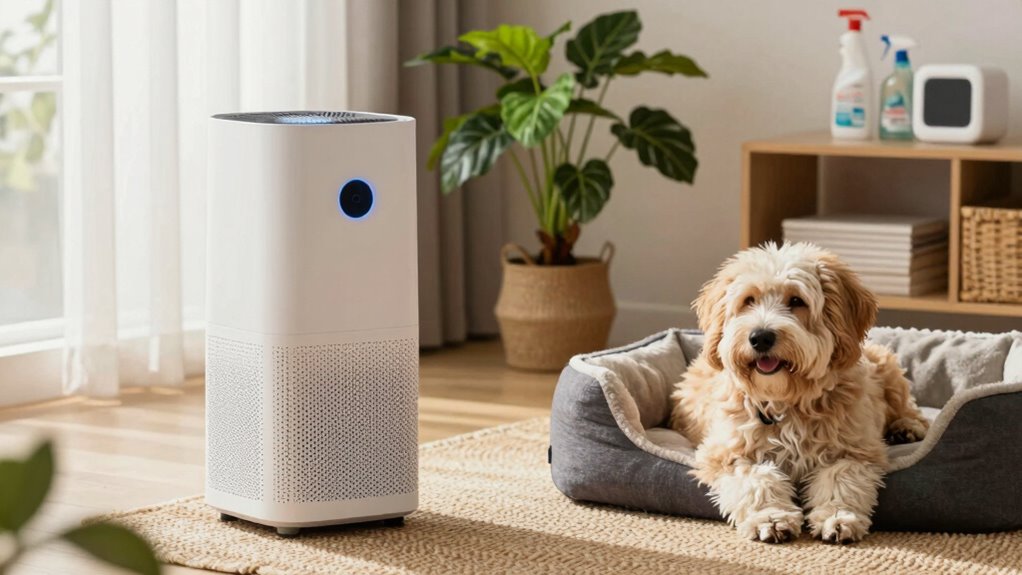
To build a pet-friendly air quality routine, start by regularly grooming your pets outdoors and washing their bedding to reduce dander. Use a HEPA-filter air purifier and set a schedule for keeping filters clean or replacing them every 6 to 12 months. Vacuum frequently with a HEPA-equipped vacuum and keep your home well-ventilated. Monitoring indoor air quality helps you adjust your routine for cleaner, healthier indoor air—discover more tips to improve your home environment.
Key Takeaways
- Choose an air purifier with a HEPA filter and set a regular schedule for filter replacement.
- Groom and bathe pets frequently to reduce dander and shedding indoors.
- Vacuum with a HEPA-filter vacuum regularly, especially on pet bedding and fabrics.
- Ensure proper ventilation and use air quality monitors to track indoor pollutant levels.
- Maintain consistent cleaning routines and device upkeep to sustain healthy indoor air quality.
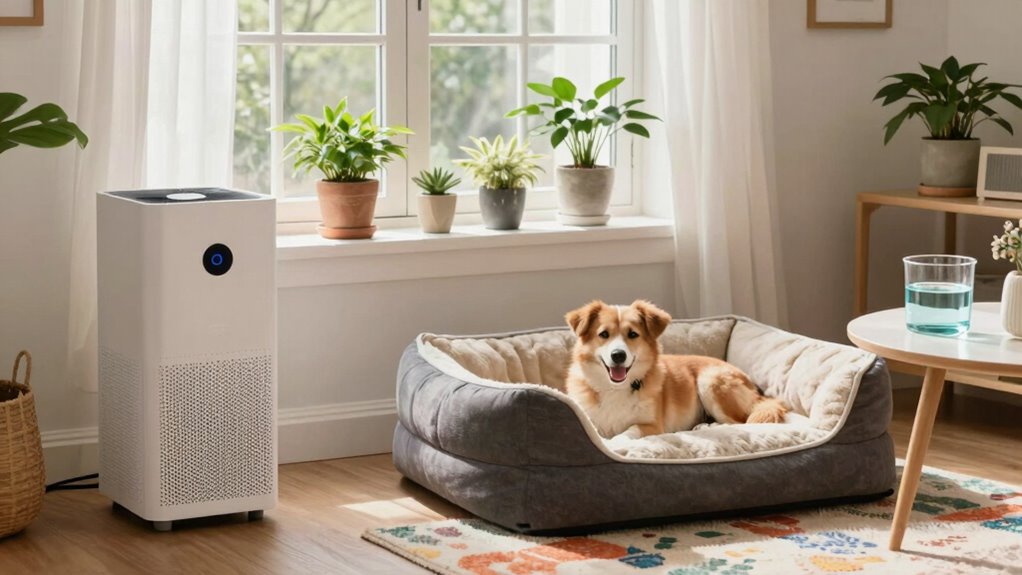
Maintaining good air quality at home becomes especially important when you share your space with pets, as their health can be affected by airborne pollutants. Pets shed fur, dander, and sometimes bring in pollen or dust from outside, all of which can contribute to indoor air pollution. To create a safe environment for your furry friends and yourself, you need a routine that minimizes pet allergens and keeps the air clean. One of the most effective tools in this effort is an air purifier. But simply plugging it in isn’t enough—you have to understand how to keep it running at its best through regular air purifier maintenance.
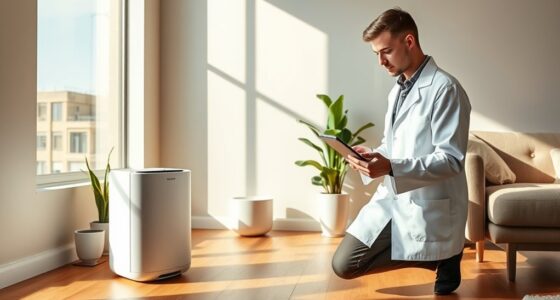
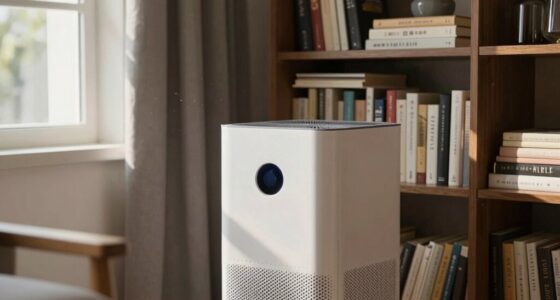
Start by choosing an air purifier with a HEPA filter, as these are proven to capture pet allergens effectively. Once you have your device, set a schedule for filter replacement, typically every 6 to 12 months, depending on usage and manufacturer recommendations. Regularly checking the filter helps guarantee it’s functioning properly and continues to trap pet dander, dust, and other airborne irritants. When replacing filters, dispose of used filters carefully to prevent releasing trapped allergens back into the air. Some air purifiers also have pre-filters or carbon filters, which should be cleaned or replaced periodically to maintain maximum effectiveness. Proper filter maintenance is essential for ensuring your air purifier continues to operate efficiently.
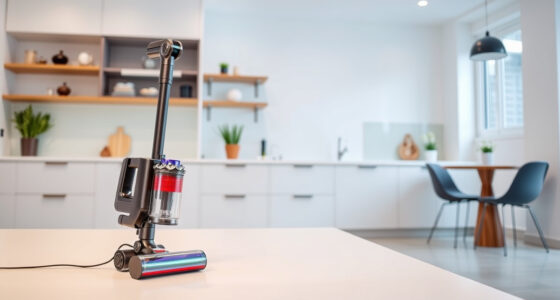
In addition to maintaining your air purifier, you should adopt daily habits that reduce pet allergens. Regularly grooming your pets minimizes shedding and dander. Brushing your pet outdoors prevents loose fur from spreading throughout your home. Bathing your pets on a routine basis also helps reduce dander buildup. Keep your home clean by vacuuming frequently with a vacuum equipped with a HEPA filter, which can trap pet hair and dander before they become airborne. Don’t forget to wash your pet’s bedding, toys, and any washable fabrics regularly to cut down on allergens lurking in those areas. Incorporating proper ventilation can further improve indoor air quality by reducing the concentration of airborne pollutants. Additionally, using air quality monitors can help you track and manage indoor pollutant levels more effectively. Regularly evaluating your home’s air quality can help identify problem areas and improve your routine over time.
Creating a pet-friendly air quality routine involves consistent attention. Make a habit of inspecting and replacing filters according to the manufacturer’s schedule, and stay vigilant about cleaning your home. Use air purifier maintenance as a key part of this routine, ensuring your device continues to operate efficiently. By combining good device upkeep with daily cleaning practices, you noticeably reduce pet allergens in your living space. This combined effort helps everyone breathe easier, keeping your home healthier and more comfortable for both you and your pets.
HEPA air purifier for pet allergens
As an affiliate, we earn on qualifying purchases.
As an affiliate, we earn on qualifying purchases.
Frequently Asked Questions
Can Certain Houseplants Improve Indoor Air Quality for Pets?
Certain houseplants can improve indoor air quality for pets by filtering toxins and increasing humidity, which benefits both humans and animals. However, you should consider toxicity concerns, as some plants are harmful to pets if ingested. Research plant benefits carefully and choose pet-safe options like spider plants or Boston ferns. Always keep potentially toxic plants out of your pet’s reach to guarantee a healthy, safe environment at home.
Are Air Purifiers Safe for All Types of Pets?
Air purifiers are generally safe for most pets, but you should consider Pet allergy management and different air purifier types. HEPA filters are effective and safe for homes with pets, helping reduce pet dander. Avoid ozone generators, as they can be harmful, especially for respiratory-sensitive pets. Always check product labels, and consult your vet if you’re unsure about specific air purifier types for your pets’ safety and health.
How Often Should I Replace Air Filters for Pet Safety?
You should replace your air filters every 1 to 3 months to guarantee pet-safe filtration and maintain ideal air quality. Regular air filter maintenance is essential because it prevents the buildup of pet dander, hair, and other allergens that could harm your pets. Keep an eye on filter condition, and if you notice reduced airflow or increased odors, replace it sooner. This routine keeps your home safe and comfortable for your furry friends.
Do Pet Dander and Odors Affect Indoor Air Quality?
Imagine tiny airborne allergens and stubborn odors as invisible clouds swirling around your home, affecting your indoor air quality. Pet dander and odors do impact it, making the air less fresh and potentially triggering allergies or asthma. Regularly cleaning, using air purifiers, and practicing odor control can help clear these invisible clouds, creating a healthier, more comfortable space where your pets and family breathe easier.
What Natural Remedies Help Reduce Pet Allergens Indoors?
Natural remedies like regular vacuuming with a HEPA filter, washing your pet’s bedding frequently, and using natural sprays with essential oils can help reduce pet allergens indoors. You can also try adding air purifiers with HEPA filters and using natural deodorizers, like baking soda, to absorb pet odors. Consistent allergen reduction routines make your home safer and more comfortable for both you and your pets.
Conclusion
By integrating these simple steps into your daily routine, you create a sanctuary where your pet can breathe freely and thrive. Imagine the gentle hum of an air purifier, the fresh scent of cleaned surfaces, and sunlight filtering through windows—each element working in harmony. With consistent effort, your home transforms into a haven of pure, pet-friendly air. Together, you and your furry friend can enjoy a healthier, happier life amidst the crisp, clean atmosphere you’ve cultivated.