To prevent your robot vacuum from chasing pet bowls and cords, keep sensors clean by wiping them regularly, and update the firmware for better obstacle detection. Use cord organizers and consider placing pet bowls in less accessible areas. Set virtual boundaries through your app to block off tricky zones. Proper home arrangement and regular sensor maintenance help the vacuum navigate smoothly and avoid unnecessary collisions. For more tips on optimizing your vacuum’s performance, keep exploring these strategies.

Get cleaning gear delivered free — and shop member deals
- Fast, free delivery on millions of items
- Access to Prime Big Deal Days deals on October 6–7
- Prime Video, Amazon Music and more included
Key Takeaways
- Use virtual boundaries or no-go zones via the vacuum’s app to restrict access around pet bowls and cords.
- Organize and secure cords with cord organizers or furniture barriers to prevent chasing.
- Place pet bowls and cords in less accessible areas or behind barriers to reduce attraction.
- Regularly clean sensors to ensure accurate obstacle detection and prevent misidentification of objects.
- Keep the vacuum’s navigation system updated and calibrated for reliable obstacle avoidance.
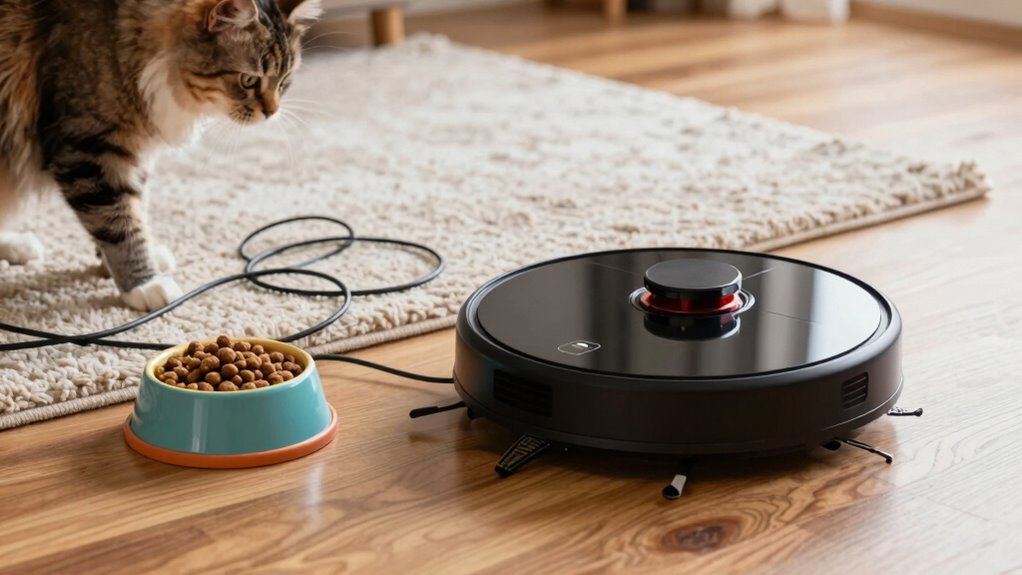
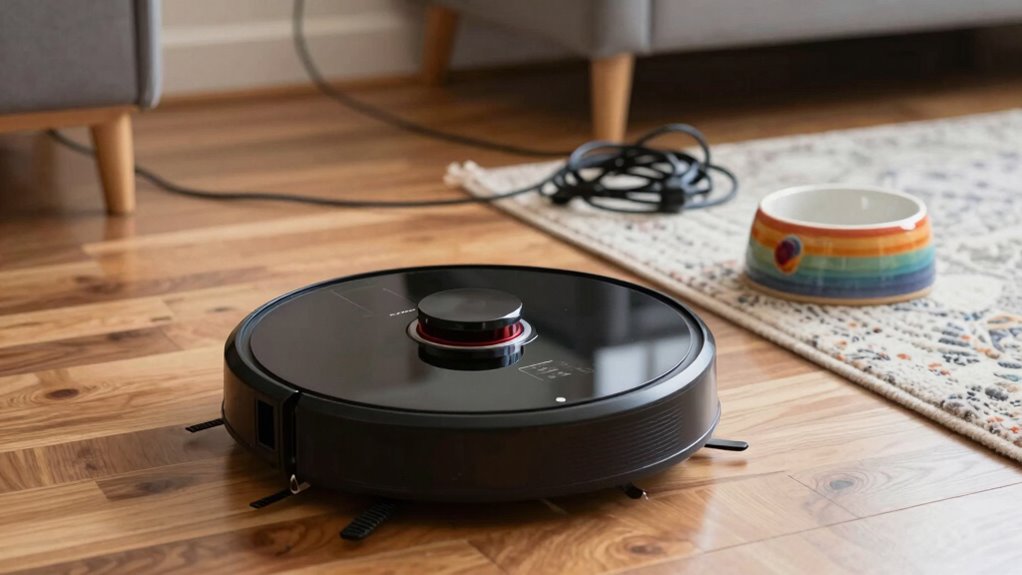
Have you ever wondered why your robot vacuum seems to chase after pet bowls and cords? It’s frustrating to see your device repeatedly bump into the same objects, especially when it’s supposed to be cleaning efficiently. The good news is that many of these issues stem from how your vacuum navigates your home. Modern robot vacuums are equipped with smart navigation systems, designed to map out your space and avoid obstacles. However, these systems aren’t foolproof. If your vacuum struggles with obstacle detection, it might fail to recognize pet bowls or cords as barriers, causing it to bump into or chase after them.
Modern robot vacuums use smart navigation but can struggle with obstacle detection, leading to repeated bumps and chasing household items.
To prevent this, start by understanding how smart navigation works. These systems use sensors, cameras, or laser-guided mapping to chart your rooms. When functioning correctly, they help the vacuum plan an ideal cleaning route and avoid objects in its path. Obstacle detection, on the other hand, is essential for preventing your vacuum from bumping into or chasing after items like pet bowls or loose cords. If your vacuum’s sensors aren’t properly calibrated or are obstructed by dust or pet fur, it might not detect obstacles accurately, leading to repeated collisions. Regularly inspecting and cleaning these sensors can significantly improve sensor performance.
One effective way to improve obstacle detection is to keep your vacuum’s sensors clean. Regularly wipe down the sensors with a soft, dry cloth to guarantee they aren’t blocked by dirt or pet hair. Also, consider strategically placing your pet’s bowls and cords in areas less accessible to the vacuum. Using cord organizers or furniture barriers can help guide the vacuum around these objects rather than into them. Additionally, many vacuums allow you to create no-go zones via companion apps. Use these features to designate areas with pet bowls or cords, preventing the vacuum from entering those spaces altogether.
Another tip involves training your vacuum to recognize and avoid specific objects. Some models come with features that allow you to manually mark obstacles or set virtual boundaries. By doing so, your vacuum learns which areas to steer clear of during cleaning cycles. If your vacuum uses smart navigation, ensure its mapping is updated regularly. An outdated map can cause it to misjudge obstacle locations, leading to repeated pursuits of pet bowls and cords. Maintaining sensor calibration is crucial to ensuring your device’s obstacle detection remains accurate over time. Regular firmware updates can also enhance obstacle detection capabilities. Additionally, keeping your device updated with the latest firmware can improve obstacle detection performance. Regularly inspecting and replacing worn sensors can also help maintain optimal sensor accuracy.
Ultimately, keeping your robot vacuum from chasing after pet bowls and cords involves a combination of good maintenance, strategic placement of objects, and leveraging the advanced features your vacuum offers. With proper obstacle detection and smart navigation, your device can clean more effectively without constantly bumping into or chasing after everyday household items.
Frequently Asked Questions
Can Robot Vacuums Be Programmed to Avoid Specific Objects Permanently?
Yes, you can program robot vacuums to avoid specific objects permanently using obstacle sensors and object recognition. Modern models learn to detect and remember objects over time, adjusting their paths accordingly. You can also set virtual boundaries or use mapping features to exclude certain areas or items. Regularly updating the vacuum’s software helps improve its obstacle avoidance capabilities, ensuring it stays clear of pet bowls, cords, and other designated objects.
Are There Specific Robot Vacuum Models Better at Avoiding Pet Bowls?
Did you know some robot vacuums are 30% better at avoiding pet bowls? Models with advanced dust sensors and obstacle detection excel at this. The iRobot Roomba s9+ and Roborock S7 are top choices, offering smart mapping and object avoidance. These vacuums efficiently handle pet hair and recognize obstacles, making them ideal for homes with bowls and cords. Choose one with precise sensors for peak pet-friendly cleaning.
How Does a Robot Vacuum Detect and Differentiate Cords From Other Objects?
A robot vacuum detects and differentiates cords from other objects using obstacle sensors and advanced detection technology. These sensors recognize differences in shape, size, and material, alerting the vacuum to avoid cords. Some models also use cameras or laser sensors for better object detection. This combination helps the vacuum navigate efficiently, prevent tangling, and avoid damaging cords or other fragile items during cleaning.
Can Robot Vacuums Be Customized With Additional Sensors for Better Navigation?
Sensor upgrades and customization options transform your robot vacuum into a tailored cleaning tool. You can add advanced sensors that enhance navigation, avoid obstacles, and prevent chasing pet bowls or cords. By customizing your device with these enhancements, you boost its brilliance in boundary detection and obstacle avoidance. Ultimately, these additions make your vacuum more versatile, vigilant, and valuable, ensuring cleaner floors and a happier, hassle-free home.
What Are the Best Maintenance Tips to Prevent Vacuum Malfunctions?
To prevent vacuum malfunctions, stick to a regular cleaning schedule by emptying the bin and cleaning filters often. Check brushes and sensors for debris to guarantee smooth operation. Prioritize battery care by fully charging after each use and avoiding complete discharges. Keep your vacuum’s components in good shape, and update its software when needed. These simple steps help extend your vacuum’s lifespan and maintain superior cleaning performance.
Conclusion
By taking these simple steps, you’ll prevent your robot vacuum from turning your home into a chaotic chase scene. Blocking cords and relocating pet bowls might seem small, but they’re powerful enough to keep your vacuum on its cleaning path—without turning your house into a wild obstacle course. With a little effort, you’ll turn your cleaning routine into a smooth, effortless dance rather than a frantic game of chase, saving you time and frustration.
Evergreen bestsellers Picks
bestsellers
As an affiliate, we earn on qualifying purchases.