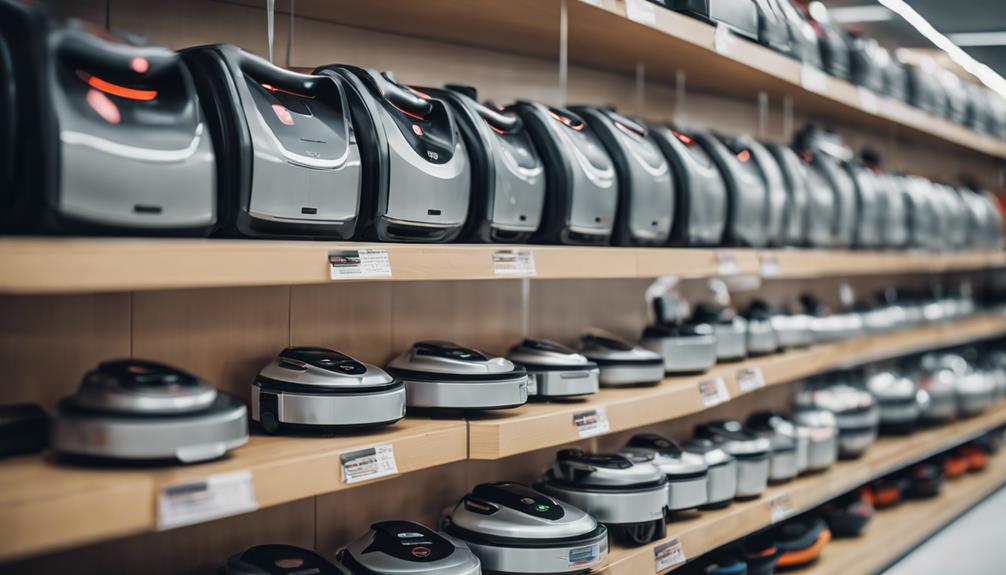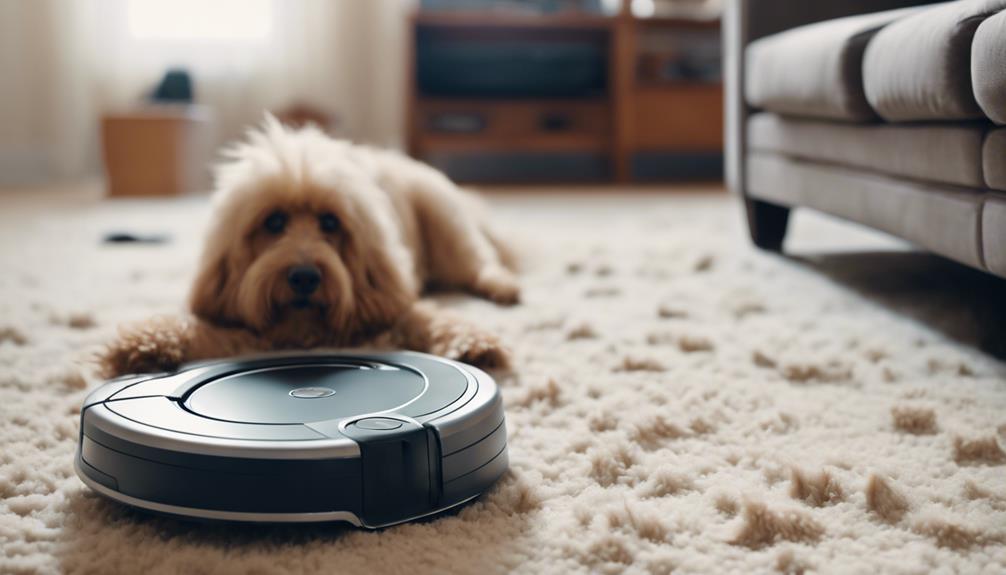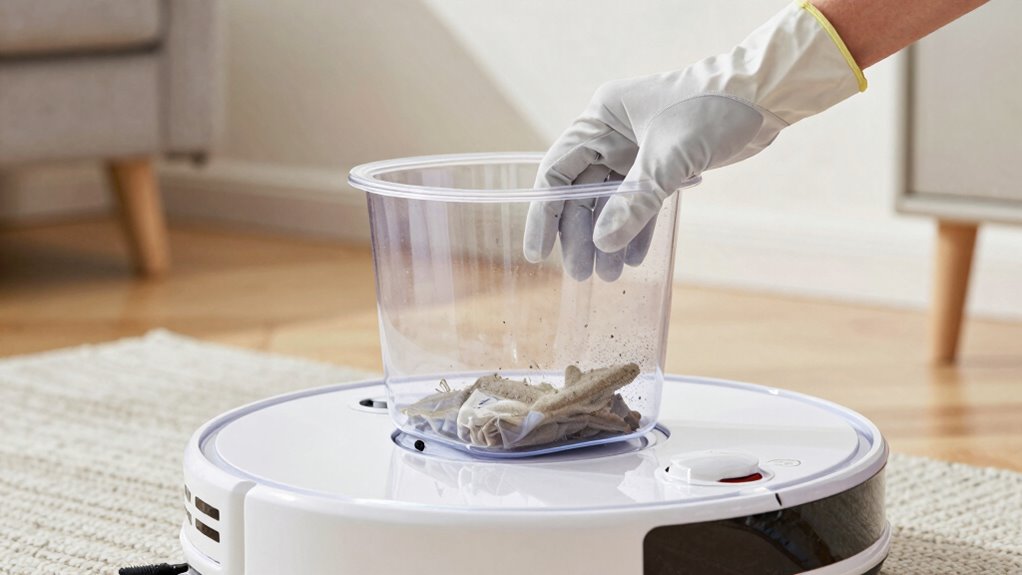
To clean your robot vacuum’s dust bin between runs, regularly remove and empty it to prevent clogs. Use a soft brush or cloth to wipe interior surfaces, focusing on filters and vents. Check if the filter is washable; rinse and thoroughly dry it before reinstalling. Keeping the dust bin and filters clean ensures maximum suction and performance. For more tips on maintaining your robot’s efficiency, keep exploring how to keep all components in top shape.

Get cleaning gear delivered free — and shop member deals
- Fast, free delivery on millions of items
- Access to Prime Big Deal Days deals on October 6–7
- Prime Video, Amazon Music and more included
Key Takeaways
- Remove the dust bin and empty it into the trash, ensuring debris is fully cleared.
- Use a soft brush or cloth to wipe interior surfaces, filters, and vents for thorough cleaning.
- Rinse washable filters with water, then dry completely before reinserting.
- Check and replace HEPA filters as recommended to maintain optimal filtration.
- Inspect for blockages or dust buildup to ensure unobstructed airflow and suction.
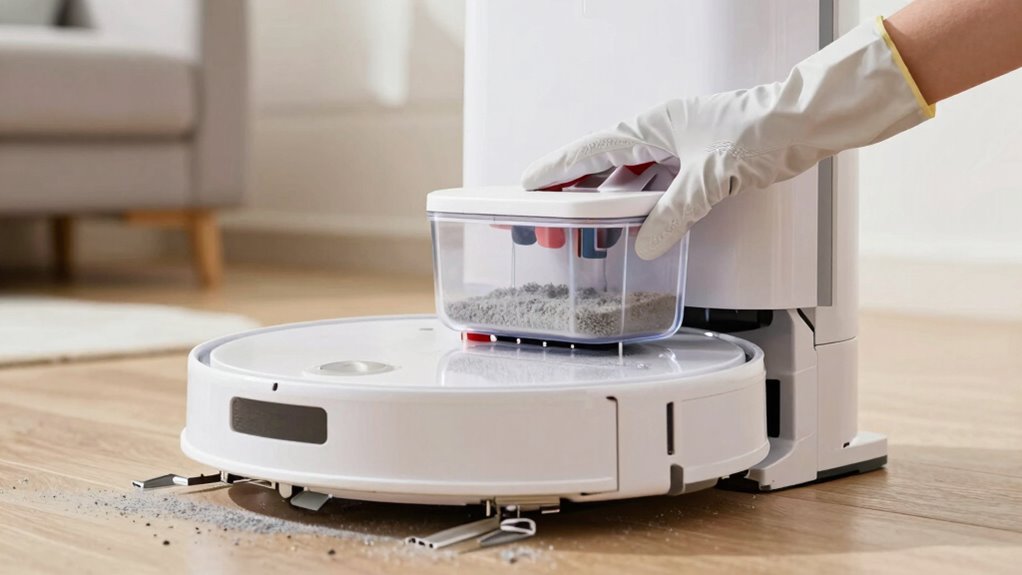
Cleaning your robot vacuum’s dust bin between runs is vital for maintaining peak performance and guaranteeing your home stays clean. When you empty the dust bin regularly, you prevent clogs and keep suction power at its best. However, it’s not just about dumping out debris; you also need to pay attention to other maintenance tasks like battery upkeep and sensor calibration to keep your device running smoothly over time. Regular cleaning and maintenance also help to extend the lifespan of your robot vacuum’s components and ensure consistent cleaning results. Start by removing the dust bin from your robot and emptying its contents into the trash. Use a soft brush or cloth to wipe away dust and debris from the bin’s interior, especially around the filter and vents. This prevents buildup that can reduce airflow and suction. When cleaning the filter, check if it’s washable—if so, rinse it gently with water and let it dry completely before reinstalling. A clean filter guarantees maximum airflow, which is essential for maintaining strong cleaning performance. If your robot has a HEPA filter, replace it periodically as recommended by the manufacturer to keep allergens and dust out of the air. Additionally, ensuring your robot’s airflow system is unobstructed is crucial for optimal performance. Regularly inspecting and maintaining the filter system can prevent airflow restrictions and help your robot operate efficiently. While the dust bin is out, it’s a good opportunity to perform sensor calibration if your robot’s navigation seems off or it’s missing spots. Dust and debris can interfere with optical or infrared sensors, leading to navigation errors. Carefully wipe the sensors with a soft, dry cloth, making sure they’re free of dust, hair, or smudges. Some models allow you to recalibrate sensors through the app—check your user manual for specific instructions. Proper sensor calibration helps your robot detect obstacles accurately and navigate efficiently, reducing missed spots or collisions. It also helps maintain navigation accuracy, which can be compromised by dust buildup. Additionally, ensuring your robot’s battery health is optimal will contribute to better performance and longer cleaning sessions. Battery maintenance is another vital aspect to contemplate. Even though it’s not directly related to cleaning the dust bin, a well-maintained battery ensures your robot runs longer and performs better. Keep the battery charged according to the manufacturer’s guidelines; avoid letting it drain completely or keeping it constantly plugged in for extended periods. If your robot has a removable battery, inspect it for signs of swelling or damage and replace it if necessary. Proper battery care extends the lifespan of your device and guarantees it’s ready for a thorough clean every time.
Frequently Asked Questions
Can I Clean the Dust Bin With Water?
You shouldn’t clean the dust bin with water because most robot vacuum dust bins are not waterproof. Water cleaning can damage the bin and affect its performance. Instead, for dust bin maintenance, you should empty it regularly and wipe it with a dry or slightly damp cloth. This keeps it clean without risking water damage. Always check your vacuum’s manual for specific cleaning instructions to guarantee proper care.
How Often Should I Replace the Dust Bin?
Think of your dust bin as the heart of your robot vacuum—its lifespan depends on how well you care for it. Generally, you’ll want to replace the dust bin every 6 to 12 months, depending on usage and wear. Keep an eye out for cracks, persistent odors, or decreased capacity, as these signs mean it’s time for a replacement. Regular checks ensure your vacuum runs smoothly and maintains peak cleaning power.
Is It Necessary to Remove Filters During Cleaning?
Yes, you should remove filters during cleaning to prevent dust buildup and guarantee proper filter maintenance. Regularly taking out and gently cleaning the filters helps maintain suction power and prolongs their lifespan. Be careful not to damage the filter material, and wash or replace filters as recommended by your vacuum’s manufacturer. This routine keeps your robot vacuum working efficiently and maintains clean air quality in your home.
Can Cleaning the Bin Improve Vacuum Performance?
Cleaning the bin can dramatically boost your vacuum’s performance, preventing dust buildup and airflow blockage that turn your cleaning hero into a sluggish mess. If you ignore this essential step, your vacuum might struggle to pick up dirt, leaving your floors less than spotless. Regularly emptying and cleaning the bin guarantees peak airflow, helps maintain suction power, and makes your robot vacuum work like it’s brand new, every single time.
What Tools Help Clean Hard-To-Reach Dust?
To clean hard-to-reach dust, you should use a soft brush to gently loosen debris without damaging components. An air compressor is also helpful to blow out stubborn dust from tight spots, ensuring thorough cleaning. These tools work together to remove trapped dust effectively, improving your robot vacuum’s performance. Always use gentle pressure and avoid excessive force to prevent damaging delicate parts.
Conclusion
By giving your robot vacuum’s dust bin a quick clean between uses, you keep it running smoothly—like a well-oiled machine. Think of it as giving your trusty sidekick a spa day; a little maintenance goes a long way. Not only will this extend its lifespan, but you’ll also enjoy cleaner floors without the hassle. So, take a minute to tidy up the dust bin, and your robot will thank you with exceptional performance every time.
Fall Picks
fall essentials
As an affiliate, we earn on qualifying purchases.