Using the wrong deodorizing methods can trap odors and make them worse over time. Common mistakes include applying too much deodorizer, relying on masking scents instead of neutralizing smells, and not thoroughly cleaning before deodorizing. Oversaturating carpets can cause residues that hold odors, while uneven coverage leaves spots untreated. Avoid these pitfalls to keep your carpet fresh longer. Keep going for tips on how to get the best results and prevent odors from coming back.
Key Takeaways
- Overusing deodorizer or applying too much can cause residues that trap odors and lead to worse smells over time.
- Masking odors with strong scents without eliminating the source can make underlying smells reappear more intensely.
- Failing to thoroughly clean carpets before deodorizing leaves deep-seated odors untreated, causing them to return or worsen.
- Uneven application or missing spots results in inconsistent odor neutralization, allowing smells to re-emerge.
- Ignoring manufacturer guidelines and proper techniques can damage carpet fibers and reduce deodorizer effectiveness, worsening odors long-term.
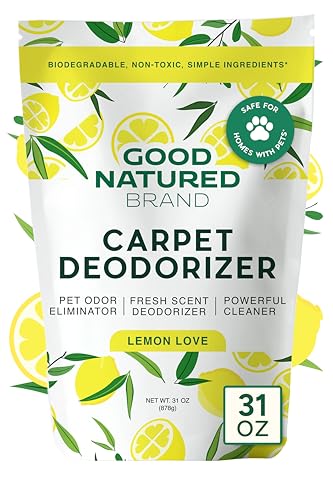
Good Natured Brand | Carpet Deodorizer & Freshener Powder | 31 oz Pet Odor Eliminator for Strong Odor & Pet Urine | Fresh Natural Lemon Scent | Safe for Homes with Pets
Powerful Deodorizing & Lasting Freshness – Harness the effective cleaning power of GNB's Carpet Freshener Deodorizer. This superior…
As an affiliate, we earn on qualifying purchases.
As an affiliate, we earn on qualifying purchases.
How to Choose the Right Carpet Deodorizer and Mistakes to Avoid
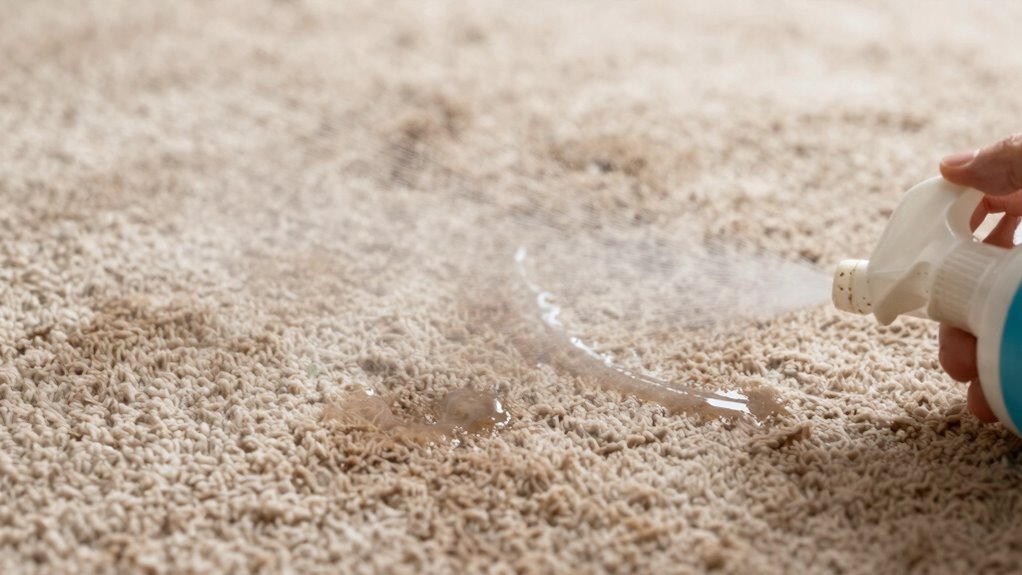
Choosing the right carpet deodorizer is essential to effectively eliminate odors without damaging your carpet. When choosing products, look for those specifically formulated for carpets and compatible with your material. Avoid generic or overly harsh options, as they can cause discoloration or fiber damage. Scent masking might seem helpful, but it only covers up odors temporarily; true deodorization neutralizes smells instead. Be cautious about deodorizer scents—strong fragrances can sometimes worsen odors or cause allergic reactions. Always read labels carefully to ensure the product is safe for your carpet type. Testing a small area first helps prevent damage. Additionally, understanding the role of proper ventilation can help improve the effectiveness of deodorizing treatments and prevent lingering smells. Proper ventilation can also aid in dissipating odors more quickly, ensuring a fresher environment. Incorporating correct application techniques can further enhance results and avoid common mistakes that leave odors lingering or even harm your carpet’s integrity. Using appropriate cleaning tools alongside deodorizer applications can also maximize odor removal and protect your carpet fibers. Moreover, selecting a deodorizer with enzymatic properties can be particularly effective at breaking down organic odors and providing long-lasting freshness.

Resolve Professional Strength Spot and Stain Carpet Cleaner, Carpet Cleaner, Carpet Cleaner Solution, 32 Fl Oz
NEUTRALIZES ODORS and lifts out stains
As an affiliate, we earn on qualifying purchases.
As an affiliate, we earn on qualifying purchases.
Pre-Cleaning Steps You Must Do Before Deodorizing
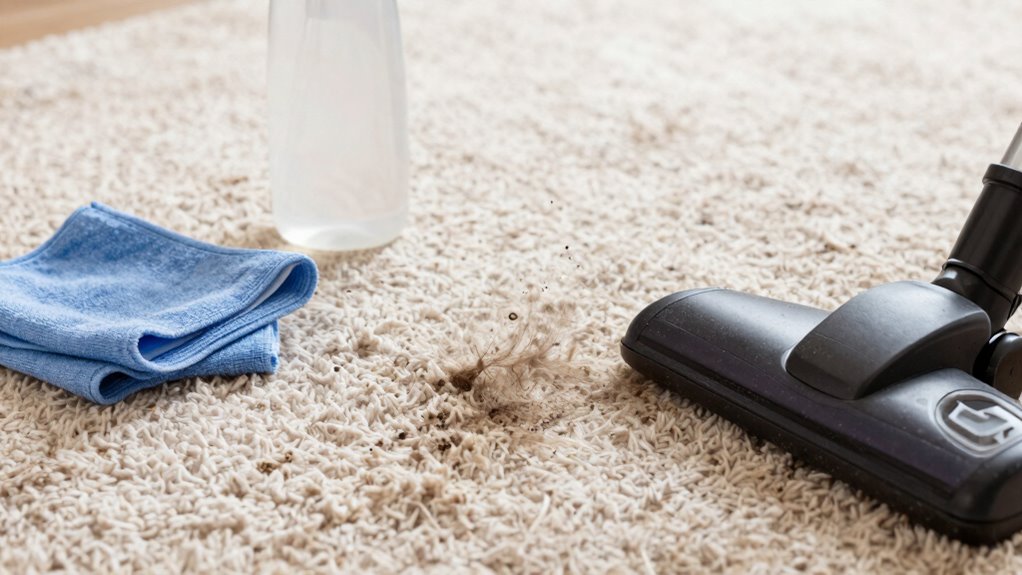
Before applying a deodorizer, it’s important to thoroughly clean your carpet to remove dirt, dust, and debris. Start by vacuuming thoroughly to pick up loose particles that can trap odors and hinder deodorizer effectiveness. Pay special attention to high-traffic areas and edges. Next, remove any stains, since lingering spots can emit foul smells even after deodorizing. Use an appropriate stain remover and ensure the area is fully dry before proceeding. This pre-cleaning step guarantees that odors aren’t hidden beneath dirt or stains, allowing the deodorizer to work more efficiently. Additionally, recognizing the importance of proper cleaning techniques can help prevent odor buildup in the future. Regular carpet maintenance can further reduce the likelihood of odors returning. Incorporating routine cleaning schedules helps in maintaining a fresh environment and prevents the accumulation of odor-causing particles. Implementing deep cleaning methods periodically can also enhance odor control and prolong the freshness of your carpet. Skipping these steps can cause odors to persist or worsen over time. Proper pre-cleaning, including thorough vacuuming, is essential to remove loose dirt that can trap odors and reduce deodorizer effectiveness. Proper pre-cleaning sets a solid foundation for effective deodorizing and long-lasting freshness.

Bissell Commercial Bissell BigGreen Commercial BG10 Deep Cleaning 2 Motor Extractor Machine
Country Of Origin : China
As an affiliate, we earn on qualifying purchases.
As an affiliate, we earn on qualifying purchases.
Why Applying Deodorizer Incorrectly Causes Smells to Come Back
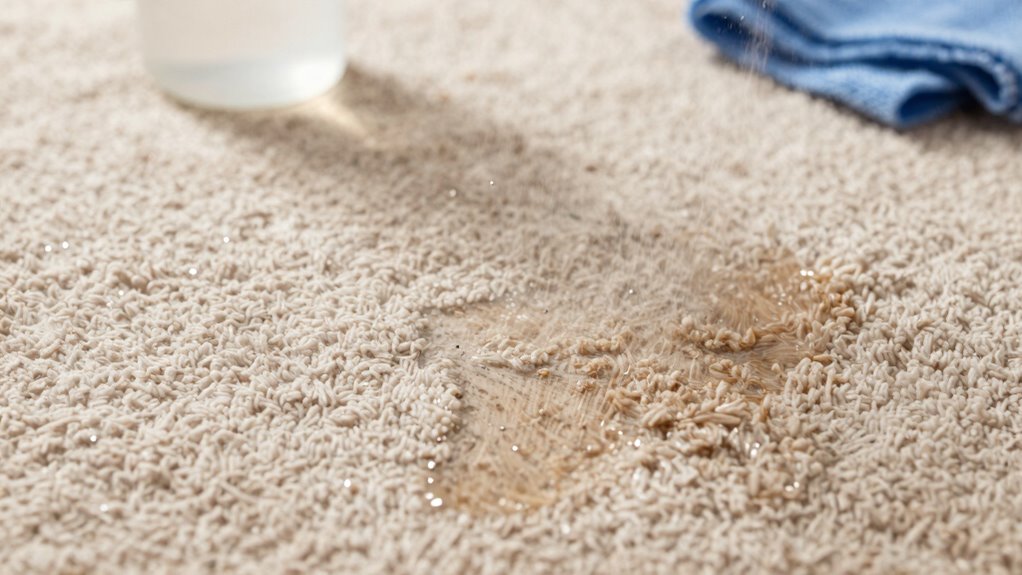
Applying deodorizer incorrectly can cause odors to return because it often means the product isn’t reaching all the affected areas or isn’t used in the right way. When you spray too little, the deodorizer won’t neutralize deep-seated smells. Conversely, overapplication can lead to deodorizer buildup, which traps odors and causes them to re-emerge. Relying solely on fragrance masking might temporarily hide odors but won’t eliminate them. Proper application involves thorough coverage and allowing the product to penetrate fibers. Additionally, understanding effective application techniques ensures the deodorizer works as intended. Incorporating auditory feedback during application can help ensure even coverage and technique accuracy, leading to better results. Using the correct application tools can also improve coverage and effectiveness. To achieve optimal results, it’s essential to understand the proper methods for deodorizer application, which can prevent common mistakes and ensure persistent odor removal. Employing test methods to evaluate odor elimination can also help confirm the effectiveness of your deodorizing efforts.
Good Natured Brand | Carpet Deodorizer & Freshener Powder | 31 oz Pet Odor Eliminator for Strong Odor & Pet Urine | Fresh Natural Lemon Scent | Safe for Homes with Pets
Powerful Deodorizing & Lasting Freshness – Harness the effective cleaning power of GNB's Carpet Freshener Deodorizer. This superior…
As an affiliate, we earn on qualifying purchases.
As an affiliate, we earn on qualifying purchases.
Why Cover-Up Scents Won’t Eliminate Odors and How to Truly Get Rid of Them
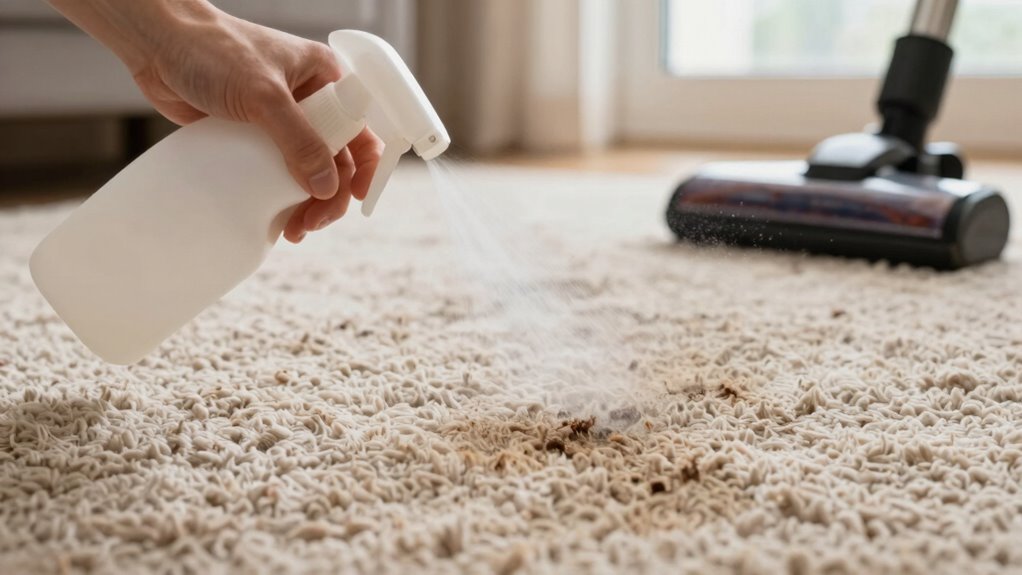
Cover-up scents may hide odors temporarily, but they don’t eliminate the source. Relying on them can make persistent smells worse over time. To truly get rid of odors, you need effective cleaning methods that target the root cause. Using proper filtration systems and regular deep cleaning can help eliminate odor-causing particles more effectively. Incorporating advanced air purification technology can further improve odor removal by capturing microscopic particles that traditional filters might miss. Regular maintenance of ventilation systems ensures continuous removal of airborne contaminants, reducing the likelihood of odor recurrence. Implementing odor-neutralizing agents during cleaning can also help break down and eliminate residual smells rather than just masking them.
Limitations of Cover-Ups
While spray-on scents might temporarily mask unpleasant odors, they don’t actually eliminate the smell. Relying on scent layering causes you to cover up rather than address the root problem. This approach can lead to a false sense of freshness, but odors linger beneath the surface. Cover-ups only hide the smell temporarily and often make it worse when the scent fades. Utilizing educational resources can help you understand effective odor removal techniques instead of relying solely on scents. Understanding odor elimination methods can lead to more lasting solutions that prevent odors from returning.
Effective Odor Solutions
To truly eliminate odors from your carpet, you need to go beyond masking them with scents and focus on removing the source. Effective odor solutions rely on odor absorption, which involves using products that trap and neutralize odor molecules rather than just covering them up. Enzymatic cleaners are a great choice—they break down organic stains and odors at their root. Additionally, avoid fragrance layering, where multiple scents are layered over the original odor, making it harder to detect and eliminate the problem. Instead, choose a single, neutralizing product designed for carpets. Proper cleaning methods, like hot water extraction, combined with targeted odor neutralizers, ensure you remove odors completely—leaving your carpet fresh and odor-free without just hiding the smell. Incorporating odor absorption techniques can further enhance the effectiveness of your odor elimination efforts.
How Much Deodorizer Should You Use for Best Results
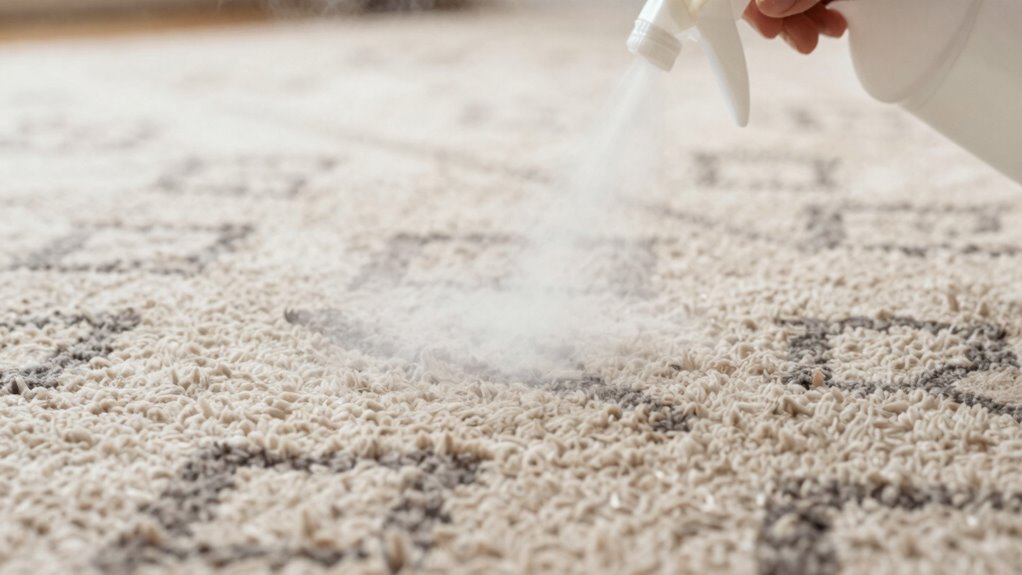
To get the best results, you need to use the right amount of deodorizer and apply it correctly. A proper spray technique guarantees even coverage without wasting product. Remember, overapplying can lead to a sticky residue and less effective odor control. Using the correct application method ensures you cover the carpet evenly and avoid common mistakes. Proper product distribution is essential for achieving long-lasting freshness. Additionally, understanding odor absorption can help you select the most effective deodorizing approach. Applying deodorizer in controlled amounts helps prevent buildup and maintains a fresh scent over time.
Proper Spray Technique
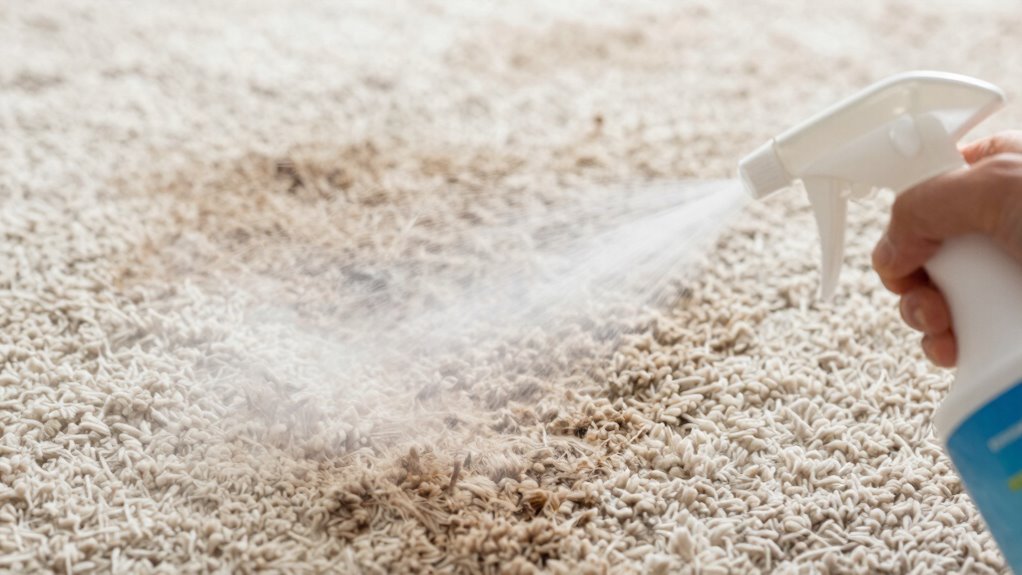
Using the right amount of deodorizer is essential for effective carpet freshening. Spray evenly, keeping the nozzle about 12 inches from the surface. Focus on high-traffic areas and avoid oversaturating, which can lead to lingering odors. Proper application timing ensures the deodorizer settles into fibers, maximizing scent absorption. When choosing a scent, consider subtle fragrances that won’t clash with the room’s existing aromas. To visualize, here’s a quick guide:
| Application Timing | Scent Selection | Spray Technique |
|---|---|---|
| After cleaning | Light, fresh scents | Even, controlled spray |
| During regular cleaning | Neutral or unscented | Avoid heavy layering |
| When odors persist | Complementary scents | Cover entire surface |
Mastering spray technique helps odors fade, not intensify.
Avoid Overapplication
Applying too much deodorizer can do more harm than good, as oversaturation can trap odors rather than eliminate them. When you use excessive product, it may settle into carpet stains or cling to pet hair, making odors worse over time. Instead, spray lightly and evenly, focusing on affected areas without overdoing it. This ensures the deodorizer penetrates fibers properly, breaking down odor sources without leaving residues that trap smells. Remember, a little goes a long way—using too much can lead to sticky patches or an overpowering scent that masks, rather than removes, odors. Proper application not only improves odor control but also helps avoid the need for repeated treatments, saving you time and money. Always follow the manufacturer’s instructions for the best results.
Long-Term Carpet Maintenance Tips to Keep Your Home Fresh
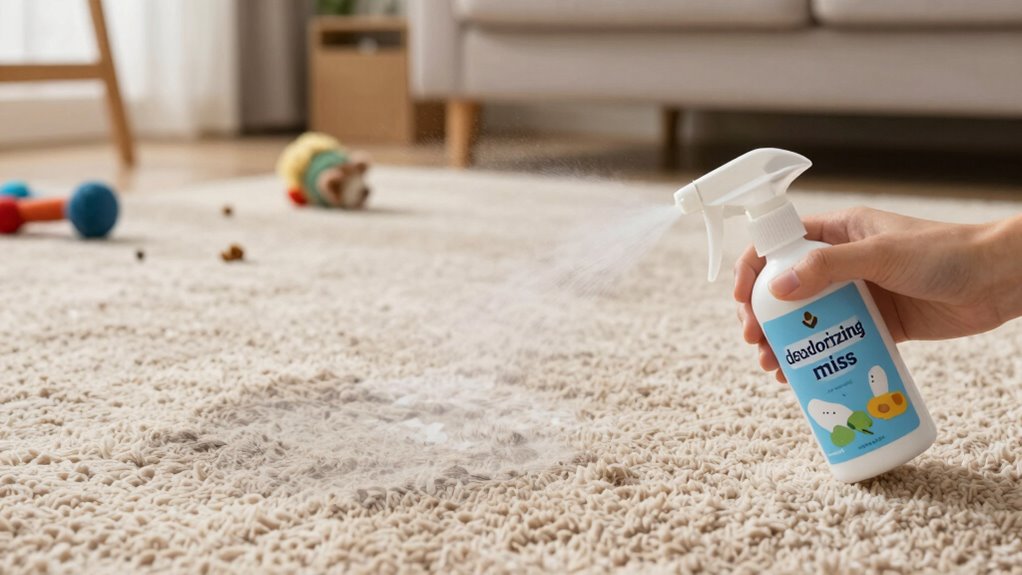
Regularly maintaining your carpets is essential for keeping your home smelling fresh and looking clean over the long term. Knowing your carpet fiber types helps you choose proper cleaning methods, preventing damage and odors. Consistent vacuuming removes surface dirt, reducing odor buildup. Prompt pet stain removal is critical; act quickly to prevent stains from setting and causing lingering smells. Additionally, deep cleaning every 6-12 months with appropriate products keeps fibers fresh. Consider professional cleaning for stubborn stains or deep-seated odors. Remember, a well-maintained carpet doesn’t just look good—it smells better and lasts longer.
- Understand your carpet fiber types before cleaning.
- Regularly vacuum and spot clean pet stains.
- Schedule professional deep cleaning periodically.
- Use appropriate cleaning products to avoid damage.
Frequently Asked Questions
Can Natural Deodorizing Methods Be as Effective as Chemical Products?
Natural alternatives can be quite effective, but they often don’t match the strength of chemical comparison products for stubborn odors. You might find that natural methods like baking soda, vinegar, or essential oils work well for light smells, but chemical products tend to provide faster, longer-lasting results. If you prefer a natural approach, be patient and consistent, and you’ll see improvements without the harsh chemicals.
How Often Should I Deodorize My Carpets for Optimal Freshness?
You should deodorize your carpets every 4 to 6 weeks for ideal freshness. Using DIY remedies like baking soda or vinegar can be effective, but for stubborn odors, store-bought solutions may work better. Regular deodorizing prevents odors from settling deep into the fibers, reducing the chances of them coming back worse. Consistency is key—sticking to a routine helps keep your carpets smelling fresh and clean.
Are There Specific Deodorizer Ingredients to Avoid?
You should avoid deodorizer chemicals with strong fragrances that mask odors instead of neutralizing them. These perfumes might seem effective initially but can trap odors, causing them to come back worse. Fragrance masking chemicals create a false sense of freshness, making it harder to identify lingering smells. Instead, look for natural, odor-neutralizing ingredients like baking soda or enzymes, which eliminate odors without adding harmful or overpowering chemical scents.
Does Carpet Type Affect Deodorizer Effectiveness?
Yes, your carpet type affects deodorizer effectiveness. For example, carpet fiber like wool or nylon responds differently to deodorizing agents. Stain-resistant carpets often have protective coatings that can hinder deodorizer penetration, reducing effectiveness. Always check your carpet’s fiber type and manufacturer recommendations before applying a deodorizer. Using the wrong product can trap odors instead of eliminating them, so tailor your approach based on your carpet’s specific fiber and stain resistance features.
Can Pet Odors Be Completely Eliminated With Deodorizing?
Think of pet odor removal like trying to clear a foggy window; sometimes, the smell seems gone but lingers. You can’t always fully eliminate pet odors with deodorizing alone, especially if pet accidents seep deep into the fibers. Natural alternatives like baking soda or vinegar help, but for complete removal, professional treatments are often best. Regular cleaning and addressing accidents promptly make a big difference in keeping odors at bay.
Conclusion
To keep your carpets smelling fresh and odor-free, avoid common deodorizing mistakes like skipping pre-cleaning or overusing products. Think of deodorizer as a fresh coat of paint—you need a clean surface first for it to work its best. When you choose the right method and apply it correctly, odors won’t sneak back like unwelcome guests. Stay consistent with maintenance, and your carpets will stay welcoming and fresh, just like a breath of clean air.