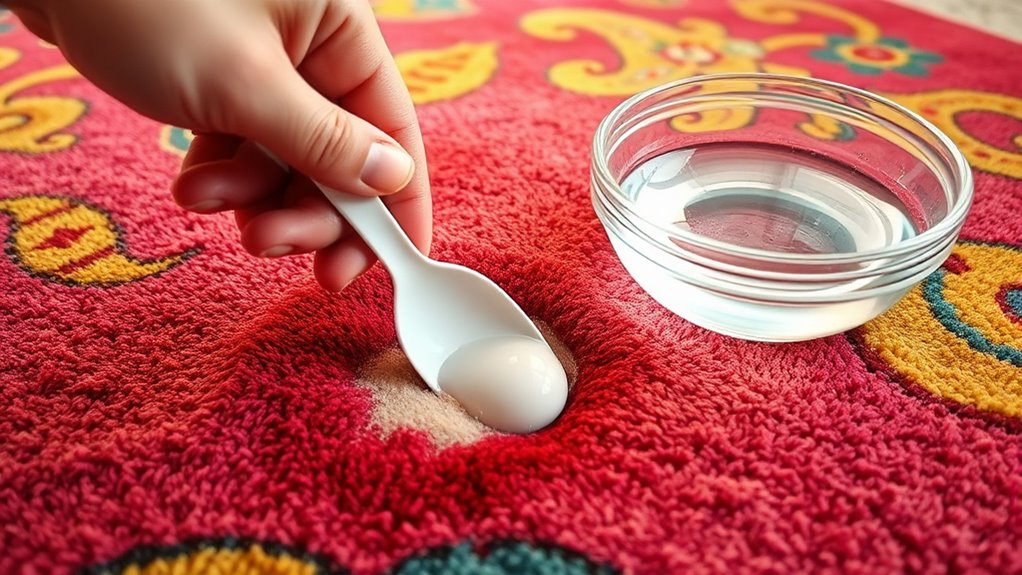

To remove high-traffic carpet stains with vinegar and a stiff spoon, start by blotting the stain and spraying a solution of equal parts white vinegar and water onto it. Let it sit for several minutes to loosen dirt. Gently scrape the stain with the stiff spoon, lifting the debris without damaging fibers. Blot again to absorb loosened dirt. Keep applying vinegar and scraping until the stain fades—more effective tips follow.
Key Takeaways
- Blot excess stain and spray a vinegar-water solution onto the high-traffic area to loosen embedded dirt.
- Use a stiff spoon or scraper to gently lift and dislodge stubborn or dried stains from carpet fibers.
- Repeat application of vinegar solution and scraping until the stain begins to fade or is fully removed.
- Blot the area with a clean cloth afterward to lift loosened dirt and residual stain particles.
- Consistently repeat the process for persistent stains, especially in high-traffic zones, for better results.

Carpet stains can be stubborn, but with the right approach, you can restore your carpet’s appearance quickly. High-traffic areas tend to accumulate dirt, grime, and spills, making stain removal more challenging. When it comes to pet stain removal, quick action is essential to prevent odors and permanent marks. Using vinegar and a stiff spoon is an effective method to tackle these stubborn stains, especially when combined with consistent stain prevention tips.
Start by blotting the stain with a clean cloth or paper towel to soak up as much of the spill as possible. Avoid rubbing, as this can push the stain deeper into the fibers. Once you’ve absorbed the excess liquid, mix a solution of equal parts white vinegar and water. Vinegar’s natural acidity helps break down stains and neutralize odors caused by pets, making it a perfect choice for pet stain removal. Spray or pour the vinegar solution directly onto the stained area, ensuring full coverage. Allow it to sit for about 5-10 minutes to loosen the stain particles and any residual pet odors.
Next, take a stiff spoon or a scraper and gently lift the stain from the carpet fibers. This method works well for dried or embedded stains that have set in high-traffic zones. Be careful not to press too hard, as you risk damaging the carpet fibers. After scraping, use a clean cloth to blot the area again, lifting away loosened dirt and stain remnants. If the stain persists, repeat the vinegar application and scraping process until the stain shows signs of fading.
In addition, understanding the cycle of breakups and how recurring issues can impact your emotional well-being can help you approach stain removal with patience and resilience, making the process less stressful.
Prevention tips are just as important as removal techniques. Regularly vacuum high-traffic areas to reduce the accumulation of dirt and prevent stains from setting. Use doormats at entrances to minimize dirt and moisture brought in by shoes and pets. Consider applying a protective carpet sealant in high-traffic zones, which can make future stains easier to clean. Additionally, train pets to avoid certain areas or use designated spaces, reducing the likelihood of future pet stains. Promptly cleaning spills and addressing accidents as soon as they happen can considerably improve stain removal results.
Incorporating these stain prevention tips into your routine will save you time and effort in the long run. Remember, the key to successful stain removal, especially pet stains, is patience and consistency. Vinegar and a stiff spoon are simple, cost-effective tools that can help you maintain a fresh-looking carpet even in the most heavily trafficked spots. With a little effort, you can keep your carpets looking clean and inviting despite ongoing foot and pet traffic.
vinegar carpet stain remover
As an affiliate, we earn on qualifying purchases.
As an affiliate, we earn on qualifying purchases.
Frequently Asked Questions
Can Vinegar Damage Different Types of Carpet Fibers?
Vinegar generally won’t damage most carpet fibers if used properly, but you should consider fiber compatibility and stain removal safety first. For delicate fibers like silk or wool, test a small hidden area before applying vinegar directly. For durable fibers like nylon or polyester, vinegar is usually safe. Always dilute vinegar and avoid excessive use to prevent potential damage. This guarantees effective stain removal without risking fiber harm.
How Long Should Vinegar Sit on a Stain Before Scrubbing?
You should let vinegar dwell on the stain for about 5 to 10 minutes to allow it to penetrate and loosen the stain. This dwell time helps vinegar break down the stain, reducing its penetration into the fibers. After that, gently scrub the area with a stiff spoon or brush, ensuring the vinegar has had enough time to work without risking damage or over-saturation. Patience maximizes stain removal success.
Is This Method Effective on Old or Set-In Stains?
This method isn’t very effective on old or set-in stains because vinegar’s effectiveness diminishes over time. If the stain has been there for a long time, the stain longevity makes it tougher to remove with vinegar alone. For stubborn, old stains, you might need stronger cleaning solutions or professional help. Vinegar works best on fresh stains, so acting quickly increases your chances of successful removal.
Are There Any Carpets That Shouldn’t Be Cleaned With Vinegar?
Certain carpets, especially delicate or wool fibers, shouldn’t be cleaned with vinegar because of potential damage, color fading, or fiber deterioration. Instead, you might consider vinegar alternatives like baking soda or specialized carpet cleaners that prioritize fiber safety. Always check your carpet’s care label, test any cleaning solution on a hidden area first, and prioritize carpet fiber safety to prevent long-term damage.
Can I Use This Technique on Delicate or Wool Carpets?
You shouldn’t use this technique on delicate fibers or wool carpets, as vinegar’s acidity can damage them. Wool carpets are sensitive and may shrink or discolor when exposed to vinegar and aggressive scrubbing. For delicate fibers, stick to gentle cleaning methods recommended for your specific carpet type. Always test a small, hidden area first to avoid potential damage before applying any cleaning solution broadly.
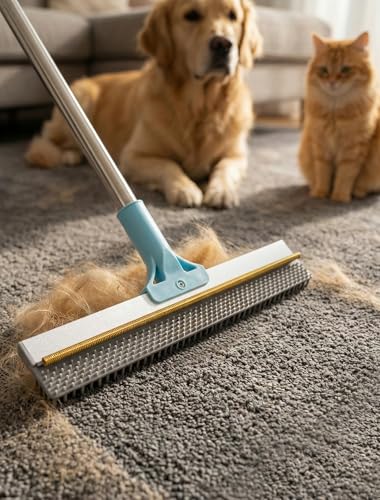
DELOMO Carpet Rake for Pet Hair Removal Carpet Scraper Broom with 54” Adjustable Long Handle, Dual-Sided, Metal + Short Silicone for Carpets & Rugs, Extended Silicone for Shag Rugs & Hard Floors
Dual-Sided Carpet Rake for Pet Hair Removal – One side works as a carpet rake and carpet scraper…
As an affiliate, we earn on qualifying purchases.
As an affiliate, we earn on qualifying purchases.
Conclusion
Now that you know how to tackle high-traffic carpet stains with vinegar and a stiff spoon, you can confidently restore your carpet’s appearance. Did you know that a clean carpet can improve indoor air quality by removing up to 87% of airborne allergens? Keeping your carpets stain-free not only looks great but also promotes a healthier home. So, next time stains strike, remember this simple, effective method to keep your space fresh and inviting.

Replacement 3" Tough Stain Tool W/Removable Nozzle for All Bissell Portable Carpet Cleaners 2036651, 2037151, 1425 Series, 73H55, 73H5C, 73H5K (SpotBots, SpotCleans, Little Green, and others)
Highly Effective Stain Removal: Our 3" Tough Stain Brush Tool features robust bristles that effectively loosen and lift…
As an affiliate, we earn on qualifying purchases.
As an affiliate, we earn on qualifying purchases.

Zep High Traffic Carpet Cleaner – 1 Gallon – Penetrating Formula Removes Deep Stains. Make High-Traffic Areas Look New Again
Lifts food and dirt stains
As an affiliate, we earn on qualifying purchases.
As an affiliate, we earn on qualifying purchases.