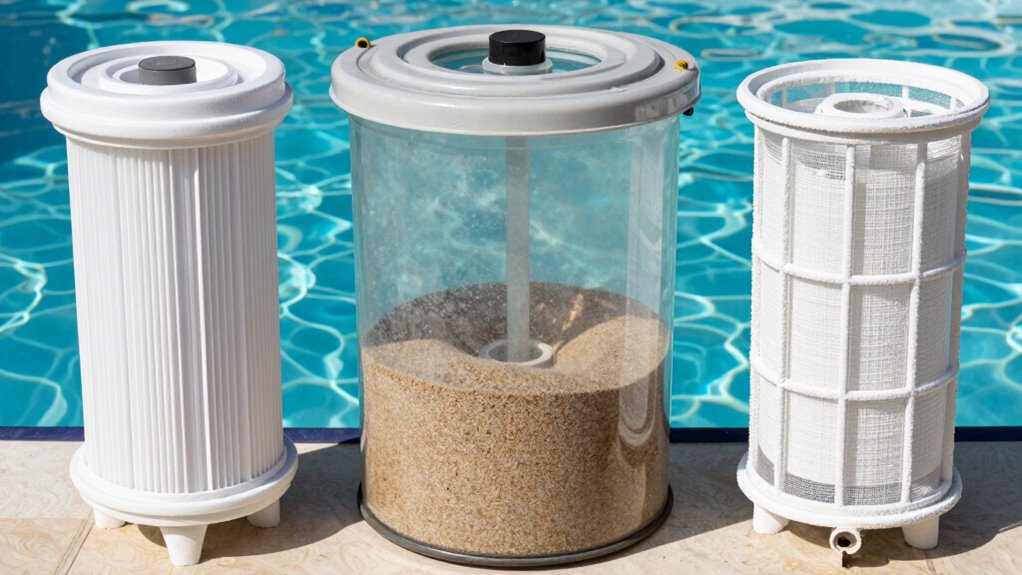

When choosing a pool filter, it’s important to understand how each type works. Cartridge filters are easy to maintain and great for small pools, but may need replacing sooner. Sand filters are durable, cost-effective, and work well for general use, though they require backwashing. DE filters offer the highest filtration and are perfect for clear water, especially after algae or heavy debris. Keep exploring to discover which filter suits your pool best and how to keep it running smoothly.

Get cleaning gear delivered free with Prime
- Fast, free delivery on millions of items
- Prime Video, Amazon Music and more included
- Member-only deals all year
Key Takeaways
- Cartridge filters are easy to maintain but have a shorter lifespan; sand filters require backwashing and are durable.
- DE filters offer superior filtration for tiny particles but need more frequent cleaning and media replacement.
- Choose a filter based on pool size, debris level, and water clarity needs to optimize performance and cost.
- Proper maintenance, including cleaning and backwashing, extends each filter’s lifespan and ensures clear, healthy water.
- DE filters excel after algae blooms and heavy debris, providing the highest filtration efficiency among the three types.
As an affiliate, we earn on qualifying purchases.
How Do Pool Filters Work and Why Are They Important?
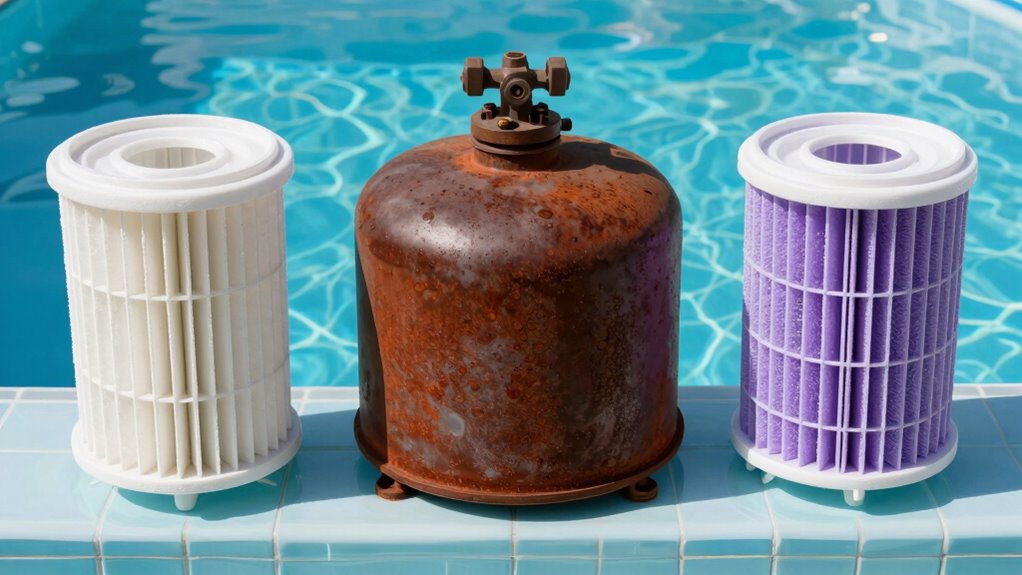
Have you ever wondered how your pool stays clean and clear? Pool filters play a vital role in maintaining water clarity by trapping dirt, debris, and algae. When water circulates through the filter, contaminants get caught, preventing them from clouding your pool. Regular filter maintenance guarantees it operates efficiently, keeping your water sparkling and safe. Without proper upkeep, filters can clog or lose effectiveness, leading to murky water and increased chemical use. Understanding how your filter works helps you keep your pool inviting and healthy. Whether it’s a cartridge, sand, or DE filter, their primary job is to remove impurities and keep water clear. Proper filter care ensures consistent performance, reducing your effort and guaranteeing your pool always looks its best. Additionally, utilizing energy-efficient technology can help reduce operational costs and support sustainable pool management. Knowing the different filter types allows you to select the best option for your specific needs, ensuring optimal water quality and ease of maintenance. Regularly inspecting filters also helps identify potential issues early, preventing costly repairs and ensuring continuous clean water. Proper understanding of filter operation can extend the lifespan of your equipment and improve overall pool health, especially when combined with regular maintenance practices.
What Are the Main Types of Pool Filters? Cartridge, Sand, and DE Compared

Choosing the right pool filter depends on understanding the main types available and how they compare. Cartridge, sand, and DE filters each have distinct features affecting filter maintenance and pool filter lifespan. Cartridge filters are easy to maintain and replace, making them ideal for low-maintenance pools, but their lifespan is typically shorter. Sand filters require less frequent replacement and are durable, with a longer lifespan, but they need backwashing for filter maintenance. DE filters offer the highest filtration efficiency and can trap tiny particles, but they require more frequent cleaning and handling of the DE powder. Your choice depends on your pool’s size, water clarity needs, and how much time you’re willing to invest in filter maintenance. Proper filter maintenance is essential to extend the lifespan of your pool filters and keep your water crystal clear. Additionally, understanding the filter performance differences can help you select the most efficient option for your specific needs.
How to Choose the Best Pool Filter for Your Budget and Pool Size
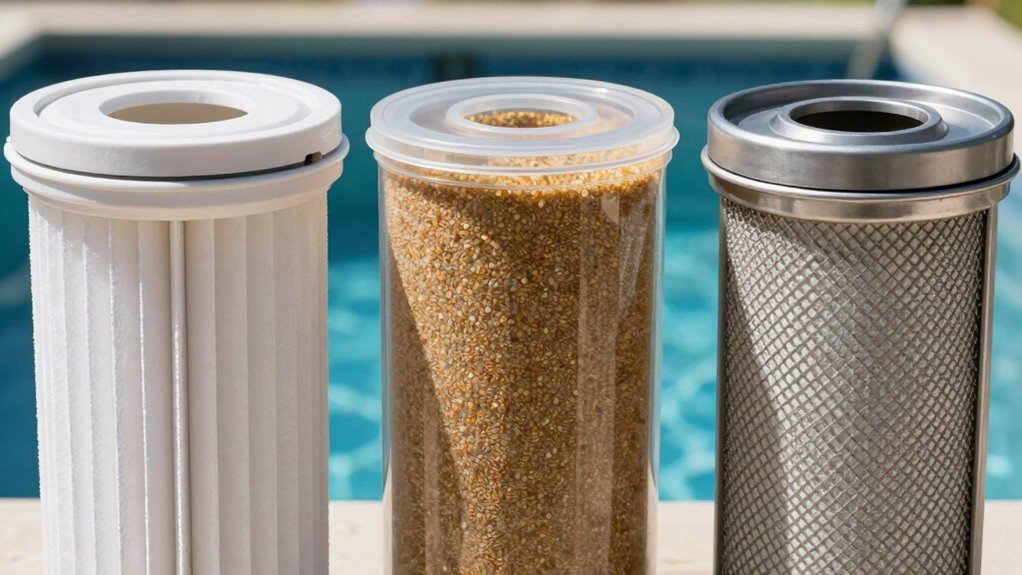
Selecting the right pool filter involves balancing your budget with your pool’s size and filtration needs. If you want energy efficiency, consider filters that require less power, which can save you money long-term. Larger pools demand higher-capacity filters, which might come with increased installation costs but improve overall performance. For smaller pools, a more affordable, basic filter can suffice, reducing upfront expenses. Think about your long-term savings—energy-efficient models may cost more initially but save you money on electricity. Also, factor in installation costs; some filters are easier and cheaper to install, while others may require professional help. Ultimately, matching your pool size and budget with the right filter ensures efficient, cost-effective filtration without unnecessary expenses. Remember to evaluate the filtration system types to find the best fit for your needs and ensure optimal pool maintenance. Incorporating smart monitoring capabilities can further optimize your pool’s filtration and maintenance routines for better efficiency. Additionally, understanding the maintenance requirements of each filter type can help you choose a model that fits your lifestyle and willingness to perform routine upkeep.
Pros and Cons of Cartridge Pool Filters
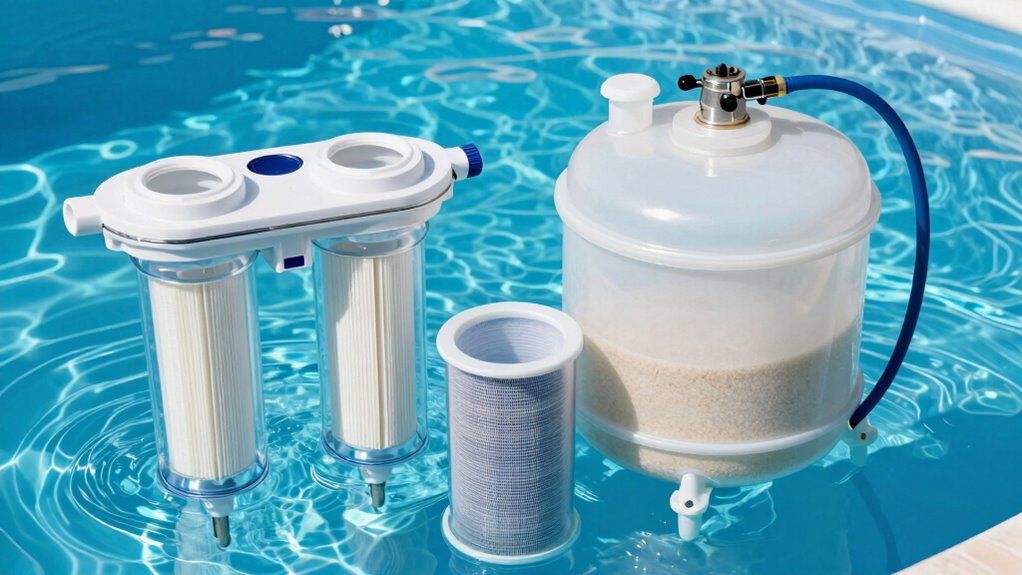
Cartridge pool filters are a popular option for many pool owners due to their ease of use and maintenance. One advantage is their relatively long filter lifespan, often lasting several seasons with proper care, which means fewer replacements. Additionally, they are simple to install, with many models designed for straightforward setup, making it easier for you to get your system running quickly. However, there are some drawbacks. Cartridge filters can be sensitive to installation challenges, such as ensuring proper sealing and fit. They also require regular cleaning to maintain efficiency, especially if your pool sees heavy use or debris. While they save space and are low-cost upfront, neglecting maintenance can reduce their lifespan and filtration effectiveness over time. Proper filter maintenance is essential to ensure optimal performance and longevity of your cartridge filters. Furthermore, understanding the filter media used in these systems can help in selecting the right cartridge for your specific needs.
Advantages and Disadvantages of Sand Pool Filters
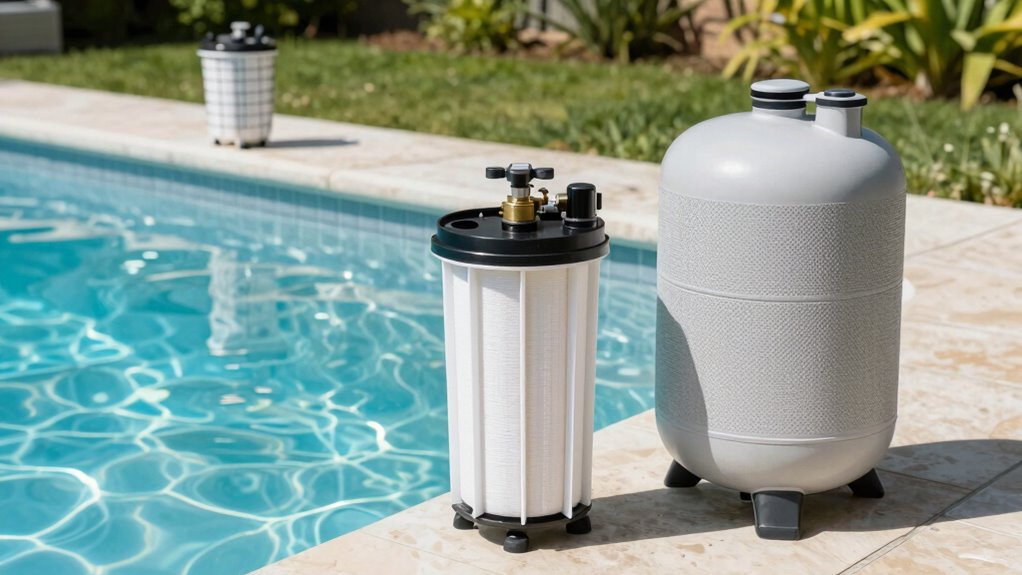
Are sand pool filters a good choice for keeping your pool clean? They offer simple operation and low initial costs, but their filter efficiency is moderate, meaning smaller debris might slip through. Maintenance costs are generally low because sand doesn’t need frequent replacement—just backwashing regularly. However, over time, you might notice reduced performance, requiring more frequent backwashing. Additionally, filter media lifespan can vary depending on usage and water quality. Proper filter maintenance practices can extend the lifespan of your sand filter and improve its performance. Regularly inspecting the sand and performing proper backwashing techniques help maintain optimal filter efficiency. It’s also important to monitor water quality to prevent clogging and ensure the filter functions effectively. For optimal results, understanding the hydraulics of filtration can help you troubleshoot and improve your system’s efficiency. Here’s a visual to help you picture it:
| Filter Type | Efficiency | Maintenance Costs |
|---|---|---|
| Sand Pool Filter | Moderate; good for large debris | Low; simple backwashing |
| Cartridge Filter | High; fine debris removal | Moderate; cartridge replacement |
| DE Filter | Very high; crystal-clear water | Higher; regular cleaning |
When Should You Use a DE Filter for Crystal-Clear Water?
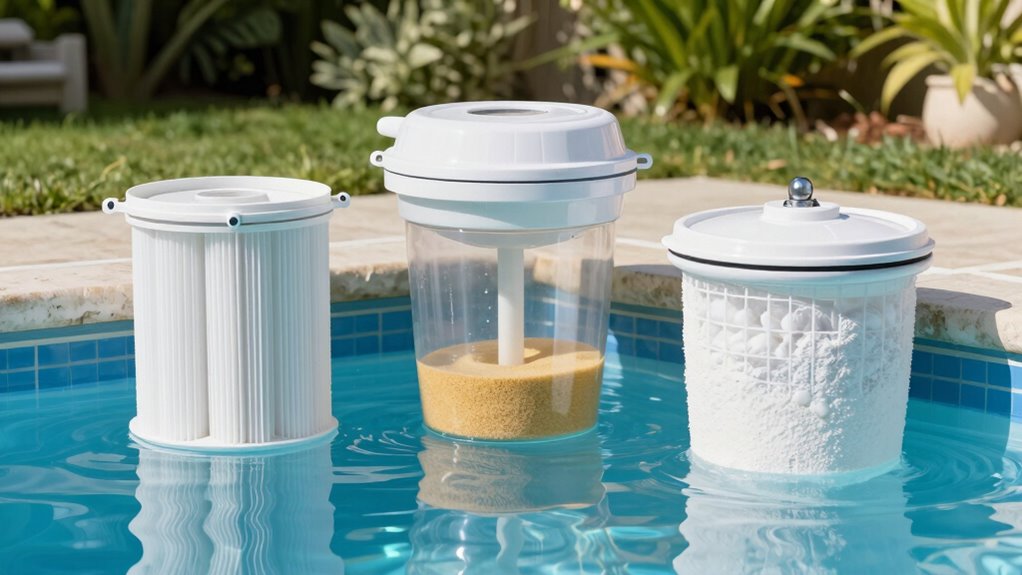
You should consider a DE filter when your pool needs exceptional clarity, especially with fine particles or heavy buildup. It’s ideal if you want quick filter changes and peak filtration performance. A DE filter ensures your water stays crystal clear, even in challenging conditions. Additionally, DE filters are highly effective at removing airborne pollutants, which can contribute to a healthier swimming environment. In fact, they are also known for their superior ability to filter out small debris and microscopic contaminants, providing an extra level of water purity. For optimal results, understanding filter media and its role in water quality can help you make informed maintenance decisions. Moreover, the technology behind DE filters enhances their efficiency and ensures long-lasting clarity. Recognizing the filtration process can help you better appreciate how DE filters maintain such pristine water quality.
Best for Fine Particles
Wondering when a DE (Diatomaceous Earth) filter is the best choice for your pool? If you want crystal-clear water by capturing fine particles, a DE filter excels due to its superior pool filter efficiency. It can trap particles as small as 3 microns, ensuring your water stays spotless. When considering filter size options, DE filters typically have smaller, more compact designs, making them ideal for pools that need detailed filtration. Use a DE filter if you prioritize clarity and have fine debris or algae issues. Keep in mind, its ability to handle small particles makes it perfect for maintaining pristine water quality in pools with heavy use or sensitive swimmers.
- Superior particle trapping for unmatched clarity
- Compact filter size options for convenience
- Best suited for fine debris and algae control
Ideal for Heavy Buildup
When your pool faces heavy buildup of debris, algae, or other contaminants, a DE filter becomes highly effective. It traps fine particles that other filters might miss, ensuring crystal-clear water. Use a DE filter after chemical treatments to remove lingering contaminants or algae blooms. It’s especially helpful when preparing for pool resurfacing, as clean water prolongs the surface’s lifespan.
| Heavy Buildup Situations | Recommended Action | Benefits |
|---|---|---|
| Algae overgrowth | Run DE filter continuously | Clear, sanitized water |
| Post-chemical treatment | Use DE filter to remove residues | Prevent cloudiness |
| Residual debris | Filter out fine particles intensively | Protects surface and equipment |
Quick Filter Changes
Quick filter changes are essential when maintaining crystal-clear water, especially during times of increased use or after chemical treatments. A DE filter offers rapid filter replacement, making it easier to keep your pool water pristine without lengthy downtime. Its ease of maintenance ensures you spend less time on cleaning and more time enjoying your pool. Additionally, DE filters utilize free floating filtration media that can be easily replenished, further simplifying maintenance routines. Consider a DE filter when: – You need quick filter replacement during peak swimming season – Maintaining water clarity with minimal effort – Reducing downtime caused by clogged filters Using a DE filter simplifies the process, so you can quickly switch out the filter media and restore ideal flow. This makes it ideal for pool owners who prioritize convenience and consistent water quality.
How to Maintain and Troubleshoot Your Pool Filter System
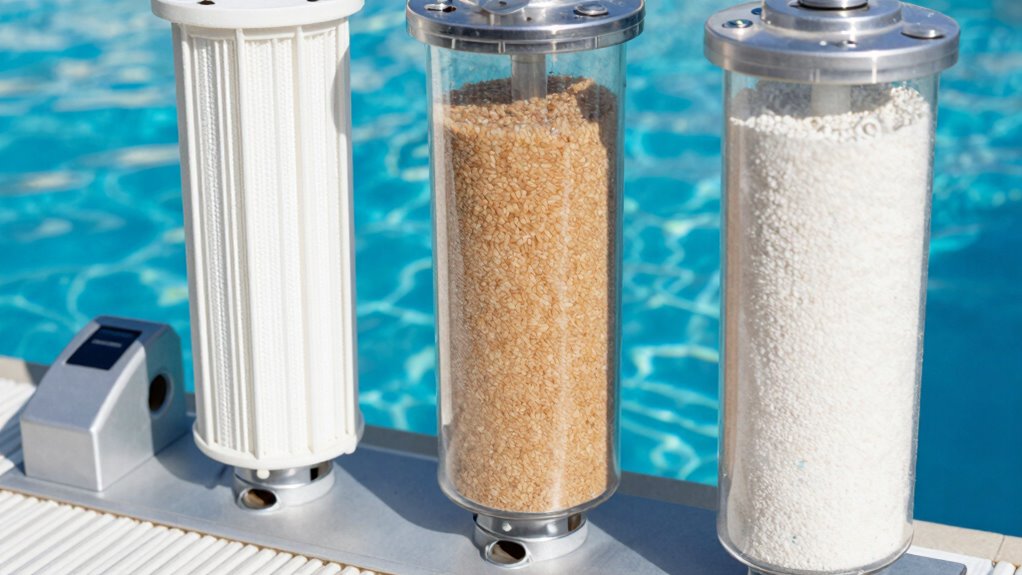
Maintaining and troubleshooting your pool filter system is essential for keeping your pool clean and running smoothly. Start by regularly inspecting your filter for debris and wear, and clean or replace components as needed. Confirm your pool’s chemical balancing is correct, as improper chemicals can damage the filter or reduce efficiency. Additionally, using the correct cleaning techniques according to manufacturer instructions can prevent damage and ensure optimal operation, whether it’s backwashing a sand or DE filter or rinsing a cartridge filter. When troubleshooting, check for pressure gauge spikes or drops, which indicate clogs or leaks. Remember, maintaining proper pool safety measures, like turning off the pump before servicing, prevents accidents. Consistent care and prompt troubleshooting keep your filter functioning at its best, saving you time and money while maintaining a safe, clean pool environment. Additionally, understanding the basic electrical safety principles can help prevent hazards when working with pool equipment and ensure your system operates safely. Regularly inspecting your filter components and adhering to recommended maintenance routines can extend the lifespan of your system and improve its performance.
Tips for Selecting the Right Pool Filter Based on Your Pool Usage

Choosing the right pool filter depends on how often and how heavily you use your pool. If you swim daily or have a large family, you’ll need a high-capacity filter to handle frequent pool maintenance. For light use, a smaller or less powerful filter may suffice. Consider the different pool filter types and their maintenance needs, as some require more upkeep than others.
Choose a pool filter that matches your swimming frequency and pool size for easy maintenance and optimal performance.
To select the best filter:
- Evaluate your pool usage and swimming frequency
- Match filter size and type to your pool size and debris load
- Factor in ease of pool maintenance and filter replacement costs
Frequently Asked Questions
Which Pool Filter Type Is Most Eco-Friendly?
You’ll find that cartridge filters are the most eco-friendly options because they use fewer chemicals and waste less water during cleaning. They also have a lower environmental impact since they don’t require backwashing like sand and DE filters, reducing water consumption. Plus, cartridge filters are often made from recyclable materials, making them a sustainable choice for eco-conscious pool owners wanting to minimize their environmental footprint.
How Often Should I Replace or Clean My Pool Filter?
Ever wondered how often you should clean or replace your pool filter? Typically, you should check your filter every 4-6 weeks during peak season, performing filter maintenance as needed. A cartridge filter needs cleaning every 2-4 weeks, while sand and DE filters might last 3-5 years before replacement. Following a consistent filter maintenance and replacement schedule keeps your pool crystal clear and running smoothly.
Can I Upgrade My Filter Type Later On?
Yes, you can upgrade your filter type later on, but keep in mind that filter maintenance needs may change. Upgrading might involve additional installation costs and adjusting your pool setup. Before switching, consider how the new filter affects cleaning frequency and efficiency. It’s a good idea to consult a professional to guarantee compatibility and avoid unexpected expenses, making your transition smoother and more cost-effective.
Do Different Filters Affect Water Chemistry Differently?
Different filters can impact water chemistry and filter maintenance. For example, sand filters may require less frequent cleaning but can affect pH levels over time, while DE filters provide excellent clarity but demand more maintenance and careful chemical balance. Cartridge filters are easier to clean and maintain, helping you keep water chemistry stable. Choosing the right filter guarantees your water stays balanced and clean, simplifying filter maintenance in the long run.
How Do Energy Costs Compare Among Filter Types?
You’ll find that cartridge filters are generally more energy-efficient, using less power to operate due to their lower pressure requirements. Sand filters tend to be less efficient, requiring longer run times, which increases energy costs. DE filters, while effective, can use more energy because of their high-pressure operation. Choosing an energy-efficient filter can lead to significant long-term savings, reducing your electricity bills and overall pool maintenance costs.
Conclusion
Choosing the right pool filter is like finding the perfect key to open sparkling, pristine water. Whether you opt for the versatility of cartridges, the simplicity of sand, or the precision of DE, each has its own dance in your pool’s symphony. By understanding their rhythms, you’ll keep your oasis crystal-clear and inviting. So, trust your instincts, tune into your pool’s needs, and let your filter work its magic—transforming your backyard into a shimmering paradise.
Halloween Picks
halloween
As an affiliate, we earn on qualifying purchases.