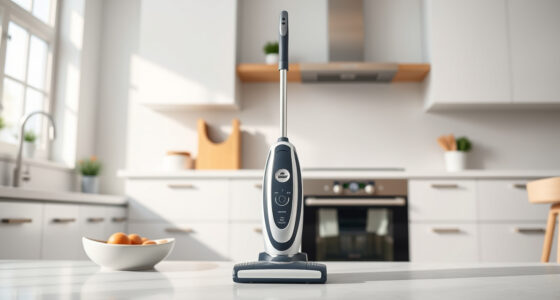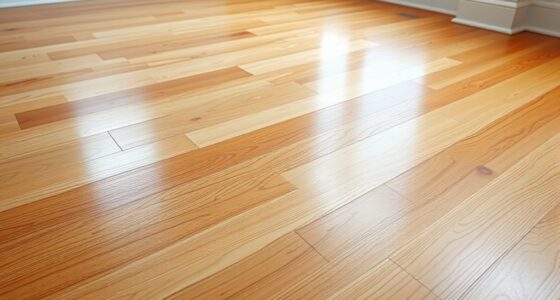
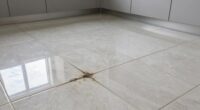
To clean your laminate floors without damage, avoid excessive water and use a damp, microfiber mop instead of soaking it. Make sure your space is clear of obstacles, and gather gentle, pH-neutral cleaning products. Don’t use steam mops or harsh chemicals, as they can warp or peel the surface. Keep moisture levels controlled and regularly inspect for vulnerabilities. Want to learn more tips to protect your floors while keeping them spotless? Continue below.

Get cleaning gear delivered free with Prime
- Fast, free delivery on millions of items
- Prime Video, Amazon Music and more included
- Member-only deals all year
Key Takeaways
- Use a damp, not soaking, microfiber mop to prevent excess water from seeping into seams.
- Choose pH-neutral cleaning solutions designed for laminate flooring to avoid surface damage.
- Wring out the mop thoroughly to keep it only lightly damp, minimizing moisture exposure.
- Avoid steam mops and abrasive scrubbers that can strip protective layers or cause warping.
- Regularly inspect and promptly clean spills to prevent water from seeping into seams and causing damage.
microfiber mop for laminate floors
As an affiliate, we earn on qualifying purchases.
As an affiliate, we earn on qualifying purchases.
Why Water Damages Laminate Floors and How to Prevent It
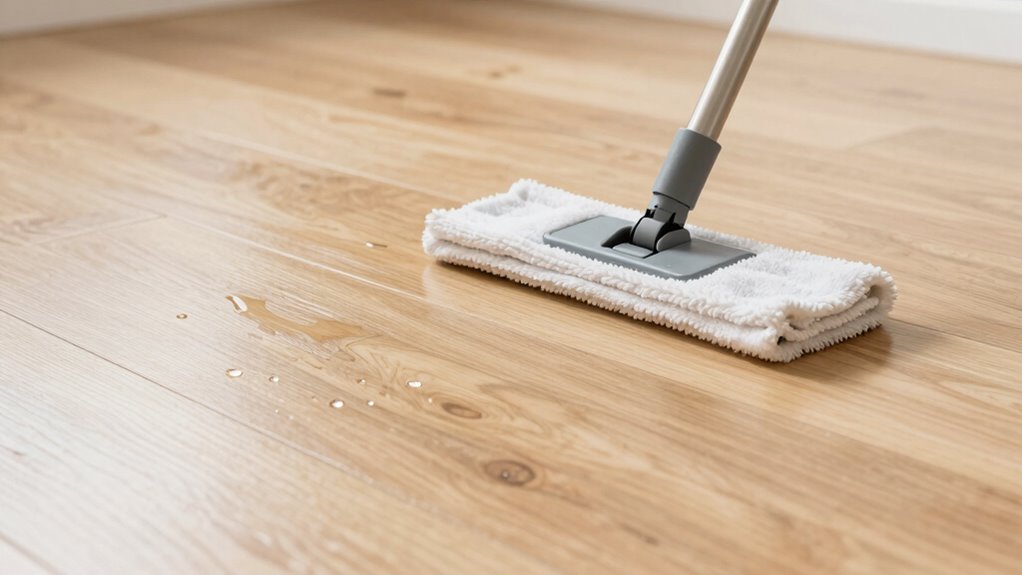
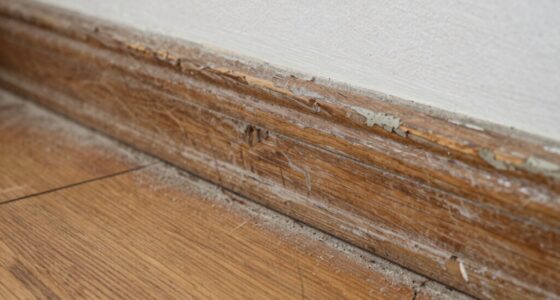
Water is one of the biggest threats to laminate floors because it can seep into the seams and cause the core material to swell, warp, or crack. Water damage occurs when moisture penetrates the surface, especially if the flooring isn’t properly sealed. To prevent this, sealing techniques are essential; applying a high-quality sealant creates a barrier that blocks water from reaching the core. Regularly inspecting the seams and edges helps identify potential vulnerabilities early. Immediate cleanup of spills minimizes exposure time. Remember, even small amounts of water can lead to significant damage over time. Using essential oils like eucalyptus or tea tree oil in cleaning solutions can provide antimicrobial benefits and help maintain a healthier floor environment. Additionally, choosing water-resistant laminate flooring options can offer extra protection against water damage. Ensuring your flooring has proper sealing techniques in place is crucial for longevity and resistance to water exposure. Incorporating waterproofing measures during installation can further safeguard your floors from future incidents. Proper maintenance practices also play a vital role in preventing water-related issues and extending the lifespan of your flooring. By sealing your laminate flooring effectively and acting quickly when spills happen, you reduce the risk of warping and extend the lifespan of your floors.
How to Prepare Your Space and Tools for Water-Safe Mopping
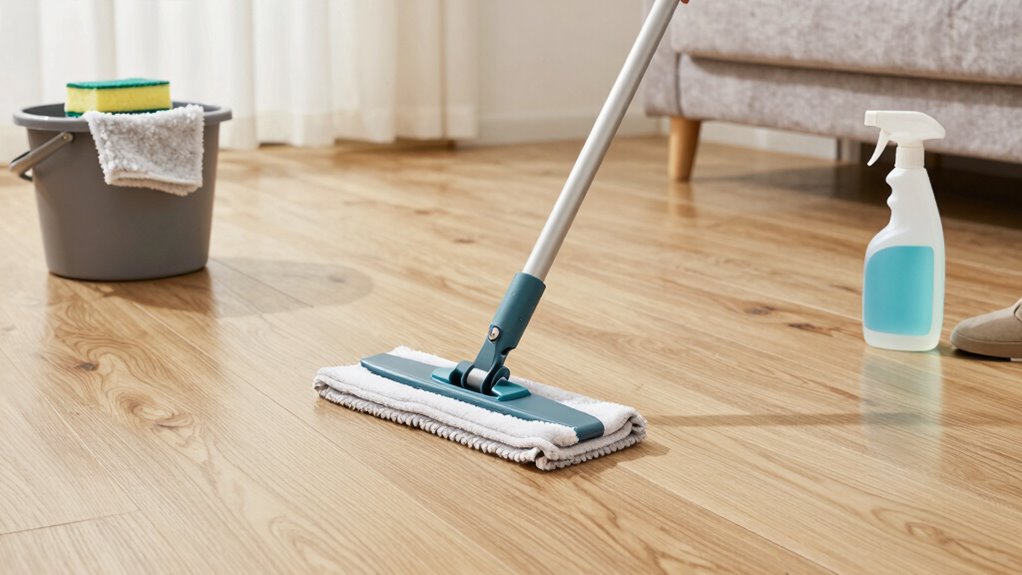
Before you start mopping, it’s important to prepare your space and tools to guarantee your laminate floors stay dry and undamaged. First, remove any area rugs that could trap moisture or interfere with cleaning. Use furniture pads under chairs, tables, and other furniture to prevent scratches and make moving pieces easier without dragging water onto the floor. Clear the room of objects that can catch water or become damaged if exposed to moisture. Gather a damp mop, a bucket with a well-wrung cloth, and a gentle cleaning solution suitable for laminate floors. Ensuring your space is clear and your tools are appropriate helps you control water exposure and protects your flooring from unnecessary damage during mopping. Additionally, understanding the proper maintenance techniques can help you extend the life of your flooring and prevent costly repairs. Being aware of the horsepower of electric dirt bikes can inspire you to choose the right equipment for outdoor cleaning tasks that require power or mobility. Proper technique and attention to flooring material characteristics can further prevent water damage during cleaning. Taking the time to learn about appropriate cleaning methods for laminate floors can make your routine more effective and safer for your surfaces.
Effective Mopping Techniques and Safe Products for Laminate Floors
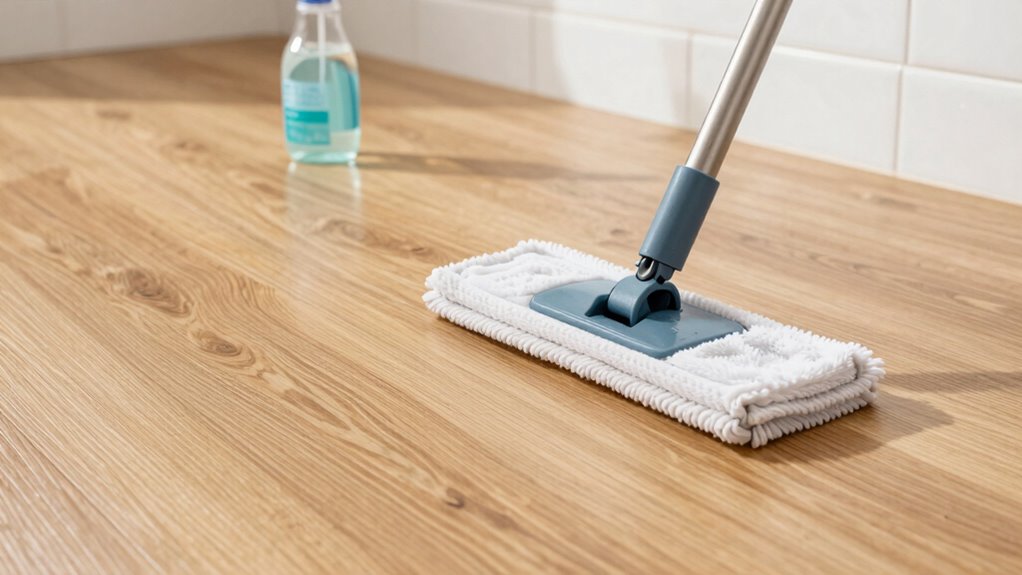
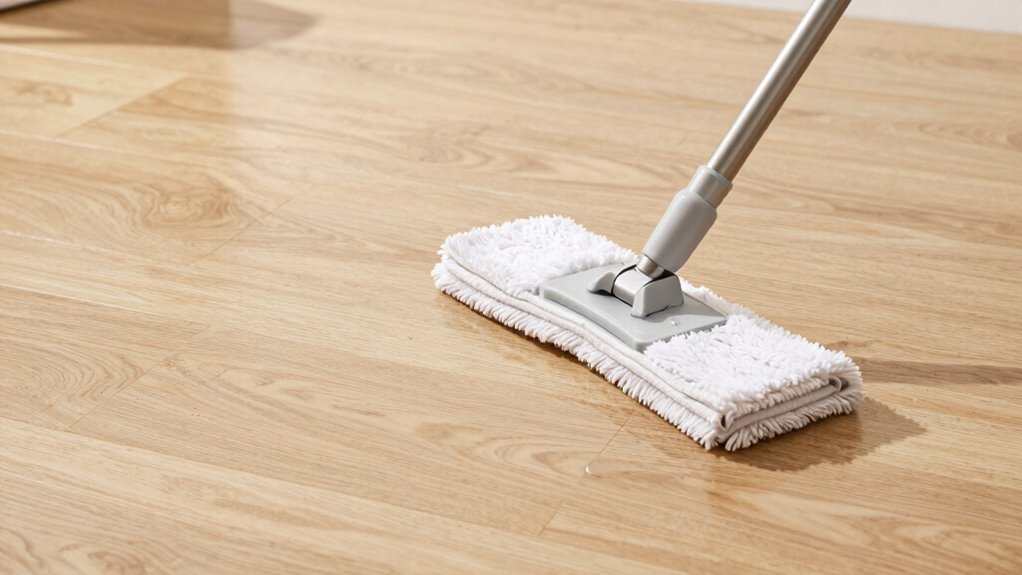
To effectively clean your laminate floors while preventing damage, it is vital to use proper mopping techniques and choose safe cleaning products. Opt for microfiber mops, which are gentle yet effective at picking up dirt without scratching the surface. Always dampen the mop rather than soaking it, as excess water can seep into seams and cause damage. Use pH neutral cleaners specifically formulated for laminate flooring; harsh chemicals can weaken the finish and dull the surface. Avoid steam mops or abrasive scrubbers. Instead, lightly glide the microfiber mop across the floor, ensuring even coverage without applying excessive pressure. Regular, gentle cleaning with the right tools and products keeps your laminate floors looking their best while safeguarding their integrity and longevity. Being aware of water damage risks helps you better understand why controlling moisture during cleaning is crucial. Additionally, understanding proper cleaning techniques can further protect your flooring investment. Remember, minimizing moisture exposure is key to maintaining the durability of laminate surfaces, especially in high-traffic areas. Incorporating appropriate cleaning methods ensures your floors remain beautiful and well-preserved over time.
Common Mistakes to Avoid When Cleaning Laminate Floors With Water
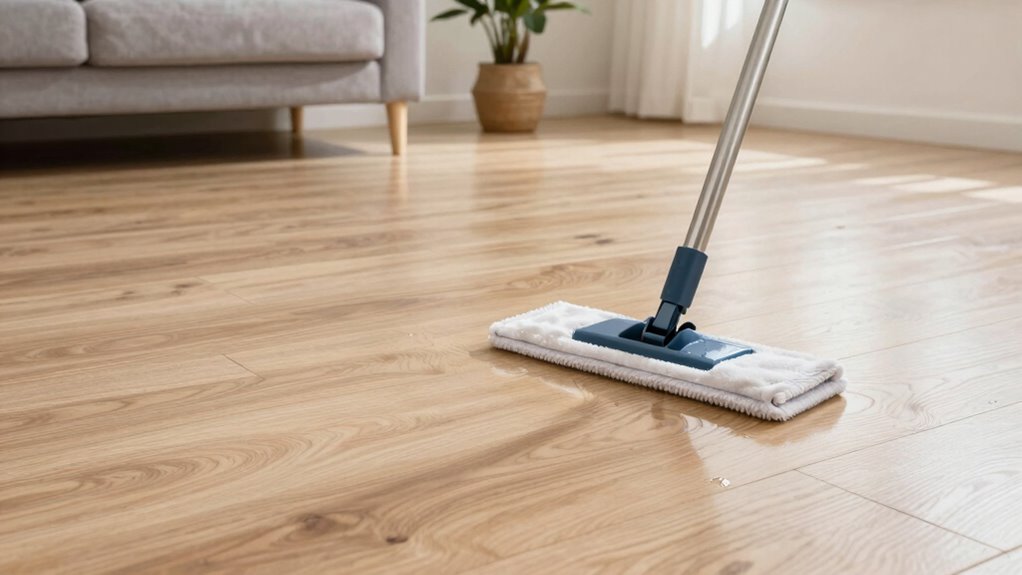
One of the most common mistakes people make when cleaning laminate floors is using too much water or leaving the floor excessively wet. Over wetting mops can cause water to seep into the seams, leading to swelling or warping over time. Avoid wringing your mop excessively; just use a damp cloth, not soaked. Additionally, steer clear of harsh cleaning chemicals, as they can damage the laminate’s protective layer and cause discoloration. Using strong detergents or ammonia-based products may seem effective but often do more harm than good. Always opt for gentle, laminate-safe cleaners and ensure your mop is only lightly damp. Proper surface protection and regular maintenance can help prevent buildup of dirt and debris that might require more aggressive cleaning methods later on. Controlling moisture levels is essential, as excess water is one of the leading causes of damage to laminate flooring. Incorporating proper cleaning techniques and understanding the importance of moisture control can significantly extend the lifespan of your laminate floors. By controlling moisture and avoiding aggressive chemicals, you protect your floors from water damage and extend their lifespan. Remember that moisture control is key to maintaining the appearance and integrity of laminate flooring over time.
Tips to Maintain and Protect Your Laminate Floors Long-Term
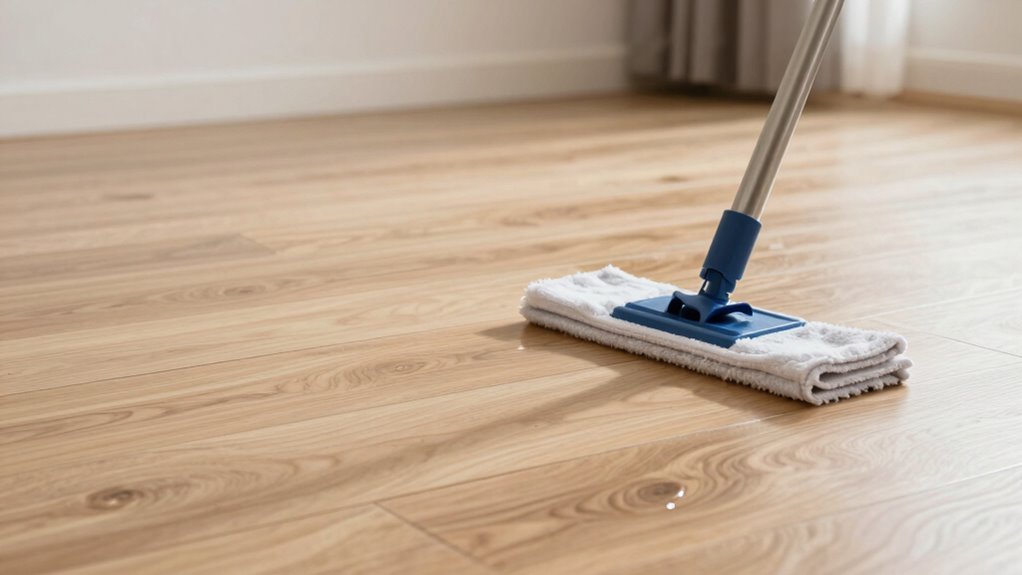
Maintaining and protecting your laminate floors over the long term requires consistent care and mindful habits. To maximize laminate durability, establish a regular cleaning schedule that avoids harsh chemicals and excessive water. Use a damp mop or microfiber cloth, ensuring floors are only lightly cleaned to prevent damage. Place mats at entryways to reduce dirt and moisture tracking, and use felt pads on furniture legs to prevent scratches. Avoid dragging heavy items across the surface, which can cause gouges. Regularly inspect for signs of wear or moisture intrusion, addressing issues promptly. By sticking to a routine and being gentle during cleanings, you’ll extend your floors’ lifespan and keep them looking their best for years to come.
Frequently Asked Questions
Can I Use a Steam Mop on Laminate Floors Safely?
You shouldn’t use a steam mop on laminate floors because it can cause damage. Steam cleaning introduces excess moisture, risking warping or swelling, and can strip away any wax that protects the surface. Instead, opt for a damp, well-wrung microfiber mop for gentle cleaning. Avoid steam cleaning to prevent water damage and wax removal, ensuring your laminate floors stay beautiful and durable over time.
How Often Should I Mop Laminate Floors With Water?
Think of your floor as a delicate flower that needs just the right amount of watering. Mopping frequency depends on foot traffic, but generally, you should mop laminate floors with water once every 1-2 weeks. Keep water exposure limits in mind—avoid excess moisture, as too much can cause damage. Regular, light cleaning helps maintain your floor’s beauty without risking warping or swelling.
Are There Specific Cleaning Solutions Recommended for Laminate Floors?
You should choose gentle detergent choices like a few drops of dish soap or a laminate floor cleaner. Avoid harsh chemicals or ammonia-based solutions. For regular cleaning, stick to a mild, pH-neutral cleaner and use it sparingly—about once a week or as needed—based on your cleaning frequency. Always dilute the solution well and use a damp mop, not soaked, to prevent water damage and keep your laminate floors looking their best.
What Signs Indicate Water Damage on Laminate Flooring?
Did you know that over 60% of laminate flooring damages are caused by water? You’ll notice water stains or swelling edges, which are clear signs of water damage. If your floor shows these signs, it’s essential to act quickly, as prolonged exposure can lead to warping or buckling. Regularly check for these indicators and avoid excessive moisture to keep your laminate floors looking their best.
Can I Use a Microfiber Cloth Instead of a Mop?
Yes, you can use a microfiber cloth instead of a mop. Microfiber effectiveness makes it an excellent alternative cleaning tool for laminate floors, as it gently lifts dirt and dust without excessive water. Just dampen the cloth slightly—avoid soaking it—and wipe in the direction of the planks. This method helps clean thoroughly while protecting your laminate flooring from water damage. It’s a quick, safe, and effective cleaning solution.
Conclusion
Treat your laminate floors like delicate works of art—they thrive on gentle care and respect. By avoiding excess water and using the right techniques, you’ll keep their beauty shining brighter than a polished gemstone. Think of each careful mop as a whisper of gratitude for your floors’ enduring elegance. With mindful maintenance, your space transforms into a sanctuary where your floors remain a gleaming affirmation to your loving stewardship—resilient, radiant, and timeless.
Halloween Picks
halloween
As an affiliate, we earn on qualifying purchases.