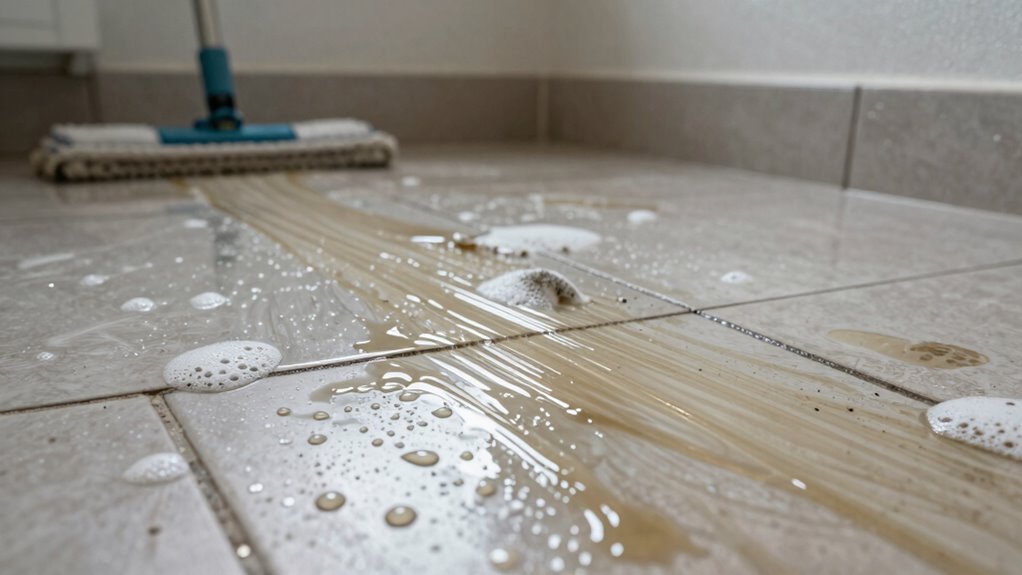

If you use too much cleaner on your floors, it can leave behind sticky residues that trap dirt, dust, and debris. This residue creates a dull, film-like surface that attracts more grime over time, making your floors look dirtier rather than cleaner. Excess chemicals also weaken finishes and leave a buildup that’s hard to remove, leading to a cycle of ineffective cleaning. Keep going, and you’ll discover practical ways to maintain your floors’ shine without causing damage.
Listen free for 30 days with Audible
Thousands of audiobooks and originals — cancel anytime.
As an affiliate, we earn on qualifying purchases.
Key Takeaways
- Excess cleaning chemicals leave residues that trap dirt and dust over time.
- Overapplication creates a sticky film that attracts more debris.
- Residue buildup diminishes the floor’s natural shine and cleanliness.
- Improper rinsing leaves leftovers that form a dull, dirt-attracting layer.
- Frequent use of too much cleaner weakens floor finishes, increasing dirt accumulation.
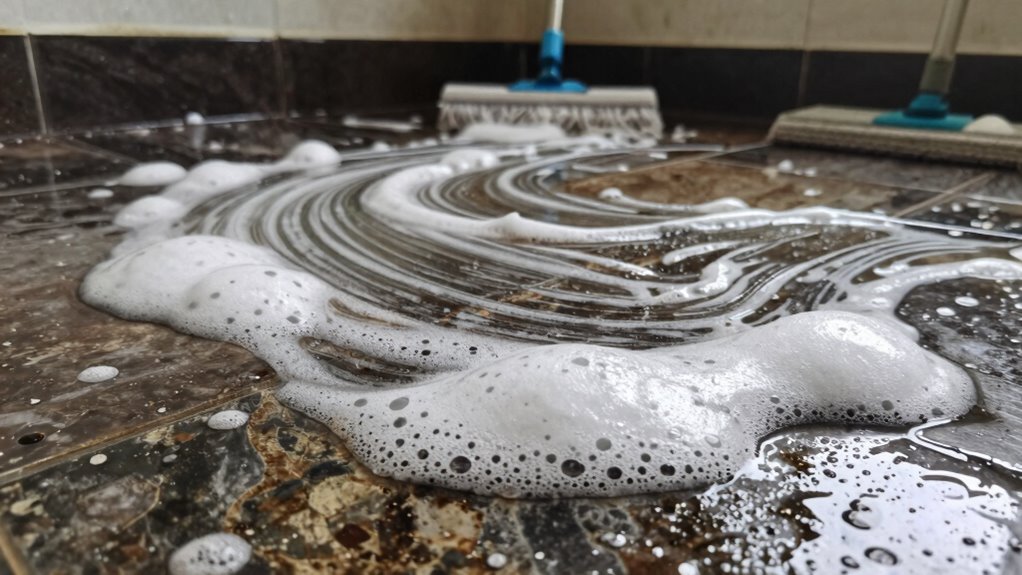
Many people believe that using more cleaner will make their floors spotless, but in reality, overdoing it can backfire. When you pour on excessive cleaning chemicals, you might initially see a shine, but this often leads to residue buildup that can make your floors dirtier over time. Cleaning chemicals are formulated to break down dirt and grime, but using too much of them overwhelms your flooring surface. Instead of cleaning, these chemicals can leave behind sticky layers that trap dirt, dust, and debris, creating a film that attracts even more dirt with each passing day.
Residue buildup is a common consequence of overusing cleaning chemicals. When you don’t rinse or mop thoroughly, leftover residues remain on the surface. Over time, this buildup forms a slick film that’s difficult to remove and often looks dull rather than shining. This film not only ruins the appearance of your floors but also makes regular cleaning less effective. Dirt can cling to the residues, so you find yourself constantly battling a cycle where your floors seem clean one day but look grimy again shortly after. It’s a classic case of cleaning work that can backfire because of improper product use. Using the correct cleaning techniques for your specific flooring type ensures that you avoid these issues and maintain your floors’ appearance and integrity. Additionally, following manufacturer guidelines can help prevent chemical damage and ensure the longevity of your flooring. Proper floor maintenance is key to keeping your surfaces in top condition and avoiding unnecessary damage.
Overusing cleaning chemicals causes dull film buildup, trapping dirt and making floors look grimy again quickly.
Using too much cleaner can also damage your flooring material. Many cleaning chemicals contain harsh ingredients that, in excess, can erode or discolor certain surfaces. For example, overly aggressive chemicals can weaken wood finishes or dull tile glazes. Instead of prolonging the life of your floors, you might inadvertently shorten it. Additionally, the thick layers of chemical residue can interfere with the floor’s natural texture and shine, making it look dull and unkempt despite your efforts. To prevent this, understanding the proper cleaning techniques for your specific flooring type is essential.
best floor cleaner for hardwood floors
As an affiliate, we earn on qualifying purchases.
As an affiliate, we earn on qualifying purchases.
Frequently Asked Questions
Can Using Less Cleaner Still Effectively Clean My Floors?
Yes, using less cleaner can still effectively clean your floors. Opt for eco-friendly solutions and natural cleaning methods that are gentle yet effective. You don’t need a lot of product to remove dirt and grime; often, a small amount works better and prevents residue buildup. By using less cleaner, you protect your flooring and the environment, making your cleaning routine safer and more sustainable.
How Often Should I Clean My Floors to Avoid Buildup?
You should clean your floors at least once a week to prevent dirt buildup. Regular cleaning maintains a fresh appearance and stops grime from accumulating, which can make your floors look dull and be harder to clean later. Adjust the cleaning frequency based on foot traffic and household activity. Staying consistent helps avoid excessive dirt buildup, ensuring your floors stay cleaner longer and reducing the need for heavy, frequent scrubbing.
Are There Specific Types of Cleaners That Cause More Dirt Accumulation?
Some cleaners, especially those with harsh chemicals, leave behind residues that trap dirt like a magnet. These cleaning residues create a sticky surface, attracting more grime over time. Avoid using overly chemical-laden cleaners, as they can cause buildup and make your floors dirtier later. Instead, opt for eco-friendly or gentle options that rinse clean, preventing residue accumulation and keeping your floors fresh without inviting more dirt.
Does the Type of Flooring Affect How Much Cleaner Should Be Used?
Yes, the type of flooring affects how much cleaner you should use. For delicate surfaces like hardwood or laminate, use minimal cleaning tools and a gentle cleaner to avoid damage. For tile or vinyl, you can apply slightly more cleaner, but still avoid excess to prevent residue buildup. Using too much cleaner impacts the environment negatively and makes your floors dirtier later, so always choose the right amount and eco-friendly options.
What Are Signs That I’M Using Too Much Cleaning Product?
If you notice a sticky or streaky surface after cleaning, you’re likely using too much cleaner. Chemical residue can build up, making floors feel grimy and attracting more dirt. You might also see surface damage or discoloration over time. These signs indicate excess cleaner, so reduce the amount you use, rinse thoroughly, and opt for less product to keep your floors clean without harm.
Conclusion
Using too much cleaner on your floors is like overwatering a plant—it might seem helpful at first, but it can actually lead to more dirt and grime later on. When you layer on excess cleaner, it can leave behind sticky residues that trap dirt, making your floors dirtier over time. To keep them shining, use just a small amount and clean with a damp mop. Think of it as giving your floors a gentle hug, not an overwhelming squeeze.
Fall yard work Picks
leaf blowers
As an affiliate, we earn on qualifying purchases.