
You should deep clean your carpets every 6 to 12 months, especially if you notice stains that won’t lift, lingering odors, or high traffic areas looking dingy. Regular vacuuming helps, but deep cleaning removes embedded dirt, allergens, and bacteria, extending your carpet’s life. If you have pets or allergies, more frequent cleanings are advised. To do it effectively, inspect and treat stains first, then use a suitable cleaning machine or solution. Keep exploring for detailed tips.
Key Takeaways
- Deep clean carpets every 6 to 12 months, more often with pets or allergies.
- Look for persistent stains, odors, or increased dirt to determine if deep cleaning is needed.
- Vacuum thoroughly before deep cleaning to remove surface dust and debris.
- Use proper stain removal techniques promptly for spills to prevent permanent staining.
- Regular deep cleaning maintains carpet appearance, extends lifespan, and promotes a healthier home environment.

Regularly deep cleaning your carpets is essential to maintain a healthy and fresh home environment. But knowing when to go beyond your regular vacuuming routine can be tricky. Typically, if you notice persistent stains, unpleasant odors, or visible dirt that your usual vacuum doesn’t lift, it’s time for a deep clean. Deep cleaning helps remove embedded dirt, allergens, and bacteria that regular vacuum maintenance might miss. It’s especially important if you have pets, children, or allergy sufferers in your home, as these factors increase the buildup of debris and allergens in your carpets. Additionally, high traffic areas tend to accumulate dirt faster, so consider deep cleaning more frequently in those spots. Regularly scheduling a deep clean every 6 to 12 months ensures your carpets stay fresh and hygienic.
Deep clean your carpets every 6 to 12 months to keep them fresh, healthy, and allergen-free.
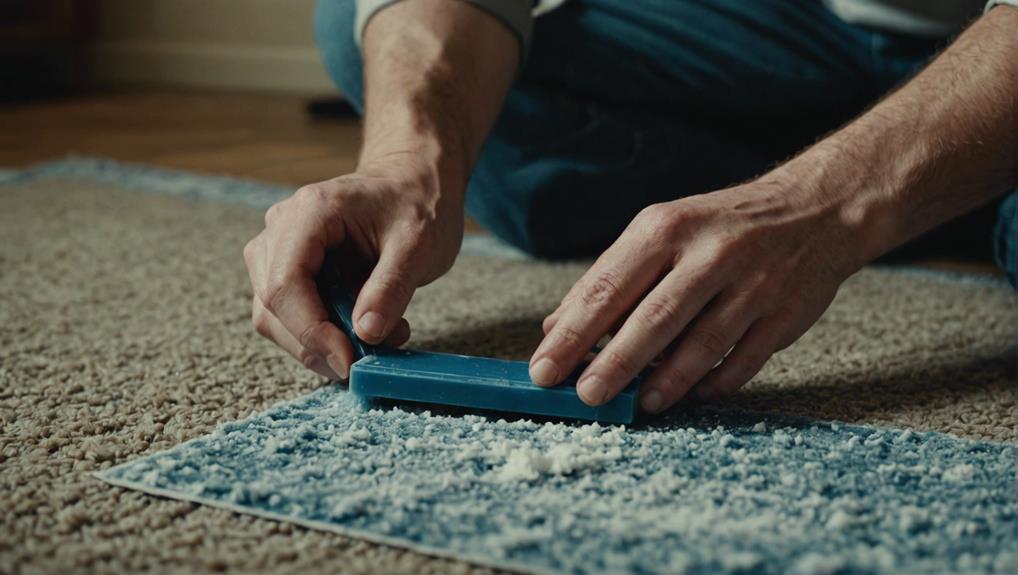
Before you start, inspect your carpet for stains or spots that need special attention. Effective stain removal techniques involve acting quickly—blotting spills immediately with a clean cloth to prevent them from setting. For stubborn stains like wine or coffee, a mixture of mild dish soap, white vinegar, and water often works well. Apply it to the stain, let it sit for a few minutes, then blot gently. For more resistant stains, commercial stain removers designed for carpets can be effective, but always test a small hidden area first to avoid discoloration. Remember, patience is key; aggressive scrubbing can damage fibers or spread the stain further. Using a high-quality vacuum before deep cleaning can enhance the overall effectiveness of the process.
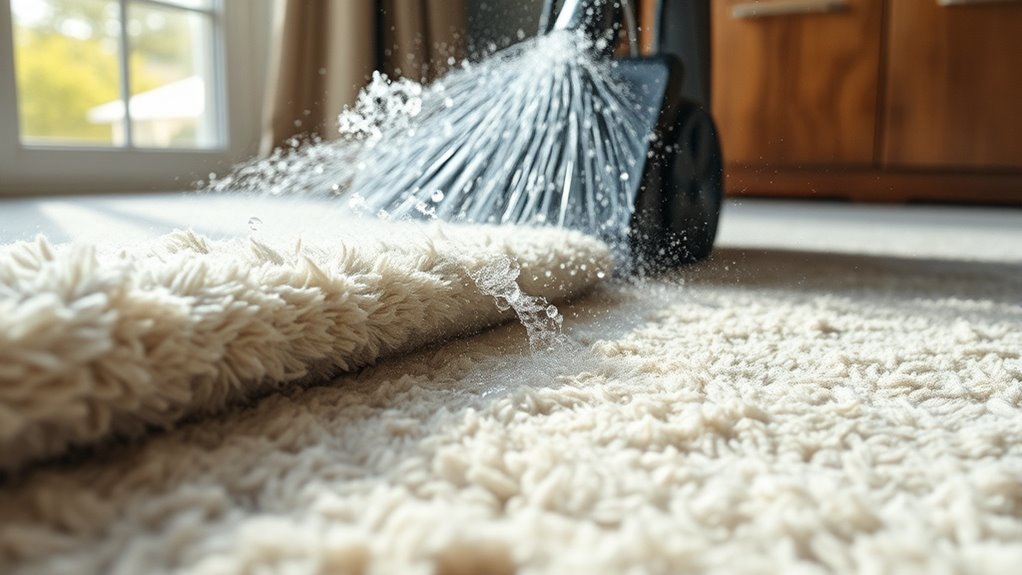
Once stains are treated, it’s time to prepare for the deep cleaning process. Proper vacuum maintenance beforehand ensures your carpet is free of surface dust and loose debris, which can interfere with deep cleaning machines or solutions. Use your vacuum to thoroughly clean the entire surface, paying special attention to edges and corners. This step makes the deep cleaning more effective by removing loose dirt that could otherwise get pushed deeper into the fibers during the process. When it’s time to deep clean, you can opt for a steam cleaner, carpet shampooer, or hire professional services, depending on your carpet’s material and your budget. Follow the manufacturer’s instructions carefully to avoid over-wetting, which can lead to mold or mildew.
Deep cleaning isn’t just about aesthetics; it’s about creating a healthier living space. Regularly maintaining your vacuum and practicing effective stain removal techniques will keep your carpets looking their best and extend their lifespan. When you notice signs like persistent stains, odors, or increased allergy symptoms, don’t hesitate to schedule a deep clean. It’s a worthwhile investment in your home’s cleanliness and your family’s health. By staying consistent with these cleaning routines, you ensure your carpets remain inviting, fresh, and safe for everyone who walks on them.

Hoover PowerScrub Deluxe Carpet Cleaner Machine for Carpet and Upholstery, Deep Cleaning Carpet Shampooer Machine with Multi-Purpose Tools, Pair Carpet Cleaner Solution
THE COMPLETE CLEAN COMBO: The Hoover PowerScrub Deluxe Carpet Cleaning Machine combines five counter-rotating SpinScrub brushes and HeatForce…
As an affiliate, we earn on qualifying purchases.
As an affiliate, we earn on qualifying purchases.
Frequently Asked Questions
How Often Should Deep Cleaning Be Scheduled for High-Traffic Areas?
You should schedule deep cleaning for high-traffic areas every 6 to 12 months. Regular vacuum maintenance helps keep surface dirt away, but deep cleaning removes embedded stains and allergens effectively. Use stain removal techniques before deep cleaning to tackle spots. If the area experiences heavy use or has pets, consider more frequent deep cleans. This routine keeps your carpets fresh, prolongs their life, and maintains a healthy home environment.
Can I Deep Clean Carpets Myself Without Professional Equipment?
Absolutely, you can deep clean carpets yourself using DIY methods without professional equipment. You’ll need basic equipment like a rental or purchased carpet cleaner, a vacuum, and cleaning solutions. Follow the manufacturer’s instructions for the equipment and choose a suitable cleaning solution. Pre-treat stains, vacuum thoroughly, then use the carpet cleaner to extract dirt and grime. It’s an effective way to refresh your carpets without hiring professionals.
What Signs Indicate It’s Time for a Deep Carpet Clean?
You should deep clean your carpet when you notice persistent pet stains that regular cleaning can’t remove or if the fibers look dull and worn. Signs like lingering odors, visible dirt, or increased allergens indicate it’s time for a thorough clean. Deep cleaning helps with pet stain removal and prevents carpet fiber damage, ensuring your carpet stays fresh and durable longer. Don’t wait until stains set or fibers deteriorate—act early for best results.
Are There Specific Cleaning Products Best for Deep Cleaning Carpets?
Did you know carpets can hold up to 4 times their weight in dirt? For deep cleaning, you want eco-friendly solutions that are safe for your family and pets. Commercial grade products are often the most effective, breaking down stubborn stains and deep-seated grime. Look for options with natural enzymes or biodegradable ingredients, ensuring a thorough clean while protecting the environment. Always follow product instructions for best results.
How Long Does a Deep Carpet Cleaning Typically Take?
A deep carpet cleaning, including steam cleaning and carpet extraction, usually takes about 1 to 2 hours depending on the size of your space. You’ll want to clear the area beforehand, and the process involves thoroughly washing and extracting dirt from your carpets. Keep in mind that drying can take a few hours afterward, so plan accordingly. This method guarantees your carpets get a deep, revitalizing clean.

Resolve Pet Expert Stain and Odor Remover, Carpet Cleaner, Pet Stain and Odor Remover, Carpet & Upholstery Cleaner – Removes Stains and Odors, 22 oz
1. DESTROYS URINE ODORS THE FIRST TIME Urine elimination technology neutralizes and removes odors on contact for immediate…
As an affiliate, we earn on qualifying purchases.
As an affiliate, we earn on qualifying purchases.
Conclusion
Regular deep cleaning can extend your carpet’s lifespan by up to 30%, keeping your home healthier. Knowing when to deep clean—like after spills, heavy foot traffic, or seasonal changes—ensures your carpets stay fresh and spotless. Don’t wait until dirt and allergens build up; schedule a deep clean every 12-18 months. Trust me, a cleaner carpet not only looks better but also improves indoor air quality, making your space more comfortable for everyone.

BISSELL Revolution HydroSteam Carpet Cleaner, Upright Deep Cleaner, HydroSteam Technology, 4-inch Self-Cleaning Tough Stain Tool & Formulas Included, 4123
CLEANS MESSES UP TO 45% BETTER with HydroSteam Technology
As an affiliate, we earn on qualifying purchases.
As an affiliate, we earn on qualifying purchases.

Amazon Basics Deep Cleaning Carpet Cleaner, Stain and Odor Remover, Fresh Scent, 64 fl oz
DEEP CLEAN PERFORMANCE: Our carpet cleaner solution penetrates stains, lifts soils, and eliminates odors right at the source
As an affiliate, we earn on qualifying purchases.
As an affiliate, we earn on qualifying purchases.