To clean high-touch surfaces effectively without overdoing it, choose proven disinfectants that suit each material, and follow the instructions carefully. Use light sprays and thorough wiping for porous surfaces like wood, and more potent disinfectants for non-porous materials like stainless steel and plastic. Match your cleaning tools to each surface to prevent damage, and balance cleaning frequency based on usage and risk. If you want to learn more, you’ll find helpful tips for maintaining surface safety and hygiene.

Get cleaning gear delivered free with Prime
- Fast, free delivery on millions of items
- Prime Video, Amazon Music and more included
- Member-only deals all year
Key Takeaways
- Use gentle disinfectants proven to kill germs on high-touch surfaces, following manufacturer instructions carefully.
- Clean surfaces regularly but avoid excessive cleaning to prevent wear and deterioration.
- Select appropriate tools and sprays based on surface material to avoid damage.
- Focus on high-touch areas like doorknobs and counters, balancing cleaning frequency with usage risk.
- Wipe surfaces thoroughly with light sprays and proper techniques to prevent over-saturation and harm.
High-touch surfaces are common sources of germs and bacteria, making their regular cleaning essential for maintaining a healthy environment. However, cleaning too aggressively or too often can wear down surfaces and waste cleaning resources. To strike the right balance, it’s important to understand how disinfectant effectiveness and surface material considerations come into play.
When choosing disinfectants, you want products that are proven to kill germs efficiently without damaging your surfaces. Look for disinfectants that specify effectiveness against a broad spectrum of bacteria and viruses, and follow the manufacturer’s instructions carefully. Using a disinfectant that’s too weak may leave germs behind, while overly harsh chemicals can degrade delicate surfaces over time. If you’re cleaning materials like glass or plastic, opt for a gentler disinfectant that won’t cause cracking or clouding. Conversely, for tougher surfaces like stainless steel or ceramic, you can use more potent disinfectants without worry. Always check the label for surface compatibility to guarantee you’re not compromising the integrity of your surfaces.
Surface material considerations are vital because not all surfaces react the same way to cleaning agents. For example, wooden surfaces and porous materials tend to absorb liquids, so using excessive disinfectant or moisture can cause damage or promote mold growth. In these cases, a light spray followed by thorough wiping is enough to disinfect without soaking the surface. Non-porous surfaces like countertops, doorknobs, and light switches can handle a more thorough cleaning with disinfectant solutions. Remember, overusing disinfectants on certain materials can lead to discoloration or deterioration, so always match your cleaning method to the surface type. Additionally, understanding the effectiveness of disinfectants and their impact on different surfaces helps prevent unnecessary damage and ensures a healthier environment. Regularly evaluating cleaning frequency based on usage and risk factors can also help maintain a balanced approach. It’s also helpful to use appropriate cleaning tools tailored to each surface to achieve optimal results without causing harm.
disinfectant spray for high-touch surfaces
As an affiliate, we earn on qualifying purchases.
As an affiliate, we earn on qualifying purchases.
Frequently Asked Questions
How Often Should I Clean High-Touch Surfaces?
You should clean high-touch surfaces daily to maintain hygiene and reduce germs. The cleaning frequency depends on surface durability; more delicate surfaces may need gentler cleaning, while sturdier ones can handle regular disinfecting. Pay attention to usage levels—touchpoints in busy areas require more frequent cleaning. Consistent cleaning helps prevent the spread of germs without overdoing it, ensuring your surfaces stay safe and in good condition without unnecessary wear.
Can I Use Natural Cleaning Products Effectively?
Are natural cleaning products as effective as chemicals? Absolutely. Natural alternatives like vinegar, baking soda, and lemon can clean high-touch surfaces effectively without harsh chemicals. While they may not always match the chemical effectiveness of commercial disinfectants, they still kill germs well enough for daily cleaning. Plus, they’re safer for your skin, pets, and the environment. Just make sure you’re using proper ratios and techniques to maximize their cleaning power.
What Disinfectants Are Safest for Children and Pets?
You should choose child-safe disinfectants and pet-friendly cleaning agents, like diluted white vinegar or hydrogen peroxide, which are effective yet gentle. Look for products labeled specifically as safe for children and pets, avoiding harsh chemicals like bleach or ammonia. Always follow instructions carefully, use in well-ventilated areas, and store them out of reach. This way, you protect your loved ones while maintaining a clean environment.
Should I Wear Gloves When Cleaning High-Touch Areas?
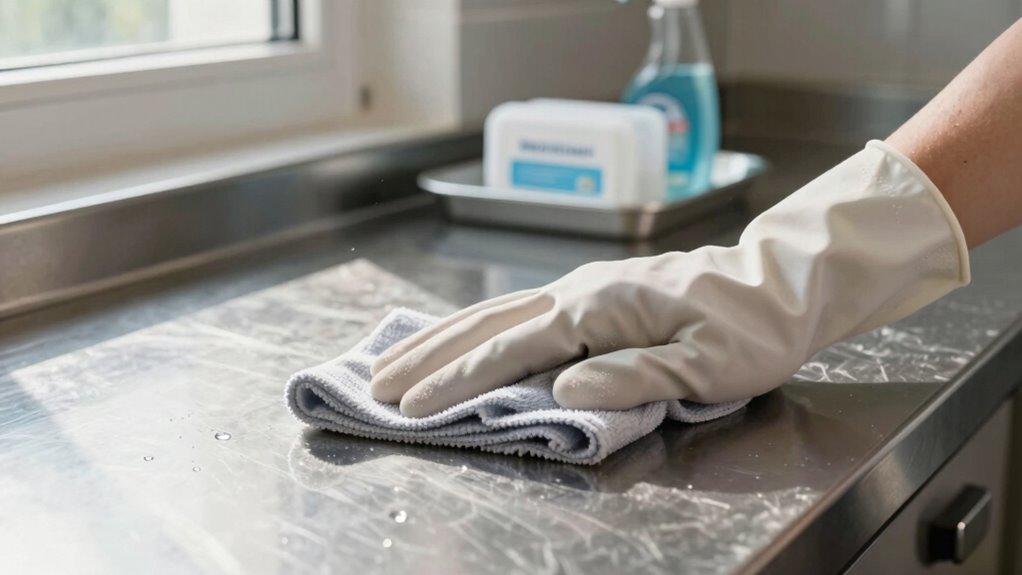
Yes, you should wear gloves when cleaning high-touch areas. Opt for gloves made of latex, nitrile, or vinyl, which provide good protection against cleaning chemicals. Use proper cleaning techniques by thoroughly covering surfaces and avoiding unnecessary contact with your face. Wearing gloves helps prevent the transfer of germs and chemicals to your skin, ensuring safer cleaning, especially when dealing with disinfectants or potentially contaminated areas.
How Do I Prevent Cross-Contamination During Cleaning?
Think of your cleaning process as a well-choreographed dance—each move matters. To prevent cross-contamination, use separate cloths or sponges for different surfaces, and always clean from the cleanest to the dirtiest. Follow proper cleaning techniques by disinfecting high-touch areas thoroughly, and avoid reusing contaminated tools. This careful approach keeps germs at bay and makes certain you’re effectively preventing contamination during every cleaning session.
Conclusion
By cleaning high-touch surfaces thoughtfully, you’re not just wiping away dirt—you’re shielding yourself and others from unseen threats. Think of your efforts as planting seeds of safety; each wipe nurtures a healthier environment. When you strike the right balance, cleaning becomes a shield rather than a sword, protecting your space without overdoing it. Remember, a mindful touch is the key to keeping your surroundings safe and sparkling, like a lighthouse guiding you safely through foggy waters.
Halloween Picks
halloween
As an affiliate, we earn on qualifying purchases.