
TL;DR

Get cleaning gear delivered free with Prime
- Fast, free delivery on millions of items
- Prime Video, Amazon Music and more included
- Member-only deals all year
A Hunker report outlines using an oil-based pigmented stain, such as Minwax Wood Finish, to color plain, prepared wood cabinets while leaving the grain visible. The method requires careful sanding, stain application and cleanup, followed by at least two coats of a protective topcoat; the report does not establish that oil stain is better for every cabinet or surface.
A Hunker woodworking report describes using oil-based stain to color plain wood cabinets while keeping their grain visible, offering an alternative to opaque paint or gel. The method depends on applying stain to prepared, bare wood and protecting it afterward with a separate topcoat, rather than treating stain as a complete finish.
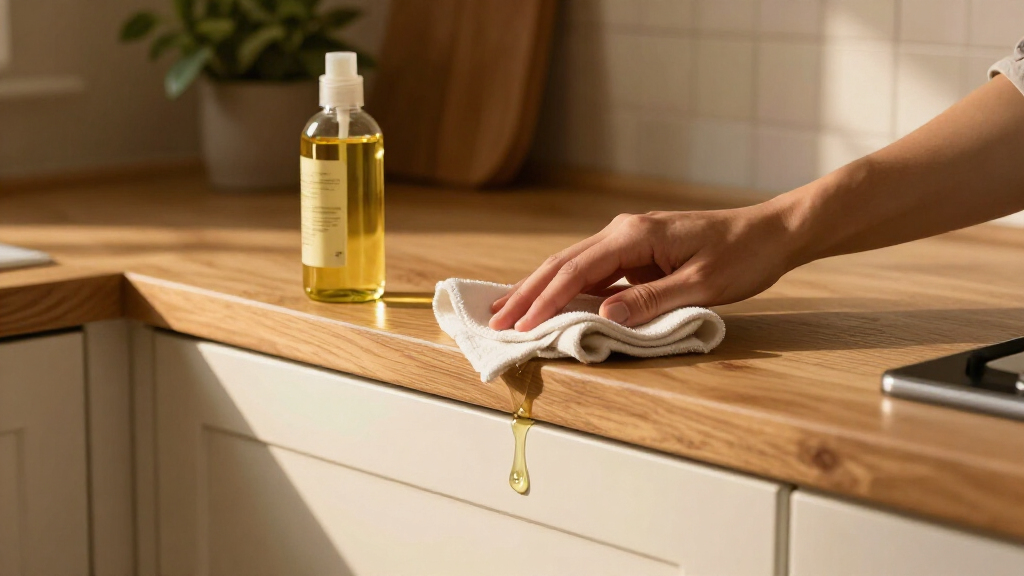
The report identifies Minwax Wood Finish as an example of a product that suspends pigments in an oil solution. Applied to raw, prepared wood, the stain adds color and can accent the wood’s grain. The author, who says he has more than 40 years of professional woodworking experience, describes the product as easy to apply and says it can provide even color across a large job such as a set of cabinets. Those are the author’s professional judgments, not comparative test results.
The suggested process starts by removing cabinet doors and hardware, cleaning the surfaces and sanding progressively. The author recommends starting with 60- or 80-grit sandpaper and working up to at least 220 grit, then removing dust with a tack cloth. He describes brushing stain over the wood, including corners and decorative details, and wiping away the excess with a cotton cloth or shop towel. Comparing stained pieces as work progresses can help identify differences in color.
Stain is only one part of the process: the report says to let it dry completely and apply at least two coats of polyurethane or a similar protective product. It also advises using mineral spirits for cleanup and laying stain-soaked rags flat to dry because they can present a fire hazard. Readers should follow the specific product label for drying, disposal, ventilation and safety instructions.
Keeping Wood Grain Visible
For homeowners who want to change the color of plain wood cabinets without concealing the grain, stain provides a different result from an opaque coating. The distinction matters: paint covers the wood’s visible pattern, while the method described in the report is intended to add pigment and retain that detail. The outcome will depend on the wood, its preparation and the selected stain color.
The process also makes clear that staining is not necessarily a shortcut. Removing hardware, sanding thoroughly, applying color evenly and adding a protective topcoat all take time. The two or more coats of topcoat are part of the proposed finish, not an optional detail if the surface needs protection. Readers should weigh the desired appearance against the work involved and confirm that their cabinets are suitable for the approach.
Minwax Wood Finish oil-based stain
As an affiliate, we earn on qualifying purchases.
As an affiliate, we earn on qualifying purchases.
Stain Is Not the Topcoat
The source report focuses on staining plain wood, not applying stain directly over a finished cabinet surface. It notes that pigmented oil stain can be used over an existing finish in a technique called glazing, but treats that as a separate method from the cabinet process it explains. A homeowner should not assume that the bare-wood preparation steps apply unchanged to finished, laminated or otherwise non-wood surfaces.
The word “finish” in a product name can also cause confusion, the author says. In this case, Minwax Wood Finish is described as a stain that colors wood; the report calls for a separate protective layer after the stain dries. Its recommendation is polyurethane or a similar product, with at least two coats. The source does not compare specific topcoats or provide product-specific drying times.
“After the stain has dried, a couple of coats of polyurethane or similar product needs to be applied for further surface protection.”
— Hunker report author
Suitability Depends on the Cabinets
The source does not specify which wood species, existing cabinet conditions or product formulations produce the best results, and it provides no independent testing that compares oil stain with paint or gel. It also does not give a complete project timeline or product-specific drying and recoat intervals. The source discusses bare wood; whether a particular cabinet can be sanded back to suitable wood is not established. Readers should check the manufacturer’s label and test the color on an inconspicuous area before treating an entire set of cabinets.
Check Product Directions Before Starting
The report does not announce a product launch or scheduled follow-up; it offers a practical method for readers considering a cabinet update. Before starting, identify the cabinet material and current coating, then confirm that the stain and chosen topcoat are compatible with the prepared surface. Follow label directions for application, ventilation, protective equipment, cleanup and disposal, and allow the stain to dry as directed before applying the topcoat. Keep stain-soaked rags flat and away from ignition sources while they dry, as the report warns of a fire hazard.
Key Questions
Can oil stain be applied directly over existing cabinet paint?
The report’s main instructions are for bare, prepared wood. It mentions glazing stain over an existing finish as a separate technique, but does not give enough detail to recommend applying oil stain over paint. Check the product instructions and test a small area first.
Does the stain protect cabinets on its own?
No. The report describes stain as the coloring step and calls for at least two coats of polyurethane or a similar topcoat after the stain has dried.
How should the cabinets be prepared?
The suggested steps are to remove doors and hardware, clean the surfaces, sand progressively from 60- or 80-grit to at least 220 grit, and remove dust with a tack cloth. The method is intended for plain wood, not every cabinet material.
What should I do with used stain rags?
The report says to lay stain-soaked rags flat and allow them to dry to reduce fire risk. Follow the product label and local rules for safe handling and disposal.
Source: rss
Columbus Day / Indigenous Peoples' Day Picks
long weekend sales
As an affiliate, we earn on qualifying purchases.