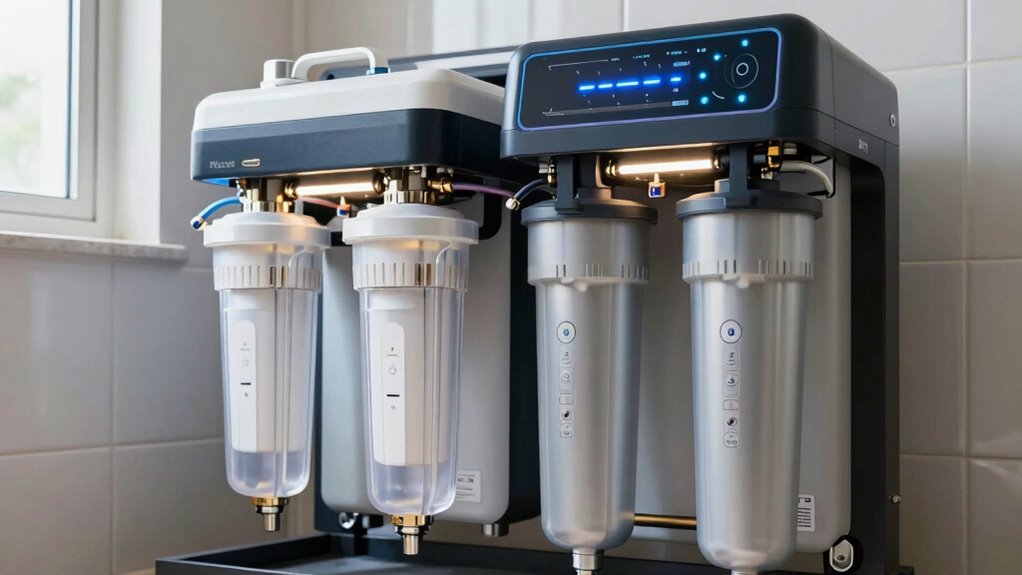

If you want ultra-pure drinking water and are okay with some mineral removal, a reverse osmosis system is ideal for your needs. It strips out impurities, bacteria, and heavy metals but may require mineral reintroduction to balance pH. A whole-house filtration system improves taste and eliminates chlorine and sediment but keeps most natural minerals intact. Consider your priorities, and you’ll find more details that can guide your choice for everyday use.

Get cleaning gear delivered free with Prime
- Fast, free delivery on millions of items
- Prime Video, Amazon Music and more included
- Member-only deals all year
Key Takeaways
- Reverse osmosis provides ultra-pure water by removing most contaminants but may strip beneficial minerals, affecting taste and pH.
- Whole-house filtration improves water taste, removes chlorine and sediment, and preserves natural minerals for daily use.
- RO systems are ideal for addressing high levels of dissolved solids and contaminants requiring purified drinking water.
- Whole-house systems are low-maintenance options suitable for general household water needs like bathing and cooking.
- The choice depends on whether priority is pure water quality or maintaining natural mineral content for everyday use.

Are you trying to decide between reverse osmosis and whole-house filtration systems for your water? Both options can considerably improve your water quality, but they serve different needs and come with distinct advantages. Understanding how each system impacts your water’s pH balance and mineral retention can help you make an informed choice. Reverse osmosis systems are known for their ability to strip away impurities, including bacteria, chemicals, and heavy metals, providing you with exceptionally clean water. However, this process also removes beneficial minerals, which can affect the water’s pH balance, making it slightly more acidic. If maintaining mineral content and a natural pH balance are priorities for you, an RO system might require additional steps, like remineralization filters, to restore those essential minerals and stabilize the pH.
Reverse osmosis removes impurities but can reduce minerals, affecting water’s pH balance and requiring remineralization.
On the other hand, whole-house filtration systems typically use a combination of filters, such as activated carbon or sediment filters, to target specific contaminants without stripping away all minerals. This means your water retains more of its natural mineral content, supporting a healthier pH balance. These systems are designed to treat water at the point of entry into your home, ensuring that every tap delivers filtered water, which is especially beneficial for everyday use—cooking, bathing, and drinking. Since they preserve minerals, whole-house filters often provide water that feels more natural and palatable, with a balanced pH that’s closer to neutral. Additionally, water mineral content plays a significant role in overall water quality and health benefits.
Understanding the different filtration methods can help you better evaluate which system aligns with your water quality needs. When choosing between the two, consider your specific water quality concerns. If you’re dealing with high levels of dissolved solids, heavy metals, or the need for ultra-pure water, reverse osmosis offers a thorough solution. But keep in mind, you’ll need to supplement with mineral reintroduction to maintain a proper pH balance and mineral retention. Conversely, if your goal is to improve taste, remove chlorine or sediment, and keep essential minerals intact, a whole-house filtration system is more suitable. It also tends to require less maintenance and energy, making it a practical choice for everyday water use.
Ultimately, your decision hinges on your priorities: whether you value absolute purity and are willing to manage mineral levels, or prefer a system that preserves your water’s natural qualities and pH balance. Both systems can enhance your water quality, but understanding their effects on mineral retention and pH will help you select the best fit for your home’s needs.
reverse osmosis water filtration system
As an affiliate, we earn on qualifying purchases.
As an affiliate, we earn on qualifying purchases.
Frequently Asked Questions
How Often Should I Replace Filters in Each System?
You should replace reverse osmosis filters every 6 to 12 months, depending on water quality and usage, while whole-house filtration filters typically last 6 to 12 months as well. Consider maintenance costs and installation complexity when planning replacements. Regularly checking filters guarantees peak performance and water quality, preventing costly repairs or system inefficiencies. Keep a schedule to avoid neglecting filter changes, which can impact your system’s lifespan and water safety.
Do These Systems Remove Beneficial Minerals From Water?
Ever wonder if your water system strips away beneficial minerals? Reverse osmosis often removes minerals like calcium and magnesium, leading to mineral depletion. Whole-house filtration systems typically retain these minerals, but some may also filter them out. To keep your water balanced, consider water remineralization post-filtration, adding back essential minerals for taste and health. Wouldn’t you prefer water that’s both clean and nourishing?
Which System Is More Energy-Efficient for Daily Use?
Whole-house filtration systems are generally more energy-efficient for daily use because they consume less energy compared to reverse osmosis units. Reverse osmosis systems require high-pressure pumps, which increase energy consumption and reduce overall system efficiency. If you prioritize low energy use and minimal maintenance, a whole-house filtration system is the better choice, as it provides clean water without the high energy demands associated with reverse osmosis.
Can Both Systems Be Installed Together?
Yes, you can install both systems together, but you need to take into account system compatibility and installation complexity. Reverse osmosis units typically require a separate space and specific connections, while whole-house filtration systems are integrated into your plumbing. Consulting a professional helps guarantee compatibility and a smooth installation process. Combining both can give you cleaner, safer water throughout your home, but it’s essential to plan carefully for maximum performance.
What Is the Typical Lifespan of Each Filtration System?
Like a trusty old friend, your filtration system’s lifespan depends on water quality and system maintenance. Reverse osmosis units typically last 2-3 years before filters need replacement, while whole-house systems often endure 10-15 years with proper upkeep. Regularly checking filters and addressing water quality issues prolongs their efficiency. Keep up with maintenance, and your systems will reliably provide clean water for years to come.
Conclusion
Choosing between reverse osmosis and whole-house filtration depends on your needs. For example, if you’re concerned about removing specific contaminants like lead, reverse osmosis is highly effective. However, for overall water quality and convenience, a whole-house system might suit you better. Imagine a family in a suburban home enjoying cleaner water straight from every tap—both systems can improve your water experience, but selecting the right one guarantees you meet your unique needs efficiently.
Halloween Picks
halloween
As an affiliate, we earn on qualifying purchases.