
To prevent laundry and utility room disasters, install leak sensors near common trouble spots like under washing machines, water heaters, and pipes. Position them low on the floor and secure on flat surfaces, then test each sensor with a small water flow to confirm proper function. Connect sensors to your smart home system for instant notifications and automatic shutoffs. Keep firmware updated and check sensors regularly. Want to discover more tips for better protection? Keep exploring how to optimize your leak sensor setup.

Get cleaning gear delivered free with Prime
- Fast, free delivery on millions of items
- Prime Video, Amazon Music and more included
- Member-only deals all year
Key Takeaways
- Place leak sensors near washing machines, water heaters, and pipes to detect leaks early in utility rooms.
- Regularly test sensors and ensure proper installation for reliable leak detection.
- Integrate sensors with smart home systems for automatic water shutoff and immediate alerts.
- Keep sensors low and close to the floor where leaks are likely to pool.
- Maintain secure Wi-Fi connections and update firmware to ensure accurate detection and prevent false alarms.
Ever wondered how to protect your laundry and utility rooms from costly water damage? Installing leak sensors is one of the smartest steps you can take. These devices detect leaks early, giving you peace of mind and preventing extensive damage. If you want to maximize their effectiveness, focus on smart home integration and sensor installation tips. Integrating leak sensors with your smart home system allows for seamless alerts and automation, making it easier to respond quickly. Many modern sensors connect directly to your Wi-Fi or smart hub, enabling notifications on your phone or even triggering other devices, like shutting off the water supply automatically when a leak is detected. This level of integration not only saves you money but also reduces stress, especially if you travel frequently or own multiple properties.
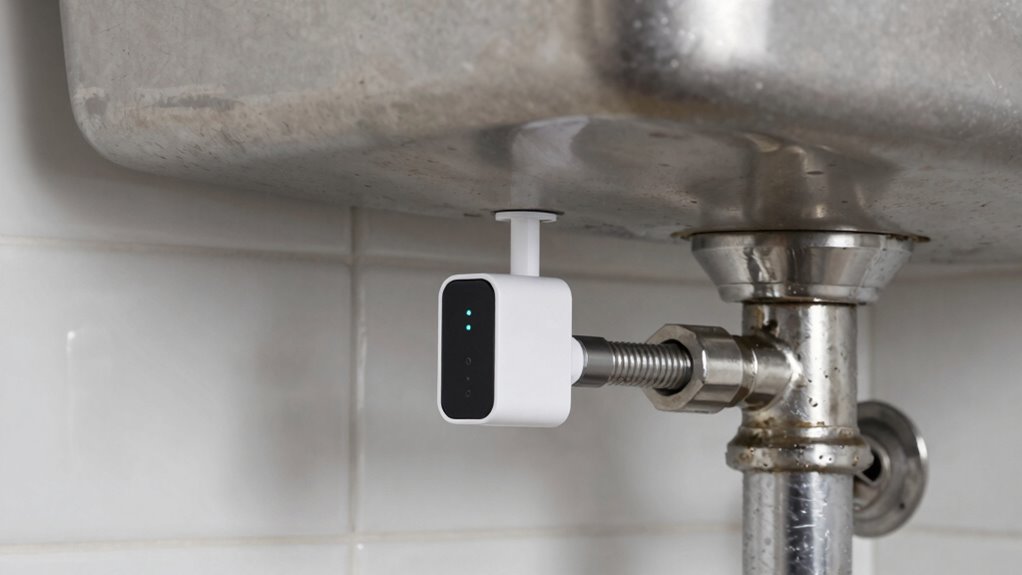
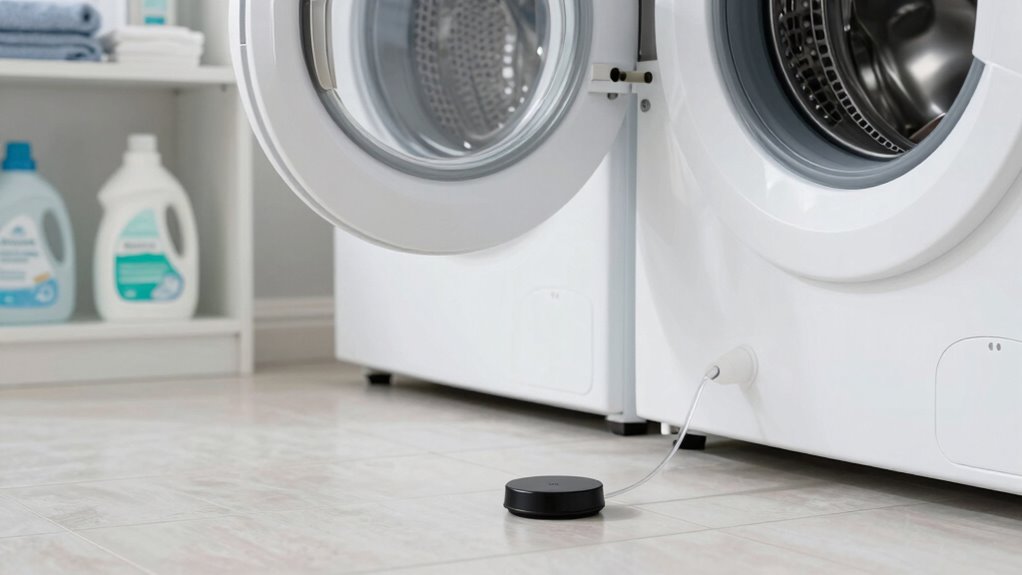
When installing leak sensors, placement is essential. Position them near potential trouble spots: under the washing machine pan, behind the water heater, near sinks, and close to water pipes or valves. Keep sensors at a low height, close to the floor, where leaks are most likely to pool. Be sure to follow the sensor manufacturer’s installation tips; most recommend mounting sensors on flat, stable surfaces and avoiding areas with heavy dust or vibration that could cause false alarms. You should also test each sensor after installation to confirm it’s working properly—simply place a small amount of water near the sensor to verify it activates and sends alerts. Regular testing and maintenance are vital to keep your leak detection system dependable. Additionally, choosing sensors with reliable connectivity can help ensure consistent alerts and reduce false alarms. Ensuring your sensors have secure network connections is also critical to protect against hacking risks. Incorporating advanced sensor technology can further improve detection accuracy and minimize false positives. Moreover, selecting sensors with smart notification features allows for more timely and targeted alerts, enhancing your overall safety system. To further enhance your system, consider choosing sensors with long-lasting batteries, which can minimize maintenance and ensure continuous operation.
In addition to placement and testing, consider how your sensors connect with your existing smart home ecosystem. Many sensors work with voice assistants like Alexa or Google Home, so you can get spoken alerts or control other smart devices via voice commands. Setting up automation routines, such as shutting off the main water supply when a leak is detected, can greatly reduce damage. Be sure to secure your Wi-Fi network and update firmware regularly to guard against potential hacking risks and to ensure your sensors operate with the latest features. Also, keep spare batteries handy if your sensors are battery-operated, so they stay functional at all times.
water leak sensor for laundry room
As an affiliate, we earn on qualifying purchases.
As an affiliate, we earn on qualifying purchases.
Frequently Asked Questions
How Often Should Leak Sensors Be Tested for Proper Functionality?
You should test your leak sensors monthly to make certain proper functionality. During testing, check sensor calibration and moisture sensitivity by applying a small amount of water or using the test button if available. Regular testing helps confirm that sensors detect leaks accurately and respond promptly, preventing potential water damage. Keeping sensors maintained and calibrated guarantees they remain reliable in alerting you to leaks, protecting your laundry or utility room effectively.
Are Leak Sensors Compatible With Smart Home Automation Systems?
Think of your smart home as a symphony, where each device, including leak sensors, plays a essential role. Many leak sensors are compatible with smart home automation systems, acting like vigilant guardians. With sensor integration, they seamlessly connect to your smart home setup, allowing you to monitor and receive alerts instantly. This harmony helps you prevent disasters efficiently, giving you peace of mind knowing your laundry and utility rooms stay safe and dry.
What Is the Typical Lifespan of a Leak Sensor Battery?
The typical lifespan of a leak sensor battery usually ranges from one to three years, depending on usage and sensor durability. You should plan for regular battery replacement to guarantee reliable detection. Many sensors have low-battery alerts, so you’re notified in advance. Keep an eye on your sensor’s performance and replace batteries promptly to maintain protection. Proper maintenance helps extend your leak sensor’s effectiveness and longevity.
Can Leak Sensors Detect Slow Leaks or Only Major Bursts?
Leak sensors can detect both minor leaks and major bursts, thanks to their adjustable sensor sensitivity. You set the sensitivity level based on your needs, so even slow leaks won’t go unnoticed. When you increase sensitivity, the sensor detects minor leaks early, preventing water damage. Be sure to monitor and adjust the sensitivity regularly to guarantee it’s optimized for detecting small leaks while avoiding false alarms.
How Do I Choose the Best Leak Sensor for My Laundry Room?
You should choose a leak sensor with reliable water detection and easy sensor placement. Ironically, the best sensor isn’t necessarily the most expensive; it’s the one that fits your laundry room’s layout and detects leaks early. Look for features like adjustable sensitivity, waterproof design, and easy installation. Proper sensor placement—near the washer, pipes, and potential leak spots—ensures you catch problems before they cause damage.
Conclusion
By installing leak sensors in your laundry and utility rooms, you’re taking a vital step to prevent unexpected disasters. But the real question is—will these sensors catch the leak before it causes significant damage? The answer depends on how quickly you act once they alert you. Don’t wait until it’s too late. Stay vigilant, stay protected, and let these sensors be your silent guardians—ready to alert you when disaster is just around the corner.
Halloween Picks
halloween
As an affiliate, we earn on qualifying purchases.