
To keep your floors clean and hygienic with weekly mopping, you should use high-quality supplies suited to your flooring type. Sweep or vacuum first, then mop with warm water and the right cleaner, avoiding harsh chemicals. Use proper techniques, like overlapping strokes, and dry the floor thoroughly afterward. Consistently following these steps helps preserve your floors and maintain a healthy environment. Keep going for tips to make your weekly mopping even more effective.
Key Takeaways
- Use appropriate cleaning tools and floor cleaners to prevent damage and ensure effective dirt removal.
- Sweep or vacuum thoroughly before mopping to remove loose debris and prevent scratching.
- Follow proper mopping techniques, including wringing out the mop and overlapping strokes for thorough coverage.
- Work from the farthest corner toward the exit, then dry floors to prevent streaks and water damage.
- Maintain a weekly routine to preserve floor appearance, hygiene, and extend flooring lifespan.
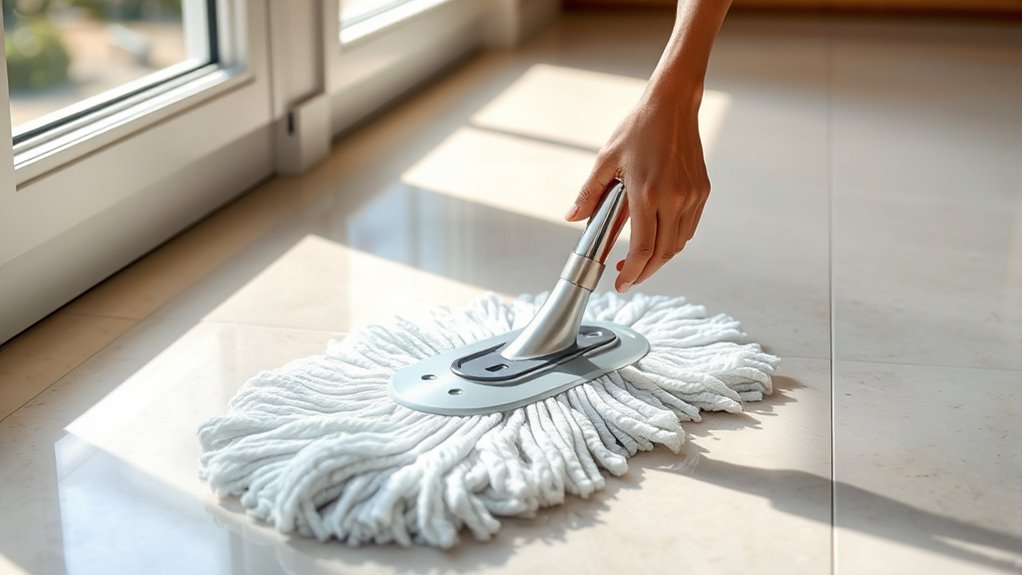
Keeping your floors spotless often starts with a simple routine: weekly mopping. This essential task not only keeps your home looking tidy but also helps maintain a hygienic environment. To get the most out of your mopping routine, you need to adopt effective floor cleaning tips and proper mopping techniques. By doing so, you’ll ensure your floors stay sparkling clean and free from germs, dirt, and grime.
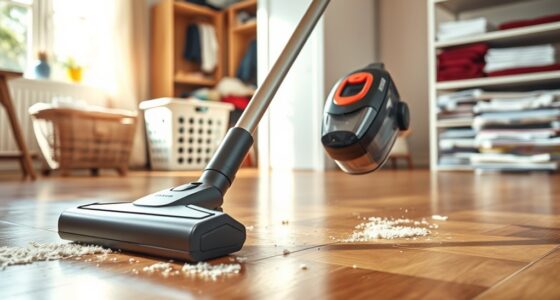
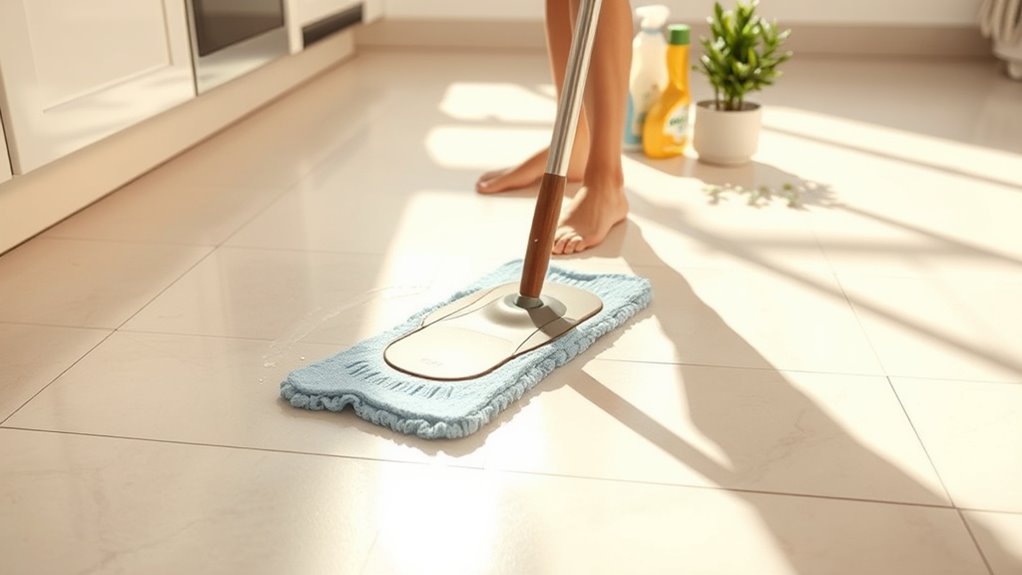
Start by preparing your cleaning supplies. Use a high-quality mop suited for your floor type—whether it’s a microfiber mop for hardwood or a sponge mop for tiles. Fill a bucket with warm water and add a suitable floor cleaner, following the manufacturer’s instructions. Avoid harsh chemicals that could damage your flooring or leave residues that attract more dirt. Before mopping, sweep or vacuum the area thoroughly to remove loose debris. This step prevents scratching and ensures your mopping efforts are focused on cleaning, not just spreading dirt around.
Once your area is prepped, it’s time to begin mopping. Dip the mop into the cleaning solution, then wring it out well. Excess water can cause streaks or damage, especially on hardwood floors, so ensure your mop is damp but not dripping. When mopping, use a figure-eight motion or overlapping strokes to cover the entire surface effectively. Pay extra attention to corners and edges, where dust and grime tend to accumulate. Rinse and wring your mop frequently to prevent spreading dirt around, and change the cleaning water if it becomes visibly dirty. This helps maintain the cleaning power of your solution and prevents recontamination.
Another key mopping technique is to work from the farthest corner of the room toward the exit, so you don’t walk over freshly cleaned areas. After mopping, allow the floor to air dry or use a clean microfiber cloth for quick drying, especially on hardwood or laminate floors. If you notice streaks or spots, revisit those areas with a dry cloth or a slightly damp mop. Regularly maintaining this routine not only preserves the appearance of your floors but also extends their lifespan. Incorporating correct mopping techniques ensures optimal results and prevents damage.
Incorporating a consistent mopping schedule, along with proper floor cleaning tips and techniques, ensures your home remains hygienic and visually appealing. Remember, effective mopping doesn’t require complex tools or products—just a little preparation, attention to detail, and regularity. When done right, weekly mopping becomes a simple but powerful step in keeping your floors spotless, safe, and inviting.

Microfiber Mops for Hardwood Floor Cleaning – BPAWA Flat Floor Mop with 4 Washable Pads for Laminate Wood Tile Vinyl Home Kitchen Bathroom – 59" Adjustable Handle
Microfiber Mops for Floor Cleaning: Flat floor mop with adjustable long handle, flexible lightweight but sturdy, great for…
As an affiliate, we earn on qualifying purchases.
As an affiliate, we earn on qualifying purchases.
Frequently Asked Questions
How Often Should I Change My Mop Head?
You should change your mop head every 2 to 3 months, depending on the mop head lifespan and how often you clean. If you notice fraying, lingering odors, or reduced cleaning effectiveness, it’s time for a replacement. Regularly inspecting your mop head guarantees you maintain hygienic floors. Don’t wait too long, as worn-out mop heads can spread dirt and germs, compromising your cleaning routine.
Can I Use Bleach in My Mopping Solution?
Using bleach in your mopping solution is like adding fire to water—effective but risky. You can do it, but you must follow bleach safety guidelines carefully. Always dilute bleach properly and avoid mixing it with other cleaners. For safer options, consider alternative disinfectants like vinegar or commercial floor cleaners. These can sanitize without the hazards associated with bleach, keeping your floors clean and your household safe.
What Type of Mop Is Best for Hardwood Floors?
You should use a microfiber or soft cotton mop for hardwood floors because their gentle mop material protects the delicate surface. These mops effectively clean without scratching or damaging your hardwood, supporting proper hardwood care. Avoid rough or abrasive mops, which can harm the finish. Regularly rinse and dry the mop to prevent moisture buildup, helping you maintain beautiful, clean, and well-preserved hardwood floors.
How Do I Prevent Streaks After Mopping?
Did you know that using a microfiber mop can reduce streaks by 30%? To prevent streaks after mopping, focus on proper mopping techniques like rinsing your mop frequently and using a damp, not soaked, mop. Always mop in a figure-eight motion and avoid over-wetting the floor. These tips help you achieve a spotless, streak-free shine every time, making your floors look their best.
Is It Necessary to Sanitize Mops Regularly?
Yes, you should disinfect your mops regularly to prevent bacteria buildup and maintain a hygienic environment. Proper mop storage helps keep the mop dry and reduces mold growth, making sanitation easier. Cleaning frequency depends on how often you mop and the level of dirt, but sanitizing at least weekly is recommended. This routine ensures your mop stays effective and your floors stay clean and safe.

Microfiber Spray Mop for Floors Cleaning: Wet Dry Hardwood Floor Mops with 3 Washable Reusable Pads for Swiffer Powermop – Flat Mop with Sprayer for Tile Wood Laminate Vinyl Marble
Spray Mop for Effortless Cleaning: This spray mop has both wet and dry functions and is designed for…
As an affiliate, we earn on qualifying purchases.
As an affiliate, we earn on qualifying purchases.
Conclusion
So, keep up with your weekly mopping—because nothing says “I care” like a floor so spotless you could eat off it. Sure, you might prefer binge-watching your favorite show instead of scrubbing, but hey, a shiny floor is the real housekeeper’s badge of honor. Remember, dirt and grime are just waiting to embarrass you during unexpected visits. So, grab that mop and show those germs who’s boss—your floor’s sparkle depends on it!

O-Cedar EasyWring Microfiber Spin Mop, Bucket Floor Cleaning System, Red, Gray, Standard
HANDS-FREE WRINGING: Our exclusive mop bucket design features a built-in wringer that allows for hands-free wringing while Splash…
As an affiliate, we earn on qualifying purchases.
As an affiliate, we earn on qualifying purchases.

Quick Shine Multi Surface Floor Finish 64oz | Cleaner & Polish to use on Hardwood, Laminate, Luxury Vinyl Plank LVT, Tile & Stone | Safer Choice w/Clean Shine Technology | Shine-Protect-Refresh
Use on Hardwood, Laminate, LVT-Luxury Vinyl Tile, LVP-Luxury Vinyl Plank, Tile or Stone floors
As an affiliate, we earn on qualifying purchases.
As an affiliate, we earn on qualifying purchases.