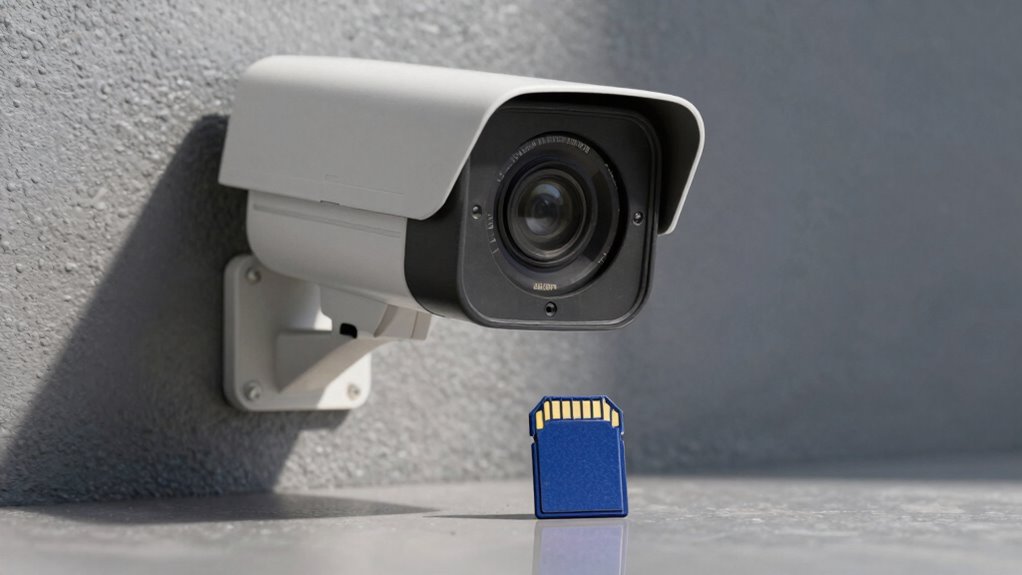

Memory cards and local storage matter for your security cameras because they give you reliable recording, even during internet outages. They keep footage private and reduce your reliance on cloud services, saving you money in the long run. Local storage also offers faster access to footage and adds extra security layers to prevent hacking. If you want to discover how these benefits protect your system and keep your data safe, there’s more to explore.
Listen free for 30 days with Audible
Thousands of audiobooks and originals — cancel anytime.
As an affiliate, we earn on qualifying purchases.
Key Takeaways
- Local storage ensures continuous recording during internet outages, maintaining security coverage without interruption.
- It offers enhanced privacy by keeping footage physically within the premises, reducing cyber attack risks.
- Memory cards provide cost-effective, long-term storage, eliminating recurring cloud subscription fees.
- Increased storage capacity supports extended recording periods, essential for comprehensive security monitoring.
- Combining local storage with cloud backups creates a layered security approach for greater data protection.
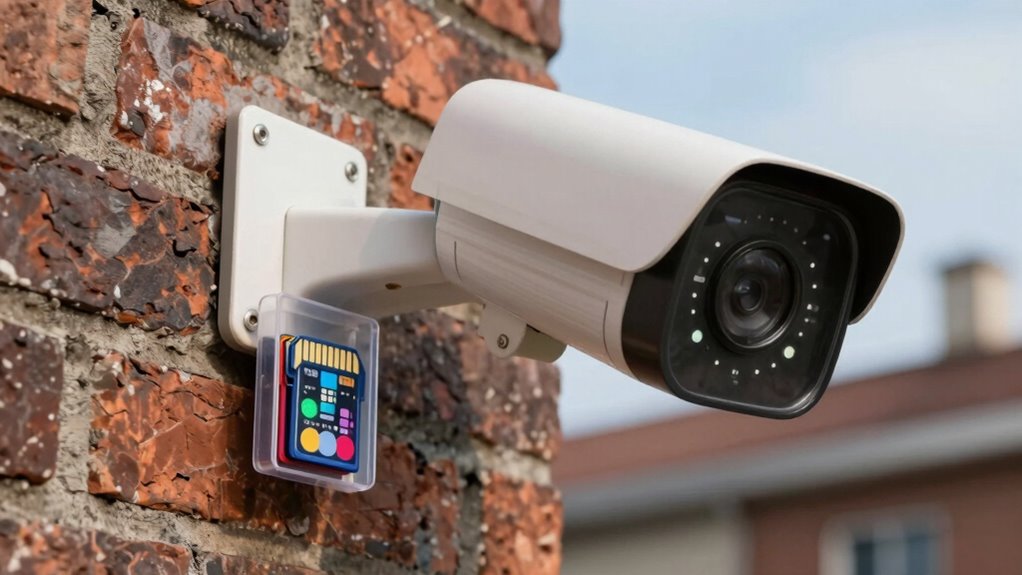
Have you ever wondered how security cameras store footage without relying solely on cloud services? The answer often lies in local storage options like memory cards, which play a crucial role in many security setups. While cloud integration is popular for its convenience and remote access, local storage offers undeniable advantages, especially in situations where internet connectivity is unreliable or security concerns are high. When a camera has a slot for a memory card, it can record footage directly onto the card itself, reducing dependence on Wi-Fi or internet connection. This makes it a dependable backup, ensuring that your security system keeps working even if your network goes down.
Local storage with memory cards ensures reliable, offline security footage recording even during internet outages.
Wireless connectivity has made security cameras more flexible, but it also introduces vulnerabilities. Relying exclusively on cloud storage means your footage is stored externally, often on third-party servers, which can raise privacy concerns and sometimes lead to increased costs. Local storage, on the other hand, keeps your footage within your control. Memory cards and other local storage devices don’t need an internet connection to operate, making them ideal for environments where internet access is limited or unstable. Plus, with local storage, you avoid potential delays caused by uploading footage to the cloud, giving you quicker access to critical recordings when needed. Additionally, storage technology advancements have further improved the performance and durability of memory cards, making them even more reliable for continuous security use.
Another benefit of local storage is its resilience against cyber threats. Hackers often target cloud accounts or remote servers to gain access to footage, but local storage offers a layer of protection because the data remains physically within your premises. You can also set up multiple layers of security, like encrypted memory cards, to prevent unauthorized access. This is especially important if you’re concerned about sensitive footage or want to minimize data breaches. Furthermore, storage capacity improvements have allowed for storing larger amounts of footage on a single card, reducing the need for frequent replacements and expanding storage options. As technology advances, the longevity of memory cards has also increased, ensuring reliable performance over extended periods.
Furthermore, memory cards and local storage devices are typically more cost-effective over time. Cloud storage plans can add up, especially if you need to store large amounts of footage or retain recordings for an extended period. Local storage allows you to buy a memory card once and use it repeatedly, saving money in the long run. Plus, many modern security cameras support high-capacity memory cards, giving you the ability to record for weeks or even months depending on the quality and settings.
In short, while cloud integration and wireless connectivity have revolutionized security cameras, local storage options like memory cards continue to be relevant. They provide security, independence from internet issues, cost savings, and peace of mind that your footage is stored safely on-site. For thorough security, combining both approaches often offers the best of both worlds.
As an affiliate, we earn on qualifying purchases.
Frequently Asked Questions
Can Local Storage Prevent All Types of Cyberattacks on Security Cameras?
Local storage can’t prevent all cyberattacks on security cameras, especially remote access breaches. While storing footage on memory cards or local drives reduces exposure to remote hacking, attackers can still exploit vulnerabilities in the camera’s network or software. Implementing data encryption and strong security protocols helps protect stored data, but thorough security requires a layered approach. So, local storage alone isn’t foolproof against every cyber threat.
How Does Local Storage Impact Data Recovery After a System Failure?
While cloud backups can be disrupted, local storage guarantees quick, reliable data retrieval after a system failure. You benefit from storage reliability because your footage remains accessible even when internet issues or cyberattacks occur. This juxtaposition highlights that, unlike remote servers, local storage offers direct control, making data recovery straightforward and minimizing downtime. You can restore security footage swiftly, maintaining your peace of mind and operational continuity.
Are Memory Cards Resistant to Physical Damage or Environmental Conditions?
Memory cards offer moderate resistance to physical damage and environmental conditions. They are designed with some physical durability, such as shock resistance, but can still be vulnerable to extreme impacts or rough handling. Their environmental resilience varies; many are built to withstand moisture, dust, and temperature changes, but extended exposure to harsh elements can still cause damage. So, while they provide decent protection, taking extra precautions is always wise.
What Are the Cost Differences Between Cloud Storage and Local Storage?
Imagine a wallet overflowing with coins versus one with just a few bills. Cloud storage often has ongoing subscription fees, making the cost comparison clear—you’re paying monthly for storage expenses. Local storage, like memory cards, involves an upfront investment but no recurring costs. You see, with cloud, costs can add up over time, while local storage provides a one-time expense, giving you more control and predictable expenses.
How Long Can Security Footage Be Stored Locally Before Needing to Replace Storage?
You can store security footage locally for varying durations based on your storage capacity and data longevity needs. Typically, a 64GB memory card holds about a week of footage, while larger capacities like 256GB can store several weeks. The actual timeframe depends on video quality and recording settings. To guarantee continuous surveillance, regularly monitor your storage and replace or expand it before it runs out, maintaining ideal security coverage.
Conclusion
In the end, memory cards and local storage are the bedrock of security camera reliability. They act like a sturdy vault, safeguarding your footage even when the internet goes dark or cyber threats loom. While cloud options shine in convenience, local storage keeps your footage close, like a trusted confidant. Never underestimate their quiet strength—your security’s anchor in a sea of digital chaos. Keep them in mind, and your peace of mind will stay firmly anchored.
Flea & tick season Picks
flea and tick prevention
As an affiliate, we earn on qualifying purchases.