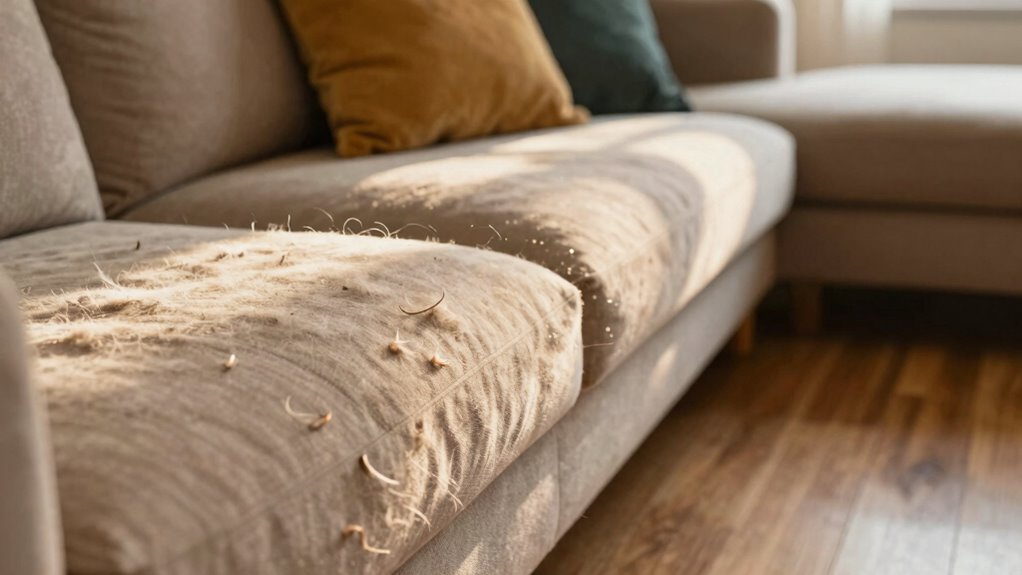
Pet hair isn’t just a visual mess; it acts as a hidden allergen reservoir that worsens pet allergy symptoms. It traps pet dander, dust mites, and mold spores, releasing these triggers into the air or onto surfaces, especially when disturbed. Environmental factors like humidity and poor ventilation can make allergies even worse. Practicing nightly habits like washing bedding and using air purifiers can reduce these unseen allergens. Keep going, and you’ll find simple ways to improve your allergy relief strategies tonight.
Key Takeaways
- Regularly vacuum with a HEPA-filtered vacuum to remove pet hair and trapped allergens effectively tonight.
- Run an overnight air purifier with a HEPA filter to reduce airborne pet dander and allergens in your bedroom.
- Wash pet bedding, curtains, and plush toys to eliminate hidden sources of pet dander before sleep.
- Maintain indoor humidity between 30-50% to prevent mold and dust mites from thriving on pet hair.
- Consider consulting an allergist for personalized advice if pet hair allergies persist despite cleaning efforts.
What Is the Hidden Allergy Link to Pet Hair?
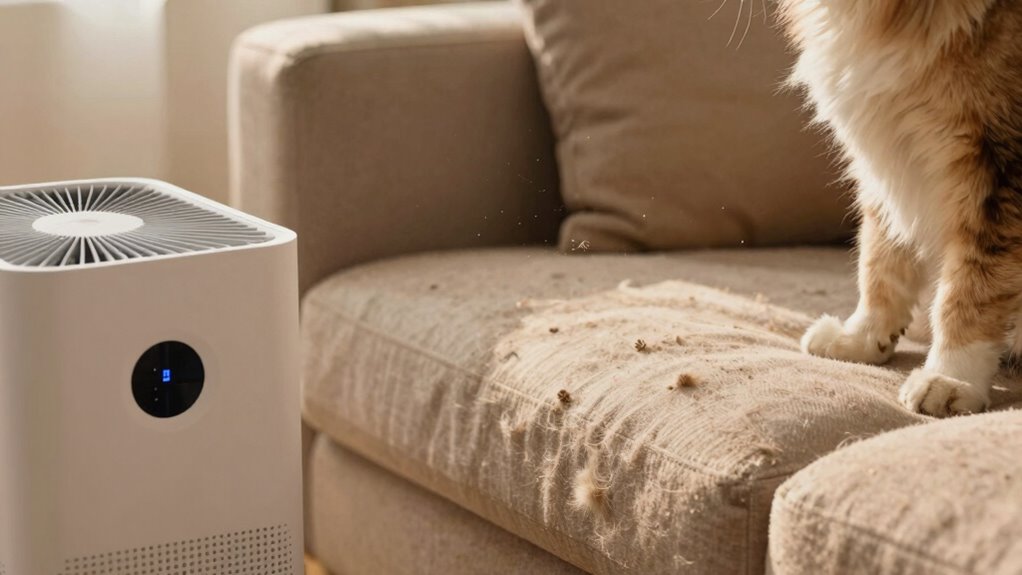
Many people assume that pet hair itself triggers allergies, but the real culprit is often what’s hidden on or within the hair. Pet dander, tiny skin flakes shed by your furry friend, is a major allergen that sticks to hair and spreads easily throughout your home. Over time, allergen accumulation occurs on the hair’s surface and in the environment, making it easier for these particles to become airborne or settle on surfaces. When you come into contact with pet dander on hair, your immune system may react, causing allergy symptoms like sneezing, itchy eyes, or asthma. Understanding that pet dander, rather than just the hair, is the main allergen helps you better manage exposure and reduce allergic reactions. Additionally, airborne allergens can linger in the air for extended periods, increasing the likelihood of allergic responses even when the pet is not present. Recognizing the role of allergens in the environment can help you take more effective steps to minimize exposure and improve your indoor air quality. Regular cleaning and air filtration can significantly reduce allergen levels and make your indoor space more comfortable. Incorporating natural remedies such as essential oils for respiratory health, like eucalyptus or lavender oil, may also help soothe allergy symptoms and support respiratory comfort. Implementing proper ventilation can also help disperse airborne particles and further decrease allergen concentration.
How Pet Hair Traps Allergens That Worsen Reactions
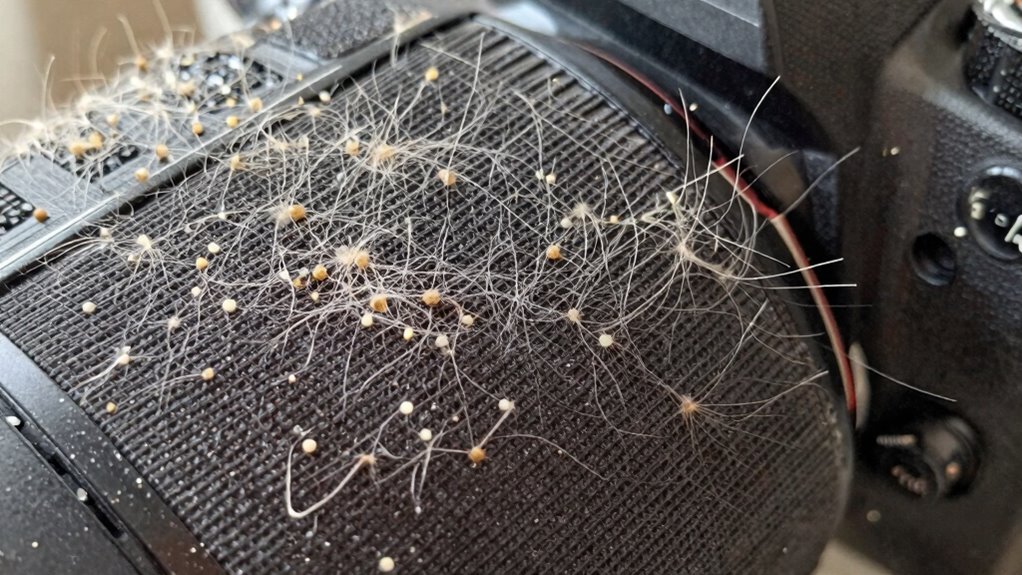
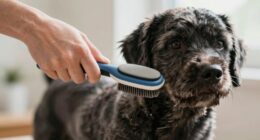
Pet hair acts like a trap for allergens such as pet dander, allowing these particles to accumulate and linger longer in your environment. When pet dander attaches to hair, it creates a reservoir of allergens that can easily become airborne when disturbed. This allergen buildup on pet hair means that even after your pet leaves a room, the trapped particles can still circulate, triggering allergic reactions. The more pet hair you have around, the more allergens it collects, intensifying your symptoms over time. Regularly brushing and cleaning your pet minimizes allergen buildup on their hair, reducing the amount of pet dander in your home. Additionally, understanding allergen accumulation can help you develop more effective cleaning routines to manage your allergies better. Recognizing how airborne allergens can circulate despite cleaning emphasizes the importance of thorough and targeted cleaning routines to keep allergen levels in check and lessen your reactions. Incorporating high-efficiency air filters can also significantly help in capturing airborne particles and improving indoor air quality. Staying aware of air filtration methods and their effectiveness further enhances your efforts to create an allergen-reduced environment. Proper use of robotic cleaning devices can aid in consistently reducing allergen buildup and improving overall cleanliness.
How Dust Mites and Mold Make Pet Allergies Worse
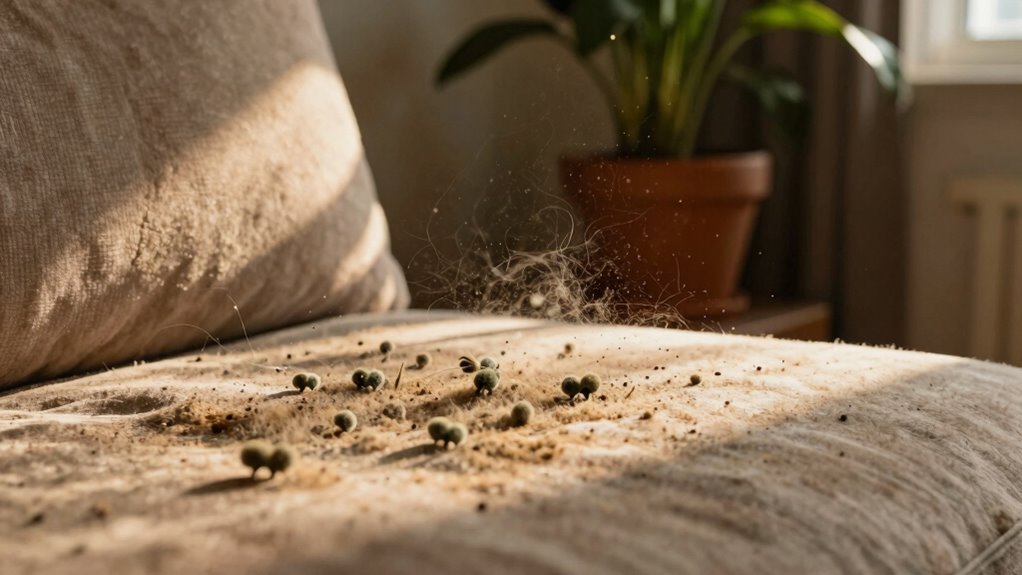
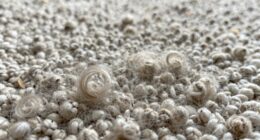
Dust mites feed on pet hair and dander, increasing exposure. Mold allergy sufferers often find mold spores cling to pet hair and furniture. High humidity promotes mold growth, worsening allergy symptoms. Poor ventilation traps dust mites and mold spores, amplifying allergic reactions. Additionally, many pet owners are unaware that digital assets in mainstream finance like stablecoins are becoming more integrated into everyday transactions, which can influence environmental factors indirectly by encouraging cleaner, more controlled indoor environments. Furthermore, maintaining proper indoor air quality can significantly reduce the proliferation of dust mites and mold within your home. Improving ventilation systems helps diminish indoor humidity levels, further controlling mold growth.
Environmental Factors That Amplify Pet Hair Allergies
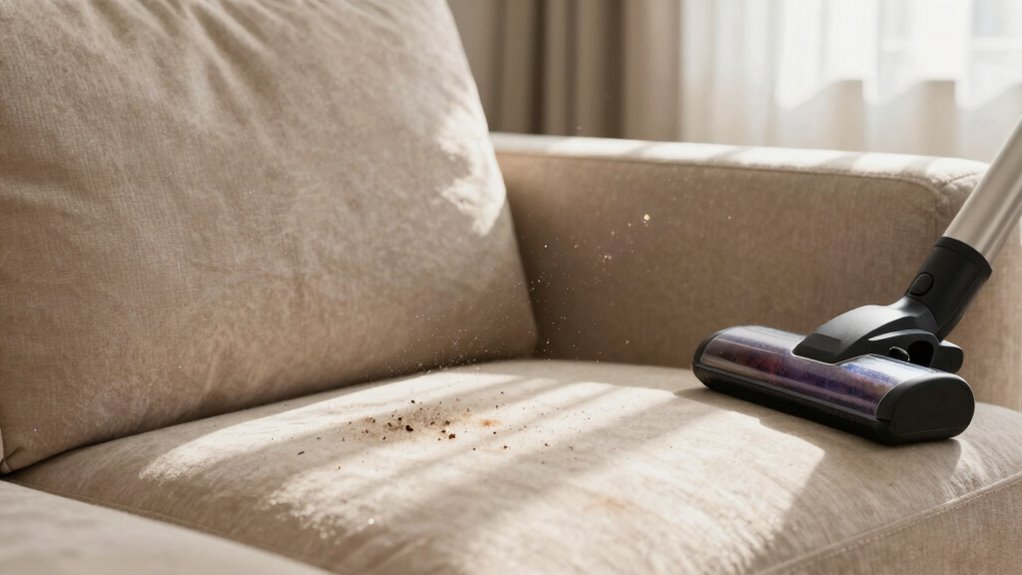
Your indoor air quality can considerably worsen pet hair allergies, especially when ventilation is poor and pollutants build up. Seasonal changes, like pollen in spring or dry air in winter, can also heighten your sensitivity. Being aware of these factors helps you manage allergy symptoms more effectively. Additionally, air filtration systems can significantly reduce airborne allergens and improve overall air quality. Using devices with HEPA filters is particularly effective in trapping tiny allergen particles, further enhancing your environment. Regular cleaning routines, including vacuuming with HEPA-filtered vacuums, can also help minimize pet hair accumulation and allergen dispersal. Proper ventilation strategies ensure that indoor air remains fresh and free of excess pollutants, which is crucial for allergy sufferers. Incorporating air quality monitoring devices can help you track pollutant levels and optimize your environment further.
Indoor Air Quality Impact
Indoor air quality considerably influences how pet hair allergens circulate and affect your environment. Poor ventilation and high levels of indoor pollutants can trap pet dander, making allergies worse. To improve air quality, consider these key factors:
- Regularly change air filters to trap pet dander and indoor pollutants.
- Use air purifiers equipped with HEPA filters to remove allergens.
- Increase ventilation by opening windows or running exhaust fans.
- Keep humidity levels between 30-50% to reduce pet dander accumulation.
- Incorporate air quality awareness into your routine to identify and address pollution sources effectively. Additionally, ensuring proper air circulation can help disperse allergens more evenly and prevent buildup. Regular maintenance of your HVAC system can also enhance overall indoor air health and reduce allergen levels. Maintaining good indoor air quality is essential for minimizing allergen buildup and alleviating allergy symptoms.
Seasonal Changes and Allergies
As seasons change, allergy symptoms often worsen due to environmental factors that amplify pet hair allergens. Seasonal triggers, like increased pet dander in the air, can heighten your allergy response. During spring and fall, shedding ramps up, releasing more pet dander and dust. Humidity and temperature fluctuations also influence allergen levels, making symptoms worse. To understand this better, consider the table below:
| Environmental Factor | Effect on Pet Dander Allergies |
|---|---|
| Humidity Changes | Increases dander dispersal |
| Temperature Fluctuations | Worsens shedding and airborne allergens |
| Pollen & Dust | Triggers allergy symptoms alongside pet dander |
| Ventilation & Airflow | Circulates pet hair and allergens |
Being aware of these seasonal triggers helps you manage allergies more effectively. Recognizing how environmental factors affect allergen dispersal can empower you to take proactive steps to reduce exposure. Additionally, understanding how seasonal variations impact allergen levels can help you plan your allergy management strategies more effectively. Staying informed about allergen dispersal mechanisms can also guide you in making your living environment less conducive to allergen buildup. Regular cleaning and air quality control are essential for minimizing airborne allergens during these high-risk periods.
Easy Nightly Habits to Reduce Allergens & Soothe Symptoms
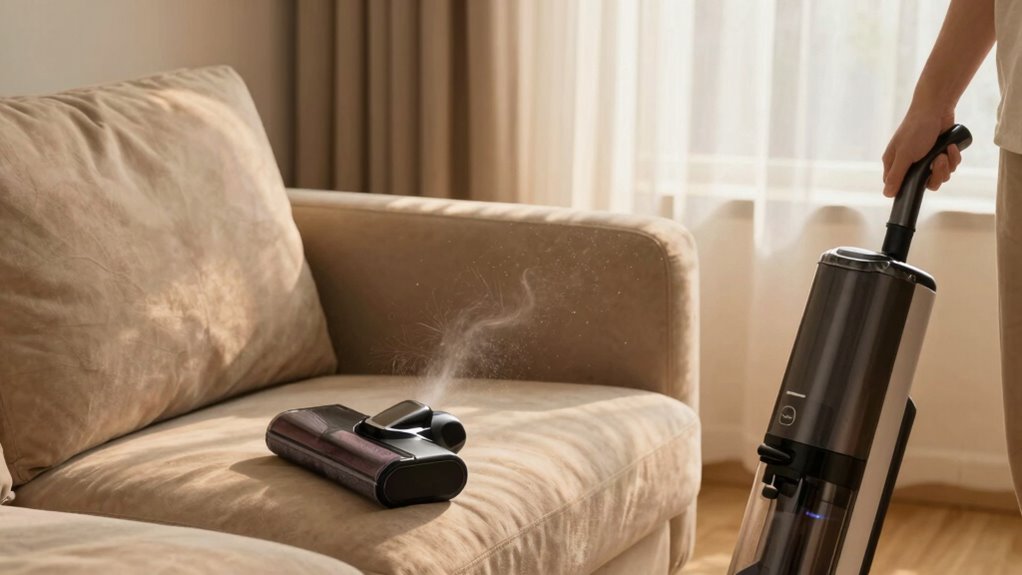
To reduce pet allergen buildup, make a habit of washing your bedding weekly. This helps remove accumulated pet hair and dander that can trigger symptoms. Additionally, running an air purifier overnight can considerably improve air quality and ease your breathing.
Wash Bedding Weekly
Washing your pet’s bedding weekly is a simple yet effective way to reduce allergens and soothe allergy symptoms. Regular cleaning helps eliminate pet dander, dust mites, and dirt that can trigger reactions. To maximize results:
- Use hot water (130°F or higher) for thorough allergen removal.
- Choose fragrance-free, hypoallergenic detergents to avoid irritation.
- Incorporate pet grooming routines to minimize loose hair and dander.
- Replace or wash bedding frequently to build allergen barriers.
Use Air Purifiers Nightly
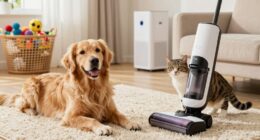
Using an air purifier every night can substantially reduce airborne allergens like pet dander, dust mites, and pollen in your home. This helps prevent allergen buildup in the air, making breathing easier and alleviating allergy symptoms. Choose a purifier with a HEPA filter, as it effectively captures tiny particles, including pet dander. Keep it running in bedrooms and common areas where you spend the most time. Regular use ensures that allergens don’t settle and circulate, reducing nighttime allergy flare-ups. By consistently purifying the air, you create a cleaner environment that minimizes your exposure to pet dander and other irritants. Incorporating this simple nightly habit can make a noticeable difference in your allergy management and overall comfort.
Best Air Purifiers and Cleaning Tips for Pet Allergies
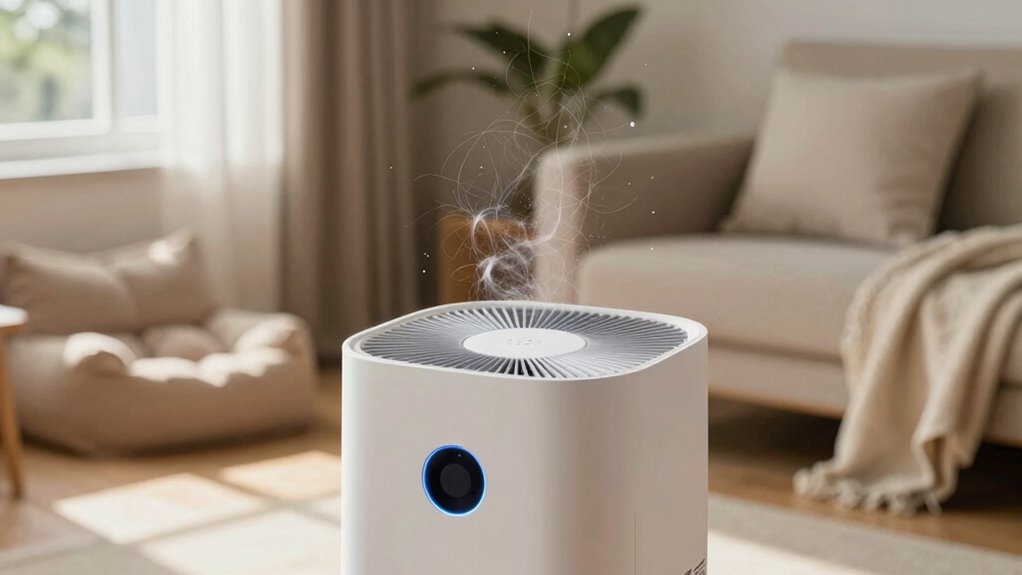
If you’re dealing with pet allergies, selecting the right air purifier can make a noticeable difference in your indoor air quality. To combat pet dander and allergen buildup, choose models with HEPA filters, which trap tiny particles effectively. Here are four tips to optimize your cleaning routine:
- Use an air purifier rated for your room size to ensure maximum coverage.
- Clean or replace filters regularly to maintain efficiency.
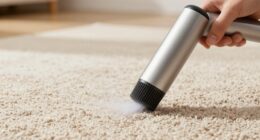
- Vacuum with a HEPA-filtered vacuum at least twice a week.
- Wash pet bedding, curtains, and plush toys weekly to reduce allergen accumulation.
These steps, combined with a good air purifier, help minimize pet dander and allergen buildup, making your home more comfortable and allergy-friendly.
When to See an Allergist for Testing and Advice
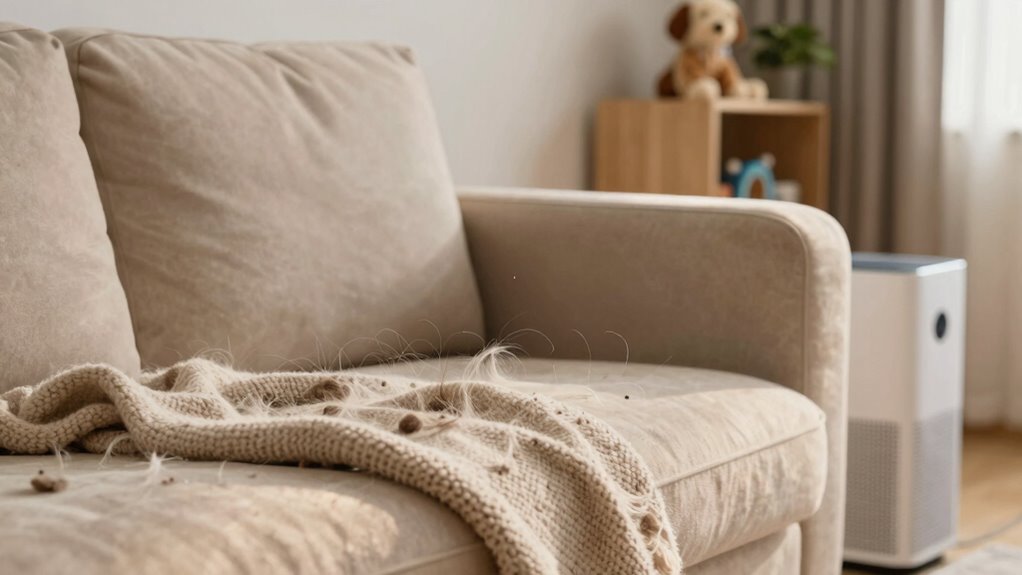
Recognizing when allergy symptoms warrant professional testing can help you manage your condition more effectively. If pet dander consistently triggers sneezing, congestion, or itchy eyes despite cleaning efforts, it’s time to see an allergist. Allergen testing, such as skin or blood tests, can identify whether pet dander is the culprit. You should consider making an appointment if your symptoms interfere with daily activities or worsen over time. An allergist can provide personalized advice and confirm your sensitivities, helping you develop an effective management plan. Don’t wait until symptoms become unbearable; early testing can save you discomfort and guide you toward better control of your pet allergy. Recognizing these signs ensures you take timely action to improve your quality of life.
How Fixing This Hidden Allergy Problem Can Improve Your Pet Life
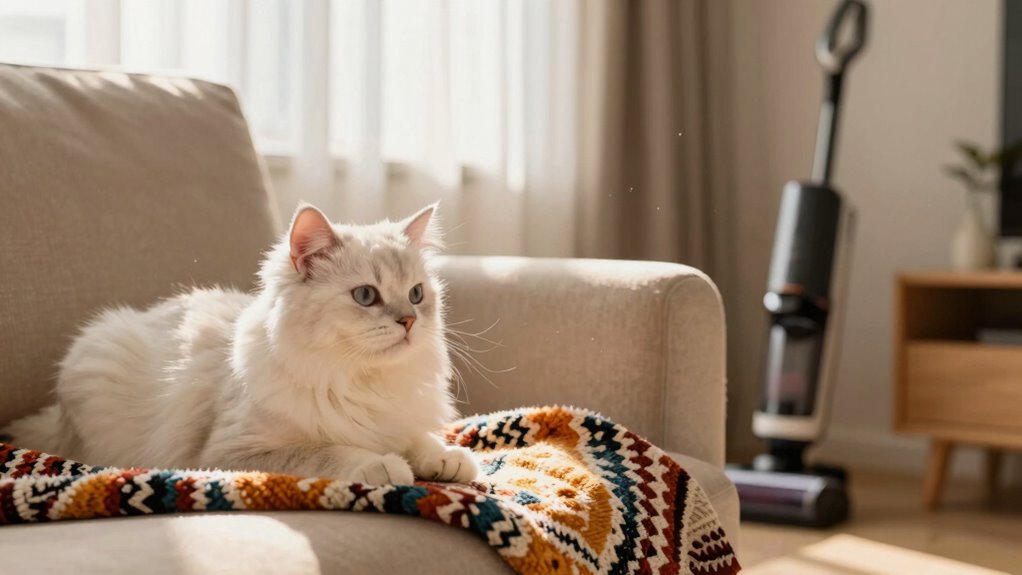
Addressing a hidden pet allergy can considerably enhance your bond with your furry friend. When you manage allergy triggers like pet dander, your interactions become more enjoyable. Here are four ways fixing this problem improves your pet life:
- Reduces sneezing, coughing, and itchy eyes caused by pet dander.
- Creates a more comfortable environment for both you and your pet.
- Prevents skin irritations and respiratory issues linked to allergy triggers.
- Boosts your pet’s overall health and happiness by minimizing stress from allergens.
Frequently Asked Questions
Can Pet Hair Allergies Develop Suddenly Without Previous Symptoms?
Yes, pet hair allergies can develop suddenly without previous symptoms. You might experience a sudden allergy onset, even if you’ve been around pets before without issues. The allergy symptom timeline varies; symptoms can appear hours or days after exposure. Factors like changes in pet dander levels, your immune system, or environmental conditions can trigger new allergies unexpectedly. Stay alert to any new breathing or skin issues around pets.
Do Different Pet Breeds Produce Varying Levels of Allergen Trapping?
Yes, different pet breeds produce varying levels of allergen trapping. Breed differences markedly impact allergen levels, with some breeds shedding less and trapping fewer allergens in their coat. For example, hypoallergenic breeds like Poodles and Bichon Frises tend to produce fewer allergens, making them better for allergy sufferers. Understanding these breed differences can help you choose a pet that minimizes allergen exposure and allergy symptoms in your home.
How Do Seasonal Changes Influence Pet Hair Allergy Severity?
As seasons shift like a painting in motion, your pet hair allergy severity can ebb and flow with seasonal variation. Cold winter air often traps more allergens indoors, intensifying symptoms, while warm, humid summers can help wash away irritants. Climate impact plays a crucial role, making allergy management a dynamic dance with nature’s changing rhythm. Stay vigilant, adapt your environment, and watch how your reactions shift with each season’s gentle or fierce embrace.
Are There Hidden Sources of Pet Allergens Beyond Visible Hair?
Hidden allergens, like tiny airborne particles from pet dander, can trigger allergies even if you don’t see pet hair. These microscopic particles cling to furniture, carpets, and clothing, circulating in the air and causing reactions. You might not notice them, but they’re often more persistent than visible hair. To reduce exposure, regularly vacuum with a HEPA filter, wash bedding frequently, and improve ventilation to clear these hidden allergens from your environment.
Can Diet or Supplements Help Reduce Pet Hair Allergy Symptoms?
Think of your allergy symptoms like a fire that needs smothering. Dietary adjustments, like increasing omega-3s and reducing processed foods, can help soothe your immune response. Supplements like quercetin or fish oil provide anti-inflammatory benefits, potentially easing allergy symptoms. While they won’t eliminate pet hair allergens, they can support your body’s resilience, making it easier to tolerate pet dander and reduce overall discomfort.
Conclusion
By addressing these hidden pet hair allergies tonight, you can breathe easier and enjoy your furry friend more. Imagine reducing your allergy symptoms just by simple nightly routines—like using an air purifier or cleaning your bedding. For example, Sarah noticed her sneezing stopped after a week of targeted cleaning. Taking these steps not only improves your health but lets you cherish those cozy moments with your pet without allergy worries. Start tonight and enjoy a happier, healthier home.