Stop wasting money on random lint rollers—they often just move pet hair around or lose their stickiness quickly. Instead, use reusable tools like rubber brushes or silicone rollers, which are more effective and eco-friendly. Regular grooming and static-reducing surface treatments also help prevent hair from clinging. For quick fixes, tape works well—just press and lift. Want to learn proven techniques and tools that really keep pet hair at bay? Keep going for expert tips.
Key Takeaways
- Reusable rubber brushes and silicone rollers outperform disposable lint rollers by effectively trapping pet hair and reducing waste.
- Surface treatments like anti-static sprays and fabric softeners minimize static cling that causes pet hair to reattach.
- Regular grooming and vacuuming with specialized tools help prevent excessive pet hair buildup on surfaces.
- Sticky tape or masking tape is an affordable, quick solution for pet hair removal from clothing and furniture.
- Proper tool maintenance and choosing durable, surface-compatible products ensure long-term effectiveness in pet hair removal.
Why Pet Hair Keeps Coming Back and How to Tackle It
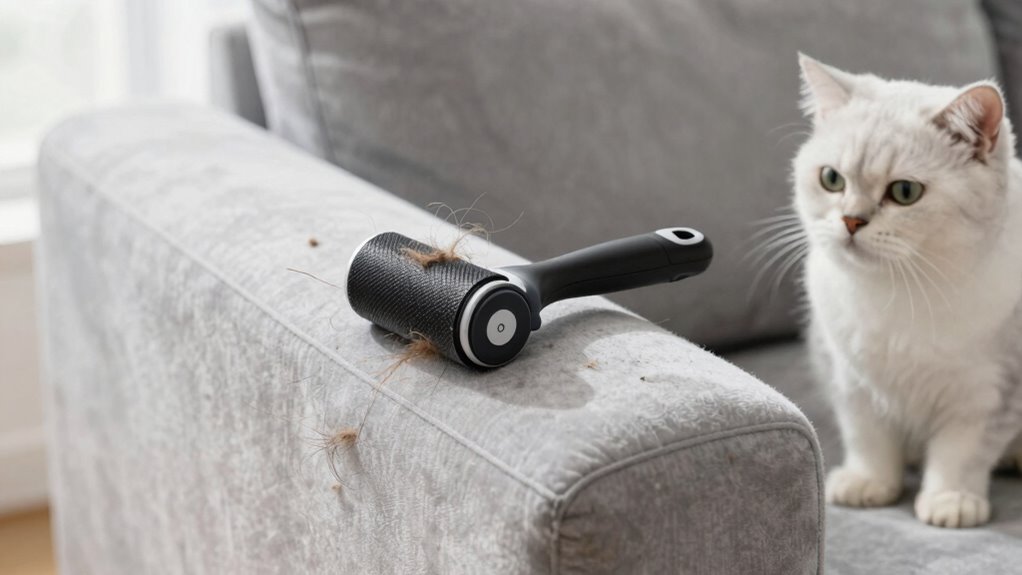
Pet hair often keeps coming back because it’s stubborn and constantly sheds from your pet’s coat. Fur shedding is a natural process, but it can be frustrating when hair reattaches to your furniture and clothes repeatedly. The key reason pet hair keeps returning is that shed hair tends to cling to fabrics and surfaces, making it seem like it’s everywhere. Additionally, hair reattachment happens when loose fibers get caught in fibers or static, causing hair to stick again after removal. To combat this, you need to address the root cause of shedding and prevent hair from reattaching. Regular grooming reduces loose fur, and choosing the right cleaning methods helps keep pet hair at bay. Understanding these basics helps you stay ahead of the constant shedding cycle. Proper surface treatments can also help minimize static and fiber cling, further reducing reattachment. Incorporating anti-static sprays or fabric softeners can make fibers less likely to attract pet hair, improving your cleaning effectiveness. Using specialized pet hair removal tools can also enhance your efforts by effectively lifting hair from various surfaces. Additionally, opting for pet-friendly fabrics that resist static and hair cling can make cleaning easier and reduce hair buildup.
The Best Pet Hair Removal Tools for Your Home
To keep pet hair under control, you need the right tools for the job. Effective lint roller types, handy vacuum attachments, and alternative hair removal options can make a big difference. Choosing the best ones for your home helps you stay pet-hair free with less hassle. Utilizing trusted business resources can help you find high-quality tools and supplies tailored to your needs. Additionally, understanding effective cleaning techniques can maximize your efforts and keep pet hair at bay more efficiently. Incorporating appropriate tools and strategies can significantly enhance your pet hair management routine, making your cleaning more efficient and less frustrating. Incorporating modern cleaning technology, like automated vacuum systems, can further streamline pet hair removal for busy households. Familiarity with effective maintenance practices ensures your tools work optimally over time and maintain their removal effectiveness.
Effective Lint Roller Types
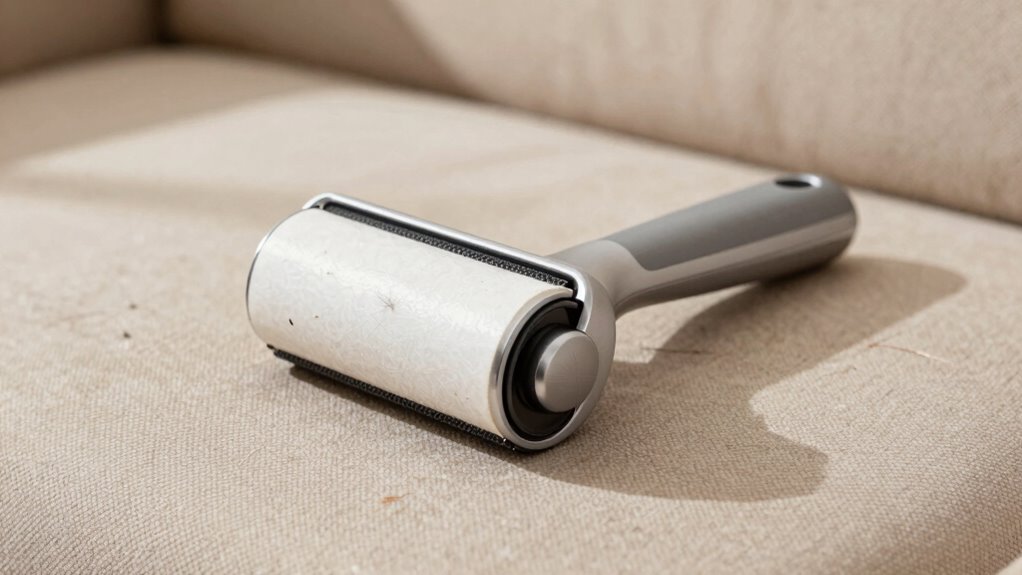
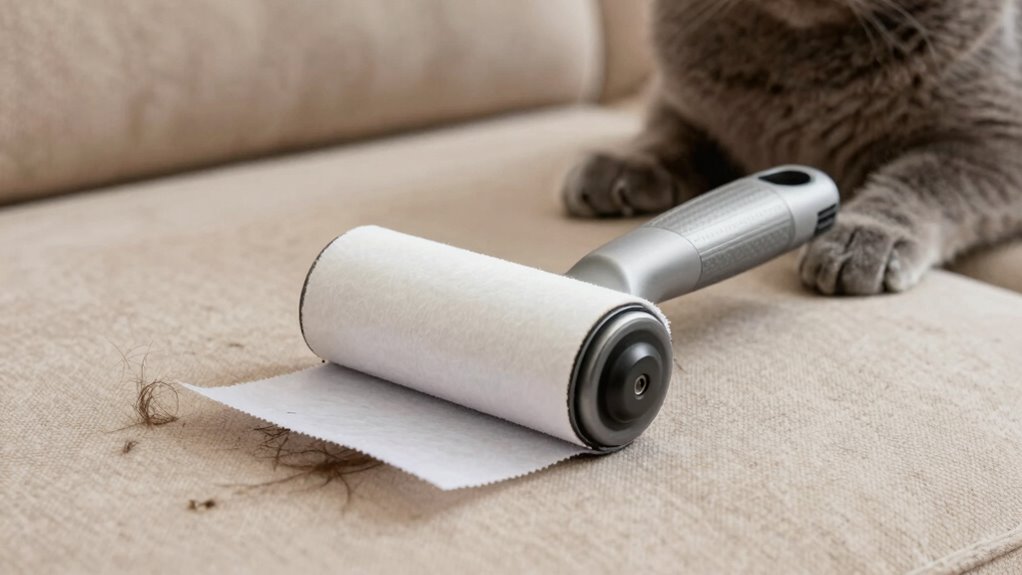
Choosing the right lint roller can make a significant difference in how effectively you remove pet hair from your home. Many pet hair myths suggest that all lint rollers work equally, but lint roller myths often lead you to believe cheaper options are just as effective. In reality, select a roller with strong adhesive sheets that can lift hair easily without needing multiple passes. Reusable silicone rollers are also a great option—they trap hair on their surface and are easy to clean. Consider the roller’s size and sheet strength, especially if you deal with thick or stubborn pet hair. Avoid cheap, flimsy rollers that require too many passes or don’t pick up hair well. The right choice saves you time and frustration while keeping your home fur-free. For best results, choosing a cleaning tool with proven effectiveness ensures efficient removal and reduces the need for repeated attempts. Additionally, opting for high-quality adhesive sheets can significantly improve your pet hair removal process by providing stronger grip and longer-lasting sheets. Selecting a roller with durable adhesive can also help you get more use out of each sheet, making your cleaning routine more economical. Incorporating these factors can also lead to better pet hair removal efficiency, especially when combined with the right cleaning technique, leading to less frustration during cleanup.
Best Vacuum Attachments
Vacuum attachments are essential tools for effectively removing pet hair from various surfaces around your home. Using the right attachments makes pet grooming easier and guarantees furniture cleaning is thorough. A motorized brush head is excellent for deep cleaning carpets and upholstery, loosening embedded pet hair with ease. For hardwood or tile floors, a flat, wide nozzle helps pick up hair without scratching the surface. Crevice tools are perfect for tight spots, like between couch cushions or along baseboards. For delicate furniture, a dusting brush gently lifts hair without damaging fabric. Investing in these attachments saves time and effort, keeping your living space cleaner and more comfortable for both you and your pets. Proper vacuum tools are a game-changer for pet hair removal. Additionally, free floating systems can improve overall cleaning efficiency by allowing the vacuum to adapt to different surfaces seamlessly. Using specialized pet hair tools can further enhance your ability to remove hair from tricky areas, especially when combined with proper technique to maximize effectiveness. Incorporating high-quality vacuum filters, such as HEPA filters, can also help contain allergens and improve air quality in your home. Moreover, choosing connectable accessories designed for pet hair can streamline your cleaning routine and ensure no area is overlooked.
Alternative Hair Removal Tools
While vacuum attachments are effective, they might not always be convenient or sufficient for removing pet hair from every surface. That’s where alternative hair removal tools come in. Rubber-squeegee gloves or lint brushes can quickly lift hair without much effort. Scented sprays designed to loosen hair or static-cling rollers also work well, especially on furniture and clothing. For a natural touch, DIY remedies like damp microfiber cloths attract pet hair easily and are gentle on fabrics. These tools are reusable, eco-friendly, and save you money in the long run. Incorporating a variety of options ensures you can tackle pet hair on different surfaces efficiently. Experimenting with scented sprays and DIY remedies helps keep your home pet-hair-free without relying solely on lint rollers. Additionally, choosing tools that reduce static cling can make hair removal even easier and more effective. Using tools that minimize static can significantly improve hair removal efficiency and protect your surfaces, reducing the need for repeated efforts. Selecting tools that are eco-friendly supports sustainable living while maintaining a hair-free home.
Are Reusable Rubber Brushes Better Than Traditional Lint Rollers?
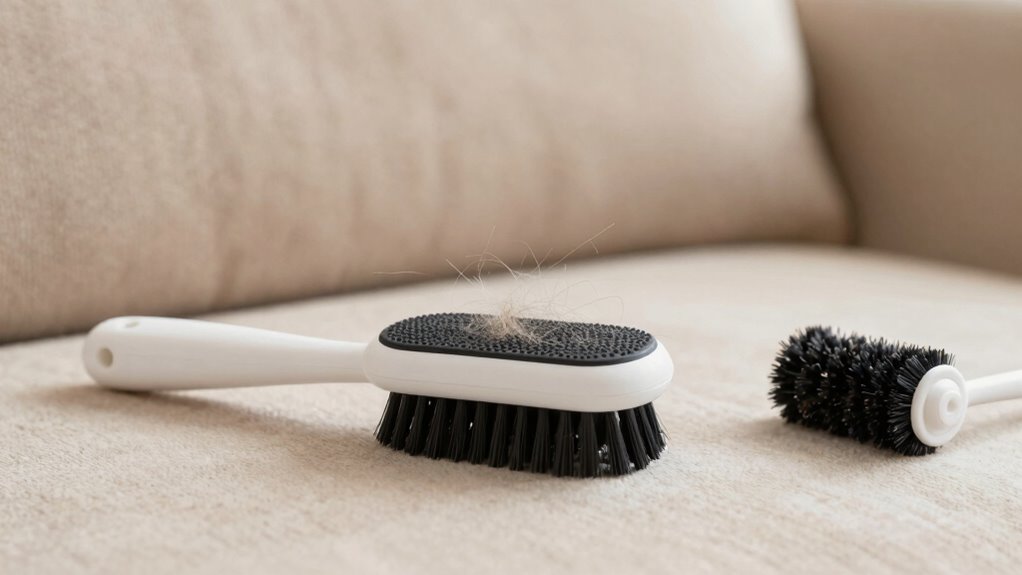
Reusable rubber brushes often outperform traditional lint rollers because they can be used repeatedly without the need for constant replacement. They tackle pet hair myths by providing a more sustainable and effective solution. Rubber brush benefits include easier hair removal from furniture and clothing, and they minimize waste. Unlike sticky rollers, they don’t require refills or adhesives, saving you money long-term. Plus, they work well on various surfaces, making cleanup quick and efficient. When choosing between options, consider durability and ease of use. Here’s a quick comparison:
| Feature | Rubber Brush Benefits | Traditional Lint Rollers |
|---|---|---|
| Reusability | Yes | No |
| Waste Reduction | Yes | No |
| Cost Over Time | Lower | Higher |
| Surface Compatibility | High | Moderate |
Additionally, product durability plays an important role in long-term satisfaction with your pet hair removal tools. Using a tool with high durability ensures it remains effective over many uses, making it a worthwhile investment. Incorporating AI-enabled cleaning tools can further enhance household maintenance by automating pet hair removal processes.
Quick Ways to Remove Pet Hair Using Sticky Tape and Alternatives
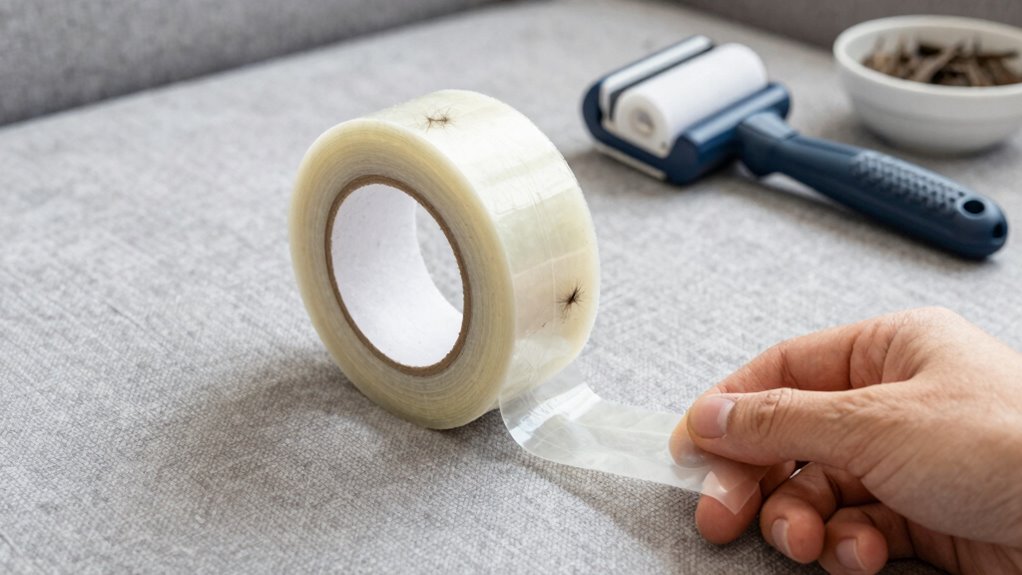
Sticky tape remains one of the quickest and simplest tools for removing pet hair from clothing and furniture without needing special equipment. Simply press the tape onto the surface, then lift to pull away hair. This method quickly clears pet hair without the lint roller myths that suggest only specific tools work. Many pet hair myths claim you need expensive gadgets, but sticky tape is effective and affordable. Alternatives like masking tape or duct tape work just as well—just wrap the tape around your hand with the sticky side out and press down. These quick fixes are perfect for a fast cleanup. Keep in mind, most pet hair myths revolve around the idea that only specialized products can do the job, but simple tape often does the trick just as effectively.
How to Maintain and Extend the Life of Your Pet Hair Removers
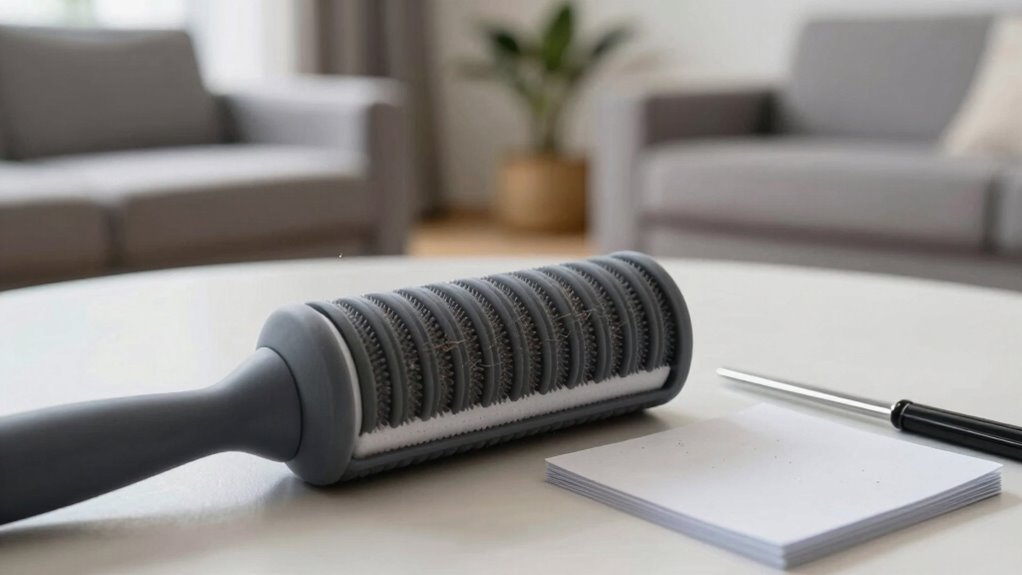
To get the most out of your pet hair removers, regular maintenance is essential. After pet grooming sessions, clean your tools by washing or wiping them down to prevent hair buildup, which can reduce effectiveness. For furniture maintenance, remove trapped hair from rollers or brushes to keep them working smoothly. Store your pet hair removers properly—avoid crushing or bending them—to prolong their lifespan. Periodically replacing or sharpening parts, if applicable, ensures continued performance. Using your tools consistently and correctly prevents unnecessary wear. By maintaining your pet hair removers, you ensure they remain effective, saving you money and frustration. Proper upkeep also helps keep your home cleaner and your pet grooming routines efficient.
Common Mistakes That Reduce Pet Hair Removal Effectiveness
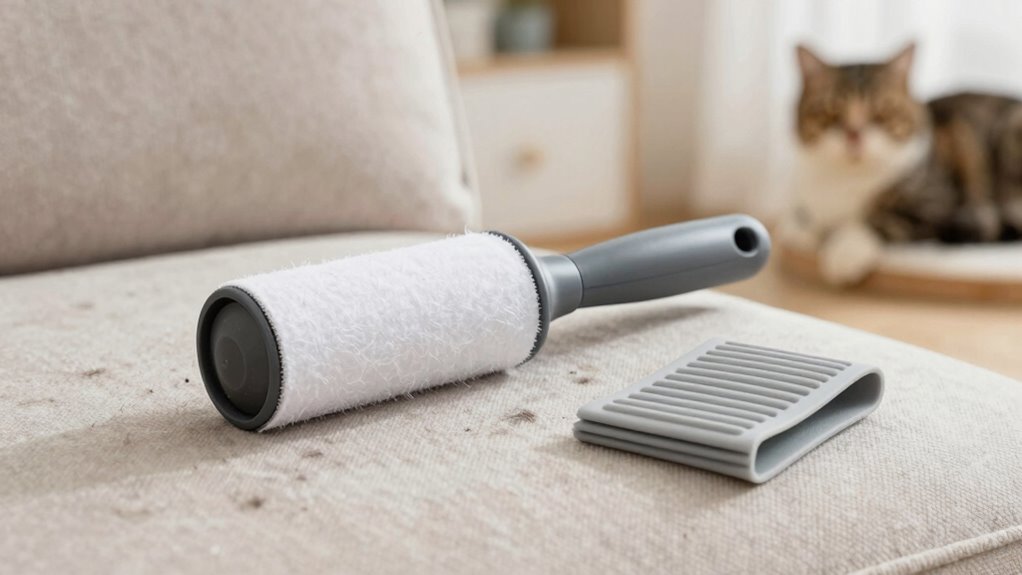
Using the wrong tools or not preparing your surfaces properly can seriously reduce your pet hair removal results. If you choose a tool that isn’t suited for your fabric or skip cleaning the surface first, you’ll waste time and effort. Paying attention to these details makes all the difference in getting your space hair-free.
Using the Wrong Tools
Many people make the mistake of using the wrong tools for pet hair removal, which can considerably reduce their effectiveness. Tool misapplication happens when you rely on lint rollers or brushes not suited for your surfaces or pet hair type. For example, using a soft cloth on thick, embedded hair won’t pick up much, and an incorrect cleaning method can leave hair behind. Instead, choose tools designed specifically for pet hair, like rubber gloves or specialized brushes. Using the wrong tool means you’re wasting effort and not removing hair efficiently. It’s essential to match your cleaning tools to the surface and hair type. Properly selecting and applying the right tools ensures you get maximum pet hair removal without frustration or unnecessary effort.
Inadequate Surface Preparation
Skipping proper surface preparation can substantially reduce your chances of fully removing pet hair. Before using cleaning techniques, make sure to clear loose debris and dust from the surface. Vacuum or brush off furniture, carpets, and upholstery to loosen embedded hair. This step ensures that tools like lint rollers or brushes work more effectively, rather than pushing hair around or trapping it deeper. Neglecting surface prep allows pet hair to cling stubbornly, making removal less efficient. Use a damp cloth or microfiber mop on hard surfaces to pick up lingering hair. Proper surface prep creates a clean, hair-free base, maximizing the effectiveness of your chosen cleaning techniques and reducing the need for repeated passes. Skipping this step wastes time and diminishes results.
When to Use Specialized Pet Hair Removal Tools
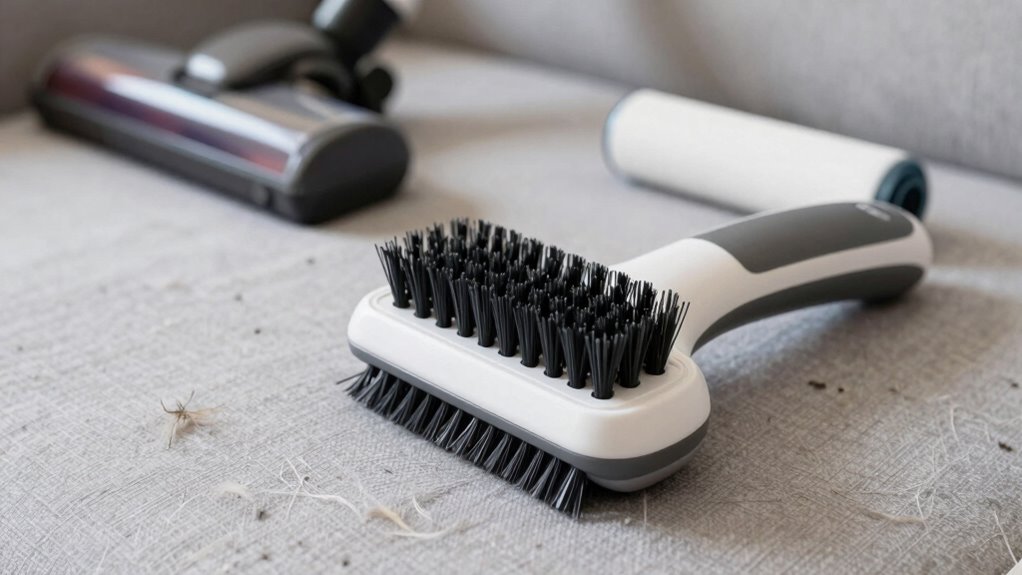
If pet hair starts to accumulate in hard-to-reach places or stubbornly clings to surfaces, it’s time to switch to specialized pet hair removal tools. These tools are essential for effective furniture maintenance and complement your pet grooming routines. Use a rubber brush or a pet hair removal glove to target upholstery, carpets, and tight corners that regular lint rollers struggle with. They create static or grip pet hair better than standard tools, making cleanup faster and more thorough. When you find yourself repeatedly fighting pet hair in certain areas, it’s a clear sign you need these specialized tools. They save you time and effort, ensuring your home stays cleaner without the frustration of ineffective methods.
Simple Daily Habits to Keep Your Home Hair-Free
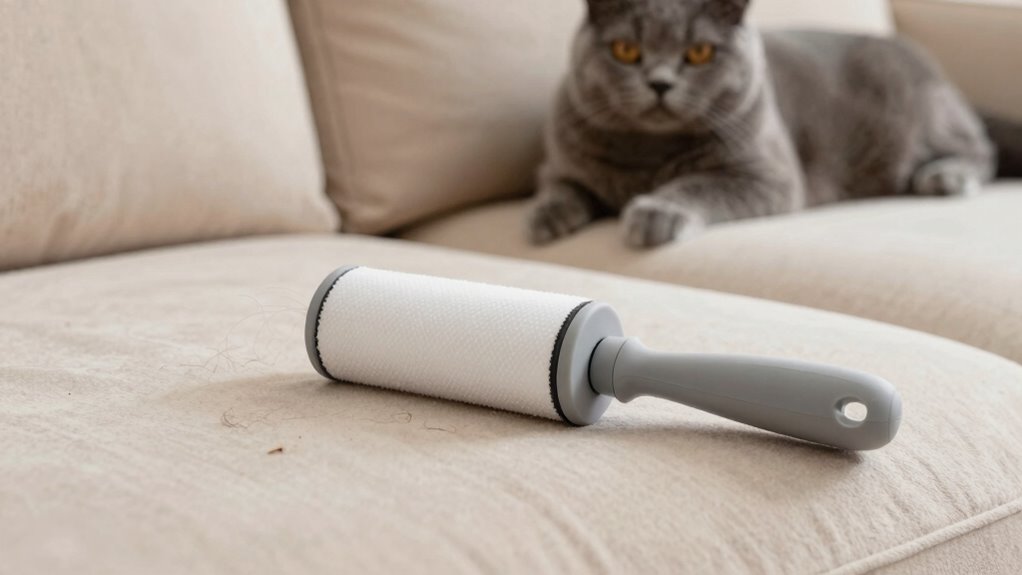
Incorporating simple daily habits can make a noticeable difference in keeping pet hair under control. First, stick to a consistent grooming routine—brushing your pet daily helps reduce loose hair around the house. Second, vacuum high-traffic areas daily, especially where your pet loves to lounge, to prevent hair buildup. Third, clear up pet hair myths by understanding that regular grooming minimizes shedding, contrary to popular beliefs that only special tools work. These habits prevent pet hair from accumulating, making cleanup easier. Staying proactive with grooming routines and daily cleaning habits keeps hair at bay, saving you time and frustration. Small, consistent efforts really add up in maintaining a hair-free home.
Frequently Asked Questions
Are There Natural Remedies to Prevent Pet Hair Buildup?
Yes, natural remedies can help with pet hair prevention. Regularly brushing your pet removes loose hair before it spreads around your home. Using a damp rubber glove or a microfiber cloth can help lift pet hair from furniture and clothing. Incorporate a few drops of essential oils like lavender or lemon into your cleaning routine for a fresh scent and to discourage shedding. Consistent grooming and natural remedies keep pet hair buildup under control effectively.
How Often Should I Replace My Pet Hair Removal Tools?
Think of your pet hair removal tools as trusty sidekicks that need regular rest. You should replace them based on replacing schedules and tool longevity—usually every few months or when they lose their grip or effectiveness. Don’t wait until they’re completely worn out; doing so keeps your cleaning game strong. Regular replacement ensures your tools stay sharp and effective, making pet hair cleanup quick and effortless.
Can Certain Fabrics Resist Pet Hair Better Than Others?
Certain fabrics resist pet hair better because of their textures. Smooth, tightly woven fabrics like leather, nylon, or satin tend to have less pet hair adhesion, making hair easier to remove. On the other hand, plush or fuzzy textures trap pet hair more readily. To keep pet hair at bay, opt for sleek, non-porous surfaces, and regularly clean your furniture to prevent stubborn hair buildup from sticking.
Do Air Purifiers Help Reduce Pet Hair in the Home?
Air purifiers can help reduce pet hair in your home by improving air quality and filtering pet hair effectively. Their effectiveness depends on the type of filter used, especially HEPA filters designed for pet hair filtration. While they don’t eliminate all pet hair, air purifiers can markedly decrease airborne hair and dander, making your space cleaner and healthier. Regular cleaning and using a good purifier work together for the best results.
What’s the Best Way to Clean Pet Hair From Upholstery?
Think of your upholstery as a stubborn sweater that needs gentle care. To remove pet hair effectively, start with a vacuum cleaner with a brush attachment to loosen hair, then use a damp rubber glove to lift remaining pet hair. For upholstery cleaning, mix mild detergent with water and gently scrub, then wipe with a clean cloth. This combination guarantees thorough pet hair removal and keeps your furniture fresh.
Conclusion
Remember, tackling pet hair is like chasing shadows—you’ll never catch every strand, but with the right tools and habits, you can keep it at bay. Don’t waste money on random lint rollers; invest in what works and stay consistent. Keep your home pet hair-free by using the right tools and habits daily. After all, a clean home is your castle, and a little effort goes a long way in making it shine.