
Rugs trap pet hair worse based on their fiber density, texture, and material. Dense, plush, or shaggy surfaces create tiny spaces where hair gets lodged and becomes hard to remove. Flat, tightly woven rugs tend to trap less hair and are easier to clean. Synthetic fibers often hold more hair than natural ones. So, choosing rugs with lower fiber density and smoother surfaces can make pet hair management simpler; if you keep exploring, you’ll discover even more helpful tips.
Key Takeaways
- Rugs with higher fiber density create tiny spaces that securely trap pet hair, making cleaning more difficult.
- Plush or high-pile textures increase surface area and nooks for pet hair to settle into.
- Synthetic fibers tend to trap more pet hair compared to natural fibers due to their surface properties.
- Dense, textured rugs hold pet hair more tightly than flat, tightly woven surfaces.
- Rugs with loose fibers or low density allow pet hair to sit loosely or slide out easily, simplifying cleanup.
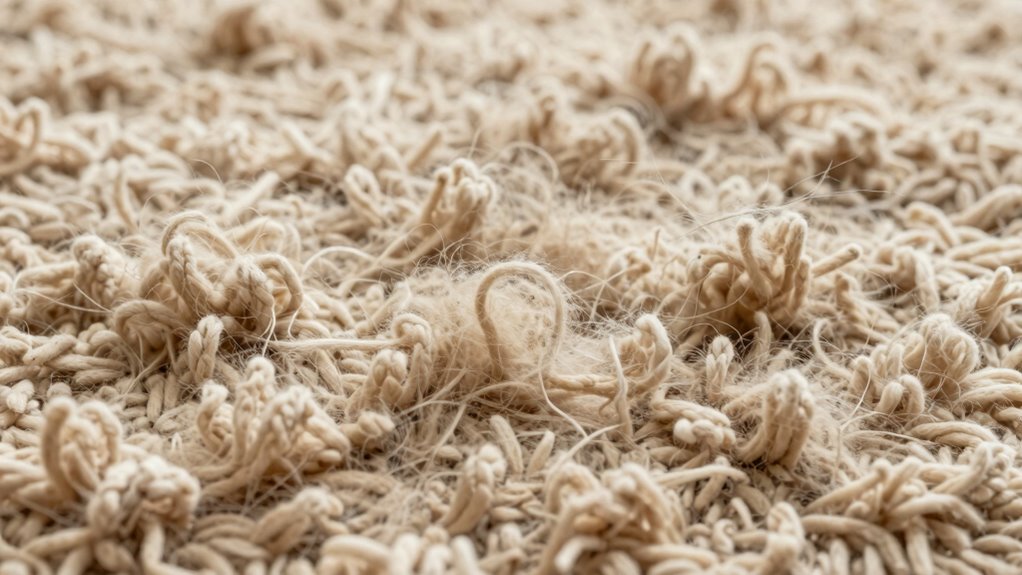
Have you ever noticed that some rugs seem to trap pet hair more than others, making cleanup a constant chore? It’s frustrating to vacuum repeatedly and still find pet hair clinging stubbornly to your rug. The key factors behind this often boil down to fiber density and surface texture. These elements determine how easily pet hair is held in place, affecting how much hair accumulates and how hard it is to remove.
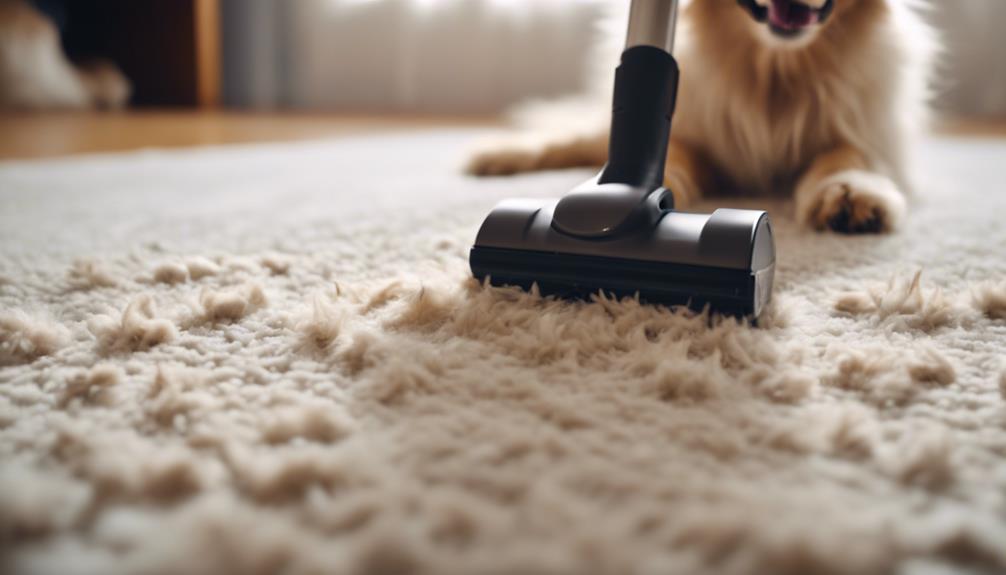
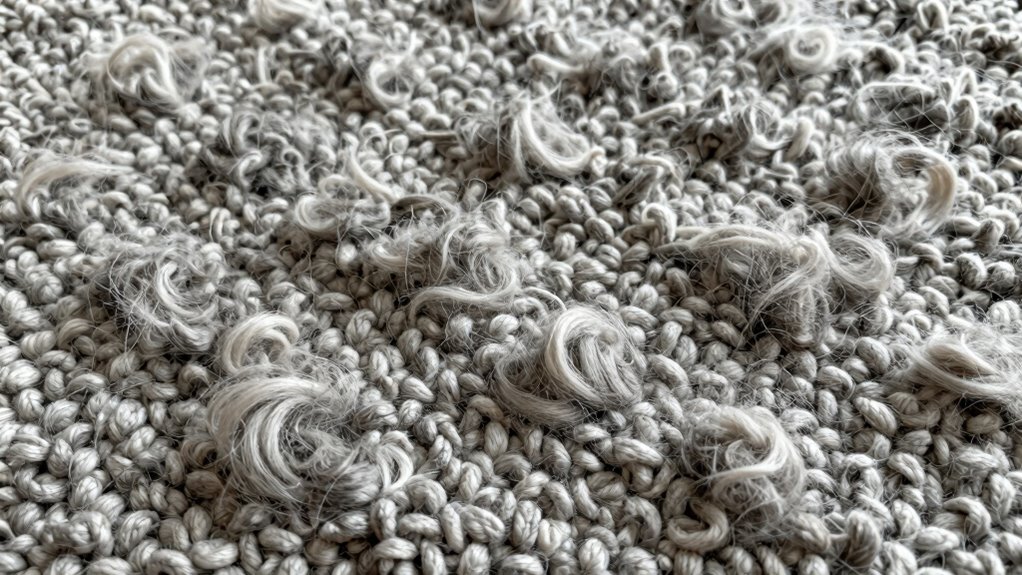
Fiber density plays a big role in how much pet hair a rug can trap. Rugs with higher fiber density have tightly packed fibers, creating a dense fabric that comfortably catches hair, preventing it from bouncing back into the air or onto your furniture. When fibers are densely woven, they form tiny little nooks and crannies that act like traps, making it difficult for pet hair to escape during vacuuming. Conversely, rugs with lower fiber density have looser fibers that don’t grip hair as effectively. Pet hair can sit loosely on the surface or easily slide out when you sweep or vacuum, reducing the amount that sticks around.
Higher fiber density traps pet hair more effectively, making cleaning more challenging.
Surface texture is another significant factor in trapping pet hair. Rugs with a plush, shaggy, or high-pile surface tend to trap more hair than low-pile or flat-weave rugs. The thick, soft fibers provide more surface area and crevices for pet hair to settle into. When you walk across such a rug, the hair gets pressed into the fibers, making it harder to dislodge. On the other hand, rugs with a smooth, tightly woven surface don’t have as many nooks and crannies, so pet hair tends to sit on top rather than get embedded. Although these rugs might look sleek, they usually require less effort to clean because hair doesn’t cling as tenaciously. Additionally, fiber material can influence how much pet hair a rug traps, with synthetic fibers often trapping more than natural ones. Choosing a rug with fiber properties that resist trapping can further ease maintenance. Moreover, understanding how fiber characteristics interact with pet hair can help you select the best rug for a pet-friendly home.
Using a rug with appropriate surface texture can also make a noticeable difference in reducing pet hair accumulation and simplifying cleaning routines. Your choice of rug affects how much pet hair it traps and how easy it is to clean. Dense, textured rugs might look cozy, but they demand more maintenance because they hold onto hair tightly. If you want to cut down on cleaning time, opt for rugs with lower fiber density and a flatter surface texture. Keep in mind, though, that other factors like fiber material also matter—synthetic fibers often trap hair more than natural ones. But to start, focusing on fiber density and surface texture will significantly improve your pet hair problem, making your cleanup routine less of a hassle and your living space more comfortable.

Black Boho Washable 2×6 Runner Rugs for Hallway Kitchen Bedroom Beside Laundry Room Bathroom Rug, Pet & Kids Friendly, Non Slip Low Pile Stain Resistant Soft Foldable Long 24 x 72 Floor Carpet
- Machine Washable: Easy to clean and maintain
- Non-Slip Backing: Safe and stable on floors
- Kid & Pet Friendly: Resists messes and scratches
As an affiliate, we earn on qualifying purchases.
As an affiliate, we earn on qualifying purchases.
Frequently Asked Questions
Do Rug Colors Affect Pet Hair Visibility?
Yes, rug colors do affect pet hair visibility. Light-colored rugs with high color contrast make hair more noticeable, while darker or patterned rugs hide hair better through hair concealment. If you want less visible pet hair, opt for rugs with busy patterns or darker shades. Conversely, if you prefer to see hair easily so you can clean it promptly, lighter, solid-colored rugs are a better choice.
Can Rug Size Influence Pet Hair Accumulation?
A larger rug can lead to more pet hair accumulation because it provides a bigger surface area for shedding. Rug material and pet behavior play vital roles; for example, shaggy or plush rugs trap more hair than smooth, low-pile options. An interesting statistic shows that pets shed up to 100 hairs per day, so choosing the right size and material helps manage hair buildup effectively in your space.
Are Synthetic Rugs More Prone to Trapping Hair?
Synthetic rugs are more prone to trapping pet hair because of their material durability and weave tightness. These rugs often have a tighter weave, making it harder for hair to escape, and their durable synthetic fibers can hold onto hair longer. If you want to reduce hair buildup, look for rugs with a looser weave or natural fibers, which typically don’t trap hair as easily and are easier to clean.
How Does Rug Pile Height Impact Hair Retention?
Like a sponge soaking up water, a rug’s pile height influences hair retention. Shorter pile rugs, with higher fiber density, resist trapping pet hair better because their fibers are tightly packed and less prone to compression. Conversely, longer pile rugs tend to trap more hair because their fibers compress easily, creating more nooks for hair to settle in. So, choosing a rug with a balanced pile height helps keep pet hair manageable.
Do Rug Cleaning Methods Affect Pet Hair Removal Effectiveness?
Yes, your rug cleaning methods considerably affect pet hair removal. Using the right techniques tailored to fiber types, like vacuuming with a brush roller for plush fibers or shaking out woven rugs, makes a difference. Regular cleaning frequency prevents hair buildup and makes removal easier. Avoid harsh chemicals that can damage fibers, and consider professional cleaning for stubborn hair, ensuring your pet hair doesn’t get trapped deep in the rug.
Conclusion
So, next time you’re battling pet hair, remember that the rug’s material and weave act like a magnet, pulling in every stray strand. Choosing a rug with a smoother surface can make cleaning easier, preventing pet hair from settling in like an unwelcome guest. Think of your rug as a dance partner—some twirl and glide effortlessly, while others get caught in every step. Picking the right one keeps your home tidy and your furry friend happy.