To prepare your home for a robot vacuum, clear your floors of shoes, toys, cords, and small objects. Remove pet hair and debris, especially in high-traffic or hairy areas, to prevent clogs and tangles. Use a cordless vacuum to quickly clean stubborn spots and under furniture. Ensuring your floors are clutter-free helps the robot move smoothly and clean thoroughly. Keep these tips in mind to optimize your robot vacuum’s performance and discover even more ways to improve your cleaning routine.
Key Takeaways
- Remove shoes, toys, and small objects to prevent obstructions and ensure smooth navigation.
- Clear cords and loose items that could entangle the robot’s brushes or cause jams.
- Use a cordless vacuum to quickly clean pet hair and debris from high-traffic or hairy areas.
- Secure or eliminate items that might damage the robot or hinder its movement.
- Regularly tidy floors to maintain optimal cleaning efficiency and prevent mechanical issues.

Getting your home ready for a robot vacuum can make a big difference in its cleaning performance. One of the most effective ways to guarantee your robot does its best is by decluttering your floors. A cluttered space not only hampers the vacuum’s ability to clean thoroughly but can also cause it to get stuck or miss spots. Before scheduling or starting your robot vacuum, take a few minutes to clear away any unnecessary objects. Pick up shoes, toys, cords, and loose items that could obstruct its path. This simple step helps the vacuum navigate smoothly and makes its cleaning more efficient.
Declutter floors to improve your robot vacuum’s cleaning and navigation efficiency.
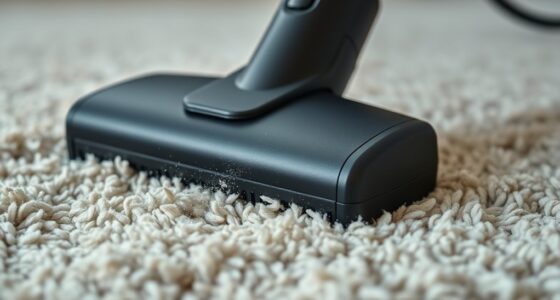
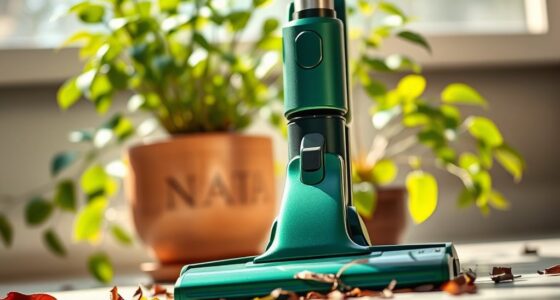
If you have a cordless vacuum, use it to quickly tackle spot cleaning or stubborn areas before the robot takes over. A cordless vacuum can easily reach under furniture and into corners, removing larger debris and pet hair that might otherwise clog the robot’s filters or brushes. Pet hair removal is a common challenge for robot vacuums, especially if your furry friends shed heavily. By removing excess pet hair from the floor beforehand, you reduce the workload on your robot, allowing it to focus on fine dust and dirt. This also prevents hair from tangling around the robot’s brushes or clogging its filters, which can diminish its effectiveness over time.
Pay special attention to areas where pet hair tends to gather, such as around pet beds, furniture legs, and along baseboards. Using your cordless vacuum to lift pet hair from these spots can considerably improve the robot’s cleaning ability. After decluttering and removing pet hair, vacuuming becomes a more straightforward process, and your robot can work more efficiently without getting bogged down by obstacles or hair buildup.
Additionally, check for loose cords or small objects that might be wrapped around the robot’s brushes or caught in its wheels. Securing or removing these items prevents potential damage and keeps the robot running smoothly. If you’re dealing with a particularly hairy pet or high-traffic areas, consider doing a quick pre-clean with your cordless vacuum regularly. This not only keeps your floors tidy but also extends the lifespan of your robot vacuum by reducing the amount of debris it has to handle. Regular floor maintenance can help maintain optimal cleaning performance and prevent clogs or mechanical issues.
Frequently Asked Questions
Can Robot Vacuums Clean Thick Carpets Effectively?
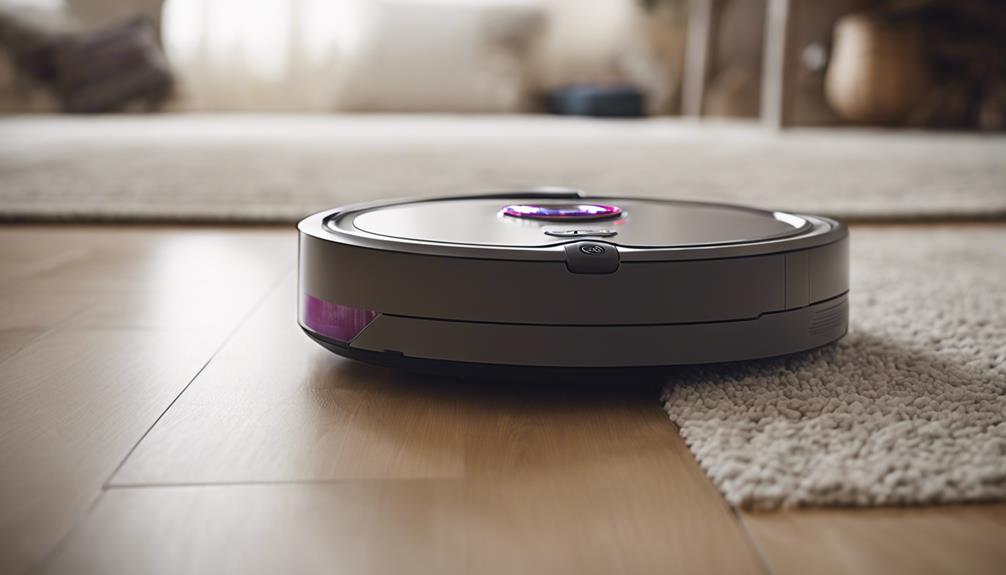
Robot vacuums can clean thick carpets effectively if they have strong vacuum suction and are designed for high-pile carpets. The carpet pile impacts cleaning performance; deeper piles may require models with enhanced suction power to pick up dirt thoroughly. Make certain to select a robot vacuum with adjustable settings or specific features for thick carpets, and ensure your floors are clear of large debris to maximize cleaning efficiency.
How Do Robot Vacuums Handle Cords and Small Objects?
Imagine your robot vacuum as a savvy explorer, maneuvering your home like a modern-day Indiana Jones. It handles cords with cord management features, avoiding tangles, and relies on small object detection to steer clear of tiny items. To confirm smooth operation, you should still pick up loose objects and secure cords, giving your robot vacuum the best chance to clean thoroughly without getting stuck or missing spots.
Are There Specific Floor Types That Robot Vacuums Struggle With?
Some robot vacuums struggle with certain floor types due to surface compatibility issues. For example, high-pile carpets or shaggy rugs can hinder their navigation and cleaning efficiency, while their type limitations may cause them to miss spots or get stuck. Hard floors like tile or hardwood typically work well. To guarantee peak performance, pick a model suited for your specific surface and check its surface compatibility before purchasing.
How Often Should I Replace the Robot Vacuum’s Filter?
You should replace your robot vacuum’s filter every 2 to 3 months, depending on your usage and filter maintenance. Regularly check the filter for buildup or clogging, as a dirty filter can reduce cleaning efficiency. Follow the manufacturer’s replacement schedule to keep your vacuum running smoothly. Doing so guarantees peak suction, prolongs the device’s lifespan, and maintains a healthy environment by capturing dust and allergens effectively.
Do Robot Vacuums Work Well on Uneven or Textured Floors?
Yes, robot vacuums can handle uneven or textured floors, but their performance depends on surface grip and suction power. Think of your vacuum as a determined explorer, gripping each bump and nook with ease. While they excel on most surfaces, high-pile carpets or deeply textured floors might challenge them. To get the best clean, choose a model with strong suction and good surface grip, ensuring every corner gets the attention it deserves.
Conclusion
Don’t worry if your floors aren’t perfect—robot vacuums are pretty forgiving. Just declutter as much as you can, and you’ll see a noticeable difference in cleaning efficiency. Remember, the goal isn’t perfection but making your life easier. With a little prep, your robot vacuum will do the hard work, giving you more time to enjoy your clean home. So, take a few minutes now, and let your robot handle the rest!