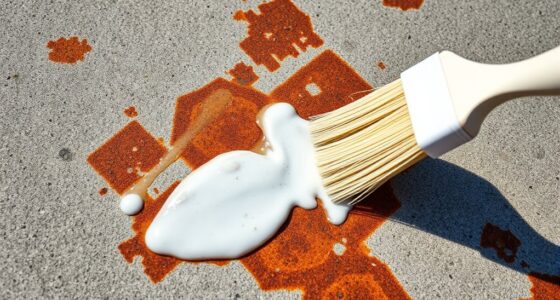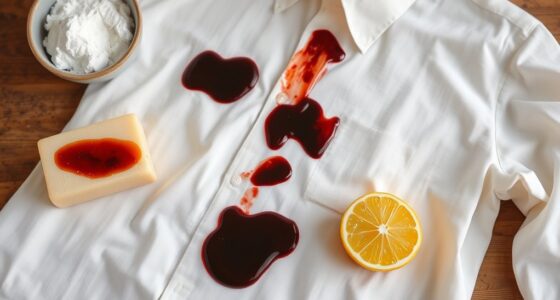
To remove coffee or sauce stains, start by gently blotting the spill to remove excess liquid. Apply dish soap directly to the stain and let it sit for about five minutes to break down oils and residues. Then, treat the stain with hydrogen peroxide to lift remaining pigments, but be careful with delicate fabrics. Rinse thoroughly with cold water afterward. If you want detailed steps, keep exploring for expert tips.
Key Takeaways
- Apply dish soap mixed with warm water to break down greasy residues from coffee or sauce stains.
- Let the dish soap sit on the stain for about five minutes to emulsify oils.
- Use hydrogen peroxide to lift remaining organic pigments, especially for stubborn or dark stains.
- Test solutions on hidden fabric areas to prevent discoloration before full application.
- Rinse thoroughly with cold water after treatment, repeating as necessary for complete stain removal.
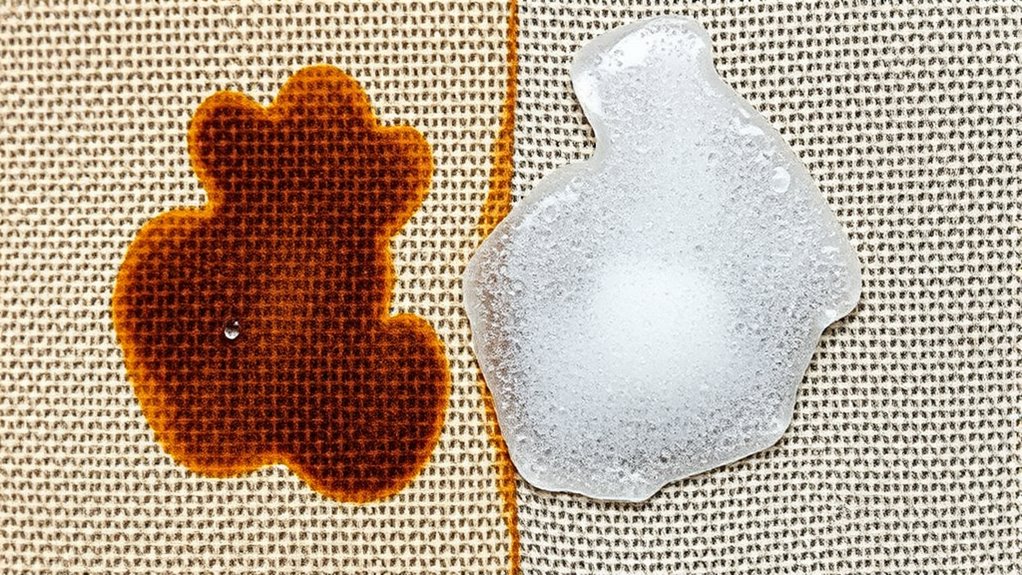
When coffee or sauce stains threaten to ruin your favorite shirt or tablecloth, knowing how to effectively remove them can save you time and frustration. The key lies in understanding different stain removal techniques and how cleaning solution comparisons can guide your choices. Using the right method and products ensures you won’t have to settle for stubborn marks that refuse to budge.
Start by acting quickly. The sooner you treat the stain, the better your chances of complete removal. A common approach involves dish soap and hydrogen peroxide, both of which are effective but serve different purposes. Dish soap is excellent at breaking down grease and food oils, while hydrogen peroxide acts as a bleaching agent to lift organic stains like coffee and sauce. When comparing cleaning solutions, it’s important to assume the fabric type and stain severity. For delicate fabrics, test your solutions on a hidden area first to prevent damage.
Act quickly and choose the right solutions for fabric type and stain severity.
For fresh stains, begin by blotting the excess liquid with a clean cloth or paper towel—don’t rub, as that could spread the stain or push it deeper into the fibers. Mix a few drops of dish soap with warm water to create a gentle cleaning solution. Apply it directly to the stain, then let it sit for about five minutes. Using a clean cloth, gently blot and lift the stain. This method works well for oily or greasy sauce stains, as the soap emulsifies the oils. For coffee or stubborn sauce stains, hydrogen peroxide is often more effective due to its bleaching properties. Pour a small amount directly onto the stain or apply it with a cotton ball. Let it sit for a few minutes, but don’t leave it too long to avoid fabric discoloration. Additionally, treating stains with specialized stain removers designed for specific fabrics can improve results.
When comparing stain removal techniques, it’s worth noting that combining these solutions can be particularly powerful. First, treat the stain with dish soap to tackle oils and residues. Then, apply hydrogen peroxide to lift any remaining organic pigments. Always rinse thoroughly with cold water afterward. For tougher stains, you might need to repeat the process or let the solutions sit longer, but keep an eye on the fabric to prevent damage.

Miss Mouth's Messy Eater Stain Treater Spray – 4oz Stain Remover – Newborn & Baby Essentials – No Dry Cleaning Food, Grease, Coffee Off Laundry, Underwear, Fabric
POWERFUL & FAST WORKING This lightning fast laundry stain remover spray is perfect for clothes, upholstery, and carpets.
As an affiliate, we earn on qualifying purchases.
As an affiliate, we earn on qualifying purchases.
Frequently Asked Questions
Are Dish Soap and Hydrogen Peroxide Safe on All Fabric Types?
You should verify fabric compatibility before using dish soap and hydrogen peroxide, as not all fabrics tolerate these cleaners equally. Generally, dish soap is safe for most fabrics, but hydrogen peroxide can cause discoloration or damage on delicate or colored materials. Always test a small, hidden area first to ensure stain removal safety. If unsure, consult the fabric care label or a professional cleaner to avoid unintended damage.
Can This Stain Removal Method Be Used on Delicate or Vintage Clothing?
You should be cautious when using dish soap and hydrogen peroxide on delicate fabrics or vintage clothing. Test a small, hidden area first to check for damage or color change. For delicate or vintage items, consider consulting a professional cleaner or using gentler stain removal methods. This approach helps prevent potential harm to fragile fabrics, ensuring your clothing stays in good condition while effectively removing stains.
How Long Should I Let the Solution Sit Before Washing?
You should let the solution sit for about 5 to 10 minutes to allow proper timing considerations and stain penetration. This brief period helps the mixture break down the coffee or sauce stain effectively. Be careful not to leave it on too long, especially on delicate fabrics, to avoid potential damage. After the sitting time, wash the garment as usual, ensuring the stain is thoroughly removed.
Will This Method Work on Old or Set-In Stains?
Did you know that the effectiveness of stain removal drops by 50% after stains set for a week? For old or set-in stains, this method can still work, but it might require repeated treatments or longer soaking times. You should apply the mixture directly, let it sit longer—up to several hours—and gently scrub. While not guaranteed, persistence can improve your chances of removing stubborn, set-in stains.
Are There Any Materials or Surfaces Where This Cleaning Method Should Be Avoided?
You should avoid using this cleaning method on delicate surfaces like silk, leather, or painted finishes, as hydrogen peroxide can cause discoloration or damage. Also, porous materials such as granite, marble, or unsealed wood can absorb the solution, potentially leading to staining or surface harm. Always test in a small, inconspicuous area first to verify compatibility, and opt for gentler cleaning methods for sensitive materials.

LEADER Hydrogen Peroxide Spray Bottle First Aid Antiseptic 3% Solution – Multi-Purpose Cleaner, Gentle & Effective Disinfectant Spray for Home, Cuts, and Scrapes, Easy-to-Use 8 oz Bottle
EFFECTIVE DISINFECTANT: LEADER Hydrogen Peroxide 3 percent is an effective disinfectant against different kinds of microorganisms, like bacteria,…
As an affiliate, we earn on qualifying purchases.
As an affiliate, we earn on qualifying purchases.
Conclusion
With a gentle touch and a little patience, dish soap and hydrogen peroxide can breathe new life into your cherished fabrics. They work quietly, softly lifting away stubborn stains and restoring your belongings’ natural beauty. Sometimes, life’s little mishaps leave behind memories in the form of stains, but with these humble remedies, you can lovingly renew your favorite items. Embrace the hope of fresh beginnings—your treasured pieces are waiting to be beautifully restored.

Dishwashing Liquid Soap Detergent by Dawn Professional, Bulk Degreaser Removes Greasy Foods from Pots, Pans and Dishes in Commercial Restaurant Kitchens,Regular Scent, 5 gal.
Dawn Professional dishwashing detergent with long-lasting suds cleans 58percent more greasy pots and pans per sink (vs. Dawn…
As an affiliate, we earn on qualifying purchases.
As an affiliate, we earn on qualifying purchases.

Amodex Ink & Stain Kit with Stain Remover Brushes, Removes Ink, Sharpie, Grease, Food and More, Safe and Effective on Clothes, Leather and Skin, Includes 1 Bottle and 2 Brushes
As an affiliate, we earn on qualifying purchases.
As an affiliate, we earn on qualifying purchases.