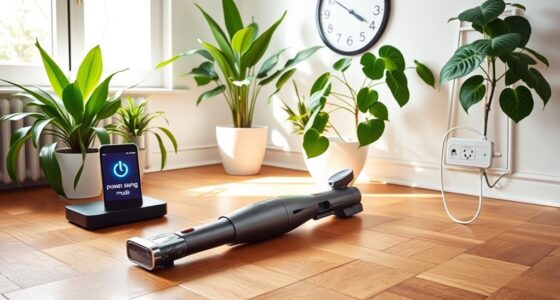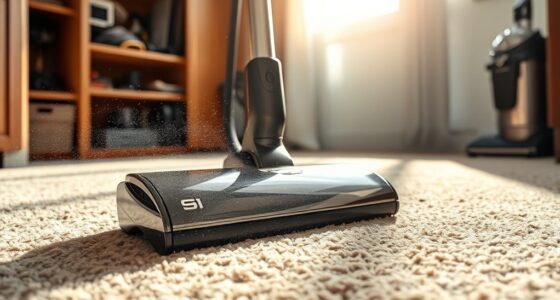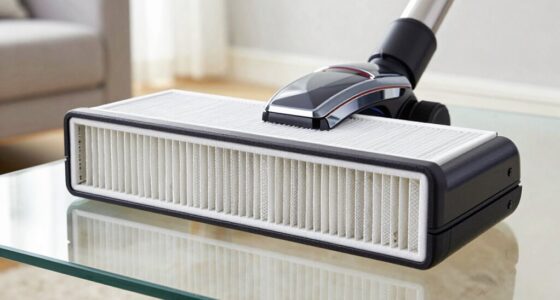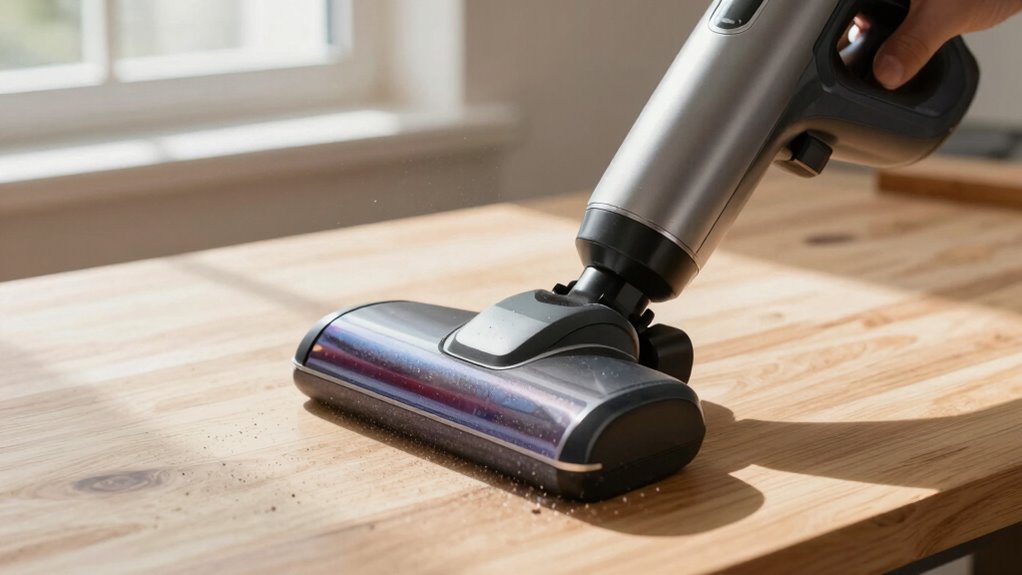

To effectively clean fine dust after a workshop project, start by turning on high-quality HEPA air purifiers and ensuring good ventilation to remove airborne particles. Use vacuums with HEPA filters to thoroughly pick up settled dust, avoiding sweeping. Wipe surfaces with damp cloths or microfiber mops, and contain dust during disposal to prevent spread. Regular routines help maintain a safe, clean workspace. Keep exploring for more tips to make cleanup even easier and safer.

Get cleaning gear delivered free with Prime
- Fast, free delivery on millions of items
- Prime Video, Amazon Music and more included
- Member-only deals all year
Key Takeaways
- Use HEPA-filtered vacuum cleaners to thoroughly remove settled dust from all surfaces and corners.
- Set up physical barriers or containment zones to prevent dust spread during cleanup.
- Operate high-quality air purifiers continuously until dust particles are eliminated from the air.
- Wipe down surfaces with damp cloths or microfiber mops to capture remaining dust.
- Dispose of vacuum contents and dust waste in sealed bags to prevent airborne dust escape.
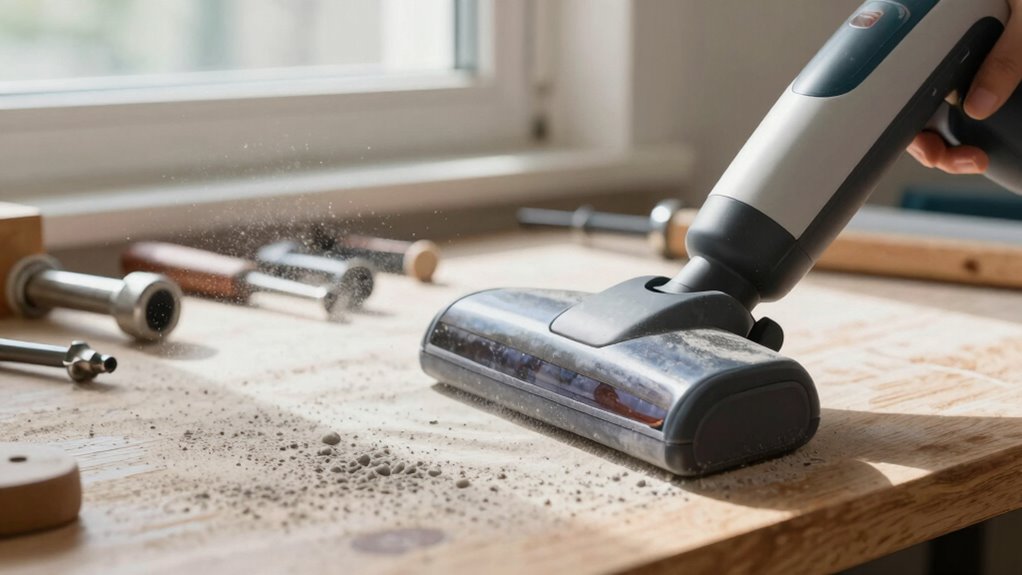
After completing a workshop project, cleaning up fine dust is crucial to maintain a safe and tidy workspace. Fine dust particles can linger in the air long after you’ve finished, posing health risks and making your workspace look cluttered. The key to effective cleanup involves proper air filtration and dust containment strategies to prevent dust from spreading further.
Cleaning fine dust after projects is vital for a safe, clutter-free, and healthy workspace.
Start by addressing air filtration. A high-quality air purifier equipped with a HEPA filter is your best defense against airborne fine dust. These filters trap tiny particles that traditional filters might miss, ensuring cleaner air in your workspace. Turn on the purifier before you begin cleaning, and keep it running until you’ve thoroughly removed all dust. This step helps reduce airborne dust, preventing it from settling again or being inhaled during cleanup. If your workshop has a ventilation system, ensure it’s functioning properly and running during and after your cleaning process. Ventilation helps carry dust outside, reducing buildup and improving air quality. Additionally, choosing the right dust containment methods can significantly minimize the spread of dust during cleanup. Using effective containment techniques like sealing off work areas can further enhance this effort.
Next, focus on dust containment. To prevent dust from spreading to other areas, set up physical barriers or containment zones around the workspace. Cover entrances with plastic sheeting or use temporary partitions to contain dust within the work area. Wear a dust mask or respirator to protect yourself from inhaling fine particles during cleanup. Use a vacuum equipped with a HEPA filter to efficiently pick up settled dust from floors, workbenches, and tools. Avoid sweeping with a broom, as this tends to stir up dust into the air. Instead, vacuum thoroughly, making sure to reach corners, crevices, and underneath surfaces where dust tends to settle. Incorporating proper cleaning techniques can further improve dust removal efficiency. Additionally, consider using proper ventilation to enhance dust removal from the workspace.
After vacuuming, wipe down all surfaces with a damp cloth or microfiber mop. This step removes any remaining fine dust that vacuuming might miss. Be sure to wash or replace your cloths frequently to avoid redistributing dust. For tools and equipment, use compressed air or a damp cloth to wipe them down, preventing dust from transferring to other parts of your workspace or storage areas. Maintaining an organized workspace can also help reduce dust accumulation over time.
Finally, dispose of the vacuum bags or contents in sealed trash bags to prevent dust from escaping back into your workspace. Maintain a regular cleaning routine to keep dust levels low and your workspace safe. Proper air filtration and dust containment aren’t just about cleanliness—they’re essential for your health and the longevity of your tools and materials. Taking these steps ensures your workshop remains a safe, productive environment long after the project ends.
HEPA air purifier for workshop dust
As an affiliate, we earn on qualifying purchases.
As an affiliate, we earn on qualifying purchases.
Frequently Asked Questions
How Often Should I Clean Fine Dust During a Project?
You should clean fine dust regularly during your project, ideally daily, to prevent buildup. Use dust containment measures like plastic sheeting and keep your workspace well-ventilated. Air filtration systems help trap airborne particles, reducing health risks and maintaining a cleaner environment. Frequent cleaning minimizes dust spread, making your workspace safer and more efficient. Stay proactive with dust containment and air filtration to manage fine dust effectively throughout your project.
Are There Specific Masks Recommended for Dust Protection?
Yes, you should wear respirator masks or dust masks to protect yourself from fine dust. Opt for masks with N95 or higher ratings, as they effectively filter out tiny particles. Make sure the mask fits snugly over your nose and mouth to prevent dust from sneaking in. Using proper dust masks during your project keeps you safe from inhaling harmful fine dust, especially when working with materials that generate a lot of fine particles.
Can I Reuse My Vacuum Filter After Cleaning Fine Dust?
Reusing your vacuum filter after cleaning fine dust is like trying to wear a wet sponge—it won’t work well. Proper vacuum maintenance is crucial, and cleaning filters can extend their lifespan, but it’s often better to replace them when clogged or damaged. Reusing filters too many times risks reduced suction and dust escape, so regularly check and replace filters to guarantee maximum performance and keep your workspace safe.
What Safety Precautions Should I Take While Cleaning Dust?
While cleaning dust, you should wear personal protective gear like a mask and goggles to avoid inhaling fine particles. Make sure your ventilation systems are working properly to disperse dust and improve air quality. Avoid creating dust clouds by gentle sweeping or vacuuming. Always wash your hands afterward and keep the workspace well-ventilated. These precautions help protect your health and make cleaning safer and more effective.
How Do I Prevent Dust From Spreading to Other Areas?
Imagine dust as a sneaky fog, anxious to invade your entire space. To keep it at bay, set up dust containment barriers around your workspace and use plastic sheeting to seal doors and vents. Enhance air filtration with HEPA filters to trap tiny particles before they spread. Regularly vacuum with a HEPA-equipped vacuum, and wipe surfaces with damp cloths to prevent dust from escaping and migrating to other areas.
Conclusion
While cleaning fine dust can seem overwhelming, using a combination of a vacuum with a HEPA filter and damp cloths makes the task manageable. Some might worry about dust settling again, but sealing off the area and cleaning systematically prevents this. Remember, it’s worth the effort — a cleaner workspace promotes health and safety. With patience and the right tools, you can keep your workshop dust-free and safe for future projects.
Halloween Picks
halloween
As an affiliate, we earn on qualifying purchases.