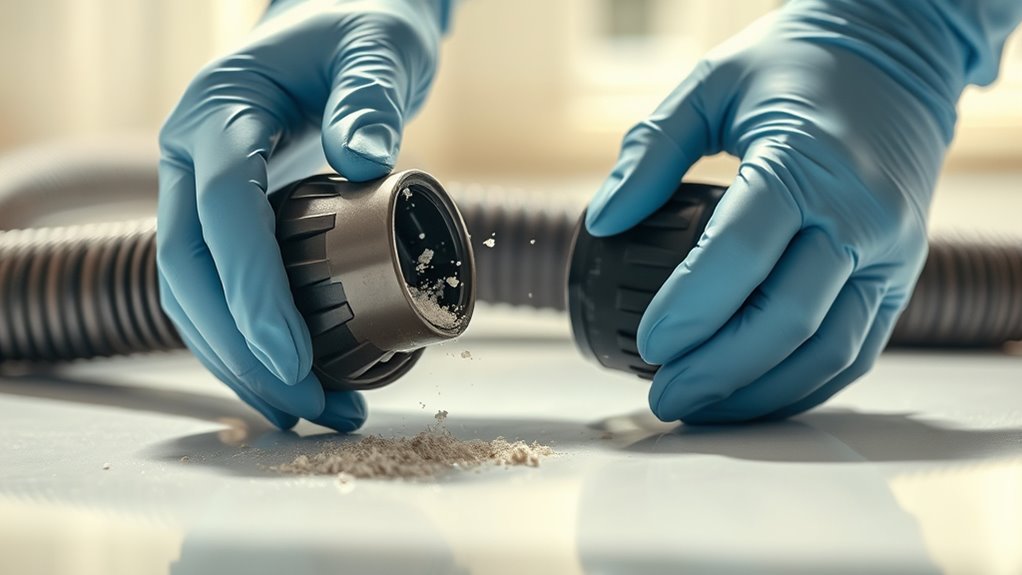

To thoroughly clean your vacuum hose and attachments, first disconnect and inspect them for blockages or debris. Run warm water through the hose and use mild soap for stubborn dirt, making sure everything is completely dry before reconnecting. For attachments, scrub with warm, soapy water and dry thoroughly. Regularly clearing out hair and debris helps maintain suction and prevents clogs. Keep your tools in good shape for maximum cleaning power—learn more about proper maintenance to keep everything in top condition.
Key Takeaways
- Disconnect the hose and check for blockages or debris; remove loose debris by hand or with tongs before rinsing.
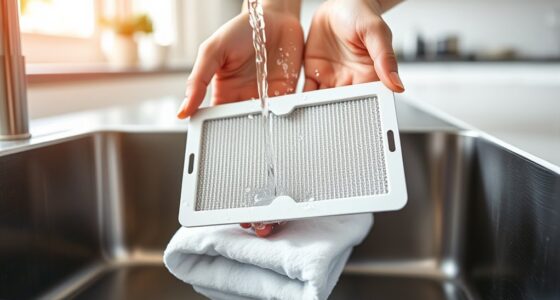
- Run warm water through the hose and use mild soap for stubborn dirt; ensure complete drying before reattaching.
- Clean attachments regularly with warm, soapy water; dry thoroughly to prevent mold and maintain effectiveness.
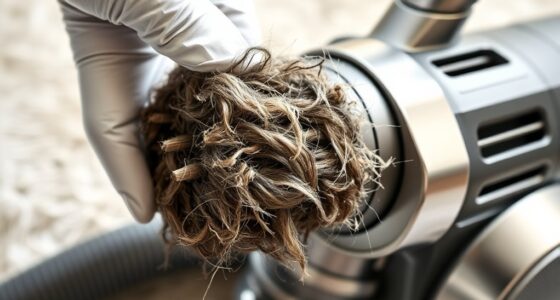
- Use small brushes or toothpicks to dislodge hair and debris from tools, especially crevice and pet hair tools.
- Store hoses and attachments properly in cool, dry places; avoid stretching or twisting to prevent damage and ensure longevity.

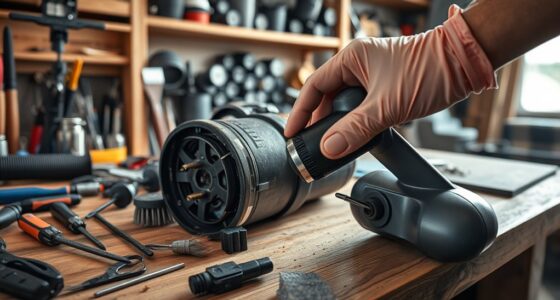
Over time, vacuum hoses and attachments can collect dust, hair, and debris that diminish their suction power and spread allergens. Regular hose maintenance is essential to keep your vacuum performing at its best. Start by disconnecting the hose from the vacuum cleaner and inspecting it for visible blockages or buildup. Use your hand or a pair of tongs to remove any loose debris lodged inside. Next, give the hose a thorough cleaning by running warm water through it. If you notice stubborn dirt or residue, a mixture of mild soap and water will help loosen grime. Be sure to rinse thoroughly and let the hose dry completely before reconnecting it to prevent mold or mildew growth. Properly maintaining your vacuum hose can also prevent clogs and leaks, ensuring optimal performance. While cleaning the hose, pay attention to attachment storage as well. Properly storing your vacuum attachments not only prolongs their lifespan but also makes maintenance easier. Keep attachments in a designated space, such as a storage bin or wall-mounted hooks, where they’re protected from dust and damage. Regularly check for cracks or wear, replacing any damaged parts to maintain ideal cleaning efficiency. To ensure your attachments stay clean, wash them periodically with warm, soapy water, especially if they’re used to clean pet hair or dusty areas. After washing, dry them thoroughly to prevent moisture from causing mold or weakening the plastic. For stubborn hair or debris stuck in tools like brushes or crevice tools, use a small brush or a toothpick to dislodge particles gently. This helps maintain their effectiveness and prevents clogging during future use. In addition to cleaning, consider routine hose maintenance to prevent issues before they start. Avoid stretching or twisting the hose excessively, which can cause cracks or leaks. When storing attachments, keep them in a cool, dry place away from direct sunlight, which can degrade plastic over time. Proper hose maintenance and careful attachment storage make your vacuum easier to handle and more efficient at capturing dirt and allergens.
Frequently Asked Questions
How Often Should I Clean My Vacuum Hose and Attachments?
You should clean your vacuum hose and attachments every three to six months to maintain ideal vacuum maintenance. Regular cleaning prevents clogs and ensures your vacuum works efficiently. If you have pets or allergies, consider cleaning more frequently. Use warm water and mild soap, and make sure everything is completely dry before reassembling. Consistent cleaning of these parts helps prolong your vacuum’s lifespan and keeps your home cleaner.
Can I Use Bleach to Disinfect Vacuum Attachments?
They say, “Better safe than sorry,” so you shouldn’t use bleach to disinfect vacuum attachments. Instead, opt for safer disinfection methods like a mix of water and mild detergent, or vinegar solutions. Regular cleaning frequency depends on usage, but cleaning attachments every few weeks helps prevent germs. Bleach can damage plastic and leave harmful residues, so stick to gentler methods to keep your vacuum safe and effective.
What Are Signs My Vacuum Hose Needs Replacing?
You should replace your vacuum hose if you notice cracks, tears, or significant wear in the hose material, which can reduce suction. Also, if your attachments don’t fit securely or if you see persistent clogs despite cleaning, it’s time for a new hose. Different attachment types, like crevice tools or brushes, may require specific hoses, so verify compatibility before replacing. Regularly inspect for damage to keep your vacuum working efficiently.
Are Certain Cleaning Solutions Better for Delicate Attachments?
You should choose gentle cleaning solutions for delicate attachments to prevent damage. Look for mild soaps or specialized cleaners that are compatible with your attachment materials. Always check the manufacturer’s instructions to verify these solutions won’t harm the attachment or affect its performance. Using the right, gentle cleaning method maintains attachment compatibility and prolongs their lifespan, ensuring your vacuum functions effectively without risking deterioration or breakage.
How Do I Prevent Mold Buildup in Vacuum Hoses?
Think of your vacuum hose as a garden hose; if you don’t care for it, mold can take root. To prevent mold buildup, regularly dry the hose after use and keep it in a well-ventilated area. Prioritize airflow maintenance by checking for obstructions and replacing filters as needed. These steps help *guarantee* your vacuum stays fresh, working efficiently, and mold-free, so you breathe easier every time you clean.
Conclusion
Cleaning your vacuum hose and attachments isn’t just about maintenance; it’s about clearing the path for your home’s fresh start. When you take the time to cleanse these tools, you’re symbolically sweeping away the dust of neglect, making way for a brighter, cleaner space. Remember, a well-maintained vacuum isn’t just equipment—it’s a guardian of your home’s purity. Keep it pristine, and let it continue to be the trustworthy hero in your cleaning routine.