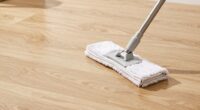
Using harsh chemicals like ammonia, bleach, or strong solvents on your hardwood floors can strip away the finish, causing a dull, lifeless appearance that can become permanent. Over-aggressive cleaning or improper techniques, such as excessive water or abrasive tools, damage the surface and prevent restoring shine. To avoid this, stick to gentle, pH-neutral cleaners and proper maintenance methods. If you want to learn how to prevent and fix dullness effectively, keep going.

Get cleaning gear delivered free with Prime
- Fast, free delivery on millions of items
- Prime Video, Amazon Music and more included
- Member-only deals all year
Key Takeaways
- Over-waxing or incorrect wax application can create a dull, film-like layer that is difficult to remove.
- Using harsh chemicals like ammonia or bleach damages the finish, leading to irreversible dullness over time.
- Excessive water or steam cleaning strips the protective finish, causing long-term dullness and surface damage.
- Neglecting proper maintenance allows dirt buildup and scratches, making dullness appear permanent.
- DIY repair attempts with abrasive cleaners or improper polishing can worsen the dullness, requiring professional refinishing.
hardwood floor pH-neutral cleaner
As an affiliate, we earn on qualifying purchases.
As an affiliate, we earn on qualifying purchases.
Why Harsh Chemicals Dull Hardwood Floors and What to Use Instead

Harsh chemicals in many commercial hardwood floor cleaners can strip away the natural finish, leaving your floors dull and lifeless. These cleaners often contain strong solvents that break down wood floor finishes, which protect and enhance the wood’s appearance. As a result, they leave behind chemical residues that can build up over time, causing a cloudy or streaky look. Instead of damaging your floors, opt for gentle, pH-neutral cleaners specifically designed for hardwood. Use a soft cloth or microfiber mop to clean without scratching the surface. Natural solutions like a mix of water and a small amount of mild dish soap, or diluted vinegar, can effectively clean without harming the finish. Protect your floors by choosing safer, finish-preserving cleaning methods. Incorporating energy-efficient cleaning tools can further reduce environmental impact and extend the life of your flooring. Regular maintenance with gentle cleaning methods helps preserve the integrity of your hardwood and keeps it looking vibrant longer. Additionally, avoiding harsh chemical cleaners contributes to maintaining healthier indoor air quality, which is especially important in creating a healthier home environment. Using automated or low-energy cleaning devices can also help ensure your cleaning routine is both effective and eco-friendly. Being aware of the effects of chemical residues can help you make better choices for ongoing floor care.
How Over-Aggressive Cleaning Harms Your Hardwood Finish
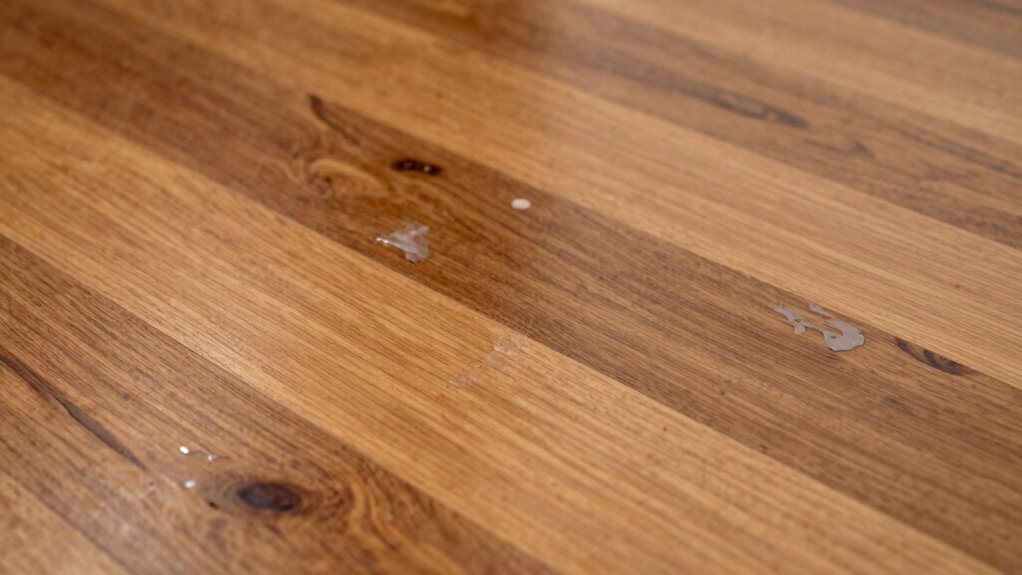
Over-aggressive cleaning can severely damage your hardwood finish, often more than you realize. Using steam cleaning or harsh scrubbing can strip away the protective top coat, leading to dullness and scratches. Excessive cleaning can also cause wax buildup, which makes floors look greasy and uneven. To understand the impact, consider this table:
| Cleaning Method | Effect on Finish | Risk Factors |
|---|---|---|
| Steam cleaning | Loosens finish, causes dullness | Excessive heat damages sealant |
| Harsh chemicals | Breaks down protective layer | Residue leads to buildup |
| Over-scrubbing | Scratches surface, removes wax | Wear and dull spots |
Stay gentle with your cleaning routine to preserve your hardwood’s natural shine. Regular maintenance and proper cleaning techniques are essential to preserve wood finish and avoid long-term damage.
How to Tell If Your Hardwood Floors Are Dull and Need Help
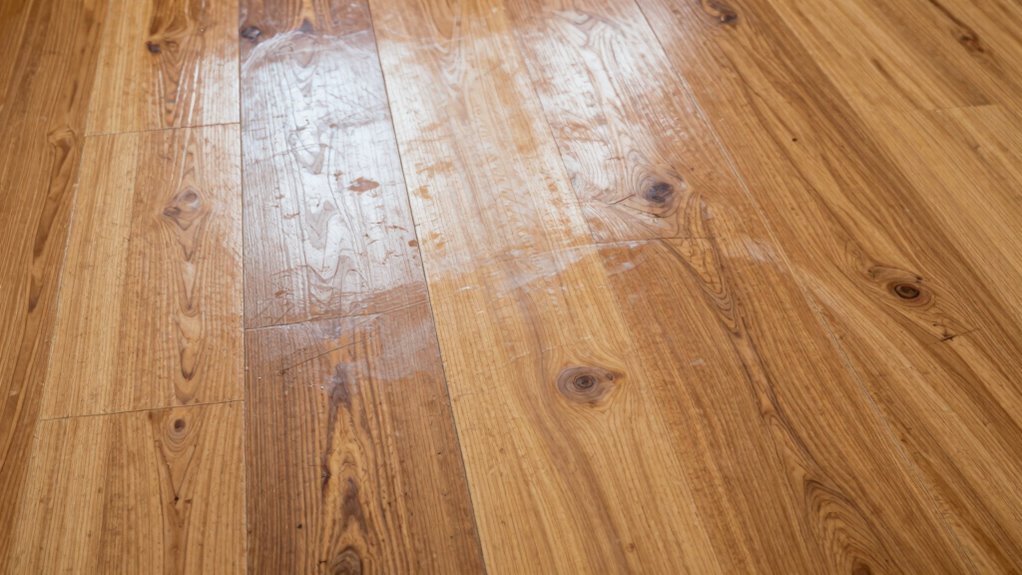
If your hardwood floors look dull, it’s time to check for visible signs like a lack of shine or a cloudy appearance. You might also notice the surface feels rough or different to the touch. These clues indicate your floors may need some extra care or a fresh finish. Additionally, improper cleaning or the buildup of residues can contribute to dullness, which can often be remedied with proper maintenance techniques. Regular cleaning and protective finishes are essential to prevent permanent dullness and maintain the floors’ natural beauty. Understanding smart cleaning solutions can also help in choosing the right tools to keep your floors looking their best. Incorporating reliable protective products can further safeguard your floors from future damage and dullness, especially when combined with proper application methods.
Dullness Visible Signs
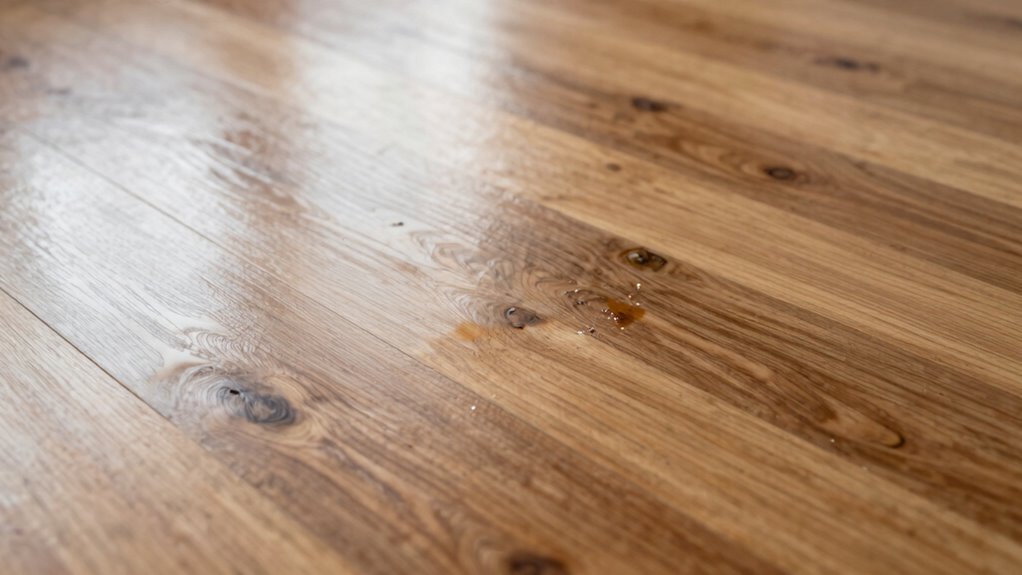
Dullness on your hardwood floors is often noticeable when the surface loses its natural shine and appears lackluster. You might notice that cleaning or buffing doesn’t restore the original luster, which can lead to polishing myths—believing more polishing will fix the issue. Instead, dullness signs include a matte or cloudy appearance and uneven patches where the surface sheen has faded. Light reflections become muted, and scratches or scuffs stand out more than usual. If your floor looks flat and dull despite regular cleaning, it’s a clear sign it needs more than just surface cleaning. Recognizing these visible signs early helps prevent permanent dullness, ensuring you address the root cause before it becomes difficult to restore the floor’s original beauty.
Loss of Shine
A noticeable loss of shine is one of the clearest signs your hardwood floors need attention. When your floors look dull or lack their original luster, it indicates the need for wood floor polishing or gloss restoration. Over time, dirt, grime, and everyday wear can strip away the finish’s shine, making your floors appear lifeless. You might notice a lack of reflection or a matte appearance even after cleaning. To assess if your floors need help, try shining a flashlight at an angle; if the surface doesn’t reflect light well, it’s time for a professional or DIY gloss restoration. Regular maintenance, including proper polishing, can prevent dullness from becoming permanent and keep your floors looking vibrant. Additionally, understanding the importance of Free Floating flooring styles can help you choose the right protective measures to avoid lasting damage. Using the right electric cleaning tools, such as buffer machines or specialized polishes, can also effectively restore shine without damaging the finish. Incorporating proper humidity control techniques can help preserve your hardwood finish and prevent premature dullness. Maintaining proper indoor humidity levels can also help preserve your hardwood finish and prevent premature dullness. Incorporating sound therapy techniques may also promote a relaxed environment, helping you stay motivated to care for your flooring regularly.
Surface Feeling Change
When your hardwood floors start feeling different underfoot, it’s a clear sign they may be losing their finish. You might notice a change in the wooden texture—becoming rougher or uneven—indicating the surface is no longer smooth. This shift often correlates with declining gloss retention, meaning the floors aren’t reflecting light like they used to. The tactile feedback is a quick way to gauge dullness; if your feet notice a duller, less polished surface, it’s time to consider refinishing or reapplying a protective coating. A loss of surface feeling consistency signals that the finish’s protective layer has degraded, exposing the wood to damage and dullness. Regular maintenance, including power tools and equipment, can help restore and protect your floors’ appearance. One common mistake is over-application of wax or polish that can build up and create a dull film, so understanding proper application techniques is essential. Employing surface testing methods can also help you assess whether your floors need refinishing or a simple polish. Additionally, using proper cleaning products designed for hardwood floors can prevent buildup and maintain their shine longer. Keeping an eye on these tactile clues helps preserve your floors’ beauty and longevity.
Proper Hardwood Floor Care: What Works and What Damages It
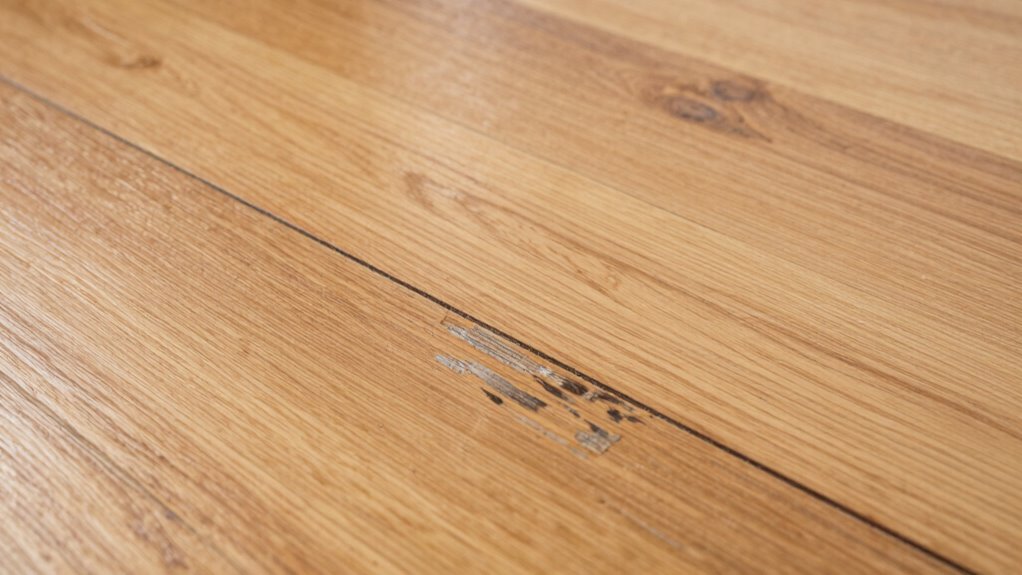
To keep your hardwood floors looking their best, it is vital to understand what cleaning methods and products work—and which can cause damage. Many wood floor myths suggest using harsh chemicals or excessive water, but these can harm the finish and underlying wood. Instead, stick to gentle sweepings and damp mops with approved cleaners. Avoid over-polishing, which can create buildup and dullness over time. Floor polishing may enhance shine temporarily, but improper use can leave residues or uneven surfaces. Always follow manufacturer instructions and test any product in a small, inconspicuous area first. Proper care involves regular maintenance with appropriate products and techniques, helping to preserve your floors’ beauty and prevent long-term damage. Understanding proper cleaning techniques is essential for maintaining the integrity of hardwood flooring over the years. Additionally, using appropriate cleaning tools can minimize scratches and wear, extending the lifespan of your floors. Incorporating correct maintenance routines can also prevent the buildup of residues that contribute to dullness and maintain your floors’ natural luster. Being aware of potential damage factors can further help you avoid common pitfalls that lead to dullness and deterioration.
Common Mistakes That Dull Hardwood Floors (And How to Avoid Them)
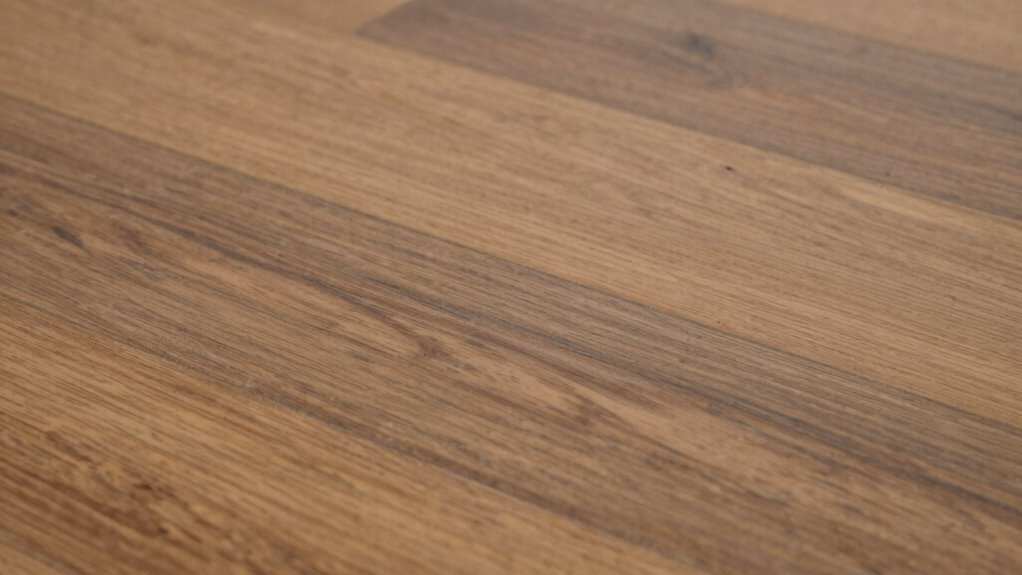
One of the most common mistakes that dulls hardwood floors is using harsh cleaning products or excessive water, which can strip away the finish and leave the surface looking dull over time. Instead, focus on proper wood floor polishing techniques to restore shine without damaging the finish. Avoid abrasive cleaners that can scratch the surface and reduce luster. Regularly applying hardwood waxing can help protect your floors and maintain their shine, but only if done correctly and with appropriate products. Over-waxing or using the wrong type of wax can create a dull film instead of a smooth, glossy finish. By steering clear of aggressive chemicals and sticking to gentle cleaning, wood floor polishing, and proper waxing, you can keep your hardwood floors looking vibrant and well-maintained. Additionally, choosing the right finishing products and maintaining proper application techniques can prevent the buildup of dull film and prolong the life of your floors. Using airless paint sprayers for applying finishes can ensure a smooth, even coat that enhances the natural beauty of your hardwood floors.
Safe Cleaning Products to Keep Your Floors Shining
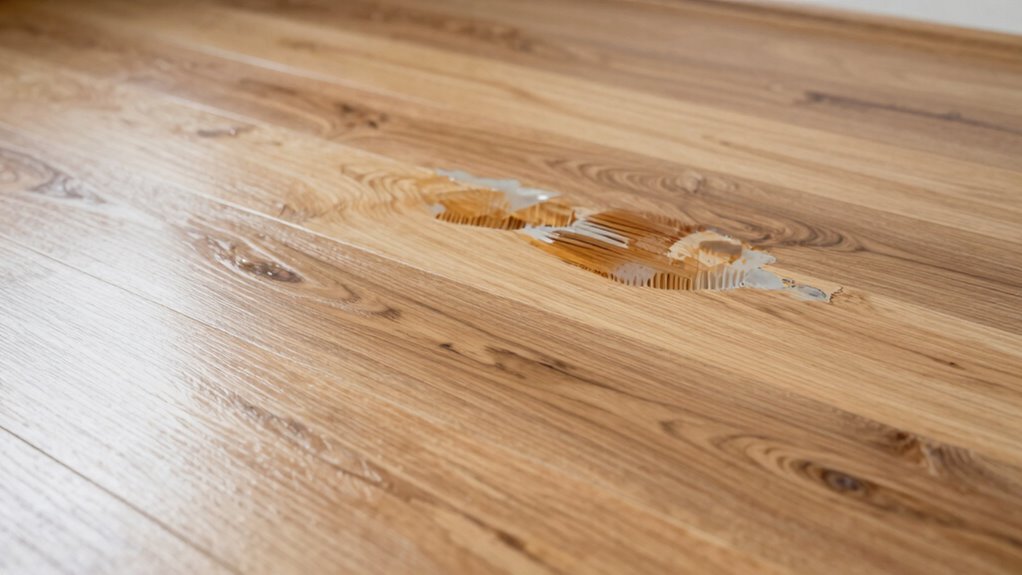
Using natural cleaning solutions is a safe way to keep your hardwood floors shining without risking damage. You should avoid harsh chemicals that can strip the finish and cause long-term harm. Proper application techniques make sure you clean effectively without leaving streaks or residue.
Natural Cleaning Solutions
Keeping your hardwood floors clean doesn’t have to mean relying on harsh chemicals. Natural cleaning solutions are gentle yet effective, helping you preserve your wood stain and maintain a beautiful shine. A simple mix of vinegar and water gently lifts dirt without dulling the surface or damaging the finish. Regular use of natural products also supports your floor’s longevity and avoids the buildup that can occur with synthetic cleaners. For added protection, consider natural floor waxing to boost shine and create a barrier against future stains. Use these options to keep your floors looking fresh and vibrant.
| Emotional Impact | Practical Benefit |
|---|---|
| Peace of mind | Safe for family and pets |
| Confidence | Preserves wood stain and finish |
| Satisfaction | Maintains natural beauty |
Avoid Harsh Chemicals
While natural cleaning solutions are gentle and effective, many commercial products contain harsh chemicals that can harm your hardwood floors over time. To keep your floors shiny and damage-free, opt for eco-friendly alternatives and DIY cleaning methods. Here are three tips:
- Use a mixture of water and a few drops of white vinegar for a safe, natural clean.
- Choose plant-based, biodegradable cleaning products free from ammonia and bleach.
- Make your own floor cleaner using simple ingredients like olive oil and lemon juice for a gentle polish.
Avoid harsh chemicals like ammonia, bleach, and synthetic fragrances, as they can strip the finish and cause dullness. stick to eco-friendly alternatives to protect your investment and ensure your floors stay beautiful for years.
Proper Application Techniques
To guarantee your hardwood floors stay gleaming, applying cleaning products correctly is essential. Always follow the manufacturer’s instructions, using the right amount of product to avoid buildup. For wood floor polishing, use gentle, pH-neutral solutions designed specifically for hardwood surfaces. When cleaning, avoid excessive water, as moisture can damage the wood and hinder hardwood refinishing efforts. Use a soft microfiber mop or cloth for even application, ensuring no streaks or residue remain. Regularly inspect your floors for dullness or scratches, which may require gentle buffing or refinishing. Proper application techniques not only keep your floors shiny but also prolong their lifespan, reducing the need for costly hardwood refinishing. Consistent, careful cleaning preserves the natural beauty of your wood floors.
Tips for Maintaining a Glossy Hardwood Finish
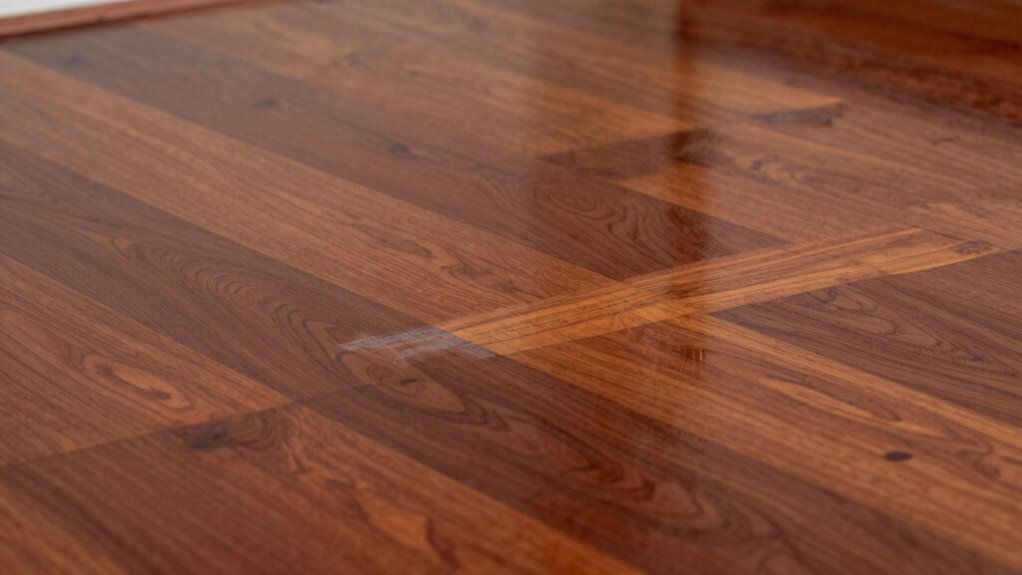
A glossy hardwood finish can instantly brighten a room, but maintaining that shine requires regular care. To keep your floors looking their best, follow these simple hardwood gloss tips:
- Sweep or vacuum daily to remove dirt and debris that can scratch the surface.
- Use a damp microfiber mop with a pH-neutral cleaner for wood floor maintenance—avoid excess water.
- Apply a quality hardwood floor polish periodically to restore shine and protect the finish.
How to Restore Dull Hardwood Floors Without Causing More Damage
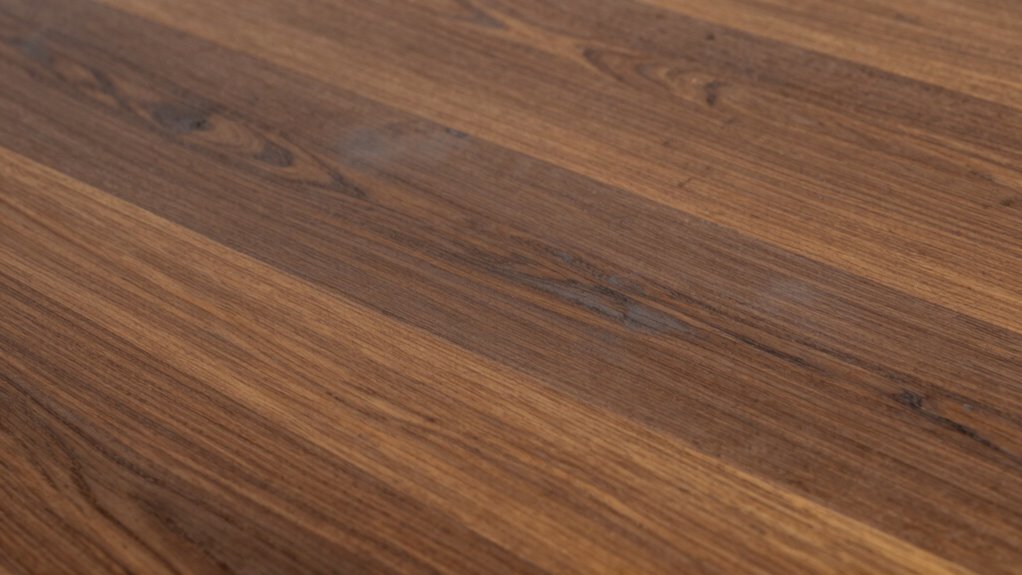
To restore your dull hardwood floors safely, start with proper cleaning techniques that remove dirt without stripping the finish. Avoid harsh chemicals, which can cause more damage, and opt for gentle, restorative methods instead. By choosing the right approach, you’ll bring back your floors’ shine without risking further harm.
Proper Cleaning Techniques
When restoring dull hardwood floors, it’s crucial to use proper cleaning techniques that won’t cause further damage. First, always dust regularly using a microfiber cloth or dust mop to prevent dirt buildup, which can scratch the surface. Second, maintain wood grain by cleaning in the direction of the grain, reducing streaks and ensuring even removal of debris. Third, avoid excessive water; instead, lightly dampen a mop with a hardwood floor cleaner designed for your finish. This helps preserve the finish and prevents warping. Consistent dust prevention and wood grain maintenance keep your floors looking their best. Proper cleaning not only restores shine but also extends the life of your hardwood, avoiding the dullness caused by harsh or improper methods.
Avoid Harsh Chemicals
Using harsh chemicals on your hardwood floors can do more harm than good, stripping away the finish or causing discoloration. Instead, opt for eco-friendly finishes that protect your floors and the environment. These gentle products help prevent damage while maintaining shine. To keep dust at bay, regularly dust with a microfiber cloth and use a damp mop with natural cleaners. Avoid abrasive cleaners that can scratch or dull your floor’s surface. Here’s a quick comparison:
| Harmful Chemicals | Safe Alternatives |
|---|---|
| Strong solvents | Eco-friendly finishes |
| Bleach | Natural, gentle cleaners |
| Ammonia-based | Vinegar and water solutions |
| Heavy abrasives | Soft microfiber cloths |
Focusing on dust prevention and eco-friendly products preserves your hardwood’s beauty without risking permanent dullness.
Gentle Restorative Methods
If your hardwood floors have lost their luster, restoring them gently can bring back their beauty without risking further damage. Start with simple, eco friendly treatments that avoid harsh chemicals. Consider these steps:
- Lightly sweep and vacuum to remove dirt and debris.
- Use a damp microfiber mop with a natural wood floor cleaning solution for cleaning and wood floor polishing.
- Apply a gentle, eco friendly treatment like a natural oil or wax to restore shine and protect the wood.
These methods help rejuvenate dull floors safely. Avoid abrasive pads or aggressive chemicals, which can cause permanent dullness. Gentle cleaning and natural products preserve your hardwood’s integrity while enhancing its natural beauty. With patience and care, your floors can regain their glow without causing harm.
When to Call a Professional for Hardwood Floor Restoration
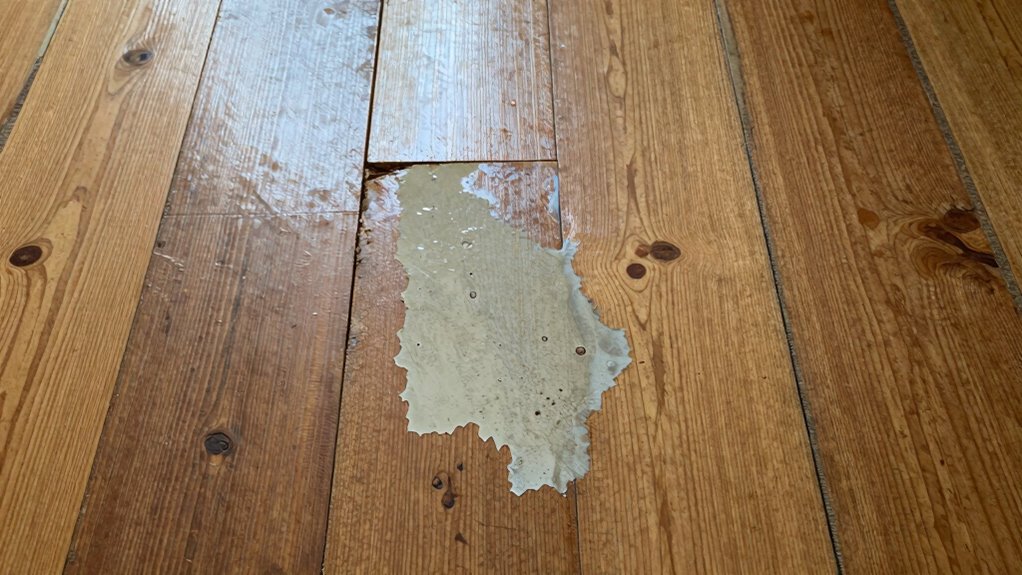
Recognizing the right moment to call in a professional can save you time, money, and frustration. If your hardwood floors show deep scratches, persistent dullness, or water damage that doesn’t respond to basic cleaning, it’s time for an expert restoration. A professional assessment can identify hidden issues like subfloor damage or worn finishes. Knowing when to seek help guarantees you don’t worsen the problem. Think about calling a specialist if DIY methods fail or if the damage covers large areas. They’ll provide the right solutions to restore your floors effectively. Here’s a quick guide:
| Signs to Call a Professional | When to Consider DIY | Cost of Expert Restoration |
|---|---|---|
| Deep scratches | Light cleaning | Initial consultation fee |
| Water damage | Minor dullness | Long-term savings |
| Persistent stains | Minor scratches | Quality results |
| Worn finish | Surface cleaning | Expert assessment |
| Large damaged areas | Small repairs | Peace of mind |
Prevent Dullness and Keep Your Hardwood Floors Looking Beautiful
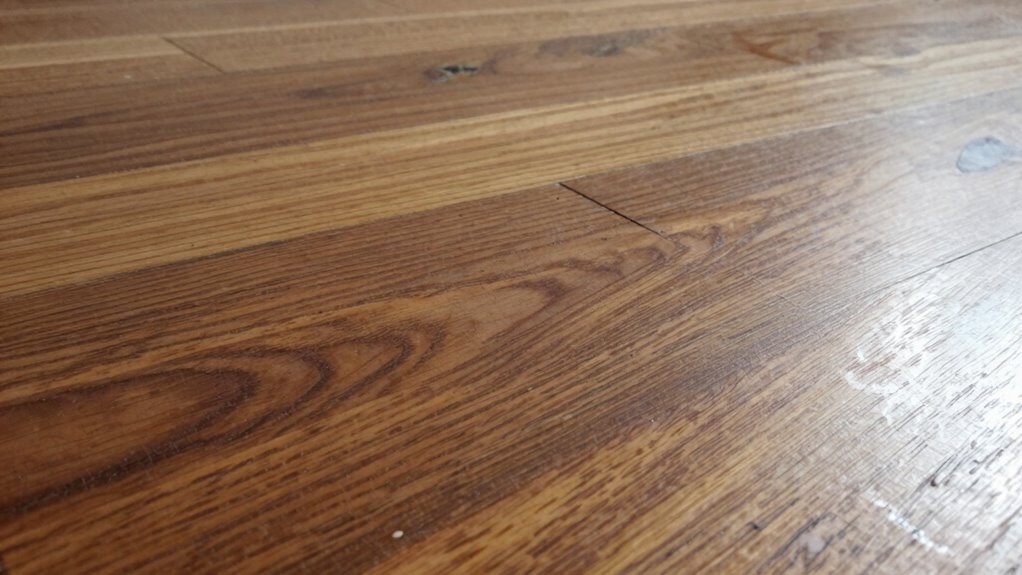
Maintaining your hardwood floors’ natural beauty requires proactive care to prevent dullness and surface wear. To keep your floors vibrant, focus on these steps:
- Regularly sweep or vacuum to remove dirt that can scratch the surface and obscure woodgrain patterns.
- Use a damp mop with a pH-neutral cleaner designed for hardwood, avoiding excess water that can damage the wood.
- Schedule professional floor refinishing when you notice dullness or scratches, restoring the wood’s luster and highlighting its natural woodgrain patterns. These efforts prevent the buildup of grime and wear that lead to permanent dullness, ensuring your floors stay beautiful longer. Proper maintenance and timely refinishing preserve the integrity of your hardwood floors and keep their natural charm shining through.
Frequently Asked Questions
Can Using Natural Oils Help Restore Dull Hardwood Floors?
Yes, using natural oils can help restore dull hardwood floors by enhancing their shine and providing a protective layer. Natural oils, like linseed or tung oil, penetrate the wood and promote wood rejuvenation, making your floors look vibrant again. Just make certain you clean the surface well before applying, and use the oils sparingly. Regular maintenance with natural oils can prolong the beauty and durability of your hardwood floors.
How Often Should I Reapply Finish to Maintain Shine?
You should reapply finish every 2-3 years to maintain shine and protect your hardwood floors. A proper reapplication schedule is key to finish maintenance, preventing dullness and wear. Regularly inspect your floors for signs of fading or scratches, and when needed, lightly sand and reapply the finish. Consistent reapplication ensures your floors stay vibrant and resilient, avoiding the permanent dullness caused by neglecting finish maintenance.
Are There Specific Cleaning Routines for Different Hardwood Types?
Imagine your hardwood floor shimmering under soft lighting—each type demands a unique touch. For different hardwoods, you tailor your wood floor cleaning routine to preserve their beauty. For example, oak thrives with gentle sweeping and a damp mop, while exotic woods need extra care to prevent damage. Knowing each wood’s needs is key to hardwood maintenance, ensuring your floors stay stunning and durable for years.
What Are Signs My Hardwood Floor Needs Professional Refinishing?
You’ll know your hardwood floor needs professional refinishing if it looks dull despite regular cleaning, shows deep scratches, or has stubborn stains that won’t lift with stain removal. Signs also include uneven color or areas where the finish is wearing thin. Floor sanding restores smoothness and prepares the surface for stain removal or refinishing, making your floors look new again. Don’t delay—professional refinishing can prevent further damage and extend your floor’s life.
Does Humidity Affect the Dullness of Hardwood Floors?
Ironically, high humidity levels can make your hardwood floors appear duller over time. When humidity rises, wood expands, causing the surface to become uneven and lose its shine. Conversely, low humidity can lead to shrinkage and cracks. So, maintaining balanced humidity levels helps keep your floors looking their best, preventing dullness caused by wood expansion or contraction. Proper humidity control is the secret to long-lasting, vibrant hardwood floors.
Conclusion
To keep your hardwood floors shining, treat them like delicate glass—avoid harsh chemicals and aggressive scrubbing. Think of proper care as tending a garden, gently nurturing their natural beauty. When you listen to your floors’ whispers of dullness, respond with restoration and patience. With consistent care, you’ll preserve their luster, letting your home’s foundation reflect your love. Remember, a well-maintained floor is the steady heartbeat of a beautiful, welcoming space.
Halloween Picks
halloween
As an affiliate, we earn on qualifying purchases.