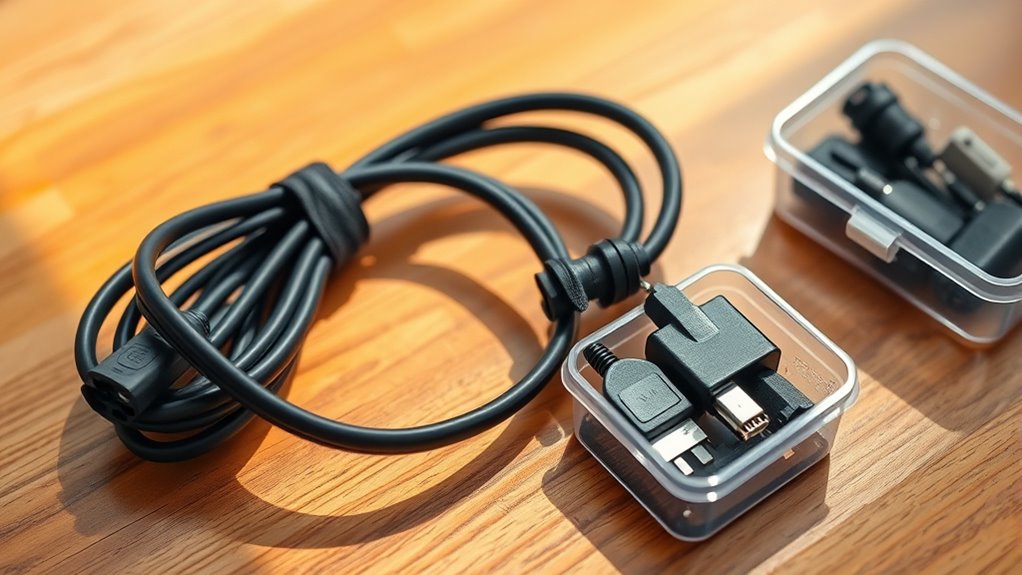

To care for and store your power cord safely, always handle it gently and avoid pulling or twisting. Wrap it loosely with gentle coils using Velcro straps or cord organizers, and store it flat in a cool, dry place away from sharp objects and hot surfaces. Inspect regularly for damage and replace any frayed wires. Proper storage and handling prevent damage and ensure safety—continue exploring tips to keep your cords in top condition.
Key Takeaways
- Always unplug cords by gripping the plug, not the cord, to prevent internal wire damage.
- Store cords in loose, gentle coils secured with Velcro or straps to avoid stress and kinks.
- Keep cords in a cool, dry environment away from sharp objects, heat sources, and heavy items.
- Regularly inspect cords for wear, cracks, or exposed wires and replace damaged ones immediately.
- Lay cords flat and organized in drawers or boxes to prevent tangling and internal damage over time.
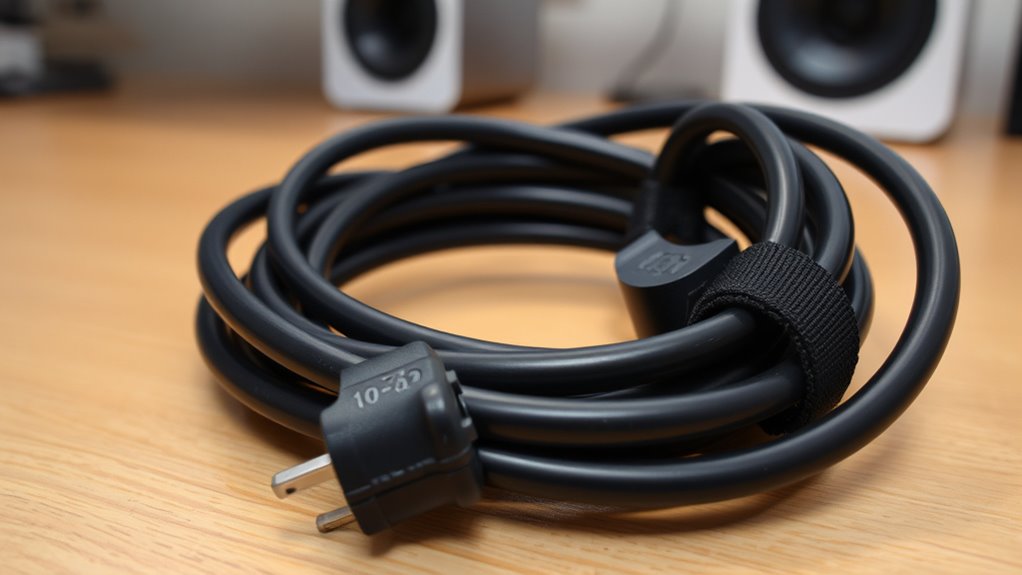
To guarantee your power cord remains safe and functional, proper care and storage are essential. Over time, cords can suffer from damage that compromises safety and performance. Cord damage often occurs from bending, twisting, or pulling the cord improperly, which can lead to frayed wires, exposed conductors, or internal breaks. These issues not only reduce the lifespan of your cord but also pose safety risks like electrical shocks or fires. To prevent this, adopting simple storage tips can make a substantial difference. When not in use, avoid wrapping the cord tightly or in a way that creates sharp bends. Instead, loosely coil it in gentle loops, ensuring there are no kinks or tight bends that could stress the internal wires. Using a cord organizer or a Velcro strap can help keep the cable neatly coiled without putting strain on it. Always keep the cord away from sharp edges, hot surfaces, or areas where it could be pinched or crushed, as these conditions accelerate cord damage. Additionally, avoid pulling the cord out of a socket by tugging on the cord itself; instead, grasp the plug firmly when disconnecting. This prevents stress on the connection points and internal wiring, extending the cord’s lifespan.
Another key storage tip is to keep your power cords in a dry, cool environment. Moisture and heat are enemies of electrical insulation, causing deterioration over time. Store cords in a place where they won’t get tangled with other objects or subjected to crushing pressure, which can cause internal damage unnoticed until failure occurs. If you have multiple cords, label them clearly to avoid unnecessary handling or untangling, which can lead to accidental damage. Also, avoid wrapping cords around objects like your hand or tightly around a hook, which can create stress points. Instead, use proper coils and secure them with a gentle tie or Velcro strap. When storing cords in a drawer or box, lay them flat and avoid piling heavy items on top, as crushing can damage the insulation. Regularly inspecting your cords for signs of wear, cracks, or exposed wires can help catch potential issues early, preventing accidents before they happen. Incorporating proper storage techniques can significantly extend the lifespan of your cords and ensure their safe use.
Implementing these storage tips and being mindful of how you handle your power cords will considerably extend their life and maintain their safety. Proper storage not only keeps your cords in good condition but also ensures they perform reliably when you need them. By avoiding common mistakes like tight wrapping, exposure to harmful environments, or pulling on the cord, you protect yourself and your equipment from electrical hazards. Taking these simple precautions is an investment in your safety and the longevity of your power cords, making sure they serve you well over time.
Top picks for "stor power cord"
Open Amazon search results for this keyword.
As an affiliate, we earn on qualifying purchases.
Frequently Asked Questions
Can I Repair a Damaged Power Cord Myself?
You shouldn’t attempt DIY repairs on a damaged power cord, as it can be dangerous. Instead, you should opt for professional replacement to guarantee safety and proper function. Trying to fix it yourself might lead to electrical hazards or further damage. Always prioritize safety by consulting an expert or replacing the cord entirely, rather than risking injury or equipment failure. Remember, professional repairs are your safest option.
How Often Should I Replace My Power Cord?
You should replace your power cord when you notice signs of wear, damage, or diminished cord durability. Generally, follow a regular replacement schedule every 1-3 years, but always prioritize safety if you see fraying, exposed wires, or after a power surge. Regular inspection helps prevent hazards and guarantees your device functions properly. Don’t wait too long—timely replacement keeps you safe and maintains ideal performance.
Are Extension Cords Safe for Long-Term Use?
Extension cords can be safe for long-term use if you prioritize cord safety and choose high-quality, heavy-duty cords designed for continuous use. Always inspect for damage, avoid overloading, and guarantee proper storage to maintain long-term durability. Use cords only for their intended purpose, keep them away from water, and replace them if you notice any fraying or damage. Proper care ensures your extension cords remain safe and durable over time.
What Are Signs of a Power Cord Electrical Fault?
Like a warning flag waving in a storm, signs of a power cord electrical fault alert you to hidden dangers. You might notice frayed or cracked cord insulation, exposed wires, or scorch marks. Keep an eye out for frequent tripping, sparks, or burning smells, as these indicate electrical hazards. Ignoring these signs risks electric shock or fire, so always disconnect and replace damaged cords promptly to guarantee safety.
Is It Safe to Wrap Cords Tightly for Storage?
No, it’s not safe to wrap cords tightly for storage because it can cause cord damage, including internal wire breakage and insulation wear. To keep your cords safe, follow safety tips like loosely coiling them and avoiding sharp bends. Proper storage prevents electrical faults and extends their lifespan. Always inspect cords for damage before storage, and store them in a cool, dry place to maintain safety and functionality.
Conclusion
Remember, a stitch in time saves nine. By taking a few simple steps to care for and store your power cord properly, you can extend its life and keep yourself safe. Avoid twisting or bending it sharply, and always unplug it by the plug, not the cord. Store it in a dry, safe place where it won’t get damaged. When you treat your power cord with care, it’ll serve you well for years to come.