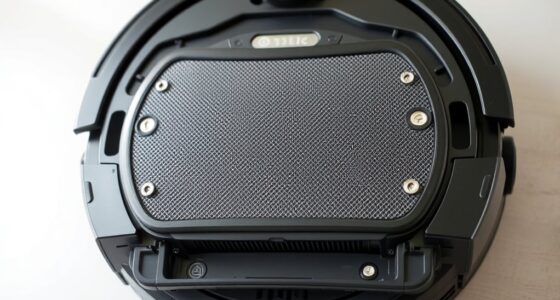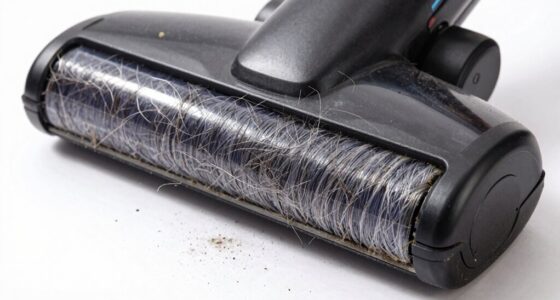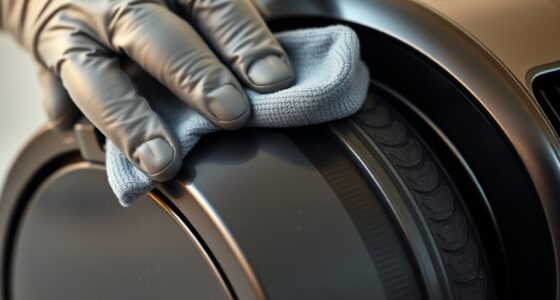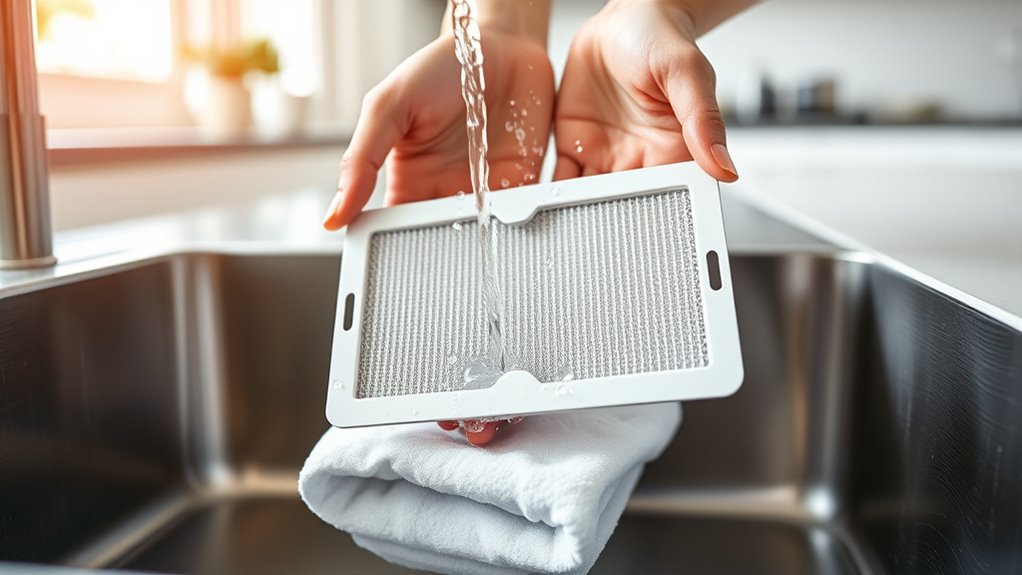

To properly wash washable filters, carefully remove them following the manufacturer’s instructions, then gently shake or tap to loosen dust. Submerge the filter in lukewarm water with mild detergent and gently agitate to remove dirt, rinsing thoroughly afterward. Allow the filter to air dry in a well-ventilated area for at least 24 hours, ensuring it’s completely dry before reinstalling. Continuing with these steps helps keep your filters effective and your indoor air clean.
Key Takeaways
- Carefully remove the washable filter following manufacturer instructions before cleaning.
- Submerge the filter in lukewarm water, gently agitating to loosen dirt, and rinse thoroughly.
- Use mild detergent if needed, avoiding harsh brushes or abrasive materials during washing.
- Air dry the filter in a well-ventilated area for at least 24 hours, avoiding direct sunlight and heat sources.
- Inspect the filter for damage before reinstalling once completely dry to ensure optimal performance.
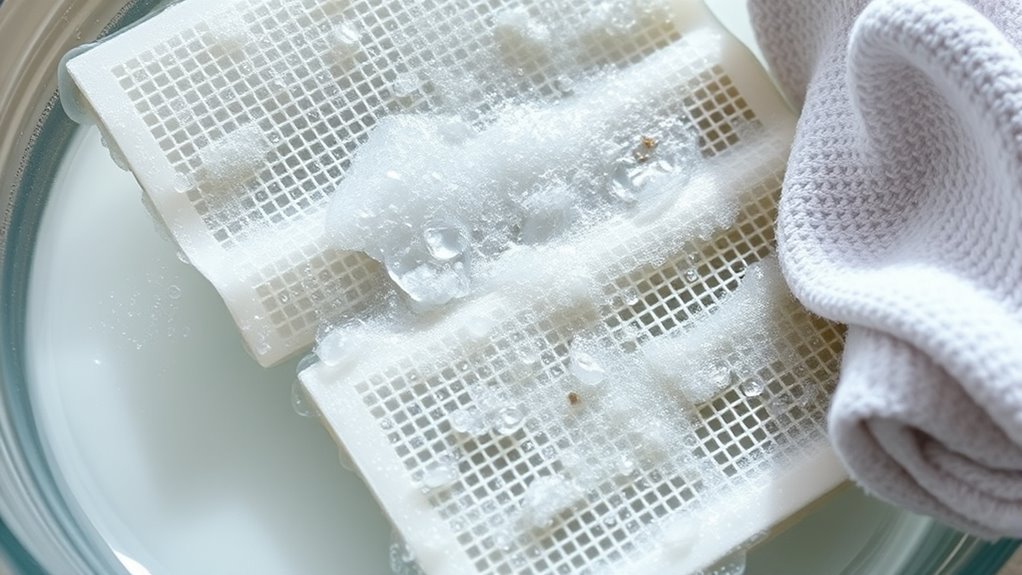
Regularly washing washable filters is essential to keep your appliances running efficiently and maintain good air quality. When you prioritize proper filter maintenance, you help prevent dust buildup, reduce strain on your systems, and ensure ideal performance. One of the most important steps in filter maintenance is understanding the best cleaning techniques. Properly washing your filters not only extends their lifespan but also improves indoor air quality by removing accumulated dirt, debris, and allergens effectively. To start, remove the washable filter carefully from your appliance, making sure to follow any manufacturer instructions. Once out, give the filter a gentle shake or tap to loosen loose dust and debris. This initial step helps make the cleaning process more effective. When it’s time to clean, use lukewarm water—hot water can sometimes warp or damage certain filters—along with a mild detergent or a specialized cleaning solution if recommended. Submerge the filter completely and gently agitate it with your hands or a soft brush, focusing on areas with stubborn dirt. Avoid using harsh brushes or abrasive materials, as they can damage the filter’s surface or reduce its filtration capacity. Next, rinse the filter thoroughly with clean water to remove all soap residues and loosened dirt. It’s crucial to ensure no soap remains, as leftover cleaning agents can affect the filter’s performance or cause unpleasant odors later. As you rinse, hold the filter under a gentle stream of water, moving it around to cover all surfaces. If you notice persistent grime, repeat the washing process until the filter appears clean. Once cleaned, you need to allow the filter to dry completely before reinstalling it. This step is vital because installing a damp filter can promote mold growth and compromise air quality. Place the filter in a well-ventilated area, ideally outdoors or near a fan, and let it air dry for at least 24 hours. Do not rush the drying process with direct heat or sunlight, as this can damage the filter material. Patience during the drying stage ensures your filter is thoroughly dry and ready for use. Proper drying also helps maintain its shape and filtration properties. Additionally, consider the filter replacement schedule recommended by the manufacturer to keep your filter functioning at peak performance. Once fully dry, inspect the filter for any signs of damage or warping. If everything looks good, reinstall it carefully into your appliance, making sure it fits securely. Regularly washing washable filters with the right cleaning techniques and allowing them to dry thoroughly keeps your appliances functioning properly and promotes healthier indoor air. Consistent maintenance like this prevents costly repairs and ensures you breathe cleaner, fresher air every day.

K&N Engineering 995000 Air Filter Accessories – FLTR CARE SERVICE KIT
CLEANS ALL OILED K&N AIR FILTERS
As an affiliate, we earn on qualifying purchases.
As an affiliate, we earn on qualifying purchases.
Frequently Asked Questions
How Often Should Washable Filters Be Cleaned for Optimal Performance?
You should clean your washable filters every 4 to 6 weeks to maintain peak performance and extend their lifespan. Regular cleaning prevents dust buildup and ensures efficient airflow. If you notice reduced suction or increased dust, consider cleaning them more frequently. Proper cleaning frequency keeps your system running smoothly, reduces wear and tear, and maximizes filter lifespan. Remember to dry filters completely before reinstalling to avoid mold and bacteria growth.
Can Washing Filters With Soap Damage Their Material?
Sure, soap can cause damage if you use the wrong kind or scrub too hard, but most gentle soaps are safe for your filter material. Think of soap damage as a tiny villain in your cleaning story—harmless if you choose wisely. Just avoid harsh chemicals, rinse thoroughly, and let the filter dry completely. That way, your washable filter stays happy, healthy, and ready to do its job.
Are There Specific Cleaning Agents Recommended for Washable Filters?
You should use gentle cleaning agents that are compatible with your filter’s material to prevent damage. Mild dish soap or specially formulated filter cleaners work well and won’t harm filter compatibility. Avoid harsh chemicals like bleach or strong detergents, as they can deteriorate the filter’s structure. Always check the manufacturer’s instructions to ensure you’re using appropriate cleaning agents that keep your washable filter effective and intact.
How Do I Know When a Filter Needs Replacing Instead of Washing?
You’ll know when to replace your filter by checking its lifespan and looking for replacement indicators. If it’s become overly clogged, discolored, or damaged, it’s time for a new one. When cleaning no longer restores proper airflow or filtration, those are signs that washing isn’t enough. Regularly inspect your filter, follow the manufacturer’s recommended lifespan, and watch for visible wear—these clues help you decide between washing and replacing effectively.
What Are the Signs of Improper Drying Leading to Mold Growth?
If your filter shows mold indicators like a musty smell, visible mold spots, or persistent dampness, improper drying is likely the cause. Insufficient drying time allows moisture to linger, promoting mold growth. To prevent this, make certain you dry the filter thoroughly, ideally for at least 24 hours in a well-ventilated area. Always check for complete dryness before reinstalling to avoid mold development and maintain air quality.

K&N HVAC Filter Cleaner: 32 Oz Spray Bottle Filter Cleaner and Refresher; Restores K&N Home Air Filter Performance; 99-6010
CLEANS ALL K&N HOME AIR FILTERS
As an affiliate, we earn on qualifying purchases.
As an affiliate, we earn on qualifying purchases.
Conclusion
Now that you know how to properly wash and dry your washable filters, you can keep your appliances running smoothly and efficiently. Remember, neglecting these steps can lead to reduced performance and potential damage. Isn’t it worth taking a few extra minutes to make sure your filters are clean and fully dry? By doing so, you’ll extend the life of your filters and maintain a healthier home environment. Isn’t that a small effort for such a big benefit?
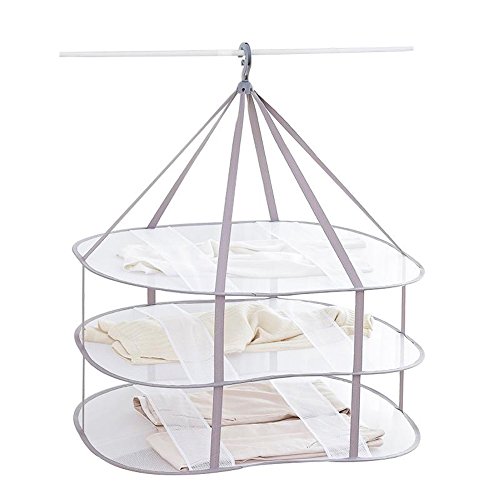
Looca 3-Tier Folded Mesh Clothes Hanging Dryer Sweater Drying Rack 30.3" L * 24.5" W*30.7" H
Open it flat can dry large size sweater or feather jacket. Fold it back into Φ11" flat circle…
As an affiliate, we earn on qualifying purchases.
As an affiliate, we earn on qualifying purchases.

Nexiview 16x20x1 Furnace Filter-MERV8, Washable & Reusable Electrostatic Air Filter, AC/HVAC Furnace Filter, Permanent Air Filter, Breathe Fresher, Easy Install
【Long-lasting & Economical】 Our Nexiview electrostatic air filter is designed for durability. Constructed with an aluminum frame, it…
As an affiliate, we earn on qualifying purchases.
As an affiliate, we earn on qualifying purchases.