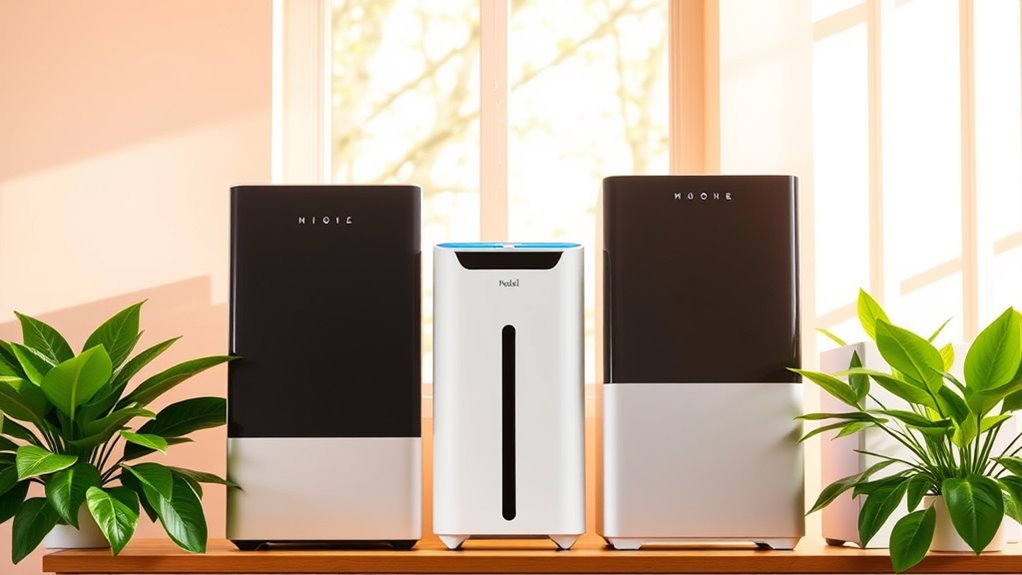

If you’re shopping for an air purifier for respiratory health, the difference between models comes down to filtration quality, clean air delivery rate (CADR), and how honestly each unit handles its claimed room size. After comparing 15 popular models, the Coway Mighty AP-1512HH stands out as the best overall pick thanks to its proven HEPA filtration, strong air exchange rate for mid-sized rooms, and a washable pre-filter that keeps long-term costs down. The Levoit Vital 200S makes the most sense for larger spaces and anyone who wants app control and real-time air quality feedback, while the budget-friendly Levoit Core 300 remains the safest small-room choice for bedrooms and nurseries. The main tradeoff you’ll face is between coverage area and running cost: big-room units like the Winix 5520 and ECOSELF cost more upfront and use pricier filters, while compact models sacrifice whole-room performance for quiet bedroom operation. Keep reading for the full breakdown, including which models to skip and why.

Get cleaning gear delivered free with Prime
- Fast, free delivery on millions of items
- Prime Video, Amazon Music and more included
- Member-only deals all year
Complete the kit


Key Takeaways
- True HEPA filtration was table stakes across all 15 models — what separated the top picks was CADR-to-room-size honesty and air exchange rate, where the Coway Mighty and Levoit Vital 200S clearly outperformed budget towers making inflated coverage claims.
- Several budget models (the FreAire KN6391RGB, FULMINARE, and Purivortex PX500) claim 1,000+ sq ft coverage but are physically better suited to bedrooms under 300 sq ft — the gap between claimed and realistic coverage was the single biggest pattern in this comparison.
- Air quality sensors proved the most useful premium feature for respiratory sufferers: the DREO‘s PM2.5 monitor and the MOOKA PR1’s display let you verify the purifier is actually working, not just trust that it is.
- Filter replacement costs varied enormously — models with washable pre-filters like the Coway Mighty and MOOKA PR1 cut long-term costs noticeably compared with sealed all-in-one cartridges that must be replaced wholesale.
- Pet households got better results from dedicated pet modes (Levoit Vital 200S, MOOKA PR1) than from generic purifiers, because dander and odor require both mechanical filtration and an activated carbon stage sized for the job.
| FreAire KN6391RGB Air Purifier for Bedroom (Up to 1086 Ft²) |  | Best for Large Bedrooms | Model: KN6391RGB | Coverage Area: Up to 1086 ft² | Filtration: 3-level HEPA system | VIEW ON AMAZON | See Our Full Breakdown |
| AirHub Air Purifier for Home, Up to 1,092 sq ft |  | Best Value Bundle | Coverage: Up to 1,092 sq ft at 1 ACH; 209 sq ft at 4.8 ACH | Filtration: Washable pre-filter, True HEPA, activated carbon | Particle Capture: Up to 99.97% of particles as small as 0.3 microns | VIEW ON AMAZON | See Our Full Breakdown |
| PuroAir 240 HEPA Air Purifier for Home, Pets, and Bedroom, Covers Up to 1,000 sq ft |  | Best for Continuous Whole-Floor Use | Coverage: Up to 1,000 sq ft in one hour | Filtration: Pre-filter, HEPA filter, activated carbon | Filtration Claim: Up to 99.9% of particles | VIEW ON AMAZON | See Our Full Breakdown |
| DREO Air Purifier with HEPA Filter and PM2.5 Monitor |  | Best Verified Performance for Small Rooms | Model: DR-HAP008 (Dreo 338) | CADR: 115 CFM (AHAM Verified) | Room Coverage: Up to 178 sq ft at 4.8 ACH; up to 856 sq ft at 1 ACH | VIEW ON AMAZON | See Our Full Breakdown |
| GermGuardian AC4825E HEPA Air Purifier Tower |  | Best Budget Tower for Odor Control | Model: AC4825E | Height: 22 inches | Coverage Area: 153 sq ft every 12.5 minutes; 743 sq ft every hour | VIEW ON AMAZON | See Our Full Breakdown |
| FULMINARE H13 True HEPA Air Purifier for Bedroom |  | Best for Small Bedrooms | Filter: H13 HEPA | Coverage area: Up to 215 sq. ft. / 20 m² | Air circulation: 5 times per hour | VIEW ON AMAZON | See Our Full Breakdown |
| Purivortex PX500 Air Purifier for Bedroom, Black |  | Best for Broad Particle and Odor Filtration | Model: PX500 | Coverage area: Up to 880 sq. ft. | Filtration efficiency: 99.97% of particles as small as 0.1 microns | VIEW ON AMAZON | See Our Full Breakdown |
| AromaRoom True HEPA Air Purifier for Bedroom and Baby Room |  | Best for Quiet Nursery Use | Model: AP103-A | Coverage area: 323 ft² / 30 m² | Air circulation rate: 2 times per hour | VIEW ON AMAZON | See Our Full Breakdown |
| Coway Mighty AP-1512HH(W) Air Purifier, White |  | Best for Automatic Air Quality Response | Model: AP-1512HH(W) | Coverage: Up to 1,748 sq. ft. in 60 minutes | Filtration: Washable pre-filter, deodorization filter, bipolar device, and HEPA filter | VIEW ON AMAZON | See Our Full Breakdown |
| ECOSELF Air Purifier for Large Rooms up to 2,400 sq. ft. with True HEPA Filter |  | Best for Large Rooms | Coverage area: Up to 2,400 sq. ft. | Filtration: True HEPA | Particle capture: Captures 99.97% of airborne particles | VIEW ON AMAZON | See Our Full Breakdown |
| Levoit Core 300-P Air Purifier for Home, Pets, and Allergens |  | Best Certified Compact for Allergy Relief | Model: Core 300-P | Coverage Area: Up to 1,073 ft² | CADR Smoke: 143 CFM | VIEW ON AMAZON | See Our Full Breakdown |
| Winix 5520 Air Purifier for Large Rooms |  | Best Smart Features for Large Spaces | Model: 5520 | Room Coverage: Up to 1,882 sq ft per hour | Filtration: Four-stage system with True HEPA and carbon | VIEW ON AMAZON | See Our Full Breakdown |
| VOOPNU Air Purifier for Home, High Efficiency Filter Up to 1076 Ft², White |  | Best Budget Pick for Quiet Bedrooms | Coverage Area: Up to 1,076 ft² | Dimensions: 6.69 x 6.69 x 9.84 inches | Noise Level: 22 dB | VIEW ON AMAZON | See Our Full Breakdown |
| LEVOIT Vital 200S-P Smart Air Purifier for Large Rooms |  | Best Overall for Serious Respiratory Filtration | Model: Vital 200S-P | Coverage Area: Up to 1,875 sq ft | CADR (Smoke): 250 CFM | VIEW ON AMAZON | See Our Full Breakdown |
| MOOKA PR1 HEPA Air Purifier with Washable Pre-Filter, Pet Mode, and PM2.5 Display |  | Best for Pet Households | Model: PR1 | Recommended Room Coverage: Up to 2,200 sq. ft. | Filtration: Four-stage system with washable pre-filter | VIEW ON AMAZON | See Our Full Breakdown |
| air purifiers for respiratory health | Model | Coverage Area | Filtration |
|---|---|---|---|
| FreAire KN6391RGB Air Purifier | KN6391RGB | Up to 1086 ft² | 3-level HEPA system |
| AirHub Air Purifier for Home | — | — | Washable pre-filter, True HEPA, activated carbon |
| PuroAir 240 HEPA Air Purifier | — | — | Pre-filter, HEPA filter, activated carbon |
| DREO Air Purifier with HEPA Fi | DR-HAP008 (Dreo 338) | — | — |
| GermGuardian AC4825E HEPA Air | AC4825E | 153 sq ft every 12.5 minutes; 743 sq ft every hour | True HEPA, activated carbon pre-filter, optional UV-C light |
| FULMINARE H13 True HEPA Air Pu | — | Up to 215 sq. ft. / 20 m² | — |
| Purivortex PX500 Air Purifier | PX500 | Up to 880 sq. ft. | — |
| AromaRoom True HEPA Air Purifi | AP103-A | 323 ft² / 30 m² | — |
| Coway Mighty AP-1512HH(W) Air | AP-1512HH(W) | — | Washable pre-filter, deodorization filter, bipolar device, and HEPA filter |
| ECOSELF Air Purifier for Large | — | Up to 2,400 sq. ft. | True HEPA |
| Levoit Core 300-P Air Purifier | Core 300-P | Up to 1,073 ft² | — |
| Winix 5520 Air Purifier for La | 5520 | — | Four-stage system with True HEPA and carbon |
| VOOPNU Air Purifier for Home | — | Up to 1,076 ft² | Triple-layer system, 99.97% efficiency |
| LEVOIT Vital 200S-P Smart Air | Vital 200S-P | Up to 1,875 sq ft | — |
| MOOKA PR1 HEPA Air Purifier wi | PR1 | — | Four-stage system with washable pre-filter |
More Details on Our Top Picks
FreAire KN6391RGB Air Purifier for Bedroom (Up to 1086 Ft²)
This option stands out for buyers who want big-room coverage paired with genuinely quiet nights. The dual-channel intake and 360-degree output help the FreAire KN6391RGB circulate air faster than single-inlet bedroom units like the FULMINARE H13, which matters if you’re trying to clear pollen or smoke from a large master suite rather than a small nursery. The 3-level HEPA system captures particles down to 0.3 microns, and the 20 dB sleep mode is quiet enough for light sleepers. Compared with the DREO, however, this model lacks real-time PM2.5 monitoring, so you’re guessing at fan speed instead of letting a sensor respond. The ambient lighting and aroma pad are pleasant extras, but they’re cosmetic — don’t buy it for them.
Pros:- Covers rooms up to 1086 ft² with dual-channel intake
- Very quiet 20 dB sleep mode
- HEPA filtration captures particles down to 0.3 microns including smoke and dander
- Ambient lighting and aroma pad add bedroom-friendly comfort
Cons:- No smart connectivity, app control, or air quality sensor
- Essential oils for the aroma pad are not included
Best for: Owners of large bedrooms or open lofts who prioritize quiet overnight operation and wide coverage
Not ideal for: Data-driven buyers who want a PM2.5 sensor and auto mode to react to air quality changes automatically
- Model:KN6391RGB
- Coverage Area:Up to 1086 ft²
- Filtration:3-level HEPA system
- Particle Capture:Down to 0.3 microns
- Noise Level:As low as 20 dB (Sleep Mode)
- Design:Dual-channel inlet, 360-degree output
- Extras:Three ambient light modes, aroma pad
Our verdict“A sensible pick if you need quiet, high-volume filtration for a large bedroom and don’t care about sensors or app control.”
AirHub Air Purifier for Home, Up to 1,092 sq ft
What separates the AirHub from the FreAire is what’s in the box: two complete filter sets, a washable pre-filter, and an aroma diffuser, which softens the long-term cost of ownership that plagues cheaper units. The PM2.5 sensor with Auto Mode is the real draw for respiratory health buyers — it ramps fan speed when air quality dips, something the FreAire simply can’t do. Be skeptical of the headline 1,092 sq ft figure, though; that’s rated at just 1 air change per hour, which is minimal for allergy sufferers. The honest number is 209 sq ft at 4.8 air changes, which puts it closer to the DREO’s small-room territory than to true whole-floor machines like the ECOSELF. Think of it as a well-equipped bedroom purifier with a spare filter, not a whole-home solution.
Pros:- PM2.5 sensor with Auto Mode adjusts fan speed in real time
- Includes two full filter sets and a washable pre-filter
- Three-stage filtration captures up to 99.97% of 0.3-micron particles
- Quiet 20 dB Sleep Mode with display lights off
Cons:- 1,092 sq ft coverage applies at only 1 air change per hour
- Noise levels at higher fan speeds are not specified
- No smart connectivity or app control
Best for: Budget-conscious buyers who want sensor-driven auto mode plus a spare filter set included from day one
Not ideal for: Anyone expecting true large-room performance — the headline coverage is based on only one air change per hour
- Coverage:Up to 1,092 sq ft at 1 ACH; 209 sq ft at 4.8 ACH
- Filtration:Washable pre-filter, True HEPA, activated carbon
- Particle Capture:Up to 99.97% of particles as small as 0.3 microns
- Sensor:PM2.5 with Auto Mode
- Sleep Mode Noise:20 dB
- Power Consumption:24 W
- Extras:Timer, child lock, filter reminder, aroma diffuser, 2 filter sets
- Support:10-year service
Our verdict“The smart buy if you want auto-mode convenience and bundled filters without paying premium prices, provided you treat it as a small-to-mid-room unit.”
PuroAir 240 HEPA Air Purifier for Home, Pets, and Bedroom, Covers Up to 1,000 sq ft
The PuroAir 240 makes the most sense for one specific scenario: a purifier that runs 24/7 in a main living area without hand-holding. Its smart particle sensor responds automatically when polluted air is detected — useful for households with cooking odors or pets — and the three-layer filter stack addresses VOCs alongside dust and dander. Unlike the AirHub, which gives you a spare filter set upfront, PuroAir doesn’t publish replacement intervals or filter costs, so budget-conscious buyers should check that before committing. The 1,000 sq ft claim is based on one cleaning per hour, which is adequate for general freshness but weaker than the near-clinical air changes the DREO delivers in small rooms. Its third-party certifications (CARB, ETL, UL) do give it credibility many no-name competitors lack.
Pros:- Three-layer filtration targets dust, pollen, smoke, dander, and VOCs
- Smart particle sensor adjusts power automatically
- Built and certified for continuous 24/7 operation
- CARB, ETL, ISO, and UL certifications plus 2-year warranty
Cons:- 1,000 sq ft figure is a manufacturer claim at one cleaning per hour
- No published filter replacement cost or maintenance interval
Best for: Households that want a set-and-forget purifier running continuously in a shared living space with pets or smokers
Not ideal for: Small bedrooms — its coverage advantage goes to waste, and quieter dedicated bedroom units like the FreAire cost less to run there
- Coverage:Up to 1,000 sq ft in one hour
- Filtration:Pre-filter, HEPA filter, activated carbon
- Filtration Claim:Up to 99.9% of particles
- Sensor:Smart particle sensor
- Modes:Sleep mode
- Operation:Designed for 24/7 use
- Certifications:CARB, ETL, ISO, UL
- Warranty:2 years
Our verdict“A reliable always-on workhorse for a pet-friendly living room, as long as you verify ongoing filter costs first.”
DREO Air Purifier with HEPA Filter and PM2.5 Monitor
This is the pick for buyers who want independently verified numbers instead of marketing math. The DREO’s AHAM Verified CADR of 115 CFM means its performance claim has been third-party tested — a rarity in this lineup, where units like the PuroAir and AirHub cite manufacturer figures. The catch is scale: at a medically meaningful 4.8 air changes per hour, it covers only 178 sq ft, roughly a bedroom or home office. That honesty is refreshing next to competitors quoting 1,000+ sq ft at a single air change. The real-time PM2.5 display with AQI readout makes invisible air quality visible, which helps asthma sufferers trust the machine is actually working. Skip it for living rooms; pair it with the coverage-heavy ECOSELF if you need both zones covered.
Pros:- AHAM Verified CADR of 115 CFM — independently tested performance
- Real-time PM2.5 sensor with AQI display and automatic speed adjustment
- ENERGY STAR certified at roughly 125 kWh per year
- Sleep mode turns off display lights for dark bedrooms
Cons:- Effective coverage caps at 178 sq ft at 4.8 air changes per hour
- Auto, Turbo, and Normal modes will be louder than its small size suggests
Best for: Asthma and allergy sufferers who want third-party verified CADR and live air quality data in a bedroom or office
Not ideal for: Large or open-plan rooms, where its 178 sq ft high-performance coverage falls well short
- Model:DR-HAP008 (Dreo 338)
- CADR:115 CFM (AHAM Verified)
- Room Coverage:Up to 178 sq ft at 4.8 ACH; up to 856 sq ft at 1 ACH
- Filter:3-in-1 pre-filter, high-efficiency filter, activated carbon
- Modes:Auto, Turbo, Sleep, Normal (4 fan speeds)
- Air Quality Monitoring:Real-time PM2.5 sensor with AQI display (1–999)
- Annual Energy Use:Approximately 125 kWh
- Certification:AHAM Verified; ENERGY STAR
Our verdict“The most trustworthy small-room pick here — buy it for a bedroom where verified performance and live air data matter more than square footage.”
GermGuardian AC4825E HEPA Air Purifier Tower
The GermGuardian AC4825E earns its spot as the low-cost entry point that still does the fundamentals well. Its activated carbon pre-filter is the standout for respiratory health buyers dealing with cooking smells or pet odor — it tackles gases that HEPA alone can’t touch, and the optional UV-C light adds a germ-reduction layer none of the other four picks offer. The tower footprint fits easily beside a nightstand where boxier units like the PuroAir 240 won’t. Tradeoffs are real, though: three fixed fan speeds with no PM2.5 sensor means no auto mode, and the ongoing costs stack up — HEPA filters, carbon filters, and UV bulbs all need replacing, unlike the AirHub’s washable pre-filter and bundled spares. Treat the 743 sq ft figure as hourly refresh, not allergy-grade filtration.
Pros:- True HEPA captures 99.97% of particles down to 0.1 microns
- Activated carbon pre-filter reduces cooking and pet odors
- Optional UV-C light adds germ-reduction capability
- CARB certified and Zero Ozone Verified, with a slim 22-inch tower footprint
Cons:- Three consumables to replace: HEPA filters, carbon filters, and UV bulbs
- No air quality sensor, auto mode, or timer — fully manual operation
- 743 sq ft claim reflects hourly circulation, not high air-change filtration
Best for: Budget-minded buyers who mainly want pet and cooking odor reduction in a bedroom or nursery
Not ideal for: Buyers who want automation — no air quality sensor, no auto mode, no app or timer
- Model:AC4825E
- Height:22 inches
- Coverage Area:153 sq ft every 12.5 minutes; 743 sq ft every hour
- Filtration:True HEPA, activated carbon pre-filter, optional UV-C light
- Efficiency:99.97% of particles as small as 0.1 microns
- Fan Speeds:3
- Certifications:CARB Certified, ETL Certified, Zero Ozone Verified
- Replacement Parts:FLT4825 series filters, LB4000 UV bulb, FLT22CB4 carbon filters
Our verdict“The cheapest credible way to fight odors and allergens in a single room, provided you accept manual controls and steady replacement costs.”
FULMINARE H13 True HEPA Air Purifier for Bedroom
For a smaller bedroom, the FULMINARE pairs an H13 HEPA filter with 360° airflow to circulate room air five times per hour across spaces up to 215 sq. ft. That faster stated circulation and its 24 dB low-speed setting make it a more focused bedroom pick than the AromaRoom, which covers more area but circulates air twice per hour. A separate night light and five timer choices add flexibility for overnight use. The tradeoff is its limited room size: it is a poor fit for open-plan spaces or larger bedrooms. I’d also factor in the stated three-month filter replacement interval, which means more frequent upkeep than the AromaRoom’s 3–6-month interval. This makes the most sense when quiet, frequent circulation in a compact room is the priority.
Pros:- Stated five air circulations per hour in rooms up to 215 sq. ft.
- Low-speed operation is around 24 dB
- 360° outlet spreads airflow around the unit
- Independent night light and five timer settings
Cons:- Coverage is limited to rooms up to 215 sq. ft.
- Filter is normally replaced about every three months
Best for: Light sleepers who want frequent air circulation in a bedroom up to 215 sq. ft.
Not ideal for: People trying to clean a large or open-plan room, or those who want longer intervals between filter replacements.
- Filter:H13 HEPA
- Coverage area:Up to 215 sq. ft. / 20 m²
- Air circulation:5 times per hour
- Air outlet:360°
- Noise level:Around 24 dB on low fan speed
- Timer settings:2, 4, 8, 10, and 12 hours
- Power:Plug-in; no battery required
- Filter replacement interval:Normally every 3 months
Our verdict“Choose the FULMINARE for quiet, frequent circulation in a compact bedroom if its small-room coverage and regular filter changes suit your routine.”
Purivortex PX500 Air Purifier for Bedroom, Black
The Purivortex PX500 stands out for combining a pre-filter, HEPA filter, and activated carbon in a unit rated for spaces up to 880 sq. ft. That gives it a wider stated reach and an odor-focused layer that the compact FULMINARE does not list. The description says it captures 99.97% of particles as small as 0.1 microns, covering a broad range of airborne particles alongside odors. Its sleep, low, medium, and high modes offer more fan choices than the AromaRoom’s listed sleep mode. There are practical gaps, though: the listing provides no decibel figure, so light sleepers have less information for judging nighttime noise, and it gives no filter replacement interval. I’d shortlist it for larger spaces where flexible settings matter, while checking filter upkeep before committing.
Pros:- Three filtration layers include activated carbon
- Rated for rooms up to 880 sq. ft.
- Four fan modes, including sleep
- Two-year warranty
Cons:- No decibel rating is provided
- Filter replacement frequency is not specified
- The stated coverage is up to 880 sq. ft.; the description does not provide an air-change rate for that area
Best for: Households seeking layered particle and odor filtration across a larger room, with several fan settings.
Not ideal for: Light sleepers who need a published noise level, or buyers who want clear filter replacement guidance before choosing.
- Model:PX500
- Coverage area:Up to 880 sq. ft.
- Filtration efficiency:99.97% of particles as small as 0.1 microns
- Filter layers:Pre-filter, HEPA filter, activated carbon
- Filter size:6 inches
- Fan modes:Sleep, Low, Med, High
- Timer settings:4, 8, and 12 hours
- Night light modes:Multicolor, blue, green, and purple
- Warranty:2 years
Our verdict“Pick the PX500 if you want layered particle and odor filtration for a larger space and can verify its noise and filter upkeep details.”
AromaRoom True HEPA Air Purifier for Bedroom and Baby Room
The AromaRoom is the quietest of these smaller-room picks on the supplied figures: its 22 dB sleep mode is rated below the FULMINARE’s roughly 24 dB low setting. It covers up to 323 sq. ft., though its stated circulation is only twice per hour, compared with the FULMINARE’s five times per hour in a smaller area. That distinction matters for buyers weighing room reach against how often room air passes through the purifier. True HEPA filtration is specified for particles from 0.1 to 0.3 microns, while a fragrance pad allows optional essential-oil use; it does not replace filtration or suit everyone seeking an unscented room. I’d choose it for quiet operation and moderate coverage, but skip it if you need faster stated circulation or plan to use it in a humid space.
Pros:- Sleep mode is rated at 22 dB
- Coverage is up to 323 sq. ft.
- True HEPA filtration targets particles from 0.1 to 0.3 microns
- Three timer settings and a fragrance pad are included
Cons:- Stated air circulation is twice per hour
- Not suitable for high-humidity environments
- Essential oils for the fragrance pad are not included
Best for: Caregivers and light sleepers who prioritize low stated sleep noise in a bedroom or nursery up to 323 sq. ft.
Not ideal for: People needing faster air circulation, using a purifier in a high-humidity room, or avoiding added fragrance.
- Model:AP103-A
- Coverage area:323 ft² / 30 m²
- Air circulation rate:2 times per hour
- Filter type:True HEPA
- Particle capture size:0.1–0.3 microns
- Sleep mode noise:22 dB
- Timer settings:2, 4, and 8 hours
- Filter replacement interval:3–6 months
Our verdict“Choose the AromaRoom for quiet operation in a moderate-size bedroom if twice-hourly circulation fits your needs.”
Coway Mighty AP-1512HH(W) Air Purifier, White
The Coway Mighty earns a distinct place for buyers who want a purifier to respond to changing air conditions: its air quality monitor adjusts fan speed automatically, and Eco mode is listed alongside Auto. Its four-part setup includes a washable pre-filter, deodorization filter, bipolar device, and HEPA filter, giving it more specified stages than the AromaRoom’s True HEPA system. The controls and filter alerts also help make ongoing use easier to manage. I’d read the large coverage figure carefully: the stated 1,748 sq. ft. is based on cleaning the space in 60 minutes, so it does not imply the same air turnover as a smaller-room purifier. The description also says performance can vary with the environment. This is better suited to buyers who value automatic response and maintenance prompts than those choosing chiefly by stated rapid circulation.
Pros:- Air quality monitor adjusts fan speed automatically
- Four-part filtration includes washable pre-filter and deodorization filter
- LED light control and filter alerts support day-to-day use
- Three-year warranty
Cons:- The 1,748 sq. ft. coverage claim is based on cleaning the space in 60 minutes
- Filter performance may vary with the environment
Best for: Households that want automatic fan adjustments, air-quality feedback, and filter alerts during everyday use.
Not ideal for: People who need a clearly stated faster air-change rate across a large room or want performance guarantees that account for their particular environment.
- Model:AP-1512HH(W)
- Coverage:Up to 1,748 sq. ft. in 60 minutes
- Filtration:Washable pre-filter, deodorization filter, bipolar device, and HEPA filter
- Particle reduction:Reduces 99.97% of 0.3-micron particles
- Modes:Auto and Eco
- Air quality monitoring:Air quality monitor with LED indicator and light control
- Maintenance features:Filter alerts
- Warranty:3 years
Our verdict“Choose the Coway Mighty if automatic air-quality response and filter alerts matter more to you than a fast stated air-change rate.”
ECOSELF Air Purifier for Large Rooms up to 2,400 sq. ft. with True HEPA Filter
For a large shared room, the ECOSELF pairs a stated maximum coverage of 2,400 sq. ft. with True HEPA filtration and automatic fan adjustment from a PM2.5 sensor. Its air purification frequency is listed as twice per hour, giving a more useful measure of the stated coverage than area alone. By comparison, the Coway Mighty lists coverage of 1,748 sq. ft. in 60 minutes and emphasizes automatic response through an air-quality monitor. The ECOSELF adds a 22 dB sleep mode, lock controls, and a filter indicator, but the description says best performance requires ECOSELF replacement filters. Before choosing it for respiratory concerns, I’d match the stated coverage and circulation to the actual room and consider whether those replacement filters are accessible. The very broad room rating does not by itself establish the same cleaning speed in every space.
Pros:- Rated for rooms up to 2,400 sq. ft.
- PM2.5 display and infrared sensor adjust fan speed automatically
- Sleep mode is rated at 22 dB
- Filter indicator and lock controls are included
Cons:- Best performance requires ECOSELF replacement filters
- Stated air purification frequency is twice per hour
Best for: People seeking a large-room purifier with a PM2.5 display, automatic fan adjustment, and a published twice-hourly purification rate.
Not ideal for: Buyers who need flexibility in replacement-filter brands or want quicker than twice-hourly stated circulation.
- Coverage area:Up to 2,400 sq. ft.
- Filtration:True HEPA
- Particle capture:Captures 99.97% of airborne particles
- Air purification frequency:Twice per hour
- Air quality monitoring:PM2.5 display and infrared sensor
- Sleep mode noise:22 dB
- Modes and controls:Auto, sleep, timer, fan speed, and lock controls
- Certifications:ETL, FCC, EPA, CARB, DOE
- Warranty and support:30-day money-back guarantee, 1 year+ warranty, lifetime tech support
Our verdict“Choose the ECOSELF for a large room if its twice-hourly circulation and reliance on ECOSELF replacement filters fit your setup.”
Levoit Core 300-P Air Purifier for Home, Pets, and Allergens
AHAM VERIFIDE certification is what separates the Core 300-P from similarly sized budget units like the FULMINARE H13, whose performance claims go largely unverified. With published CADR numbers — 143 CFM for smoke — this model gives respiratory-sensitive buyers independently tested filtration rather than marketing math. Its 24dB Sleep Mode rivals the VOOPNU’s quietness while adding a display-light shutoff, which matters if light sensitivity disrupts rest. The tradeoff is scale: compared with the Winix 5520 or Vital 200S-P, its real strength is medium rooms, and the 1,073 ft² figure assumes slow air changes. Anyone with asthma or COPD should size down expectations to bedrooms and offices. It also locks you into official Levoit replacement filters, a recurring cost cheaper third-party filters can’t legally match in performance claims.
Pros:- AHAM VERIFIDE with published CADR ratings for smoke, dust, and pollen
- Whisper-quiet 24dB Sleep Mode with display lights that shut off fully
- Timer settings and filter replacement indicator simplify maintenance
- HEPA-grade filtration rated at 99.97% for 0.1-0.3μm particles
Cons:- Locked into official Levoit replacement filters for rated performance
- 120V only — unusable outside the United States
- Coverage claim assumes slow air exchange, so real-world room size should be smaller
Best for: Allergy and asthma sufferers who want independently certified smoke and pollen filtration in a bedroom or home office
Not ideal for: Owners of large open-plan living spaces — its CADR is better suited to rooms a third of its advertised maximum
- Model:Core 300-P
- Coverage Area:Up to 1,073 ft²
- CADR Smoke:143 CFM
- CADR Dust:153 CFM
- CADR Pollen:167 CFM
- Noise Level (Sleep Mode):24dB
- Filtration Efficiency:99.97% for 0.1-0.3μm particles
- Certifications:AHAM VERIFIDE, FCC, ETL, CARB
Our verdict“This pick makes the most sense for buyers who prioritize certified, verifiable filtration over headline coverage numbers in a bedroom-sized space.”
Winix 5520 Air Purifier for Large Rooms
The Winix 5520 earns its place through automation that does the thinking for you. Smart sensors and Auto Mode continuously adjust fan speed as air quality shifts — a genuine benefit during wildfire smoke events or pollen peaks, when manual units like the Levoit Core 300-P leave you guessing. Its four-stage filtration claims capture down to 0.01 microns, and Sleep Mode activates automatically in the dark at 23.5dB. App control puts it a step ahead of the MOOKA PR1, which offers similar modes but no remote operation. The honest caveat: that 1,882 sq ft coverage figure equals just one air change per hour, meaning respiratory-health buyers should treat this as a ~600-900 ft² machine for the four-to-five changes per hour that sensitive lungs benefit from. PlasmaWave ionization can also be switched off if you prefer strictly mechanical filtration.
Pros:- Auto Mode with smart sensors adjusts purification without manual input
- Four-stage filtration captures 99.99% of allergens down to 0.01 microns
- Automatic Sleep Mode drops to 23.5dB in the dark
- App control and air quality indicator add convenience the MOOKA PR1 lacks
Cons:- Headline 1,882 sq ft coverage reflects only one air change per hour
- App setup adds a step less patient users may skip
- PlasmaWave ionizer must be disabled manually if unwanted
Best for: Tech-comfortable households in large living areas who want set-and-forget air quality management during allergy or smoke seasons
Not ideal for: Buyers who want straightforward manual controls without app setup or ionization features to manage
- Model:5520
- Room Coverage:Up to 1,882 sq ft per hour
- Filtration:Four-stage system with True HEPA and carbon
- HEPA Filtration:99.99% of allergens down to 0.01 microns
- Noise Level:23.5 dB on lowest speed
- Features:Air quality sensor, Auto Mode, Sleep Mode, app control, PlasmaWave
- Certifications:AHAM Verified, UL Certified
Our verdict“The strongest choice for buyers who want a large-room purifier that reacts to air quality on its own, provided they size it realistically for respiratory needs.”
VOOPNU Air Purifier for Home, High Efficiency Filter Up to 1076 Ft², White
At 6.69 inches square, the VOOPNU is the most unobtrusive option in this lineup, and its 22dB rating makes it the quietest here — a real advantage over the MOOKA PR1’s 26dB for light sleepers with nighttime asthma symptoms. The one-tap control panel strips away the menus and app pairing that the Winix 5520 requires, which is exactly the point: this is a plug-in-and-breathe machine. Where it gives ground is credibility. Unlike the Levoit Core 300-P or Vital 200S-P, there’s no AHAM certification or published CADR data, so the 1,076 ft² claim can’t be independently checked — treat it as a single-room device for respiratory purposes. The essential oil tray is a pleasant extra, though anyone with reactive airways should skip oils entirely. Best understood as a low-cost, low-noise bedroom purifier, not a whole-home solution.
Pros:- Quietest operation in the lineup at 22dB
- Genuinely compact footprint fits nightstands and shelves
- One-tap operation with no app or setup required
- Includes an essential oil tray for optional fragrance
Cons:- No AHAM certification or published CADR ratings to verify claims
- Requires continuous running for meaningful results, raising energy use
- Locked into official replacement filters for rated performance
Best for: Budget-conscious buyers who want the quietest possible bedside purification for a small bedroom
Not ideal for: Buyers who need verified performance data for medical-grade respiratory concerns — nothing here is independently certified
- Coverage Area:Up to 1,076 ft²
- Dimensions:6.69 x 6.69 x 9.84 inches
- Noise Level:22 dB
- Filtration:Triple-layer system, 99.97% efficiency
- Controls:One-tap control panel
- Extras:Built-in essential oil tray
- Certifications:DOE, ETL, FCC, CARB, CE, ROHS
Our verdict“A sensible low-cost pick for quiet single-room use, as long as buyers accept unverified performance claims.”
LEVOIT Vital 200S-P Smart Air Purifier for Large Rooms
If respiratory health is the primary filter for this purchase, the Vital 200S-P is the strongest all-around argument in this batch. Its CADR of 250 CFM for smoke outmoves the Levoit Core 300-P by over 70%, and that number is AHAM VERIFIDE — not a manufacturer’s estimate like the VOOPNU’s. For people with asthma, COPD, or wildfire-smoke exposure, CADR is the spec that translates directly into how quickly a room’s air actually clears. The dual traditional and U-shaped air inlets also pull in pet hair and large dander before it burdens the HEPA layer, extending filter life compared with single-inlet designs. Tradeoffs exist: noise levels and replacement filter costs aren’t published in the product data, so budgeting is a guess, and at this size it’s simply too much machine for a bedroom — the Core 300-P handles small rooms more efficiently.
Pros:- AHAM VERIFIDE with strong published CADR ratings for smoke, dust, and pollen
- Dual inlet design captures pet hair and dander before it loads the HEPA filter
- Handles large rooms up to 1,875 sq ft
- Same trusted brand ecosystem and filter availability as the Core 300-P
Cons:- Noise levels are not disclosed in product documentation
- Replacement filter costs unspecified, complicating long-term budgeting
- Physical footprint and capacity are overkill for bedrooms
Best for: Households managing asthma, allergies, or smoke exposure in large living spaces who want certified high-throughput filtration
Not ideal for: Small-room buyers — the capacity goes to waste, and the smaller Core 300-P does the same job more efficiently
- Model:Vital 200S-P
- Coverage Area:Up to 1,875 sq ft
- CADR (Smoke):250 CFM
- CADR (Dust):254 CFM
- CADR (Pollen):289 CFM
- Air Inlets:Traditional and U-shaped
- Certification:AHAM VERIFIDE
Our verdict“The best-supported pick for buyers whose respiratory symptoms demand fast, certified air clearing in a big room.”
MOOKA PR1 HEPA Air Purifier with Washable Pre-Filter, Pet Mode, and PM2.5 Display
The PR1’s washable pre-filter is its smartest feature for pet owners: instead of replacing filters clogged with fur, you rinse the pre-filter and preserve the HEPA stage — a running-cost advantage over the Levoit models, which require full replacement cartridges. Its dedicated Pet Mode targets hair and dander directly, and the real-time PM2.5 display gives owners visible proof of air quality, something the VOOPNU offers no equivalent of. Auto Mode pairs with the sensor to adjust six fan speeds automatically, matching the Winix 5520’s automation minus the app dependency. The compromises: sleep mode runs at 26dB — audible next to the VOOPNU’s 22dB — and filters are still recommended every 3–6 months, so it isn’t maintenance-free. The 2,200 sq ft coverage claim should also be read conservatively, as with all one-air-change-style figures in this category.
Pros:- Washable pre-filter extends filter life and cuts recurring costs
- Dedicated Pet Mode targets hair, dander, and odors
- PM2.5 display with Auto mode gives real air quality feedback
- Six fan speeds, timer, child lock, and aroma function add flexibility
Cons:- Filter replacements still recommended every 3–6 months
- Sleep mode at 26dB is noisier than rival compact units
- 2,200 sq ft claim should be sized down for genuine respiratory benefit
Best for: Cat and dog owners who want dander-focused filtration, visible air quality readings, and lower filter costs via a washable pre-filter
Not ideal for: Extremely light-sensitive or light sleepers — 26dB sleep mode is the loudest low setting among the quiet picks here
- Model:PR1
- Recommended Room Coverage:Up to 2,200 sq. ft.
- Filtration:Four-stage system with washable pre-filter
- Air Quality Sensor:PM2.5 real-time display
- Fan Speeds:6 (Sleep, I, II, III, Auto, Pet)
- Noise Level:As low as 26 dB in sleep mode
- Extras:Pet Mode, Auto mode, timer, child lock, aroma function
- Filter Replacement:Every 3–6 months
- Certifications:CARB, ETL, DOE, FCC
Our verdict“The clear choice for pet-heavy households that want dander control with visible results and washable-filter savings.”

How We Picked
I evaluated each purifier through one lens: whether it genuinely improves air for people with respiratory sensitivities — allergies, asthma, pet dander, smoke, and dust. That meant prioritizing True HEPA (H13 or HEPA-class) filtration first, then CADR and realistic room coverage, since a purifier that can’t exchange the air in your room four to five times per hour does little for symptoms no matter how good its filter is. I also weighed sensor quality, noise at sleep-critical speeds, filter replacement costs, and whether each unit’s stated coverage matched its airflow output.
The ranking logic follows real-world fit over spec-sheet numbers. Proven performers with strong air exchange rates, washable pre-filters, and reliable sensors (Coway Mighty, Levoit Vital 200S, Winix 5520) ranked highest. Solid mid-pack picks earned their spots for specific strengths — the DREO’s PM2.5 monitoring, the Core 300’s bedroom value — while models with inflated coverage claims or weak carbon stages ranked lower despite attractive prices. Every product included here has a legitimate use case; the order reflects which ones I’d trust most for breathing concerns.
Factors to Consider When Choosing Air Purifiers For Respiratory Health
Choosing an air purifier for respiratory health involves more than picking a well-reviewed model. Below are the broader factors, common mistakes, and tradeoffs that shaped this comparison — and that should shape your decision too.
Match CADR to Your Real Room Size
The most common mistake buyers make is trusting the coverage number on the box. Many manufacturers quote maximum coverage based on only two air changes per hour, while allergy and asthma sufferers generally benefit from four to six air changes per hour — meaning you should effectively halve the claimed coverage. A unit advertised for 1,000 sq ft may only serve a 300–400 sq ft bedroom at a medically meaningful exchange rate. Measure your actual room, ceiling height included, and buy a purifier whose CADR comfortably exceeds what that space requires. Oversizing slightly is one of the few purchases where spending more genuinely pays off, because the unit can run at lower, quieter speeds while still cleaning effectively.
Filter Quality Beyond the HEPA Label
Almost every purifier claims “True HEPA,” but the differences show up in the carbon stage and the pre-filter. For respiratory health, the HEPA layer handles pollen, dust, and dander, while activated carbon handles smoke, VOCs, and odors — and cheap units often include a token carbon pad that saturates within weeks. Look for granular carbon or replaceable carbon filters, and check whether the pre-filter is washable, since that single feature extends the life of the expensive HEPA cartridge considerably. Also check filter availability before buying: an obscure brand’s bargain unit becomes useless if replacement filters are discontinued. Budget for filter replacements as part of the purchase price, typically per year, and compare those costs across brands.
Sensors and Auto Mode: Verification Matters
When breathing is the concern, a particle sensor and auto mode do more than add convenience — they confirm the purifier is actually responding to pollution events like cooking smoke or pollen surges. Models with PM2.5 displays let you see readings drop in real time, which builds trust and helps you position the unit effectively. Cheaper sensor-less units force you to guess whether speed three is doing anything. That said, sensor accuracy varies widely; a color-changing LED light is a rough indicator, while a numeric PM2.5 readout gives you actionable data. If you have asthma triggered by specific events (cooking, wildfire season, spring pollen), auto mode that spikes fan speed automatically is worth paying extra for.
Noise and Bedroom Placement
For respiratory issues, overnight operation is usually non-negotiable, which makes noise at the lowest fan speed one of the most decision-relevant specs — and one that marketing rarely emphasizes. A unit that whines at 50 dB on low will end up turned off, defeating the whole purpose. Tower designs like the GermGuardian AC4825E tend to be louder at equivalent airflow compared with squat cylindrical designs like the Coway Mighty or Levoit Core 300. Also think about placement: a purifier needs airflow on all sides, so wedging it behind a bed or in a corner cuts its effective clean air delivery dramatically. Plan for at least a foot of clearance on the intake side.
Pet Households and Specific Triggers
Pet dander is heavier and stickier than pollen, and odor control requires a serious carbon stage — so generic “allergen” purifiers often underperform in pet homes. Models with dedicated pet modes or high fan settings paired with large carbon filters handle dander and smell simultaneously. If wildfire smoke or cooking odors are your trigger, prioritize carbon quantity over extra smart features, because no amount of app control compensates for a thin carbon pad. Conversely, if dust mites and pollen are your concern, the HEPA stage and air exchange rate matter most and you can save money by skipping carbon-heavy designs. Match the filtration stack to your specific trigger rather than buying the most feature-laden option.
Total Cost of Ownership
The sticker price is only part of the equation. Over three years, a budget purifier with expensive proprietary filters can cost more than a premium unit with washable pre-filters and widely available replacements. Before committing, check the price and availability of replacement filter cartridges, the recommended replacement interval, and electricity draw — Energy Star certification saves real money on units running 24/7. Also factor in warranty length, since fan motors working around the clock are the most common failure point. A slightly higher upfront spend on a proven platform with cheap, accessible filters is usually the better respiratory-health investment than chasing the lowest shelf price.
Frequently Asked Questions
Can an air purifier actually help with asthma or allergy symptoms, or is that marketing?
The evidence is genuine but conditional. True HEPA filters mechanically capture particles down to 0.3 microns — pollen, dust mite debris, pet dander, and much smoke particulate — and reducing airborne triggers does measurably reduce symptom exposure for many people. The catch is that the purifier must be sized to exchange your room’s air four or more times per hour, which is why I downgraded several models in this comparison for inflated coverage claims. An undersized unit in a large room produces disappointing results and leads people to conclude purifiers don’t work. Also remember that a purifier only cleans the air; it can’t fix carpet-bound allergens or humidity-driven mold, so it works best as part of a broader approach.
Is a big-room purifier like the Winix 5520 or ECOSELF overkill for a bedroom?
Not necessarily, and it can actually be the smarter play. Running a large-capacity purifier in a small room means it hits target air exchange rates at its lowest, quietest fan speed, which is ideal for overnight use when noise matters most. The tradeoffs are higher upfront cost, larger replacement filters, and physical footprint — a tower designed for 500+ sq ft takes up real space in a small bedroom. If you might move the purifier between rooms or want headroom for pollen season, buying up in capacity makes sense. If the unit will live permanently in a nursery and never move, a compact model like the Levoit Core 300 does the same job for less money and less clutter.
How much should I trust the coverage numbers like “up to 1,000 sq ft” on budget models?
Treat them as optimistic marketing ceilings, not real-world guidance. Those figures are usually calculated at the lowest meaningful air exchange rate — roughly two air changes per hour — which is below what respiratory sufferers typically need. During this comparison, the pattern was consistent: compact units like the FreAire KN6391RGB and Purivortex PX500 claim 1,000+ sq ft but have the fan power of a 250–300 sq ft bedroom unit. My rule of thumb is to take the claimed coverage, cut it by half or more, and check the CADR number instead, which is harder to fudge. A CADR roughly two-thirds of your room’s square footage (in feet) indicates the unit can clean that space effectively.
Do I need a smart purifier with an app and PM2.5 display, or is that a gimmick?
For people buying specifically for respiratory health, real-time particle data is one of the more valuable features, not a gimmick. A numeric PM2.5 readout lets you verify the purifier responded to a pollution event — cooking, vacuuming, an open window during pollen season — instead of trusting a blinking light. App control adds convenience for scheduling and remote operation, though it matters less than the sensor itself. The models where this pays off most are the DREO with its PM2.5 monitor and the Levoit Vital 200S with its smart platform. If you’re on a tight budget, skip the app and prioritize filter quality and CADR instead — but if you’re managing asthma or smoke sensitivity, the feedback loop from a real sensor genuinely changes how you use the machine.
What’s the real maintenance commitment — how often do filters need replacing?
Plan on three layers of maintenance. Washable pre-filters, found on the Coway Mighty and MOOKA PR1, should be rinsed every two to four weeks to keep the main filter from clogging with hair and dust. The HEPA cartridge itself typically lasts 6 to 12 months depending on usage and air quality — pet homes and smoke-prone areas sit at the short end. Carbon filters saturate fastest, often needing replacement every 3 to 6 months if odor control matters to you. Skipping these intervals is the most common way people quietly lose the respiratory benefit they paid for, because a loaded filter moves less air regardless of fan speed. Before buying any model, price out a year of filters and confirm replacements are actually in stock — that ongoing cost is where budget brands often hurt you.
Conclusion
For most buyers shopping for respiratory health, the Coway Mighty AP-1512HH is the best overall choice: proven HEPA filtration, strong air exchange for bedrooms and living rooms, a washable pre-filter, and reasonable running costs. The Levoit Core 300 is the best value and best beginner pick — simple, quiet, and inexpensive to maintain for small rooms. For larger spaces or anyone who wants smart features and real-time air quality data, the Levoit Vital 200S is the best premium option, with the Winix 5520 as a strong alternative for big rooms without the app. Pet households should shortlist the MOOKA PR1 for its pet mode and washable pre-filter, while the DREO suits data-driven buyers who want PM2.5 verification on a mid-range budget. Whatever you choose, size the unit to your actual room, budget for filters, and run it continuously — that discipline matters more than any single brand choice.
Fall Picks

eufy Security Essential 7-Piece Alarm System
As an affiliate, we earn on qualifying purchases.