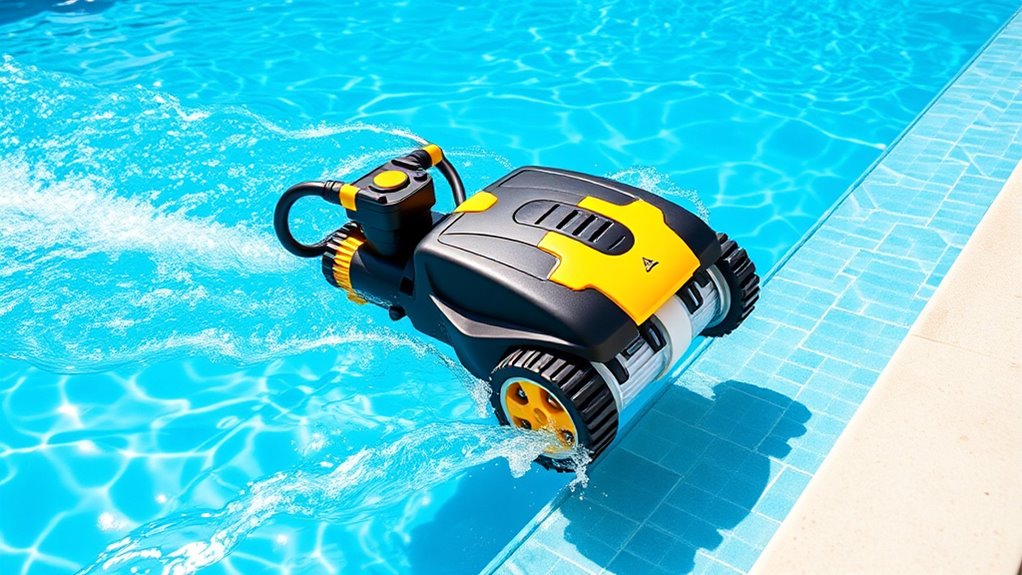
If you’re shopping for pressure pool cleaners with booster pump, you’re choosing between two things at once: the cleaner itself and the dedicated pump that powers it. The Polaris Vac-Sweep 380 earns my best overall spot for its triple-jet cleaning power and large debris capacity, while the Polaris Vac-Sweep 360 stands out because it runs off your existing pool pump — no booster pump required — making it the easiest entry point. For those replacing a failed pump rather than buying a whole system, the Aquastrong PB4-60 delivers dependable 3/4 HP performance at a lower cost than the OEM Polaris version. The main tradeoff in this category is power and thoroughness versus cost and plumbing complexity: booster-pump cleaners clean faster and handle bigger debris but need a dedicated 220V line and extra maintenance, while pump-independent models save money upfront. Keep reading for the full breakdown of all 15 cleaners and pumps, including who each one is for and who should skip it.

Get cleaning gear delivered free — and shop member deals
- Fast, free delivery on millions of items
- Access to Prime Big Deal Days deals on October 6–7
- Prime Video, Amazon Music and more included
Complete the kit


Key Takeaways
- The Polaris Vac-Sweep 380 and 3900 Sport separated themselves from other cleaners through multi-jet cleaning and oversized debris bags, but both require a working booster pump — so total system cost matters more than cleaner price alone.
- The Polaris 360 is the only cleaner in this lineup that runs on your main pool pump’s return pressure, which makes it the cheapest and simplest path into pressure-side cleaning, at the cost of some cleaning speed.
- Among booster pumps, aftermarket PB4-60 clones from Aquastrong, LINGXIAO, DASENAIR, and PureBy deliver the same 3/4 HP spec as the OEM Polaris PB4-60, with the real differences showing up in noise levels, seal quality, and warranty support rather than raw power.
- Dual voltage (115/230V) support appeared on nearly every pump in this roundup — confirming your pool’s electrical setup before buying is the single most common mistake to avoid.
- Four-wheel-drive cleaners like the Polaris 3900 Sport and the budget MAKHOON excel on larger or deeper pools where two-wheel models can lose traction on walls and tight corners.
| Polaris Vac-Sweep 380 Pressure Side Pool Cleaner, Triple Jet Powered |  | Best Overall | Pool type: In-ground | Power source: Separate Polaris booster pump (required) | Venturi jets: 3 | VIEW ON AMAZON | See Our Full Breakdown |
| Polaris Vac-Sweep 360 Pressure-Side Pool Cleaner for In-Ground Pools |  | Best No-Booster-Pump Option | Pool type: In-ground | Power source: Pool return-line water pressure | Booster pump required: No | VIEW ON AMAZON | See Our Full Breakdown |
| Polaris Quattro T2 Pressure Side Pool Cleaner for Inground Pools |  | Best Premium Pick | Pool type: In-ground (up to 70 ft) | Power source: Dedicated booster pump (required) | Drive system: Track drive (TankTrax Technology) | VIEW ON AMAZON | See Our Full Breakdown |
| Aquastrong PB4-60 Pool Booster Pump, 3/4 HP, Dual Voltage |  | Best Quiet Booster Pump | Motor: 3/4 HP, 100% pure copper | Voltage: 115V/230V (factory-set to 230V) | Maximum head: 140 ft | VIEW ON AMAZON | See Our Full Breakdown |
| PB4-60 Booster Pump, 3/4 HP Replacement for Polaris 180 280 380 480 Pool Cleaners |  | Best Value Replacement Pump | Model: PB4-60 | Horsepower: 3/4 HP | Max head: 140 ft | VIEW ON AMAZON | See Our Full Breakdown |
| Polaris Vac-Sweep 280 Pressure-Side In-Ground Pool Cleaner |  | Best Classic Pressure Cleaner | Pool Type: In-ground | Power Source: AC (separate booster pump required) | Cleaning Time: 3 hours or less | VIEW ON AMAZON | See Our Full Breakdown |
| Hayward W36060 0.75 HP Booster Pump for In-Ground Swimming Pools |  | Best Premium Booster Pump | Power: 0.75 HP | Voltage: 230 volts | Flow Rate: 10 gpm | VIEW ON AMAZON | See Our Full Breakdown |
| LINGXIAO 3/4 HP Pool Booster Pump for Pressure Pool Cleaners (PB460/EC-LA01N Compatible) |  | Best Budget Replacement Pump | Horsepower: 3/4 HP | Voltage: 115V or 230V (factory default 220V) | Max Pressure: 60 PSI | VIEW ON AMAZON | See Our Full Breakdown |
| PB4-60 3/4 HP Booster Pump for Polaris 280 380 480 Pressure Pool Cleaners |  | Best for Polaris Cleaners | Model: PB4-60 | Horsepower: 0.75 HP | Voltage: 115/230V dual voltage | VIEW ON AMAZON | See Our Full Breakdown |
| DASENAIR 3/4 HP Booster Pump for Pressure Side Pool Cleaners |  | Best for Long Plumbing Runs | Brand: DASENAIR | Model: PBS075 | Horsepower: 0.75 HP | VIEW ON AMAZON | See Our Full Breakdown |
| Polaris PB4-60 Booster Pump with 60 Hz Motor |  | Best OEM Matching Pump | Horsepower: 0.75 hp | Motor Frequency: 60 Hz | Voltage: 230 V | VIEW ON AMAZON | See Our Full Breakdown |
| PureBy Dual Voltage 115/230V Pool Booster Pump (Alternative to PB4-60) |  | Best Value Bundle | Horsepower: 0.75 hp | Voltage: 115 V / 230 V AC | Amperage: 6.4 A (115V) / 12.8 A (230V) | VIEW ON AMAZON | See Our Full Breakdown |
| PB4-60 Booster Pump 3/4 HP for Polaris 180/280/380/480/3900 and Kreepy Krauly Pressure Pool Cleaners |  | Best Build Quality | Horsepower: 0.75 HP | Voltage: 115 V / 230 V dual voltage | Flow Rate: 24 GPM | VIEW ON AMAZON | See Our Full Breakdown |
| Polaris Vac-Sweep 3900 Sport Pressure Side Pool Cleaner |  | Best Premium Cleaner | Type: Pressure-side automatic pool cleaner | Pool Compatibility: In-ground (vinyl, fiberglass, gunite, pebble, tile) | Power Source: Booster pump (AC/DC) | VIEW ON AMAZON | See Our Full Breakdown |
| MAKHOON Four-Wheel Pressure-Side Pool Cleaner |  | Best Budget Cleaner Option | Power Source: Hydraulic | Required Inlet: 1.5-inch female thread | Required Water Pressure: 4 bar | VIEW ON AMAZON | See Our Full Breakdown |
| pressure pool cleaners with booster pump | Voltage |
|---|---|
| Polaris Vac-Sweep 380 Pressure | — |
| Polaris Vac-Sweep 360 Pressure | — |
| Polaris Quattro T2 Pressure Si | — |
| Aquastrong PB4-60 Pool Booster | 115V/230V (factory-set to 230V) |
| PB4-60 Booster Pump | 115V/230V dual voltage |
| Polaris Vac-Sweep 280 Pressure | — |
| Hayward W36060 0.75 HP Booster | 230 volts |
| LINGXIAO 3/4 HP Pool Booster P | 115V or 230V (factory default 220V) |
| PB4-60 3/4 HP Booster Pump for | 115/230V dual voltage |
| DASENAIR 3/4 HP Booster Pump f | Dual voltage 115V / 230V |
| Polaris PB4-60 Booster Pump wi | 230 V |
| PureBy Dual Voltage 115/230V P | 115 V / 230 V AC |
| PB4-60 Booster Pump 3/4 HP for | 115 V / 230 V dual voltage |
| Polaris Vac-Sweep 3900 Sport P | — |
| MAKHOON Four-Wheel Pressure-Si | — |
More Details on Our Top Picks
Polaris Vac-Sweep 380 Pressure Side Pool Cleaner, Triple Jet Powered
The Vac-Sweep 380 is the benchmark pressure-side cleaner for good reason: its triple venturi jet setup generates more vacuum power than the two-jet Vac-Sweep 280, which translates to a full pool clean in about three hours rather than leaving you waiting all day. That extra jet matters most on heavy debris days, when acorns and leaf clumps would bog down lesser cleaners. The 2.25-inch inlet swallows debris that would clog a suction-side robot, and the filter bag keeps everything out of your pump basket and filter, reducing maintenance. The tradeoff is real, though: it demands a dedicated booster pump and pressure line, so if your pool lacks that plumbing, the Vac-Sweep 360 runs off the return line instead and avoids that expense entirely. It also scrubs passively rather than actively, unlike the pricier Quattro T2.
Pros:- Triple jets deliver strong vacuum power and a full clean in about 3 hours
- 2.25-inch inlet handles large debris like acorns and pebbles
- Safe on vinyl, fiberglass, gunite, pebble, and tile surfaces
- 31-foot feed hose suits most residential in-ground pools
Cons:- Requires a dedicated booster pump and pressure line, adding cost if not already plumbed
- Single-chamber filter bag is more basic than multi-stage filtration on premium rivals
Best for: Owners of in-ground pools with an existing dedicated booster pump line who want fast, large-debris cleanup on any surface
Not ideal for: Pools without a dedicated pressure line and booster pump — the required plumbing makes the Vac-Sweep 360 a far cheaper path
- Pool type:In-ground
- Power source:Separate Polaris booster pump (required)
- Venturi jets:3
- Inlet size:2.25 inches
- Feed hose length:31 feet
- Filter bag:Single-chamber
- Cleaning time:3 hours or less
- Compatible surfaces:Vinyl, fiberglass, gunite, pebble, tile
Our verdict“If your pool already has a booster pump setup, this is the most complete pressure-side cleaner for the money.”
Polaris Vac-Sweep 360 Pressure-Side Pool Cleaner for In-Ground Pools
The Vac-Sweep 360 earns its spot by removing the single biggest barrier in this category: the booster pump. It runs entirely off your pool’s return-line water pressure, which means no extra pump, no extra electricity, and no dedicated plumbing job — the main reasons people walk away from the Vac-Sweep 380. You still get Polaris fundamentals here, including the same 2.25-inch inlet for large debris and a filter bag that protects your pump basket. The catch is physics: return-line pressure is weaker than a dedicated booster, so expect a slower, less aggressive clean than the 380, and wall-climbing is more limited. It also insists on a dedicated cleaner return line for best results — a standard return can be retrofitted, but that adds an adapter and some flow compromise.
Pros:- No booster pump required, saving equipment and energy costs
- 2.25-inch inlet captures leaves, acorns, and pebbles
- Filter bag keeps debris out of the pump basket and filter
- Works on vinyl, fiberglass, gunite, and pebble surfaces
Cons:- Weaker return-line power means slower cleaning than booster-driven models
- Needs a dedicated cleaner return line or a retrofit kit on standard lines
Best for: Owners of in-ground pools without a dedicated booster pump line who still want pressure-side, bag-filtered cleaning
Not ideal for: Heavily treed yards needing maximum suction and speed — the 380 with a booster pump handles heavy debris loads far better
- Pool type:In-ground
- Power source:Pool return-line water pressure
- Booster pump required:No
- Venturi jets:3
- Inlet size:2.25 inches
- Feed hose length:31 feet
- Filter bag:Single-chamber
- Return line:Dedicated line preferred; standard line retrofittable
Our verdict“The smartest entry into pressure-side cleaning when a booster pump isn’t in the budget or the plumbing.”
Polaris Quattro T2 Pressure Side Pool Cleaner for Inground Pools
The Quattro T2 is where pressure-side cleaning stops being passive. Its TankTrax track drive gives it genuine traction over steps, slopes, and walls — something wheeled models like the Vac-Sweep 380 approximate but rarely master — and the front and side scrubbing brushes actively loosen stuck-on grime instead of just sweeping loose debris. The 2.75-inch intake is the largest in this lineup, paired with dual-stage filtration and reinforced canister seals that lock in fine particles the 380’s single-chamber bag lets slip. All of that capability comes wrapped in a 28-pound machine that expects a dedicated booster pump, and you pay a premium for the engineering. If your pool is mostly free-tracked with light debris, this is more cleaner than you need — the 380 handles that job at a friendlier price.
Pros:- Track drive (TankTrax) climbs walls, steps, and slopes with superior traction
- 2.75-inch intake is the largest here, handling big debris easily
- Dual-stage filtration captures fine debris, not just leaves
- Active front and side brushes scrub stuck-on dirt from floor to waterline
Cons:- Premium price that exceeds most pressure-side cleaners by a wide margin
- Requires a dedicated booster pump and compatible plumbing
- At 28 pounds, it’s heavier and more involved to handle during maintenance
Best for: Owners of complex pools with steps, benches, and waterline grime who want active scrubbing and serious wall climbing
Not ideal for: Simple flat-bottom pools with light debris — the extra capability goes unused while the premium price doesn’t
- Pool type:In-ground (up to 70 ft)
- Power source:Dedicated booster pump (required)
- Drive system:Track drive (TankTrax Technology)
- Debris intake:2.75 inches, dual-stage filtration
- Brushes:Front and side active scrubbing
- Dimensions:15.5 x 15.5 x 10.75 inches
- Weight:28 pounds
Our verdict“The pick when ordinary sweeping isn’t enough and you want genuine scrubbing and climbing from a pressure-side machine.”
Aquastrong PB4-60 Pool Booster Pump, 3/4 HP, Dual Voltage
A booster pump is what actually powers any pressure-side cleaner in this roundup, and the Aquastrong PB4-60 distinguishes itself where most rivals annoy: noise. Running at roughly 56 dB, it’s quiet enough to schedule cleans at odd hours without waking the household — a real advantage over generic PB4-60 clones like the LINGXIAO that don’t emphasize acoustics. With a 3/4 HP pure copper motor, 140 feet of max head, and 2250 GPH flow, it drives the Vac-Sweep 280, 380, and 3900 Sport at spec. The dual-voltage design adds flexibility, but be warned: it ships factory-set to 230V, so 115V households must reconfigure before first start or risk damage. Compatibility is stated broadly rather than exhaustively, so verify your cleaner model before ordering.
Pros:- Quiet operation at about 56 dB for flexible run scheduling
- 3/4 HP pure copper motor with 140 ft max head and 2250 GPH flow
- Selectable 115V/230V power fits most residential electrical setups
- Includes hose, quick-install fittings, and instructions
Cons:- Factory-set to 230V, requiring adjustment for 115V circuits before use
- Compatibility list is broad but not guaranteed for every pressure-side cleaner
Best for: Homeowners replacing or adding a booster pump who value quiet operation and broad Polaris-class cleaner compatibility
Not ideal for: Buyers with non-mainstream pressure cleaners — compatibility is described as ‘most,’ not all, models
- Motor:3/4 HP, 100% pure copper
- Voltage:115V/230V (factory-set to 230V)
- Maximum head:140 ft
- Flow rate:2250 GPH
- Noise level:About 56 dB
- Compatibility:Vac-Sweep 280, 380, 3900 Sport and similar pressure-side cleaners
- Support:2 years
Our verdict“The booster pump to buy when noise near living spaces is your deciding factor.”
PB4-60 Booster Pump, 3/4 HP Replacement for Polaris 180 280 380 480 Pool Cleaners
When an existing booster pump dies, this PB4-60 replacement is the straightforward, budget-conscious fix. It’s built as a drop-in replacement for Polaris 180, 280, 380, and 480 cleaners, and the included quick-connect installation kit makes it a realistic DIY job rather than a plumber’s visit — a cost edge over the Hayward W36060, which targets the same slot at a premium. The heavy-duty, leak-proof construction with an integrated anti-vibration base addresses the two most common failure complaints on budget pumps: O-ring deformation and noisy rattle. One caution: the listing carries conflicting horsepower figures (3/4 HP in the title, 1.0 HP in one spec section), so confirm the rating you need against your cleaner’s requirements before committing. Output of 140 ft max head on dual voltage covers typical residential pressure-side duty.
Pros:- Direct replacement for Polaris 180, 280, 380, and 480 cleaners
- Quick-connect fittings and installation kit support easy DIY setup
- Leak-proof design with integrated base minimizes vibration and O-ring wear
- Rated for 72-hour continuous high-pressure operation
Cons:- Listing contains conflicting specs (1.0 HP/60 GPM mentioned alongside 3/4 HP), creating uncertainty
- Less established brand track record than Hayward or Polaris-branded pumps
Best for: DIY-inclined owners replacing a failed pump on an existing Polaris 180/280/380/480 pressure-side setup
Not ideal for: Buyers who need guaranteed, verified specifications — the conflicting horsepower data in the listing demands double-checking
- Model:PB4-60
- Horsepower:3/4 HP
- Max head:140 ft
- Voltage:115V/230V dual voltage
- Frequency:60 Hz
- Port size:1 1/2 inches (inlet and outlet)
- Compatibility:Polaris 180, 280, 380, 480
- Installation type:Residential, in-ground pools
Our verdict“A sensible low-cost swap for a dead Polaris booster pump, provided you verify the specs before buying.”
Polaris Vac-Sweep 280 Pressure-Side In-Ground Pool Cleaner
This option stands out for being the workhorse of the pressure-side category, and it earns its place here as the cleaner half of the booster pump equation. The dual venturi jets and oversized 2.25-inch debris inlet mean it swallows leaves, acorns, and pebbles that would clog a robotic or suction-side unit, and the filter bag captures debris before it ever reaches your main filter — a real long-term savings on filter maintenance. Compared with the triple-jet Polaris 380, the 280 trades a jet for simpler mechanics and fewer wear parts, which matters if you’d rather tinker less. The tradeoff: it does nothing without a separate booster pump, and the 3-hour cleaning cycle is slower than newer designs like the Quattro T2. Pair it with a PB4-60-class pump for the classic setup.
Pros:- Vacuums, sweeps, and scrubs both floors and walls across vinyl, fiberglass, gunite, pebble, and tile surfaces
- Large 2.25-inch inlet handles leaves, acorns, and pebbles without clogging
- Single-chamber filter bag keeps large debris out of the main filtration system
- Simpler dual-jet design means fewer parts to replace than the triple-jet Polaris 380
Cons:- Requires a separate booster pump and dedicated plumbing line to operate at all
- Professional installation is specified, adding setup cost beyond the unit itself
- Three-hour cleaning cycle lags behind newer pressure-side designs
Best for: Owners of in-ground pools with heavy leaf or acorn loads who want large debris captured before it hits their filter
Not ideal for: Above-ground pool owners or anyone without a dedicated booster pump plumbing line — this cleaner is dead in the water without one
- Pool Type:In-ground
- Power Source:AC (separate booster pump required)
- Cleaning Time:3 hours or less
- Inlet Size:2.25 inches
- Hose Length:31 feet
- Debris Bag:Single-chamber filter bag
- Pool Surfaces:Vinyl, fiberglass, gunite, pebble, tile
- Item Weight:6.2 pounds
Our verdict“This is the classic pressure-side choice for debris-heavy in-ground pools, provided you already have or plan to install a dedicated booster pump.”
Hayward W36060 0.75 HP Booster Pump for In-Ground Swimming Pools
If electricity bills are what you’re optimizing, this model makes the most sense in the pump section of this roundup. The ENERGY STAR certification and up to 35% lower electricity draw are the headline, but the quiet operation is what owners actually notice day to day — a pressure cleaner that runs on a timer at odd hours shouldn’t wake the neighborhood. Compared with the LINGXIAO PB460-compatible unit, the Hayward arrives with genuine 1 1/2-inch pipe unions and 3/4-inch hose fittings plus a tall base that keeps the motor elevated and ventilated, which matters for longevity in flood-prone pad locations. The tradeoff is price and weight: at 27.7 pounds and an OEM-brand sticker, it costs more than aftermarket alternatives like the DASENAIR PBS075, which offers similar raw horsepower for less.
Pros:- ENERGY STAR Certified with up to 35% energy savings versus comparable models
- Advanced design delivers exceptionally quiet operation for early-morning timer cycles
- Tall mounting base improves motor ventilation and protects against flooding
- Ships with pipe unions and hose fittings for straightforward installation and service
Cons:- Cannot run standalone — it requires a separate filtration pump feeding it
- At 27.7 pounds it’s heavier and more awkward to handle than aftermarket alternatives
Best for: Owners who run their pressure cleaner daily and want the lowest long-term energy cost with brand-backed reliability
Not ideal for: Budget-focused buyers replacing a working PB4-60 — aftermarket equivalents deliver comparable output for considerably less money
- Power:0.75 HP
- Voltage:230 volts
- Flow Rate:10 gpm
- Power Source:Corded Electric
- Dimensions:16.8″ L x 11.5″ W x 13.5″ H
- Weight:27.7 pounds
- Included:Booster pump, 1 1/2″ pipe unions, 3/4″ hose fittings
- Certification:ENERGY STAR Certified
Our verdict“The premium pick for buyers who plan to own their pump for a decade and want certified efficiency and quiet running over upfront savings.”
LINGXIAO 3/4 HP Pool Booster Pump for Pressure Pool Cleaners (PB460/EC-LA01N Compatible)
When a decades-old booster pump dies, this option stands out as the most direct wallet-friendly swap. It’s built to replace OEM units like the PB4-60 and EC-LA01N, so it drops onto existing plumbing without re-engineering your pad — a genuine advantage over adapting a different form factor. The Energy Star 3.1 rated TEFC motor is a pleasant surprise at this price point; the totally enclosed fan-cooled design shrugs off rain and sun, putting it closer to the Hayward W36060 in weatherability than its price suggests. The real catch: it ships at a 220V factory default, so anyone wiring it into a 115V circuit must reconfigure the motor connections themselves — a step the generic PB4-60 replacements in this guide handle more gracefully. A two-year warranty softens the aftermarket gamble.
Pros:- Direct replacement for PB4-60, PB460, W36060, and EC-LA01N without plumbing changes
- Energy Star 3.1 rated TEFC motor resists rain and sun exposure outdoors
- Includes soft tube and fittings needed for installation
- Backed by a 2-year manufacturer warranty, unusual for the price bracket
Cons:- Factory default voltage is 220V and requires manual rewiring for 110V systems
- Units ship with residual water from factory testing, which may alarm unprepared buyers
Best for: Handy DIY owners replacing a failed PB4-60-class pump who are comfortable confirming voltage wiring before startup
Not ideal for: Anyone on a 115V circuit who isn’t confident rewiring a motor connection — the factory default will cause problems on first power-up
- Horsepower:3/4 HP
- Voltage:115V or 230V (factory default 220V)
- Max Pressure:60 PSI
- Dimensions:15.98″ L x 6.89″ W x 8.78″ H
- Weight:19.8 lbs
- Warranty:2-year manufacturer
- Compatible Models:PB4-60, PB460, W36060, EC-LA01N, LA-MS05
Our verdict“A smart money-saving swap for a dead PB4-style pump — as long as you verify the voltage wiring before flipping the breaker.”
PB4-60 3/4 HP Booster Pump for Polaris 280 380 480 Pressure Pool Cleaners
This model is better suited to readers who already own a Polaris 280, 380, or 480 and want a pump tuned specifically for it. The guaranteed 45 PSI minimum outlet pressure is the number that actually matters here — Polaris cleaners are jet-driven, and anything below that threshold means sluggish movement and missed walls. Unlike the LINGXIAO unit, this one offers true dual-voltage flexibility without a rewiring headache, and the oversized transparent strainer basket lets you spot trapped debris at a glance, a maintenance convenience the DASENAIR PBS075 doesn’t match. The reinforced thermoplastic body shrugs off corrosion in a way painted steel housings can’t. The limitation is narrow scope: if you run a Hayward or generic pressure cleaner, this isn’t your pump, and it still needs a filtration pump feeding it upstream.
Pros:- Maintains a 45 PSI minimum outlet pressure that keeps Polaris jet cleaners moving at full speed
- True dual-voltage 115/230V design installs without rewiring hassles
- Reinforced thermoplastic body resists corrosion and extends outdoor motor life
- Oversized transparent strainer basket makes debris inspection and cleaning simple
Cons:- Requires a separate filtration pump operating upstream — it is not a standalone pump
- Compatibility is limited specifically to Polaris 280, 380, and 480 models
Best for: Polaris 280/380/480 owners who want a matched pump with easy voltage setup and visible strainer maintenance
Not ideal for: Owners of non-Polaris pressure cleaners — compatibility is limited to Polaris pressure-side models
- Model:PB4-60
- Horsepower:0.75 HP
- Voltage:115/230V dual voltage
- Amps:6.0A (115V) / 12.0A (230V)
- RPM:3450
- Minimum Outlet Pressure:45 PSI
- Material:Reinforced thermoplastic
- Compatible Devices:Polaris 280, 380, 480 pressure cleaners
Our verdict“The logical pump choice for a Polaris 280, 380, or 480 owner who values correct pressure output and painless voltage configuration.”
DASENAIR 3/4 HP Booster Pump for Pressure Side Pool Cleaners
What separates this option from the other 3/4 HP pumps in this roundup is the 140-foot maximum lift capacity. If your equipment pad sits well below or well away from your pool — a hillside backyard, a distant equipment shed — head loss kills weaker pumps, and raw horsepower alone doesn’t fix it. The 1440 GPH flow rate backed by a pure copper motor keeps pressure-side cleaners like the Vac-Sweep 280, 380, and 3900 Sport fed even through awkward plumbing. The one-piece IPX4 casing does double duty, damping vibration for quiet running while blocking water and UV, which puts its weatherability near the LINGXIAO TEFC unit. The tradeoff: like that LINGXIAO, it demands a deliberate voltage selection during setup, and the compatibility list is short — Kreepy Krauly or non-Polaris owners should look elsewhere.
Pros:- 140-foot lift capacity handles long or elevated plumbing runs where other 3/4 HP pumps lose pressure
- Pure copper motor delivers reliable continuous output at 1440 GPH
- IPX4 waterproof, sunproof one-piece casing runs quietly and survives outdoor exposure
- Includes fittings and detailed instructions for straightforward installation
Cons:- Compatibility limited to Vac-Sweep 280, 380, and 3900 Sport cleaners only
- Correct voltage (115V or 230V) must be deliberately selected during setup, risking misconfiguration
Best for: Owners with equipment pads far from or below the pool who need serious lift capacity to feed a Polaris Vac-Sweep cleaner
Not ideal for: Anyone running a non-Polaris pressure cleaner — the compatibility list covers only the Vac-Sweep 280, 380, and 3900 Sport
- Brand:DASENAIR
- Model:PBS075
- Horsepower:0.75 HP
- Voltage:Dual voltage 115V / 230V
- Flow Rate:1440 GPH
- Maximum Lift Height:140 feet
- Motor Material:Pure copper
- Compatible Devices:Vac-Sweep 280, 380, 3900 Sport
Our verdict“The pick when plumbing distance is your problem — strong lift and flow keep Polaris cleaners performing where standard boosters fall short.”
Polaris PB4-60 Booster Pump with 60 Hz Motor
This option stands out for buyers who want the factory-matched booster pump for their Polaris pressure-side cleaner. The MagnetTek 3/4 hp motor is the same specification Polaris engineers designed its cleaners around, which means predictable pressure delivery compared with generic alternatives like the PureBy dual-voltage pump. It also pairs cleanly with low-speed two-speed or variable-speed main pumps, translating into real energy savings over a single-speed setup. The tradeoff is rigidity: unlike the dual-voltage PureBy or the stainless-steel B0FGXXR22S, this pump demands a 230 V circuit, so homes wired only for 115 V face an electrician bill before it can even run. At 24 lb it is manageable, but the plastic housing is less rugged than stainless competitors.
Pros:- Factory-matched design for Polaris pressure-side cleaners ensures predictable performance
- Compatible with low-speed two-speed and variable-speed pumps for energy savings
- Proven 3/4 hp MagnetTek motor built specifically for cleaner duty cycles
- Lighter than stainless-steel alternatives at 24 lb, easing mounting and swaps
Cons:- Requires a dedicated 230 V power supply, excluding 115 V-only households
- No included installation fittings or hose, unlike competitor bundles
Best for: Polaris owners with existing 230 V wiring who want an exact factory-spec replacement
Not ideal for: Homeowners with only 115 V service, since the fixed voltage requirement forces a costly electrical upgrade
- Horsepower:0.75 hp
- Motor Frequency:60 Hz
- Voltage:230 V
- Maximum Lifting Height:6 feet
- Dimensions:15.08 × 8.82 × 8.82 in
- Weight:24 lb
- Compatibility:Zodiac Polaris pressure-side cleaners
Our verdict“The safest choice for Polaris owners who already have 230 V power and want OEM-spec reliability without guesswork.”
PureBy Dual Voltage 115/230V Pool Booster Pump (Alternative to PB4-60)
Where the Polaris PB4-60 locks you into 230 V wiring, this PureBy unit accepts both 115 V and 230 V supplies, making it the pragmatic pick for households unsure of their electrical setup. The improved wiring board simplifies what is normally the fiddliest part of a pump swap, and the capacitor-start motor is built for efficiency and a longer service life. What pushes it above the bare-bones PB4-60 replacement pumps in this roundup is the bundle: four quick-connect fittings, a 6.6 ft reinforced hose, and Teflon tape arrive in the box, sparing you a hardware-store run. The main limitation is scope — this is strictly for pressure-side cleaners, so suction-side owners should look elsewhere entirely.
Pros:- Dual 115 V / 230 V design fits almost any residential electrical setup
- Complete accessory bundle covers fittings, hose, and seal tape out of the box
- Energy-efficient capacitor-start motor engineered for long service life
- Improved wiring board reduces installation friction versus older PB4-60 clones
Cons:- Pressure-side cleaner compatibility only — no suction-side support
- Plastic construction is less durable than the stainless-steel B0FGXXR22S
Best for: DIYers replacing an aging booster pump who want every fitting included and flexible voltage options
Not ideal for: Owners of suction-side cleaners, since this pump only supports pressure-side systems
- Horsepower:0.75 hp
- Voltage:115 V / 230 V AC
- Amperage:6.4 A (115V) / 12.8 A (230V)
- Motor:Capacitor-start
- Material:Plastic
- Included Accessories:4 quick-connect fittings, 6.6 ft reinforced hose, Teflon tape
Our verdict“The smart buy for buyers who want a PB4-60 alternative with forgiving wiring requirements and nothing left to purchase separately.”
PB4-60 Booster Pump 3/4 HP for Polaris 180/280/380/480/3900 and Kreepy Krauly Pressure Pool Cleaners
Compared with the plastic-bodied PureBy and the OEM Polaris unit, this pump differentiates itself through construction: a weatherproof stainless steel housing that shrugs off sun, rain, and splash zone duty for years. The 24 GPM flow rate and 140 ft max head give it headroom beyond what most Polaris cleaners strictly need, and the dual-voltage 115 V/230 V motor matches the PureBy’s flexibility. Leak-proof pre-lubricated seals and overheat protection round out a spec sheet aimed at longevity. There is one hard rule the manual repeats for good reason: never run it dry, because a dry start destroys the seals almost instantly. At 32.2 lb, it is also the heaviest pump here, so solo mounting takes some effort.
Pros:- Weatherproof stainless steel construction outlasts plastic-housed rivals
- Broad compatibility spanning Polaris 180 through 3900 plus Kreepy Krauly cleaners
- Overheat protection and pre-lubricated seals support safe, long-life operation
- DIY-friendly installation with no professional tools required
Cons:- Running dry causes immediate seal failure — requires careful priming discipline
- At 32.2 lb it is noticeably heavier than the 24 lb Polaris original
Best for: Buyers in harsh outdoor climates who prioritize corrosion resistance and long-term durability over weight savings
Not ideal for: Anyone likely to run the pump before the system is fully primed, or installers who need to lift and mount the pump alone
- Horsepower:0.75 HP
- Voltage:115 V / 230 V dual voltage
- Flow Rate:24 GPM
- Max Head:140 ft
- Port Size:3/4″ NPT
- Material:Stainless Steel
- Weight:32.2 lbs
- Max Fluid Temperature:104°F (40°C)
Our verdict“A durability-first pick for buyers who want stainless construction and wide cleaner compatibility, provided they never dry-start it.”
Polaris Vac-Sweep 3900 Sport Pressure Side Pool Cleaner
This is the cleaner the booster pumps in this roundup exist to feed, and it sits at the top of the Polaris range above the Vac-Sweep 380. The triple venturi jets and all-wheel PosiDrive deliver more vacuum power and traction than the 380’s twin-jet setup, which matters on steep walls and pebble finishes. The 2.5-inch inlet and 5-liter dual-chamber SuperBag swallow acorns and leaf clumps that would choke smaller cleaners, meaning less mid-cycle emptying during fall. The included TailSweep PRO is a small but genuinely useful touch — it stops the tail jet from soaking walkways and windows. The catch is infrastructure: it requires a dedicated pressure line and a booster pump, so above-ground pool owners or anyone without existing plumbing should skip it.
Pros:- Triple venturi jets and PosiDrive deliver class-leading vacuum power and wall traction
- Extra-large 2.5-inch inlet and 5-liter SuperBag handle heavy leaf and acorn loads
- Safe across vinyl, fiberglass, gunite, pebble, and tile surfaces
- TailSweep PRO prevents annoying spray onto decks and windows
Cons:- Cannot function without a separate booster pump and dedicated pressure line
- Bulkier and pricier than the Vac-Sweep 380 and suction-side alternatives
Best for: Owners of in-ground pools with existing dedicated pressure lines who want maximum debris-hauling power
Not ideal for: Above-ground pool owners or pools without a dedicated pressure line, since required plumbing makes it impractical to retrofit
- Type:Pressure-side automatic pool cleaner
- Pool Compatibility:In-ground (vinyl, fiberglass, gunite, pebble, tile)
- Power Source:Booster pump (AC/DC)
- Hose Length:31 feet
- Filter Bag Capacity:5 liters
- Dimensions:24″ L × 11″ W × 24″ H
- Weight:10.1 lb
- Key Features:Triple venturi jets, PosiDrive, SuperBag, TailSweep PRO, auto-reverse
Our verdict“The pick for in-ground pool owners with pressure-line plumbing who want the most powerful cleaning performance Polaris offers.”
MAKHOON Four-Wheel Pressure-Side Pool Cleaner
Positioned at the opposite end of the price spectrum from the Polaris 3900 Sport, this four-wheel hydraulic cleaner covers the basics for in-ground pools without premium features like auto-reverse or a dual-chamber bag. The four-wheel chassis is designed to track more pool floor per pass than three-wheel rivals, and the adjustable hose accommodates different pool lengths. But this is a hands-on product: the manual expects you to tune hose direction and float placement to stop tangling, and some setups need professional installation to get the 4-bar pressure dialed in. Like the 3900 Sport, it demands a dedicated 1.5-inch female-threaded inlet and a booster pump — neither is included, so budget accordingly before comparing prices against all-in-one robots.
Pros:- Four-wheel design aims to cover more floor area per cleaning cycle
- Adjustable hose adapts to varying in-ground pool lengths
- Durable plastic components keep the unit light and inexpensive to maintain
- Suits buyers who already own a compatible booster pump
Cons:- Requires a dedicated 1.5-inch inlet and separately purchased booster pump at 4 bar
- Hose and jet adjustments are often needed to prevent tangling and patchy coverage
- May require professional installation to achieve correct pressure and routing
Best for: Hands-on pool owners with existing pressure plumbing who want a low-cost pressure-side cleaner and don’t mind tuning it
Not ideal for: Buyers wanting plug-and-play performance, since tangling issues and setup tuning demand patience and possibly a professional
- Power Source:Hydraulic
- Required Inlet:1.5-inch female thread
- Required Water Pressure:4 bar
- Booster Pump:Required; sold separately
- Pool Type:In-ground
- Weight:8.19 kg
- Special Feature:Portable, adjustable hose
Our verdict“A workable budget cleaner for mechanically inclined owners with existing pressure-line plumbing, but expect tuning work the Polaris 3900 Sport doesn’t need.”

How We Picked
Because this category mixes complete cleaners and standalone booster pumps, I evaluated each product against its role in a working system rather than in isolation. Cleaners were judged on cleaning coverage, debris capacity, wall-climbing ability, and how demanding they are on the booster pump that feeds them. Pumps were judged on motor durability, noise, energy draw, electrical compatibility (115V versus 230V), and how directly they replace the OEM Polaris PB4-60 that most pressure-side cleaners were designed around.
The ranking logic favors proven pairings and total system value. A premium cleaner paired with a weak pump underperforms, so cleaners that work well with widely available 3/4 HP boosters ranked higher. Aftermarket pumps ranked based on how close they come to OEM reliability at a lower price — and I weighed real drawbacks like louder operation and shorter warranties heavily. Budget options earned their place only where they solved a genuine buyer problem, such as a first-time pressure-side setup or an emergency pump replacement, not just because they were cheap.
Factors to Consider When Choosing Pressure Pool Cleaners With Booster Pump
Choosing a pressure-side cleaning setup involves more than picking a cleaner off a shelf. The five factors below explain how the cleaner, the pump, and your pool’s existing infrastructure interact — and where buyers most often go wrong.Pump-Dependent Versus Pump-Independent Cleaners
The single biggest fork in this category is whether the cleaner needs its own booster pump. Models like the Polaris 360 use the return-line pressure your pool already generates, which saves you the cost of a pump, a dedicated electrical circuit, and extra plumbing. Pump-dependent models like the 280, 380, and 3900 Sport clean faster, hold larger debris bags, and climb walls better because a dedicated 3/4 HP pump feeds them consistent high pressure. The mistake I see most often is buyers with small or lightly-used pools paying for a booster setup they don’t need — and conversely, owners of large, leaf-heavy pools trying to save money with a pump-independent cleaner and being disappointed by its capacity. Match the decision to your pool’s debris load, not to the sticker price of the cleaner alone.
Electrical Requirements and Compatibility
Most booster pumps in this roundup run on dual voltage (115V or 230V), but that flexibility only helps if you wire it correctly for your setup. Many homes have only 115V available near the equipment pad, while older installs are wired at 230V — buying a pump before confirming your voltage is the most common and costly error in this category. You’ll also need a dedicated circuit; sharing one with your main pool pump can trip breakers and damage motors. If you’re replacing an existing booster pump, photograph the wiring before disconnecting anything and confirm the new pump’s port orientation matches your plumbing. A cheaper aftermarket pump that doesn’t line up with existing pipes can erase its savings through extra installation labor.
Debris Capacity and Bag Design
Pressure-side cleaners stand apart from suction and robotic cleaners because they collect debris in an onboard bag rather than your filter — and bag size determines how often you’ll be outside emptying it. The Polaris 380 and 3900 Sport carry noticeably larger bags than the 280, which matters enormously if your pool collects leaves, acorns, or palm debris. A small bag on a leafy pool means daily emptying, and an overfilled bag dumps debris back into the water. Also check mesh fineness: fine mesh catches sand and silt but clogs faster, while coarse mesh handles large leaves but lets fine sediment pass through to your filter. Buyers in dusty climates should lean toward dual-layer bags even though they cost more to replace.
OEM Versus Aftermarket Booster Pumps
Nearly half of this roundup consists of aftermarket pumps compatible with the Polaris PB4-60 design, and the differences between them are subtler than spec sheets suggest. The OEM Polaris and Hayward pumps typically run quieter, use more durable shaft seals, and come with stronger warranty support — worthwhile if you plan to stay in your home long-term. Aftermarket units from Aquastrong, LINGXIAO, DASENAIR, and PureBy hit the same 3/4 HP output and fit the same cleaners, making them smart choices for a rental property, a pool you plan to replace soon, or an emergency replacement when the OEM lead time is too long. The honest tradeoff: some aftermarket pumps run louder and may not last as many seasons. My advice is to buy OEM when the pump is hard to access or the pool is your forever home, and aftermarket when you value upfront savings and can tolerate a possible earlier replacement.
Pool Size, Shape, and Drive Type
Cleaner drivetrain design affects coverage more than most buyers realize. Two-wheel cleaners like the Polaris 280 are simpler, with fewer moving parts to service, but can struggle with traction on slick surfaces and deep-end walls. Four-wheel models like the 3900 Sport and the MAKHOON maintain better contact on larger pools, tight coves, and uneven finishes. Tail-sweep designs help stir fine debris off steps and benches, but the sweep hose will splash water outside the pool unless you fit a tail-sweep pro accessory. Also verify hose length against your pool’s longest dimension — a cleaner that can’t reach the far end will clean half your pool beautifully and ignore the rest. Measure diagonally from the fitting to the deepest corner before ordering.
Total Cost of Ownership
The purchase price is only the first of several costs. A booster-pump system adds a dedicated pump running an extra two to three hours a day, which shows up on your electric bill — the difference between an efficient and an inefficient motor can add up over a season. Budget for consumables: bags, filter screens, tires or tracks, and backup valves all wear out and are specific to each cleaner model, with Polaris parts being the easiest to source and off-brand parts sometimes requiring online ordering with waiting periods. Older Polaris designs like the 280 remain popular precisely because parts are available everywhere at reasonable prices. Before committing to a newer or off-brand cleaner, check that wear parts are stocked by your local pool store — a cheap cleaner with unobtainable parts becomes expensive fast.
Frequently Asked Questions
Do I need a booster pump, or can I run a pressure cleaner off my main pool pump?
It depends entirely on which cleaner you buy. The Polaris 360 is engineered to operate on standard return-line pressure from a properly sized main pump, so it needs no booster at all — that’s why it’s my pick for beginners and budget-conscious buyers. Cleaners like the Polaris 280, 380, 480, and 3900 Sport are built around a dedicated 3/4 HP booster pump delivering roughly 30 PSI at the cleaner, and they will barely move or may not climb walls without one. If your main pump is undersized or your pool has long plumbing runs with weak returns, even a 360 will underperform. The honest test: if your returns barely push water when the pump is running, plan for a booster-based system or upgrade your main pump first.
Are aftermarket PB4-60 booster pumps as good as the genuine Polaris pump?
Aftermarket pumps from brands like Aquastrong, LINGXIAO, DASENAIR, and PureBy match the OEM pump’s 3/4 HP output, dual-voltage wiring, and physical mounting pattern, so they’ll drive your Polaris cleaner properly. Where they differ is in refinement: shaft seals, bearing quality, and motor windings are where OEM units typically hold an advantage, which translates to quieter operation and a longer service life in many cases. If you’re comfortable potentially replacing an aftermarket pump a season or two sooner, the savings are real and worthwhile. If the pump sits in a hard-to-access equipment pad behind landscaping, the labor of a repeat replacement can offset the discount. My rule: aftermarket for budget and rental pools, OEM for long-term primary residences.
Which Polaris cleaner should I choose: the 280, 360, 380, or 3900 Sport?
These four models form a clear ladder. The 360 is the value pick — no booster pump needed, simple to install, ideal for small to mid-size pools with moderate debris. The 280 is the rugged workhorse that needs a booster pump but has the simplest drivetrain and the cheapest, most available parts of the group. The 380 adds a third jet for stronger suction and a bigger bag, which suits leafy pools and owners who want to empty the bag less often. The 3900 Sport is the premium choice with four-wheel drive, the largest debris capacity, and the best wall-climbing, but it demands full booster pressure and costs the most to buy and maintain. Choose based on debris volume and pool size rather than features — the 280 remains plenty for many pools.
How long should a booster pump run each day, and will it raise my electric bill?
Most pressure-side cleaners need their booster pump running two to three hours per day to complete a full cleaning cycle, and running it longer than that adds cost without meaningful benefit. A 3/4 HP booster draws roughly 8–9 amps at 230V, so a few daily hours is a modest but real addition to your electric bill — typically far less than your main pump consumes. Pair the booster with a timer or automation system so it never runs unnecessarily, and never run it unless the main pool pump is also running, since the booster isn’t self-priming and can be damaged running dry. This interlock requirement is one more reason a professional install is worth considering if your equipment pad has no existing automation.
Can I use a pressure cleaner on a vinyl or fiberglass pool?
Yes, with a couple of caveats. Pressure-side cleaners are generally safe on vinyl and fiberglass because their wheels and debris bags don’t grind debris against the surface the way some suction cleaners can. However, wheel design matters: models with wide, smooth wheels like the Polaris line distribute weight well, while cleaners with sharp-edged components or worn tires can scuff a vinyl liner over time. Fiberglass pools with slick gelcoat finishes can challenge wall-climbing on two-wheel models, so a four-wheel cleaner or one with a strong jet assist will perform better in deep ends. Also check that the cleaner’s hose connection won’t scratch your pool edge at the deck fitting — a small rubber protector solves this cheaply if your model doesn’t include one.
Conclusion
After comparing all fifteen products, the right choice comes down to what kind of buyer you are. For the best overall system, the Polaris Vac-Sweep 380 paired with the Aquastrong PB4-60 pump delivers premium cleaning power at a saner total price than going all-OEM. For best value, the Polaris Vac-Sweep 360 is unbeatable — no booster pump, no dedicated circuit, and solid cleaning for small to mid-size pools. For a premium setup on a large, leaf-heavy pool, the Polaris 3900 Sport with the OEM Polaris PB4-60 pump offers the largest debris capacity and strongest wall-climbing in this lineup. For beginners, the 360 again wins for its plug-in simplicity, with the Polaris 280 as the step-up choice once you’re comfortable adding a booster pump. And for specific needs: replacing a dead pump on a budget points to the LINGXIAO or PureBy PB4-60 alternatives, quiet-operation priorities point to the Hayward W36060, and a tight budget for a complete cleaner points to the MAKHOON four-wheel unit. Whatever you choose, confirm your voltage, measure your pool, and match the cleaner to your debris load — those three checks prevent nearly every regret in this category.
Fall Picks
fall essentials
As an affiliate, we earn on qualifying purchases.