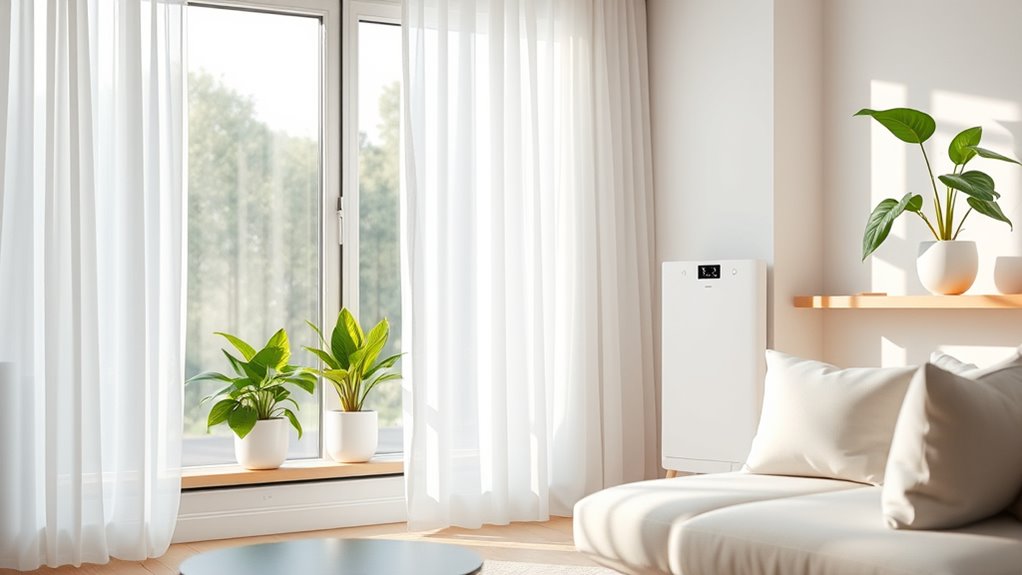

Combining air purifiers with natural ventilation creates a powerful way to improve your indoor air quality. Air purifiers filter airborne pollutants like dust, pollen, and pet dander, while natural ventilation introduces fresh outdoor air to dilute indoor contaminants. Using both together offers a balanced approach, helping you breathe healthier air. By integrating these methods and monitoring air quality, you can create a safer environment—discover more tips to optimize your indoor air setup.
Open a free Amazon Business account
Business pricing, bulk buying and tax-exempt orders.
As an affiliate, we earn on qualifying purchases.
Key Takeaways
- Combining air purifiers with natural ventilation enhances indoor air quality by filtering pollutants and diluting contaminants through fresh outdoor air.
- Use air quality sensors to optimize window opening times, ensuring effective ventilation while avoiding outdoor pollution or allergens.
- Incorporate indoor plants alongside purifiers and ventilation to naturally absorb toxins and improve overall air freshness.
- During high pollution or pollen seasons, rely more on air purifiers and limit outdoor air exchange through natural ventilation.
- Modern air purifiers with sensors can automatically adjust based on indoor and outdoor air quality data for optimal performance.
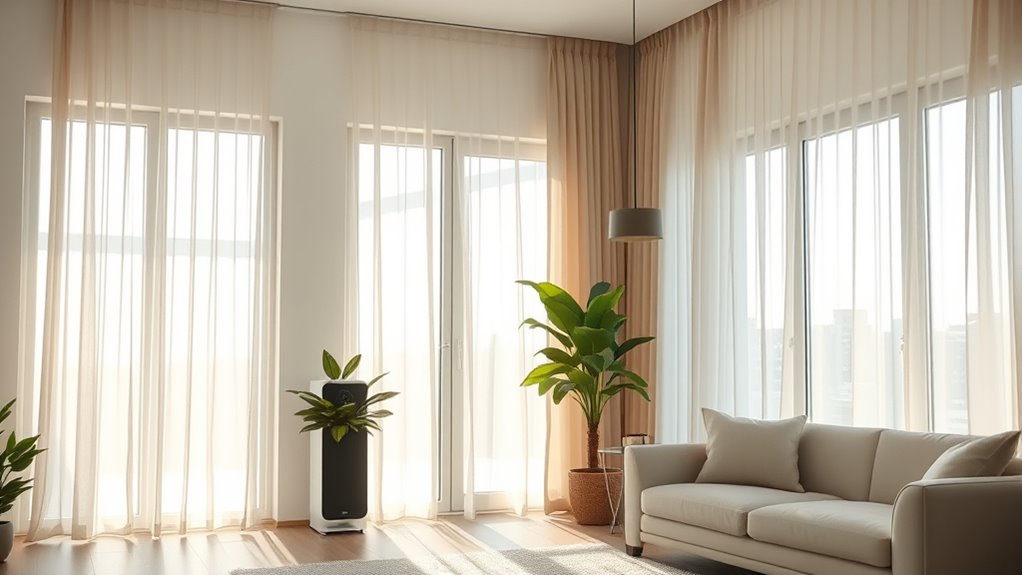
When it comes to maintaining clean indoor air, both air purifiers and natural ventilation play essential roles. While air purifiers effectively filter out airborne pollutants like dust, pollen, and pet dander, natural ventilation helps introduce fresh outdoor air and dilute indoor contaminants. Combining these approaches enhances overall air quality, creating a healthier environment for you and your family. One way to maximize indoor air improvements is through indoor plant integration. Plants naturally absorb certain airborne toxins and release oxygen, making them a passive but powerful addition to your air quality strategy. Place plants like pothos, snake plants, or peace lilies in various rooms to boost air purification naturally. Not only do they help filter indoor air, but they also add a touch of greenery that can improve your mood and reduce stress. To guarantee these plants are working at their best, consistent air quality monitoring becomes essential. Use air quality sensors to track levels of pollutants, humidity, and CO2, giving you real-time data on your indoor environment. This allows you to adjust your ventilation and plant placement accordingly, guaranteeing the air remains fresh and safe. When you open windows or use exhaust fans, you’re actively exchanging indoor and outdoor air, but it’s important to do so strategically. During high pollution days or seasons with elevated pollen counts, natural ventilation might bring in more pollutants than it removes. In such cases, relying on air purifiers becomes more important. However, even during these times, integrating indoor plants and monitoring air quality can help mitigate potential issues. You can set your ventilation schedule based on air quality data, opening windows when outdoor air is cleaner and sealing them when pollution levels spike. Additionally, modern air purifiers often come with sensors that monitor air quality and automatically adjust their operation, making it easier to maintain ideal conditions without constant manual intervention. Utilizing advanced HEPA filtration technology ensures that airborne particles are captured effectively, further improving indoor air quality. Combining these tools with indoor plant integration and air quality monitoring creates a comprehensive system that adapts to your home’s needs. This synergy ensures your indoor air remains fresh, clean, and safe, regardless of external conditions. Ultimately, the key is to stay informed and adaptable, using data from air quality monitoring to guide your ventilation practices and plant care routines. By doing so, you create a balanced, healthy indoor environment where clean air is consistently maintained through a combination of natural and technological solutions.
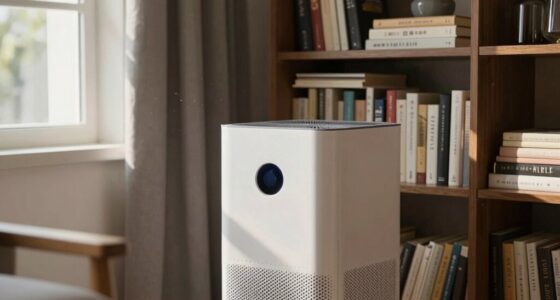
HEPA air purifier with air quality sensor
As an affiliate, we earn on qualifying purchases.
As an affiliate, we earn on qualifying purchases.
Frequently Asked Questions
How Do I Know if My Air Purifier Is Effective Enough?
You can tell your air purifier is effective enough by checking air quality indicators, like particulate levels and VOC readings. Confirm the filter efficiency matches the manufacturer’s specifications, especially for capturing fine particles and allergens. Regularly replace or clean filters as recommended. If your air quality improves over time and the indicators show cleaner air, your purifier is doing its job well. Consider using a monitor for real-time feedback on air quality.
Can Natural Ventilation Worsen Indoor Air Pollution?
Don’t let your guard down; natural ventilation can sometimes worsen indoor air pollution. If outdoor air quality is poor, bringing in fresh air might introduce pollutants, disrupting indoor air dynamics. Poor ventilation efficiency can let pollutants linger or increase exposure. To keep the air clean, monitor outdoor air conditions, and balance natural ventilation with air purifier use. This way, you’re in control and maintaining a healthier indoor environment.
How Often Should I Maintain or Replace Air Purifier Filters?
You should check your air purifier’s filter lifespan and follow the recommended maintenance schedule. Typically, filters need replacing every 3 to 6 months, but this varies based on usage and air quality. Regular maintenance guarantees peak performance and cleaner air. Keep an eye on filter indicators if your unit has them, and replace filters promptly to maintain effective air purification and prevent buildup of pollutants.
Are There Specific Times of Day Best for Natural Ventilation?
Imagine your home as a breathing organism—optimal timing for natural ventilation matters. Morning ventilation often offers the freshest air, as outdoor pollutants are typically lower and temperatures are mild. Opening windows early allows fresh air to circulate, clearing out indoor pollutants. Later in the day, if outdoor air quality worsens or temperatures rise, it’s best to close windows. So, for cleaner air, prioritize morning ventilation whenever possible.
What Are the Best Combination Strategies for Different Climates?
You should tailor your combination strategies to your climate and seasonal air quality. In mild, temperate climates, open windows during cooler mornings or evenings, and use air purifiers during hot, humid, or pollution-heavy seasons. For colder climates, rely more on air purifiers and ventilate briefly during warm days. Adjust your approach based on climate-specific ventilation needs and seasonal air quality changes to maintain cleaner indoor air year-round.
Conclusion
By combining air purifiers with natural ventilation, you create a living space that feels like a gust of fresh mountain air dancing through open windows. Picture the gentle rush of cool breezes mingling with purified air, clearing away unseen pollutants. This harmonious blend ensures each breath you take is crisp and clean, transforming your home into a sanctuary of fresh, vibrant air. Embrace this duo, and let your environment breathe life back into you.
Fall yard work Picks
leaf blowers
As an affiliate, we earn on qualifying purchases.