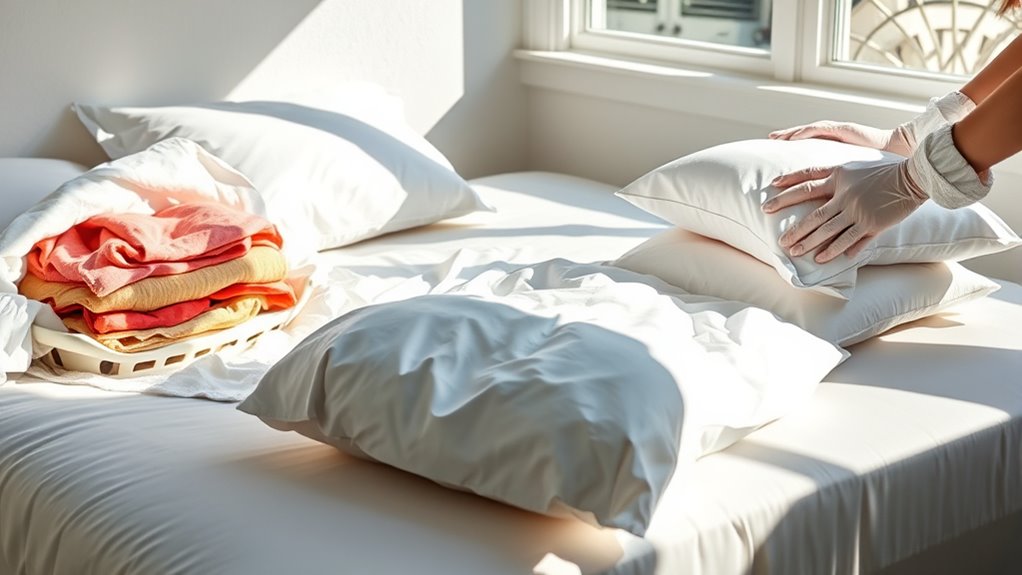

Washing your bedding and pillowcases weekly is key to maintaining a clean, healthy bedroom. It refreshes your space, removes dust mites, bacteria, and allergens, and promotes better sleep. Using hot water kills germs and keeps your pillows fresh and skin-friendly. Plus, stripping and airing out your mattress helps prevent dust buildup. Keep your sleeping environment inviting and comfortable by sticking to this routine—you’ll discover more tips to enhance your bedroom upkeep.

Get cleaning gear delivered free with Prime
- Fast, free delivery on millions of items
- Prime Video, Amazon Music and more included
- Member-only deals all year
Key Takeaways
- Wash bedding and pillowcases weekly in hot water to eliminate dust mites, bacteria, and allergens.
- Regular washing refreshes the bedroom environment and promotes better sleep quality.
- Check for stains or tears during laundry to maintain bedding condition.
- Air out the mattress and pull back sheets to improve hygiene and reduce dust buildup.
- Use fresh, clean bedding to create an inviting and healthy sleeping space.
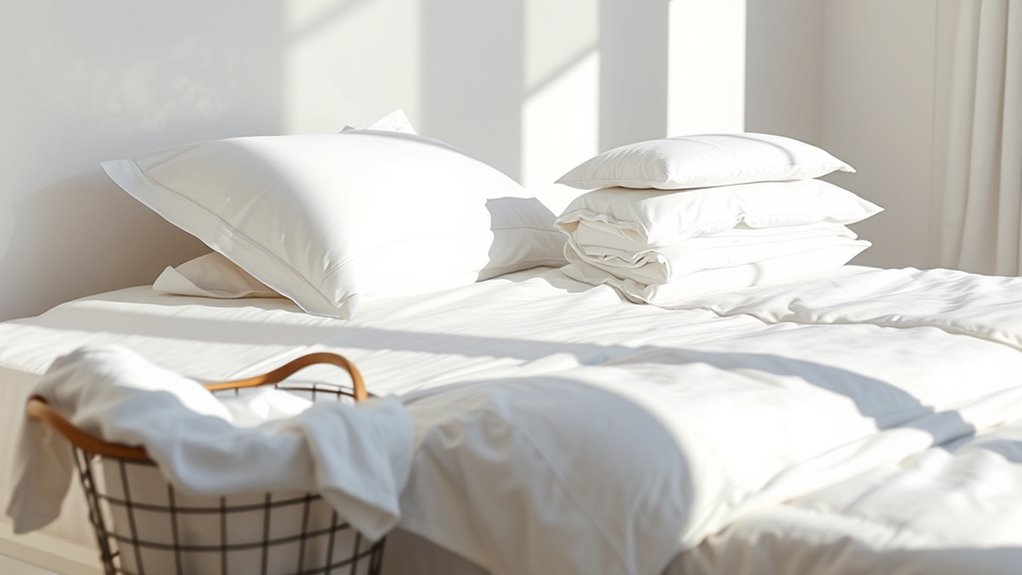
Have you ever wondered how to keep your bedroom consistently clean and inviting? One of the most important weekly tasks is washing bedding and pillowcases. Doing this regularly not only freshens up your space but also promotes better sleep and overall hygiene. When you think about maintaining your bedroom’s cleanliness, don’t forget to pay attention to mattress maintenance. Turning and rotating your mattress weekly helps distribute wear evenly, prevents sagging, and extends its lifespan. It also allows you to inspect for any signs of damage or dust buildup. A well-maintained mattress provides a cleaner sleeping surface, making it easier to keep your entire bed fresh.
Maintaining your mattress weekly extends its life and ensures a cleaner, more comfortable sleeping surface.
Organizing nightstands is another indispensable part of your weekly routine. Your nightstand collects everything from books and gadgets to lotions and personal items, and over time, it can become cluttered and dusty. Take a few minutes each week to clear out unnecessary items, wipe down the surface, and arrange essentials neatly. This not only keeps your bedroom looking tidy but also makes finding things quick and easy when you need them. When your nightstand is organized, it’s easier to spot any dust or crumbs that might have accumulated, which helps maintain a cleaner sleeping environment.
Washing your bedding and pillowcases weekly is simple but impactful. Strip your bed and toss the sheets and pillowcases into the laundry. Use hot water if your fabric allows, as it kills dust mites and bacteria that can accumulate over time. While that’s happening, take a moment to air out your mattress by pulling back the sheets and letting it breathe. This helps reduce moisture and prevents mold or dust buildup. After washing, make your bed with fresh sheets, which instantly refreshes the look and feel of your room. It’s also an excellent opportunity to check for any stains or tears and address them promptly.
Don’t forget to wash your pillowcases separately from your sheets, especially if you use products like facial cleansers or skincare that can transfer onto your pillows. Clean pillowcases are essential for healthy skin and a hygienic sleep space. Plus, regularly washing your bedding can prevent allergies caused by dust mites and pet dander. Incorporate this task into your weekly routine, and you’ll find that your bedroom feels consistently fresh and inviting. By maintaining your mattress, organizing nightstands, and regularly washing bedding, you create a cleaner, more comfortable environment that encourages restful sleep and a sense of calm every time you step into your room.
As an affiliate, we earn on qualifying purchases.
Frequently Asked Questions
How Often Should I Replace My Bedding Entirely?
You should replace your bedding entirely every 1 to 2 years to maintain good bedding maintenance. Regular washing helps, but over time, sheets and pillowcases can accumulate allergens, dirt, and wear that washing alone can’t fix. Pay attention to signs like frayed fabric, persistent stains, or loss of softness. Following this replacement frequency guarantees your sleep environment stays fresh, healthy, and comfortable, supporting better rest and overall hygiene.
Can I Wash Pillows With the Bedding?
Think of your bedding as a team, working together to keep you comfortable. You can wash pillows with bedding, but make sure pillow hygiene is maintained by washing them separately if possible. Use gentle cycles to protect pillow integrity and check bedding compatibility for fabric care. This approach helps keep your sleep environment fresh and healthy, much like a well-orchestrated harmony that ensures restful nights.
What’s the Best Detergent for Delicate Pillowcases?
You should choose a gentle, hypoallergenic detergent specifically for delicate pillowcases to avoid damage. Avoid fabric softeners, as they can leave residues that weaken fibers over time. Use a delicate or gentle cycle and opt for air drying or low heat drying techniques to prevent shrinking or wrinkles. These methods help keep your pillowcases soft, fresh, and in good condition, ensuring a comfortable and clean sleeping environment.
How Do I Remove Stubborn Stains From Bedding?
To remove stubborn stains from bedding, start with stain removal techniques like pre-treating with a stain remover or a mixture of baking soda and water. Gently rub the fabric treatment options into the stain, then let it sit for 15-30 minutes. Wash the bedding in the hottest water safe for the fabric. Repeat if necessary, and avoid drying until the stain is fully gone to prevent setting.
Should I Wash Bedding in Hot or Cold Water?
You should wash bedding in hot water if you want to eliminate germs, bacteria, and stains effectively, especially for whites or heavily soiled items. For delicate fabrics or colored bedding, cold water is gentler and helps preserve fabric care tips. Always check the care label, as water temperature preferences vary by material. Using the right temperature prevents damage and keeps your bedding fresh and clean.
Conclusion
Keeping your bedding and pillowcases fresh each week not only boosts your sleep quality but also reduces allergy symptoms. Did you know that dust mites thrive in unwashed bedding, affecting up to 10% of the population? Regularly washing your sheets can considerably cut down on these allergens. So, make it a habit—your sleep and health will thank you. A simple weekly task like this makes a big difference in creating a cleaner, more comfortable bedroom.
Columbus Day / Indigenous Peoples' Day Picks
long weekend sales
As an affiliate, we earn on qualifying purchases.