
To clean your vacuum hose without pushing the clog further, start by unplugging your vacuum and carefully detaching the hose without yanking. Inspect it visually for any debris or blockages, then gently remove visible hair or dirt with your fingers or tweezers. Rinse the hose with warm, soapy water, using a flexible brush to loosen stubborn debris—just be careful not to force anything inside. Keep going to discover more tips for a thorough clean.
Open a free Amazon Business account
Business pricing, bulk buying and tax-exempt orders.
As an affiliate, we earn on qualifying purchases.
Key Takeaways
- Detach the hose carefully without yanking to prevent pushing clogs further inside.
- Use gentle tools like tweezers or your fingers to remove visible debris without forcing it deeper.
- Rinse the hose with warm, soapy water, gently agitating to loosen dirt without pushing clogs inward.
- Avoid using excessive force or harsh chemicals that could compact debris or damage the hose.
- Ensure the hose is fully dry before reconnecting to prevent mold and future blockages.
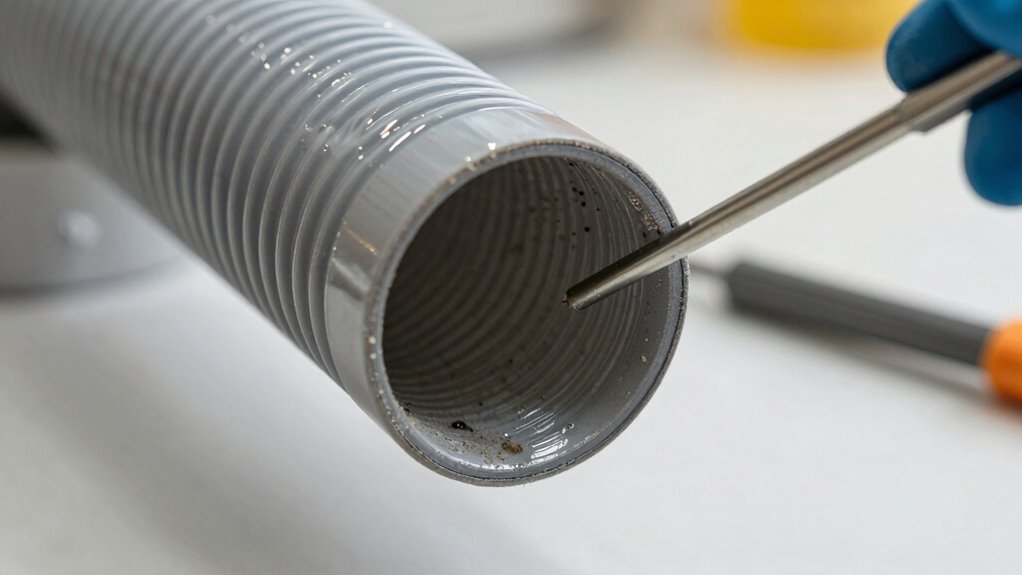
Ever wonder how to keep your vacuum performing at its best? One key aspect is maintaining good airflow, which directly impacts your vacuum’s suction power. When your vacuum isn’t pulling in debris like it used to, it’s often due to a clog or buildup inside the hose. To fix this without pushing the clog deeper, you need to focus on airflow restoration and proper hose maintenance.
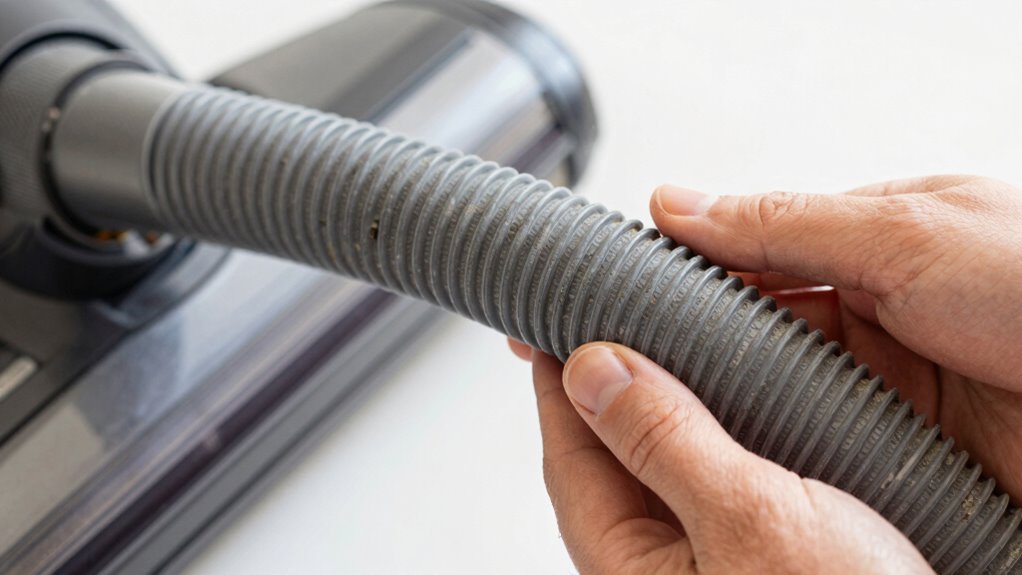
Start by unplugging your vacuum and detaching the hose carefully. Don’t yank or force it, as you might damage the connection or push debris further inside. Once removed, inspect the hose visually for obvious blockages like hair, dirt, or small objects. If you see something, try to gently pull it out with your fingers or use a pair of tweezers. Be cautious not to push the clog further down the pipe, which can make clearing more difficult later.
Unplug and carefully detach the hose, then inspect for blockages before gently removing debris.
Next, to thoroughly clean the hose and restore airflow, rinse it with warm water. Fill a basin with warm, soapy water — mild dish soap works well. Submerge the hose and gently agitate it to loosen dirt and debris inside. Avoid using harsh chemicals or anything abrasive that can damage the material. For stubborn blockages, use a long, flexible brush or a broomstick wrapped with a cloth to carefully scrub the interior. This helps dislodge debris without forcing it deeper into the hose. Regular inspection and cleaning can prevent buildup and maintain airflow efficiency. Also, considering proper maintenance techniques can extend the longevity of your vacuum and keep it functioning optimally. Additionally, using appropriate cleaning tools designed for vacuum hoses can make the process more effective and easier.
After scrubbing, rinse the hose thoroughly with clean water until the soapy residue is gone. Shake out excess water and hang the hose to dry completely before reconnecting it to your vacuum. Proper hose maintenance includes ensuring it’s fully dry, as moisture can lead to mold or damage over time. Regularly inspecting the hose for clogs and buildup can help maintain optimal airflow and prolong the life of your vacuum.
As an affiliate, we earn on qualifying purchases.
Frequently Asked Questions
How Often Should I Clean My Vacuum Hose?
You should clean your vacuum hose every three to six months to maintain ideal vacuum performance. Regular vacuum maintenance includes inspecting the hose for clogs or damage and clearing any debris promptly. By performing routine hose inspections, you prevent buildup that can hinder suction. This proactive approach ensures your vacuum runs efficiently, extends its lifespan, and keeps your home clean. Remember, consistent cleaning is key to effective vacuum operation.
Can I Use Chemicals to Clean the Hose?
Using chemicals to clean your vacuum hose is like trying to put out a fire with gasoline—you risk hose damage. Chemical cleaning may damage the material or weaken its structure, making it prone to tears or leaks. Instead, opt for warm water and mild soap, which effectively cleans without risking damage. Always avoid harsh chemicals to keep your hose in the best shape and prevent costly repairs.
What Tools Are Best for Removing Stubborn Clogs?
For stubborn clogs, you should try alternative cleaning tools like a long, flexible brush or a straightened wire hanger for DIY clog removal. These tools help dislodge debris without pushing the clog further down. Be gentle to avoid damaging the hose. Using a combination of a brush or hanger allows you to reach deep into the hose and effectively clear blockages, ensuring your vacuum functions smoothly again.
How Do I Prevent Future Blockages in the Hose?
Did you know that regular vacuum maintenance can extend your cleaner’s lifespan by up to 50%? To prevent future blockages, make hose inspection a routine part of your cleaning schedule. Check for debris and obstructions before each use, and clear them promptly. Using proper tools and gentle techniques helps avoid pushing clogs deeper, ensuring your vacuum stays efficient and clog-free longer.
Is It Safe to Use a Pressure Washer on the Hose?
Using a pressure washer on your vacuum hose isn’t safe, as it can damage the hose’s material or cause leaks. Pressure washers are powerful and may push debris further into the hose or weaken its structure. Instead, focus on gentle cleaning methods that prioritize hose safety. If you decide to use a pressure washer, make sure it’s on the lowest setting and keep the nozzle at a safe distance, but generally, it’s best to avoid it altogether.
Conclusion
Think of your vacuum hose as a treasure chest that’s been hidden beneath layers of dust and debris. When you clean it carefully, you’re like an explorer uncovering lost riches, restoring its power. By avoiding the temptation to push the clog deeper, you guarantee the flow remains free and your vacuum’s might is reborn. With patience and gentle care, you’ll keep your cleaning tool ready for any adventure—just like a seasoned sailor tending to their ship.
Fall Picks
fall essentials
As an affiliate, we earn on qualifying purchases.