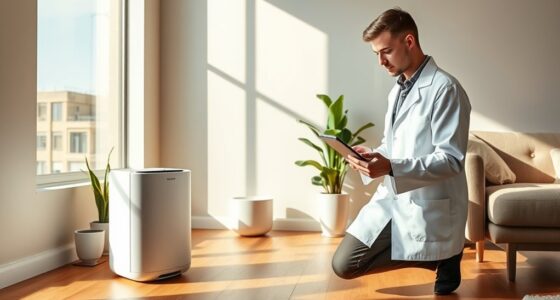
To get the most out of your air purifier in a bedroom or nursery, place it in an open, central spot with good airflow, avoiding behind furniture or near walls. Keep it at breathing-zone height, about 3-5 feet off the ground, on a table or stand. Make sure there are no obstructions or dust sources nearby to maintain efficiency. Proper placement and maintenance are key—stick around to discover more tips for best use.
Listen free for 30 days with Audible
Thousands of audiobooks and originals — cancel anytime.
As an affiliate, we earn on qualifying purchases.
Key Takeaways
- Place the air purifier in a central, open spot away from furniture and walls for optimal airflow.
- Position it at breathing zone height, about 3-5 feet off the ground, on a stable surface.
- Avoid placing near dusty areas, vents, or sources of pollution to reduce filter clogging.
- Ensure the device can circulate air freely without obstructions for maximum efficiency.
- Regularly clean or replace filters and maintain clear surroundings to sustain air quality.
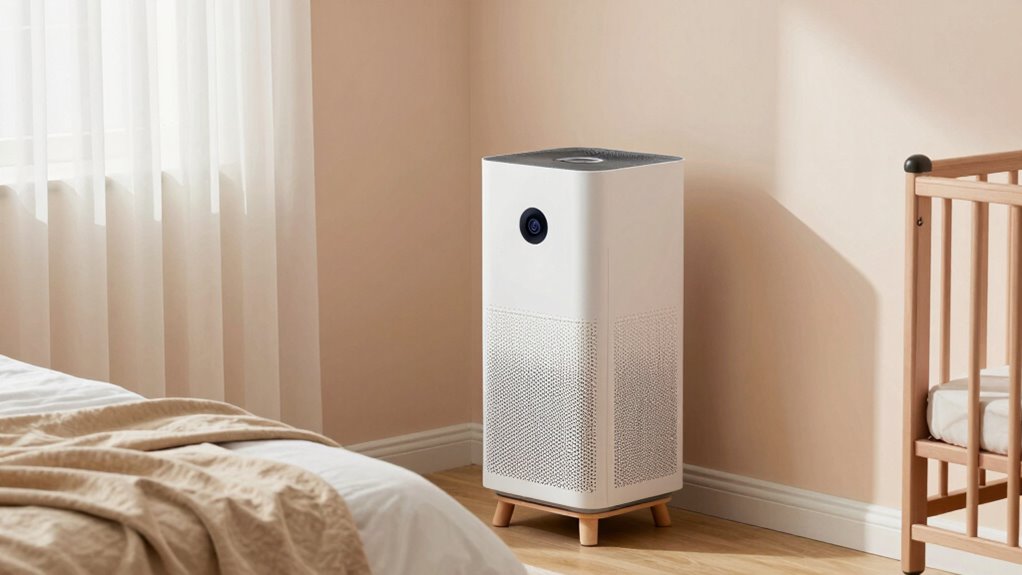
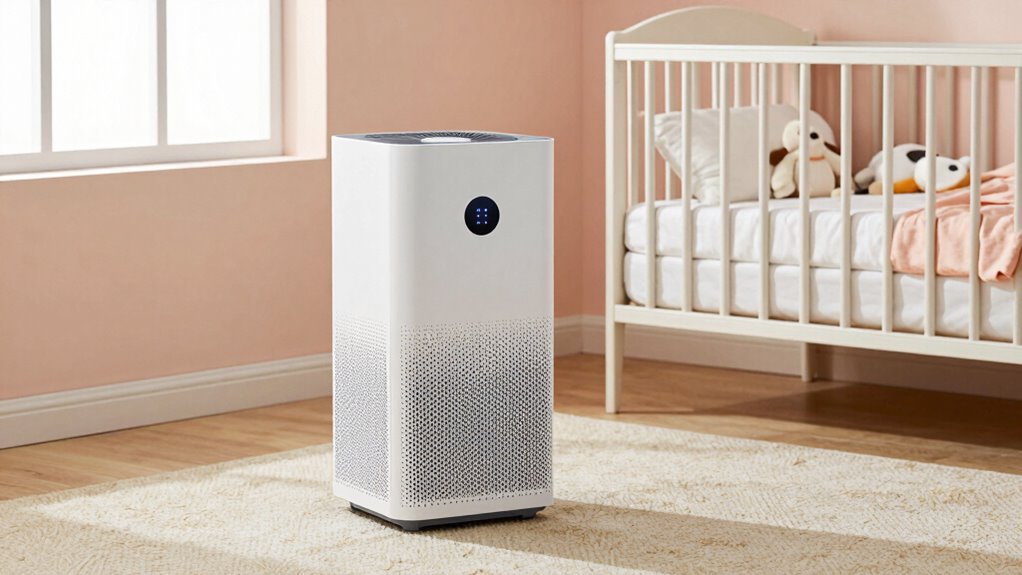
Placing an air purifier correctly in your bedroom or nursery is vital for maximizing its effectiveness and guaranteeing a healthier environment. The right placement directly influences the device’s ability to improve air quality, as well as how often you’ll need to perform device maintenance. To get the most out of your air purifier, position it where it can circulate air freely and reach all corners of the room. Avoid placing it behind furniture, curtains, or close to walls, as these obstacles can restrict airflow and diminish its efficiency. Instead, choose an open space near the center of the room or slightly off to the side, where clean air can flow uninhibited.
Position your air purifier in an open, central spot for optimal airflow and maximum air quality improvement.
Keep in mind that air quality is at its best when the purifier is positioned at the height of breathing zones. For bedrooms and nurseries, this usually means placing the device on a table, shelf, or stand about 3 to 5 feet off the ground. This height allows the purifier to better capture airborne particles, allergens, and pollutants that tend to linger at breathing level. Avoid placing the device on the floor or on a high shelf where airflow might be limited or where it could be knocked over. Consistent placement helps maintain steady air quality by ensuring the purifier operates efficiently.
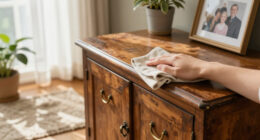
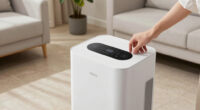
Device maintenance is another vital aspect of effective placement. Regularly cleaning or replacing filters keeps the device functioning efficiently, but placement can also influence how often you need to perform these tasks. If the purifier is placed in a dusty corner or near sources of pollution, it may clog filters more quickly, requiring more frequent maintenance. Conversely, a clean, unobstructed spot helps the device run smoothly and extends filter life. Remember to check the manufacturer’s recommendations for maintenance intervals, and keep the area around the device free of dust and debris to prevent unnecessary strain. Proper air circulation is essential for preventing the buildup of pollutants in the room. Additionally, understanding the airflow patterns within your space can help optimize placement for maximum efficiency. Being aware of ventilation sources such as windows, vents, or HVAC systems can also influence how you position the purifier for optimal results.
Finally, consider the room’s airflow patterns. Good air circulation means placing the purifier where it can pull in air from different parts of the room, not just a single corner. This ensures contaminants from various areas are filtered out efficiently, improving overall air quality. If your room has multiple sources of pollutants—like pet dander, dust, or smoke—you might need to move the device periodically or add multiple units for complete coverage. Proper placement and ongoing maintenance work together to keep your bedroom or nursery a healthier, more comfortable space for you and your loved ones. Ensuring the purifier is placed in a location that optimizes airflow and circulation is key to maintaining effective air quality.
As an affiliate, we earn on qualifying purchases.
Frequently Asked Questions
How Often Should I Replace the Air Purifier Filters?
You should replace your air purifier filters based on the filter lifespan recommended by the manufacturer, which is typically every 6 to 12 months. Stick to a regular maintenance schedule to guarantee peak performance. Check the filters regularly for dirt and buildup, and replace them sooner if they appear dirty or clogged. Proper maintenance keeps your purifier effective at cleaning the air and maintaining a healthy environment in your bedroom or nursery.
Can I Leave the Air Purifier on All Night?
Absolutely, you can leave your air purifier on all night—think of it as your silent guardian for better air quality. It actively filters pollutants and allergens, leading to sleep improvement and fresher air. Just make certain it’s placed correctly and that filters are clean. Continuous operation helps maintain a steady air cycle, so you wake up feeling more refreshed and breathe easier, turning your bedroom into a true sanctuary of health.
Is It Safe to Use a Humidifier With the Air Purifier?
Yes, using a humidifier with an air purifier is generally safe, provided you follow humidifier safety guidelines and verify compatibility between the devices. Keep the humidifier clean to prevent mold and bacteria growth, which could compromise air quality. Position both devices properly—away from each other and on stable surfaces—to optimize performance and safety. Regularly check humidity levels to avoid excess moisture, which can reduce air purifier efficiency.
What Size Air Purifier Is Best for a Nursery?
Think of your nursery as a delicate garden needing gentle care. A purifier around 200-300 square feet suits this space, like a garden’s protective fence. When considering air quality, choose a size that comfortably covers the room, ensuring fresh air flows freely. Proper purifier placement—away from walls and vents—maximizes its effectiveness, creating a safe, breathable environment where your little one can thrive like a blossoming flower.
Should I Turn off the Purifier When Cleaning the Room?
You should turn off the purifier when cleaning the room to prevent dust and debris from being drawn into it, which can reduce its effectiveness. Regular cleaning frequency helps keep the air fresh, but turning off the purifier during cleaning guarantees you don’t accidentally damage the filter or motor. After cleaning, restart the purifier and ensure proper purifier placement to maximize air circulation and filtration.
Conclusion
By placing your air purifier in the right spot, you’re setting yourself up for cleaner, healthier air. Keep it away from walls and furniture, and position it where airflow isn’t blocked. Remember, a little effort goes a long way in creating a safe space for sleep and play. When you get it right, you’ll see that it truly pays off—showing that sometimes, the best things come in small, smart doses.
Flea & tick season Picks
flea and tick prevention
As an affiliate, we earn on qualifying purchases.