Many DIY cleaning ingredients like lemon juice, baking soda, and vinegar are often overrated because they don’t reliably kill germs or viruses. While they can help remove grime, odors, and stains, they aren’t effective disinfectants. Relying solely on these can give you a false sense of cleanliness. To guarantee your home is truly sanitized, it’s important to understand their limitations and explore proven disinfectants. Keep going to discover safer, more effective cleaning options.

Get cleaning gear delivered free — and shop member deals
- Fast, free delivery on millions of items
- Access to Prime Big Deal Days deals on October 6–7
- Prime Video, Amazon Music and more included
Key Takeaways
- Lemon juice, while deodorizing, is not a reliable disinfectant against germs and viruses.
- Baking soda effectively absorbs odors but does not kill bacteria or viruses.
- Vinegar can clean grime but lacks broad-spectrum antimicrobial properties.
- Relying solely on these ingredients can lead to incomplete sanitation.
- Scientific evidence shows these ingredients are better for cleaning than disinfecting.
Have you ever wondered if you can clean your home effectively with ingredients you already have in your kitchen? It’s a common question, especially when you’re aiming for natural disinfectants and eco friendly solutions that won’t harm your family or the environment. While some ingredients might seem like miracle workers, others are often overrated and don’t perform as well as you might think. Relying on these can lead to wasted time and effort, and in some cases, even incomplete cleaning.
Many kitchen ingredients are overrated for effective cleaning and disinfection.
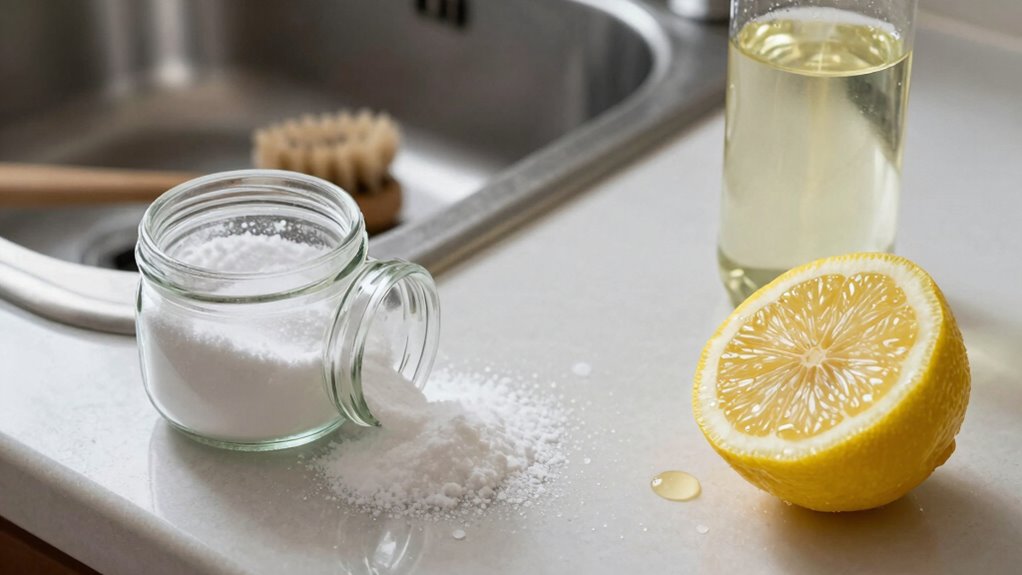
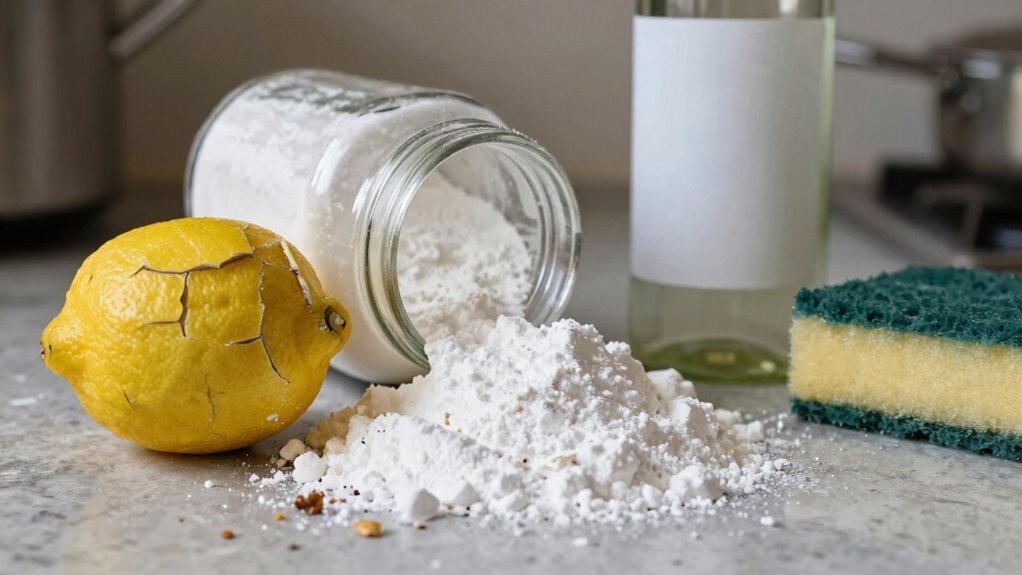
One ingredient that gets a lot of hype is lemon juice. It’s praised for its fresh scent and supposed antibacterial properties, but the truth is, lemon juice isn’t a reliable disinfectant. Its acidity can cut through some grime and add a pleasant smell, but it doesn’t kill germs effectively enough to replace standard disinfectants. If you’re after true natural disinfectants, you’ll need solutions that have been proven to eliminate bacteria and viruses. Lemon might be a good addition for a fresh scent or mild cleaning, but don’t rely on it as your main disinfectant.
Baking soda is another popular ingredient, often used for deodorizing and cleaning surfaces. It’s true that baking soda can absorb odors and scrub away dirt, making it useful in many situations. However, it’s overrated when it comes to killing germs. Baking soda doesn’t have disinfectant properties, so while it helps with cleaning and deodorizing, it shouldn’t be your go-to for sanitizing areas like toilets, sinks, or kitchen counters. It’s great for scrubbing stubborn stains or freshening up carpets, but not for disinfecting. Understanding the limitations of certain ingredients can help you develop a more effective cleaning routine.
Vinegar, particularly white vinegar, is frequently hailed as a miracle cleaner and natural disinfectant. It’s versatile and good at breaking down grime, but it’s not an effective disinfectant on its own. Despite its acidity, vinegar doesn’t reliably kill all bacteria and viruses, especially in the case of more resistant pathogens. Using vinegar as part of eco friendly solutions is smart, but it’s better combined with other ingredients or used alongside proven disinfectants for thorough sanitation. Knowledge of disinfection effectiveness can help you choose the right ingredients for your cleaning needs. Additionally, understanding scientifically proven disinfectants is key to maintaining a hygienic home.
In the end, the most effective DIY cleaning ingredients are those that have been scientifically proven to disinfect. Many natural disinfectants, like hydrogen peroxide or certain essential oils, can be part of your cleaning arsenal. But ingredients like lemon juice, baking soda, and vinegar, while useful for cleaning and deodorizing, are often overrated when it comes to actual disinfection. Knowing their limits helps you create a safe, effective cleaning routine that keeps your home truly clean without relying solely on ingredients that might not deliver the results you need.
As an affiliate, we earn on qualifying purchases.
Frequently Asked Questions
Are There Any Safety Concerns With Using These Ingredients?
Yes, there are safety concerns with using these ingredients. You might trigger chemical reactions if you mix certain substances, leading to dangerous fumes or damage. Additionally, allergy risks are real, especially if you’re sensitive to ingredients like vinegar or baking soda. Always test a small area first, wear gloves, and guarantee proper ventilation. Knowing these risks helps you avoid accidents and keep your cleaning routine safe and effective.
How Long Do Homemade Cleaning Solutions Typically Last?
Homemade cleaning solutions usually last about one to two weeks, but their shelf life depends on ingredients and storage. To maximize freshness, store them in airtight containers away from sunlight and heat. Always label your solutions with the date made, and shake or stir before use. If you notice changes in smell, color, or consistency, it’s best to discard and make a fresh batch to guarantee safety and effectiveness.
Can These Ingredients Be Used on All Surfaces?
You might think all DIY ingredients work on every surface, but that’s not the case. Surface compatibility varies, and ingredient versatility is key. For example, vinegar can damage natural stone but works well on glass and tile. Always research each ingredient’s compatibility with your surfaces before cleaning. Using the wrong ingredient on delicate surfaces can cause damage, so be cautious and test in small areas first.
Are Store-Bought Cleaners More Effective Than DIY Options?
Store-bought cleaners often outperform DIY options because they’re designed for specific surfaces and leverage controlled chemical reactions for maximum effectiveness. While DIY ingredients offer ingredient versatility, they may not create the ideal chemical reactions needed for deep cleaning or stain removal. You might find that commercial products deliver faster, more consistent results, especially on stubborn grime, making them a more reliable choice for tough cleaning tasks.
Do These Ingredients Have Any Environmental Impacts?
Are DIY cleaning ingredients truly eco-friendly? Many, like vinegar and baking soda, have minimal environmental impact, but some ingredients can contribute to environmental degradation or pose ingredient toxicity risks. For example, certain essential oils or harsh chemicals might harm aquatic life when washed away. You should always consider how ingredients break down and their potential effects, ensuring you choose options that minimize harm to the environment.
Conclusion
So, next time you reach for those so-called miracle ingredients, remember they might just be the empty promises of the cleaning world. Don’t let your trust be swept away by shiny labels or old wives’ tales. Instead, be the captain steering clear of cluttered myths and steer straight for proven, effective solutions. Your home deserves more than overrated ingredients—give it the genuine shine it craves, and watch your space sparkle like a starry night!
Fall Picks
fall essentials
As an affiliate, we earn on qualifying purchases.