
TL;DR

Get cleaning gear delivered free with Prime
- Fast, free delivery on millions of items
- Prime Video, Amazon Music and more included
- Member-only deals all year
An Ideal Home report compares resin and gravel driveways, finding that gravel generally costs less upfront and may be easier to install, while resin needs specialist installation and costs more. Expert estimates put gravel at about £50–£70 per square metre and resin at £90–£130; actual costs, durability and suitability depend on the property and installation.
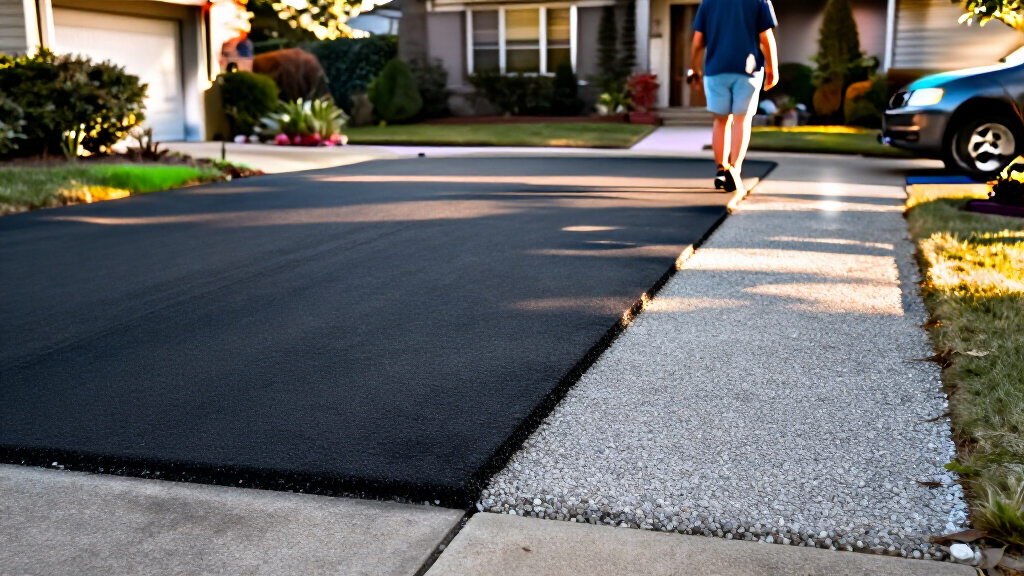
Ideal Home has published a comparison of resin and gravel driveways, outlining how their costs, installation demands, maintenance and appearance differ for homeowners planning an exterior upgrade. Experts quoted in the report estimate that gravel typically costs £50–£70 per square metre in the UK, compared with £90–£130 for resin, though the figures are indicative rather than quotes for a particular property.
The report says gravel is generally less expensive to install and may be manageable as a do-it-yourself project with research and planning. Designer Samantha-Jane Agbontaen describes it as straightforward to lay, a process that can take a couple of days with limited groundwork. Gravel also needs topping up over time, which adds to its ongoing cost and maintenance.
Resin driveways require professional installation, according to the report. Resin-bound and resin-bonded are the two types it identifies, with resin-bound described as the more common choice because of its greater longevity and lower maintenance needs. Project consultant Fergus Wickland warns that resin is difficult to lay: poor technique or unsuitable weather can leave a patchy finish.
Architectural technologist Zaeem Chaudhary estimates that a properly installed resin driveway can last 15–20 years. Gravel may last longer overall, he says, but requires more maintenance. The report also notes that resin can develop moss or algae and may discolour; visible repairs can be difficult to blend into the surface. Gravel’s natural stones may keep their appearance as rain cleans them, but the report gives no single lifespan or maintenance schedule for either material.
The Cost of a Smooth Finish
For homeowners, the choice affects both the initial project budget and the time and money needed to maintain the drive afterward. Gravel’s lower estimated installation price may make it more accessible, but topping it up is part of its longer-term upkeep. Resin has a higher upfront estimate and requires skilled fitting, while its continuous surface can be harder to repair discreetly if damaged.
Those differences matter because a driveway must serve as both the approach to a home and a working surface for parking and manoeuvring vehicles. Appearance is only one part of the decision: the property’s layout, the base condition, expected use and willingness to maintain the surface can also affect which option is practical. The cited figures are broad UK estimates, so homeowners should seek site-specific assessments before setting a budget.
Products Worth Considering

Arlo Pro Wireless Security Camera, 2K HDR, 6th Generation, 4-Camera Kit

Ring Alarm 5-Piece Kit

Philips Hue Starter Kit with Bridge Pro and 4 Retrofit LED Recessed Downlights
As an affiliate, we earn on qualifying purchases.
Two Materials, Different Demands
The source is an Ideal Home consumer guide drawing on comments from landscaping, design and construction professionals. It frames the comparison around four concerns: installation, price, longevity and appearance. It does not report a new building regulation, industry-wide price survey or change in driveway practice; the development is the publication of advice for homeowners comparing the two materials.
The guide distinguishes resin-bound from resin-bonded surfaces, and says resin-bound is more common. It also emphasizes that preparation and installation quality influence durability. Its cost ranges are presented as typical UK prices per square metre, not as a guaranteed quote, and they do not specify a date, region-by-region variation or exactly which groundwork and related costs are included.
““Gravel is cheaper – in fact it is one of the most affordable driveway options around.””
— Samantha-Jane Agbontaen, interior designer and founder of House Designer
Costs and Lifespans Vary
The source does not state when the price estimates were gathered, how they vary across the UK or whether they include excavation, drainage, edging and base preparation. Homeowners cannot treat the quoted ranges as project quotes without a property assessment. The report also does not provide a like-for-like lifetime cost calculation that adds installation, maintenance and eventual repairs for each surface.
Actual durability depends on the condition and preparation of the base, workmanship, weather exposure and use. The source gives a 15–20-year estimate for properly installed resin but does not give a precise lifespan for gravel. It also does not specify which resin products, gravel grades or driveway conditions support those estimates. Its appearance and repair observations are attributed to the cited experts and are not presented as a controlled comparison.
Get a Site-Specific Estimate
Homeowners considering either surface can ask local installers to assess the existing driveway and base, explain the groundwork required, and provide an itemized quote. They should compare installation costs with expected maintenance and repair needs, and ask how the material will perform under the property’s vehicle use and exposure to sun and weather. For resin, they can confirm whether the proposal is resin-bound or resin-bonded and what preparation and installation conditions are planned.
The Ideal Home source does not announce a follow-up report, policy decision or next industry milestone. For an individual project, the next step is a site visit and written estimate; the suitable choice remains dependent on the homeowner’s priorities and property.
Key Questions
Which driveway is cheaper to install?
The report estimates £50–£70 per square metre for gravel and £90–£130 for resin in the UK. These are typical ranges from an expert quoted by Ideal Home, not a quote for a specific site.
Can a homeowner install either driveway themselves?
The report says a gravel driveway may be possible as a DIY project with research and planning. It says both resin-bound and resin-bonded driveways need professional installation because poor laying or unsuitable weather can produce a poor finish.
How long can a resin driveway last?
One expert quoted in the report says properly installed resin can last 15–20 years. The source does not guarantee that lifespan for every property or product; installation quality and site conditions matter.
Does gravel need more maintenance?
According to the report, gravel needs topping up over time and may require more ongoing maintenance, even though an expert says it can last longer overall. The source does not give a maintenance schedule or a precise gravel lifespan.
What should homeowners check before choosing?
Ask for a site-specific assessment and an itemized quote covering preparation and installation. Compare upfront price, ongoing upkeep, repair options and appearance, and confirm which resin type is being proposed if considering resin.
Source: rss