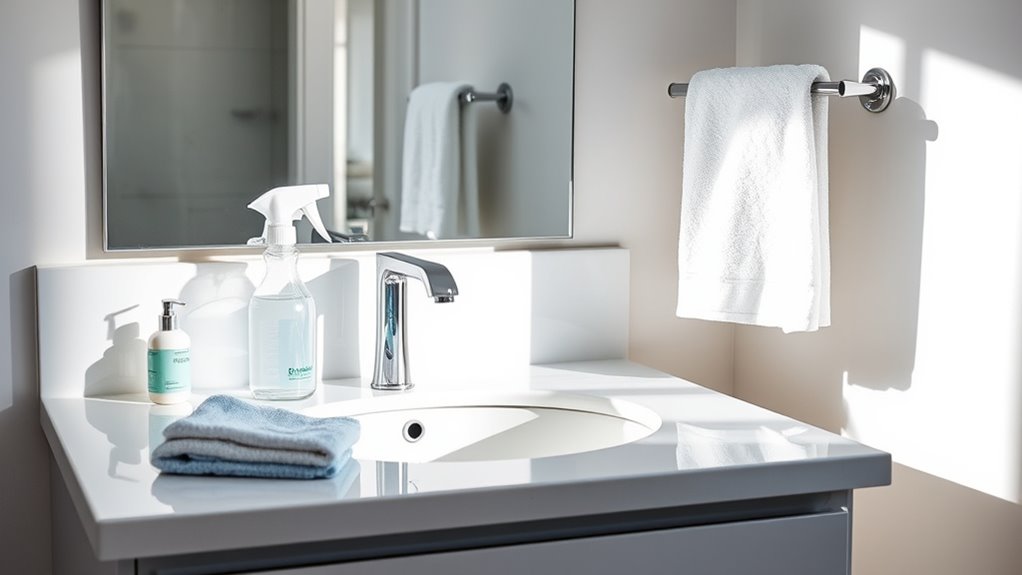
Each week, you should sanitize bathroom surfaces like sinks, counters, and doorknobs with disinfectant to prevent germs and mold growth. Wash towels regularly in hot water to eliminate bacteria and odors. Keep grout lines clean with scrubbing to maintain their appearance and prevent mold buildup. These simple tasks keep your bathroom hygienic and fresh. Staying consistent with these routines helps protect your health and keeps your space looking its best; there’s more to learn to enhance your maintenance routine.
Key Takeaways
- Sanitize bathroom surfaces weekly with disinfectant to eliminate germs and prevent mold buildup.
- Wash and replace towels regularly to maintain hygiene and reduce bacteria transfer.
- Clean and disinfect high-touch areas like doorknobs and light switches.
- Deep clean grout lines using a grout cleaner or baking soda mixture to prevent mold.
- Ensure proper drying of surfaces and towels to inhibit bacterial growth and maintain freshness.
Have you ever wondered if your bathroom stays as clean as it could be? Keeping your space fresh and hygienic requires more than just a quick wipe here and there. Regular maintenance ensures germs don’t have a chance to settle in, and it keeps your bathroom looking its best. One essential task is focusing on toilet brush cleaning. Over time, the bristles trap bacteria, mold, and soap scum, making the brush a source of germs rather than a cleaning tool. To prevent this, you should clean your toilet brush weekly. Fill a bucket with hot water and a disinfectant or a mixture of bleach and water. Submerge the brush, swirl it around, and let it soak for about 10 minutes. After soaking, rinse it thoroughly with hot water and allow it to air dry. This routine keeps the brush sanitary and ready for the next use, reducing the spread of germs.
In addition to cleaning your toilet brush, grout maintenance plays a crucial role in maintaining bathroom hygiene. Grout lines between tiles often trap dirt, soap scum, and mold, making them look grimy and contributing to unsanitary conditions. To keep grout fresh and clean, use a dedicated grout cleaner or a mixture of baking soda and water to scrub these lines weekly. A small brush, like an old toothbrush, works best for getting into the crevices. Scrubbing not only restores the grout’s appearance but also prevents mold buildup, which can cause health issues over time. After scrubbing, rinse thoroughly with water to wash away loosened debris and grime. Regular grout maintenance prolongs the life of your tiles and keeps your bathroom looking crisp and clean. Additionally, understanding the health benefits of proper cleaning practices can motivate consistent hygiene routines and prevent the buildup of harmful bacteria.

Lysol All Purpose Cleaner Spray, Multi-Purpose Disinfecting Spray, Kitchen & Bathroom Cleaner, Lemon Breeze Scent, 32 Fl Oz
ALL PURPOSE CLEANER KILLS 99.9% OF VIRUSES and BACTERIA: Lysol All Purpose disinfectant spray kills 99.9% of viruses…
As an affiliate, we earn on qualifying purchases.
As an affiliate, we earn on qualifying purchases.
Frequently Asked Questions
How Often Should Grout Lines Be Resealed?
You should reseal grout lines every 1 to 2 years, depending on grout cleaning and wear. Regular resealing helps protect against moisture and stains, keeping your bathroom looking fresh. Keep an eye on grout’s appearance; if it starts to look dull or stains seep in easily, it’s time to reseal. Proper resealing frequency preserves grout integrity and prevents costly repairs, so don’t skip this essential maintenance step.
What Eco-Friendly Bathroom Disinfectants Are Most Effective?
Did you know that choosing eco-friendly cleaning agents can reduce indoor air pollution by up to 50%? You should opt for natural disinfectants like vinegar, tea tree oil, or hydrogen peroxide, which are highly effective against germs. These natural disinfectants not only sanitize your bathroom but also protect your family’s health and the environment. Switching to eco-friendly cleaning agents makes your routine safer and greener with powerful, natural solutions.
How Can I Prevent Mold Growth in Humid Areas?
To prevent mold growth in humid areas, you should focus on humidity control and mold prevention strategies. Use a dehumidifier or increase ventilation to keep moisture levels low. Fix leaks promptly and ensure proper airflow in your bathroom. Regularly clean surfaces with eco-friendly disinfectants, and dry damp spots thoroughly. These steps help inhibit mold spores from thriving, keeping your space healthier and mold-free over time.
Is It Necessary to Replace Shower Curtains Regularly?
Think of your shower curtain like a vintage dress that needs regular cleaning. You should replace your shower curtain every 6 months to prevent mold and mildew buildup. Proper shower curtain maintenance, such as cleaning and ensuring good ventilation, extends its life. If you want bathroom curtain alternatives, consider glass doors or waterproof liners. These options are low-maintenance and help keep your bathroom fresh and mold-free longer.
What’s the Best Way to Dry Towels Quickly?
To dry towels quickly, use effective towel drying techniques like hanging them in a well-ventilated area or on a heated towel rack. You can also toss them in a dryer with a few clean tennis balls for quick drying methods. Make sure towels are spread out evenly to maximize airflow and reduce moisture. These tips help you achieve fast, efficient drying, so your towels are ready to use in no time.

Lysol Toilet Bowl Cleaner Gel, For Cleaning and Disinfecting, Septic Safe Toilet Bowl Cleaner, Lavender & Cotton Blossom Scent, 24 oz, (Pack of 2)
DISINFECTING TOILET CLEANER: This powerful 2in1 formula sanitizes and disinfects your toilet bowl and toilet brush
As an affiliate, we earn on qualifying purchases.
As an affiliate, we earn on qualifying purchases.
Conclusion
Keeping up with your weekly bathroom tasks might seem small, but it makes a big difference in maintaining a clean, healthy space. When you sanitize surfaces and wash towels regularly, you reduce germs and prevent buildup. Isn’t investing just a few minutes each week worth the peace of mind? Remember, a fresh bathroom isn’t just about appearance — it’s about caring for your well-being. So, why not make these tasks a simple, consistent part of your routine?

Lumkew Grout Cleaner Brush V Shape, Stiff Grout Cleaning Brushes for Tile Floor, Handheld Grout Scrub Brush Set for Shower, Bathroom, Kitchen, Household Use,2 pcs
V Shape Design: V grout cleaner brush fits precisely into each groove, and reaches deeply into narrow joints….
As an affiliate, we earn on qualifying purchases.
As an affiliate, we earn on qualifying purchases.

Towel and Linen Mart 100% Cotton 6 Pack Bath Towel Set, Quick Dry, Super Absorbent, Light Weight, Soft, (27 x 54 Pack of 6) Beige, White, Grey, Sky Blue, SAGE Green, Navy
Super fine premium cotton with extra-long fibers that make them durable and long-lasting. High-quality tightly woven cotton makes…
As an affiliate, we earn on qualifying purchases.
As an affiliate, we earn on qualifying purchases.