Sweeping alone often leaves dust behind because tiny particles cling stubbornly to hardwood surfaces and settle into crevices. Dust particles stick due to static electricity and natural tackiness, making them hard to remove with just a broom. Additionally, sweeping can sometimes push dust around instead of removing it. Using better tools, like damp microfiber mops or vacuum cleaners with gentle brushes, can improve cleanliness. Keep going to discover effective ways to fully tackle stubborn dust.
Key Takeaways
- Sweeping only removes surface debris, leaving tiny dust particles and those stuck in crevices untouched.
- Dust particles cling due to static electricity and surface tackiness, making them hard to dislodge with sweeping alone.
- Improper or inadequate vacuuming can redistribute dust without fully removing it from the floor.
- Glossy or polished finishes attract more dust and make removal more difficult.
- Using damp microfiber mops or specialized cleaning products helps loosen and lift stubborn dust particles.
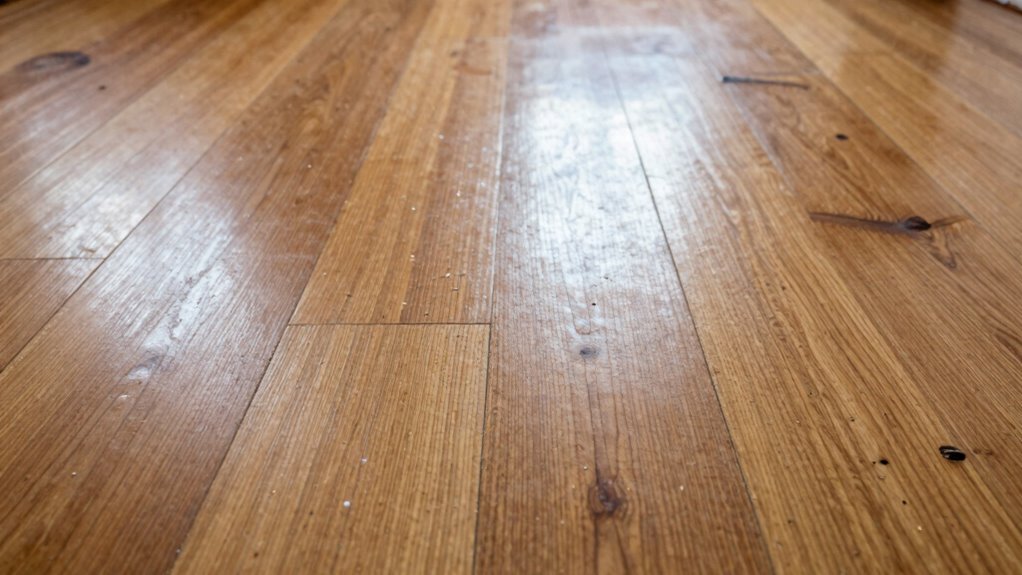
Even after you sweep your hardwood floors, they often still seem dusty and grimy. You might wonder why the dust doesn’t fully disappear, especially when you put in the effort to sweep thoroughly. The key lies in understanding vacuum effectiveness and dust particle adherence. Sweeping alone can only remove surface debris; it doesn’t always get rid of the tiny dust particles that cling stubbornly to the floor’s surface. These particles are lightweight and tend to settle into tiny crevices or adhere strongly to the wood’s finish, making them difficult to dislodge with just a broom or a dust mop.
Vacuum effectiveness plays a significant role here. Not all vacuums are built equally, and some are better suited for hardwood floors than others. A vacuum with a powerful motor and a well-designed brush roll can lift more dust and dirt from the surface and even from within small cracks or grain lines. If your vacuum has inadequate suction or a brush that isn’t gentle enough for hardwood, it might push dust around rather than remove it. This results in a floor that looks cleaner temporarily but still retains a fine film of dust particles. To improve vacuum effectiveness, you need a model specifically designed for hard floors, ideally with adjustable height settings and a soft brush or felt pad that gently lifts debris without scratching the surface.
Dust particle adherence is another factor that keeps your floors dusty after sweeping. Dust particles are tiny and tend to stick to surfaces because of static electricity or the natural tackiness of the dust itself. Also, the finish on your hardwood can influence how strongly dust adheres. A glossy or well-polished floor might attract dust more because of its smooth surface, making it easier for particles to cling. Over time, the natural oils and polish layers can create a slightly sticky environment, further trapping dust. Because of this, simple sweeping often isn’t enough. You need a method that can break the bond between dust particles and the floor—like using a damp microfiber mop or applying a cleaning product designed to lift dust and dirt.
Understanding dust adhesion and the physical properties of dust particles can help you choose more effective cleaning methods. In essence, the persistent dust on your hardwood isn’t just a matter of neglect; it’s rooted in the physical properties of dust particles and how well your cleaning tools can combat them. Regular, thorough cleaning using appropriate equipment and techniques can significantly reduce dust buildup and improve indoor air quality. Improving vacuum effectiveness, choosing the right attachments, and understanding dust adherence can make a real difference. Regular, thorough cleaning with the right equipment can help you combat these invisible clingy particles, leaving your hardwood floors looking cleaner and more polished.
As an affiliate, we earn on qualifying purchases.
Frequently Asked Questions
How Often Should I Deep Clean My Hardwood Floors?
You should deep clean your hardwood floors every 4-6 months. Use effective mopping techniques, like damp mopping with a gentle cleaner, to remove embedded dust and grime. Regularly check if your floors are sealed; proper floor sealing prevents dust from settling deep into the wood. Deep cleaning involves more than just sweeping, so focus on thorough mopping and resealing if needed to keep your floors spotless.
Can Humidity Levels Affect Dust Accumulation on Floors?
Did you know that humidity levels considerably impact dust accumulation on hardwood floors? When humidity drops below 30%, dust particles become more airborne, settling back on your floors easily. Seasonal changes often cause humidity fluctuations, affecting air quality and increasing dust buildup. To keep your floors cleaner, maintain indoor humidity between 40-60%, which helps reduce dust and enhances overall air quality, making your home healthier and more comfortable.
Are Certain Cleaning Tools Better for Hardwood Floors?
Certain cleaning tools are better for hardwood floors. You should avoid harsh brushes and instead opt for soft-bristled brooms or microfiber mops, as they won’t scratch the surface. Many cleaning myths suggest using excess water, but minimal moisture is best. Tool selection matters because using the right tools guarantees effective dust removal without damaging your floors. Stick to gentle, specialized tools for a shiny, dust-free finish every time.
Does Pet Hair Contribute to Persistent Dust?
Yes, pet hair can contribute to persistent dust on your hardwood floors. Pet dander and airborne fibers often settle into tiny cracks and fibers, making it harder to remove all dust with sweeping alone. These particles can become trapped, especially if your vacuum or broom isn’t designed for thorough cleaning. Regularly using a damp microfiber cloth or a vacuum with a HEPA filter helps capture pet dander and airborne fibers, reducing dust buildup.
What Type of Vacuum Is Best for Hardwood Floors?
The best vacuum for hardwood floors is one with a gentle yet effective brush roll and strong suction, ideally designed for bare floors. Look for models that require minimal maintenance to keep performance at its best, and consider those that double as carpet alternatives if you have both surfaces. Regularly clean and replace filters, and check brush rolls to prevent dust buildup. This guarantees your hardwood stays dust-free and looks pristine.
Conclusion
So, next time you sweep and still see dust lingering, don’t be quick to blame your broom. There’s a hidden culprit lurking beneath the surface, waiting to surprise you. Uncovering the real reason behind those stubborn particles might just change how you clean forever. Are you ready to reveal the secret and finally keep your hardwood floors truly spotless? The answer could be closer than you think—and it’s more surprising than you ever imagined.